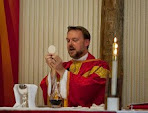
Sunday, December 12, 2010

Homily for Gaudete – The Third Sunday in Advent

(Audio)

Matthew 11:2-11; 1 Corinthians 4:1-5; Isaiah 40:1-11

In the Name of the Father and of the + Son and of the Holy Spirit.

Our lessons today are less about the preaching of John the Baptist and his imprisonment or the promised comfort and peace that the Messiah brings than they are about the mysteries of God and what it means to be a steward and manager of those mysteries, that is, a pastor. This topic Paul takes up in his letter to the Church in Corinth: This is how one should regard us, as servants of Christ and stewards of the mysteries of God. Thus, pastors are not to be regarded as bosses over the congregation, but neither are they to be regarded as employees of the congregation. Pastors are servants of Christ, and a pastor serves Christ by serving the Good Shepherd’s flock as an undershepherd. The pastor has been given stewardship, that is, management, of the mysteries of God. These mysteries are the preaching of the Gospel, the administration of the Sacraments, and the remitting and the retaining of sins through the Office of the Keys in Confession and Absolution. These mysteries do not belong to the pastor, but they belong to Christ who has given His pastors their stewardship.

Thus, the pastor is not to be judged according to worldly measures of success – quantitative growth, financial growth, other statistics, or even the development of properties or other capital – but the pastor is to be judged according to his trustworthiness, his faithfulness in his stewardship of the mysteries. For, to this stewardship alone has he been called. It is not uncommon that faithful preaching and teaching and the administration of the sacraments fails to satisfy the bottom line, but this is not the failure of the mysteries of God nor even of the pastor, the steward of those mysteries, for the Holy Spirit works where and when He pleases just as the wind blows here and there and men have no control and no ability to direct its course.

But, even stewards of God’s mysteries have moments when they get caught up in worldly measures of success and growth. It’s all too easy see your congregation merely maintaining and not perceivably growing and conclude that the mysteries aren’t working and that something needs to change – change the message to make it more appealing and practical; change the music to make it more contemporary and emotional; throw out the repetitive, predictable liturgy and replace it with a constantly changing, evolving, and emerging format that’s always fresh, always different, always new. So, you see, it comes down to faith, doesn’t it? Do you trust God to do what He has said He will do, even if our eyes do not see the effectiveness? The faithful pastor and the faithful congregation must answer “Yes!”

Was John the Baptist having such a moment of doubt when he, from prison, sent disciples to ask Jesus “Are you the one who is to come, or shall we look for another?” Perhaps; it would be, after all, only human. John was in prison, knowing that he was going to die, it’s quite plausible that he began to wonder “How can this be happening? I faithfully carried out my stewardship of the mysteries of God, preaching repentance before the coming of the Son of God, and what has it gotten me, but imprisonment and a death sentence?” Was John having a moment of disillusionment, hopelessness, and despair? Maybe. Of course, maybe he, knowing that his time was soon up, was commending his disciples unto Jesus so that they could hear with their own ears and see with their own eyes that He was the fulfillment of Messianic prophecy.

Either way, Jesus directs them, and John, to the mysteries of God: The blind receive their sight and the lame walk, lepers are cleansed and the deaf hear, and the dead are raised up, and the poor have good news preached to them. Perhaps the disciples had witnessed some of these things first hand, but many they simply had to believe by hearing. The Gospels are filled with such miraculous accounts, still many eye witnesses refused to believe. Men will be men, determining for ourselves the conditions by which we will believe. Repent.

What did you come to church to see? An inspiring motivational speaker with practical advice for how to manage your finances, deal with your co-workers, handle your rebellious child, or rekindle the flame in your marriage? What did you come to church to hear? Music like on your favorite radio station or a stroll down memory lane of your early adulthood? What did you come to church to do? The good work of your presence so that you can feel better about yourself, that at least you go to church while many of your family, friends, and neighbors do not? What did you come to church for? Motivational speakers are on the lecture circuit. They proclaim a message that is dictated by the whims and felt needs of men to make a profit. Musical tastes are fickle and subjective and are often powerfully connected to worldly pleasures and vices; these come and go, here today, gone tomorrow, while the Word of the Lord alone remains forever. If you come to church to do something for God, then you might as well stay home in bed. God needs nothing from you and, on your own, you can do nothing for God. The only reason to come to church is to receive from God His mysteries: faith, forgiveness, life, and salvation.

For this purpose, it is my privilege to stand before you today as a servant of Christ and as a steward of the mysteries of God. In fact, my standing here itself is a mystery, for I claim no worthiness, no right, or special piety to do so, but I trust in the Lord who has called me, through you, to this stewardship to do what He has said He will do: To convict your hearts of sin by the preaching of His Law to turn you in repentance to Him that He might shower you with His grace, mercy, love, and forgiveness in the preaching of His Gospel. That He might create faith in the hearts of infants and adults through Holy Baptism and that He might return you to your baptismal purity through your confession of sins and holy absolution. That He might feed, nourish, and strengthen your faith as He communes with you in His holy body and His precious blood in the supper that He died to give to you. All this, that you might be preserved and kept in faith throughout your life, through your death, into life eternal with God the Father, God the Son, and God the Holy Spirit, to whom alone be all glory and praise, now and forever.

In the + Name of Jesus. Amen.

Wednesday, December 8, 2010

The Word Becoming Flesh Meditations on the Incarnation of the Son of God from the Unique Perspectives of the Four Evangelists

Advent Evening Prayer (Weeks of Advent 1 & Advent 2)

St. Matthew & St. Mark

(Audio)

Matthew 1:18-25; Hebrews 1:1-14; Isaiah 7:10-17

[The church was without power on December 1 and there was no Evening Prayer, so this homily represents an attempt to combine two into one.]

8 December 2010

Grace, mercy, and peace be unto you from God our Father and from our Lord and our Savior Jesus Christ.

Our doctrine of verbal inspiration has its sedes in 2 Peter 1:21, “For no prophecy was ever produced by the will of man, but men spoke from God as they were carried along by the Holy Spirit.” This is to say that the men who wrote the Holy Scriptures, though they were influenced by their own cultures and family upbringings, though they had different gifts and styles in speaking and in writing, and though they were writing to different audiences at different times and in different places, nevertheless they spoke and they wrote by the inspiration of God the Holy Spirit so that what was written was what God willed to be written and was, in fact, God’s Word, and not man’s word.

During these midweek services in Advent, we will reflect upon God’s unique Word regarding the incarnation of His Son Jesus Christ as He caused it to be inspired through His evangelists Matthew, Mark, Luke, and John. These four men were very different in culture and capacity. Further, their audiences and intents were also very different. Thus, their Gospels reflect their unique perspectives on the incarnation of the Son of God. Tonight, we consider St. Matthew, the son of Alpheus and St. Mark, the young interpreter of St. Peter.

Matthew, also known as Levi, was a tax collector before Jesus called him to be a disciple and an apostle. Though a Jew, Matthew was considered to be unclean and an outcast because he collected taxes for the Roman occupiers. The Pharisees and the Scribes would have been particularly hostile to Matthew, judging him not only to be unclean, but also a traitor and a thief. But, it was men and women such as Matthew that Jesus came to save: sinners. Jesus called Matthew away from his occupation and his wealth to become a disciple. Not only did Matthew become a disciple of Jesus, but he was also called and sent as one of the Lord’s twelve apostles. Later, Matthew became the evangelist whose inspired record of the Gospel was granted first place in the ordering of the New Testament.

Matthew’s unique perspective on the incarnation of the Son of God served to convince his primarily Jewish audience that Jesus was the long-awaited Messiah and the fulfillment of Old Testament prophecy. Thus, Matthew begins his Gospel with the genealogy of Jesus Christ, His ancestors. Matthew makes no effort to hide sinners and scandals within Jesus’ genealogy, instead, he highlights them. Jesus’ ancestors include prostitutes, adulterers, violent men, and other sinners of all descriptions. Though this might surprise us, the truth is that there were no people other than sinners to make up His genealogy. Jesus’ ancestors needed a Savior just as much as we do! Jesus Christ, the sinless Son of God, born of the Virgin Mary, was descended from sinners and was just like every man or woman who had ever lived, with the exception that He had no sin. Jesus is, literally, the fulfillment of all humanity. There can be no genealogy of Jesus’ descendants, for history has reached its goal in the incarnation of Jesus Christ.

Matthew demonstrates that Jesus is the son of David and the son of Abraham: He is a descendant of King David, from whose family the Messiah was prophesied to come, and He is a descendant of Abraham, the father of the Israelites, through whom all nations were to be blessed according to God’s covenant. By emphasizing Jesus’ descent from both David and Abraham, Matthew proclaimed to his audience that Jesus was the fulfillment of Jewish Messianic hope. Jesus is the prophesied Messiah of King David’s royal lineage and He is the Savior of the nations promised to come from the seed of Abraham.

After establishing Jesus’ ancestral credentials in the genealogy, Matthew launches straightway into the birth of Jesus. Matthew is deliberate in showing that the circumstances of Jesus’ birth fulfill Old Testament Messianic prophecies concerning the conception by the Holy Spirit, the virgin birth, the Davidic ancestry of Joseph, and even the Messiah’s name, Jesus, Immanuel, God with us.

Then, extending the Messianic role of Jesus to the Gentiles, Matthew records the visit of the Magi from the east, an account that is unique to Matthew’s Gospel. This Jesus was to be the Savior of all people in all times and in all places.

Also unique to Matthew’s Gospel is the flight of the Holy Family into Egypt to escape the murderous King Herod who sought to kill the infant Jesus. This account, Matthew is sure to mention, was also to fulfill the Messianic prophecy, “Out of Egypt I called my son.” Even the slaughter of the infants in Bethlehem served to fulfill the prophecy spoken by Jeremiah. Further, Jesus’ hometown residence of Nazareth was also in fulfillment of prophecy, “He shall be called a Nazarene.”

These are but a few examples of St. Matthew’s efforts to proclaim to the Jews, the Gentiles, and to you, that the Son of God, the promised Messiah of prophecy, has come amongst us as our brother to be our Kinsman Redeemer and to set us free from the bondage of sin and death. He is the very Word by which the heavens and the earth were made, become flesh and dwelling amongst us. This truth about Jesus is depicted in the iconographic image for St. Matthew and the Gospel bearing his name, a human male with angel’s wings – the Son of God and the Son of Man.

But, if Matthew’s chief concern was to show that Jesus was the fulfillment of Messianic prophecy, St. Mark has written a Gospel of action emphasizing the Words and the deeds of Jesus.

Mark was but a young man during Jesus’ ministry, he was not yet born at the time of Jesus’ birth. Uniquely, Mark’s Gospel does not include a birth narrative but it begins with the preaching of John the Baptist preparing the way for the coming of the Christ by preaching repentance. Mark, also known as John or John Mark, was an interpreter for St. Peter and accompanied Peter and Barnabus on some of their journeys. It is believed that much of his Gospel he received personally from Peter. Mark’s audience were Gentile Christians at the Church in Rome. His writing style is short and fast-paced, perhaps catering to a Roman preference.

While Mark does not emphasize Jesus as the fulfillment of Messianic prophecy, like Matthew, he does emphasize the authority of Jesus as the Son of God and the creative power of His Word. In Mark’s Gospel, the disciples respond to Jesus’ authority, the demons fear it, and all creation obeys Him. Thus, the iconographic symbol for St. Mark and the Gospel bearing his name is a Lion – strong, fierce, and powerful, commanding fear and respect. The Jesus of Mark’s Gospel is the prophesied Lion of the Tribe of Judah.

However, though Mark clearly presents Jesus as the Son of God who has power over demons, heals the sick, and forgives sins, this Jesus also possesses a full humanity and has come to serve and to give His life for many. Mark’s Jesus is the suffering servant Messiah of Isaiah’s prophecy. The demons He casts out and the people He heals are commanded to keep silent until Jesus reveals Himself before the Sanhedrin. In Mark’s Gospel, Peter confesses Jesus only as “the Christ”, and only after the resurrection do His followers recognize Him as God. Mark also clearly defines the life of a disciple of Christ as one who follows Him through suffering and even death saying, “Take up your cross and follow me.”

In the first two Gospels we see the revealing of the Word of God made flesh. Jesus is the fulfillment of Messianic prophecy, hope and expectation, and He is the Son of Man and the Son of God, become flesh to suffer and die that men might be released from the bondage of their sins and live.

In the + Name of Jesus. Amen.

Sunday, December 5, 2010

Homily for Populus Zion–The Second Sunday in Advent

(Audio)

Luke 21:25-36; Romans 15:4-13; Malachi 4:1-6

In the Name of the Father and of the + Son and of the Holy Spirit.

In Advent, when we speak of the three-fold coming of Jesus – that He came as the Babe of Bethlehem; that He is coming as Lord, King, and Judge; and, that He comes to us now in Word and Sacrament – we must remember that we are dealing first and foremost with a great mystery. Thus, we understand the three-fold coming of Jesus incorrectly, or, at least, incompletely, if we understand His coming as three unique and unrelated events. For, the Son of God did not come into being only upon His incarnation in the conception and birth of Jesus, but He has always been with God, in the beginning, begotten of the Father before all worlds; and He was God before the incarnation, and He is God still after becoming a man, having died and having been raised. Likewise, His death and resurrection did not happen merely in Jerusalem nearly 2,000 years ago, but He is the Lamb of God that was slain from the very foundation of the world. Further, to say that Christ is coming again, a second time, is not to make Him to be a liar when He says, “I am with you always, even unto the end of the age.”

Thus, when we consider Jesus’ teaching concerning the end times and His parousia – a word commonly translated as second coming, but which literally means presence – we must submit our reason and our linear conception of time and events and, with ears to hear, listen to the Word of God in faith. For, what Jesus is teaching us is that His kingdom, which is coming, is in fact, already near and already present.

Jesus spoke the Words of our Gospel lesson to His disciples just two days before His crucifixion and death on Good Friday. He spoke of signs in the sun and moon and stars, and on the earth distress of nations in perplexity because of the roaring of the sea and the waves, people fainting with fear and with foreboding of what is coming on the world. These signs, Jesus says, indicate that the Son of Man is coming and that redemption is drawing near. Now, the common interpretation of these words of Jesus is that these signs of celestial and earthly turmoil will come at some time in the future before the second coming of the Lord in glory. And, yes, that is certainly a part of Jesus’ meaning. However, at the same time, we cannot help but observe that these signs are present in our world today: Wars and rumors of wars, the threat of global warming, tsunamis, earthquakes, terrorism, the economic crash, etc. Further, such signs have been common to every age. Are we then to conclude that our Jesus is a liar? That He has failed to come? By no means! For, listen to His Word and what He truly says: Truly, I say to you, this generation will not pass away until all has taken place.

Jesus’ Word to His disciples, that very generation, was that all these things would happen within their lifetime – and they most certainly did! Within thirty years the Romans laid siege to Jerusalem, surrounding the city and forbidding the carrying in of food and other necessities and the carrying out of refuse. Within a few weeks, hunger, disease, and death began to ravage the population so that the people resorted to the abandonment of children and even cannibalism. Surely, for the people then, it must have seemed like the end of the world. However, such signs are common to every generation at all times and in all places.

Thus, Jesus compares these signs to that of common flora – the fig tree: Look at the fig tree, and all the trees. As soon as they come out in leaf, you see for yourselves and know that the summer is already near. So also, when you see these things taking place, you know that the kingdom of God is near. Each year, decade after decade, century after century, millennia after millennia, the trees bud out, leaf, bear fruit, and wither, and then the cycle continues: this has happened in the past, it is happening now, and it will continue to happen until the Last Day. In a similar way comes the kingdom of God: the kingdom of God has come, it is coming now, and it will come. Therefore, we can watch the signs and be prepared, for the signs are as obvious as those of the fig tree and of all trees. The kingdom of God is already, even now, present, in hidden and veiled forms to sustain and keep you in the faith. Even now, you stand in the kingdom of God as you live in this generation, thus you have nothing to fear from what is coming on the world.

Christ has died. Christ is risen. Christ will come again. This is the three-fold mystery of faith. For, you too have died with Christ and have risen with Him through baptism into His death and resurrection. For you, to live is Christ and to die is gain. The life you now live you live to God, and nothing can separate you from Him but yourself. Now, the devil, the world, and your own sinful flesh will tempt you to not believe this, thus you must remain vigilant and watchful for the signs of the Lord’s parousia, His coming, His presence. Those signs are in heaven and they are in earth, for Christ fills all things. Those signs are in His death and in the death of all things, and those signs are in His resurrection and the resurrection of all things. And those signs are in His Word, preached and taught in its truth and purity. Those signs are in the water by the power of His Word and Spirit. And those signs are in the bread which is His body, and the wine which is His blood – because He has spoken so by his Word – for the forgiveness of your sins, for the strengthening of your faith, and for life everlasting – past, present, and future.

In the + Name of Jesus. Amen.

Sunday, November 28, 2010

Homily for The First Sunday in Advent (Ad Te Levavi)

(Audio)

Matthew 21:1-9; Romans 13:8-14; Jeremiah 23:5-8

In the Name of the Father and of the + Son and of the Holy Spirit.

At this time of the year, situated as we are in the northern hemisphere, the prevalence of darkness and the scarcity of light can, at times, be oppressive, depressive, and draining. And, if you are one of the millions of Americans, like myself, who are negatively affected by the absence of sunlight, you know what I’m talking about; and, if you are not so affected, perhaps you can sympathize with us as we march day by day toward the winter solstice, the shortest day of the year.

That our Advent preparations fall during this time of the year fortuitously serves as a powerful symbol of the oppressive darkness of our sin and death in which we live, a darkness from which we need deliverance and encouragement to not give in to. In fact, this very deliverance we prayed for but moments ago in our Collect for the Day, “Stir up You power, O Lord, and come, that by Your protection we may be rescued from the threatening perils of our sins and saved by Your mighty deliverance….” For, struggling, as we are, in the darkness of sin and death, we are in peril: We are in peril of not seeing our sins as perilous. We are in peril of drowning, perishing, and suffocating in the hopeless darkness of sin and death.

Part of our Advent preparation, then, is to hold out a beacon of hope, a guiding light in the darkness to lighten our path. That hope is that the night will soon be ending, that the darkness will soon withdraw and pass away. Now, worldly speaking, each day, we move closer to December 21, the Winter Solstice, the shortest day of the year. That day is coming, a day of deep darkness that we all must pass through. But, after that day, the days will progressively grow longer as light increases, so that’s something for us to look forward to, something that gives us comfort and hope. Now, spiritually speaking, though we continue to walk in the darkness of sin and death, and though we see that much darkness is all around us, we are comforted in the remembrance that the Light of the World, Jesus Christ, has come. And, we wait, in hopeful expectation, for His coming again to take us out of the darkness forever. Further, we are comforted and hopeful that even now He comes amongst us, so that, even as we dwell in darkness, we are not of the darkness, but we are children of the Light.

Rescue is coming. Rescue has come. And, rescue comes to you now. But, it’s not the Marines, it’s not the FBI, it’s not even your favorite political party that is coming to your rescue. There is no great war horse, tank or armored truck, there is no powerful political sway, might, or power as men count might and power. Those things are too obvious to our fallen flesh, too easy to place our trust in, they don’t demand anything of us in the way of change. But, your Savior came in humility, “mounted on a donkey, and on a colt, the foal of a beast of burden.” He comes to you now through veiled means: His Word preached and read, prayed and sung; common water; tasteless bread and simple wine. But, He is coming on the clouds, with power and great might that no flesh can imagine, and the darkness of sin and death will pass away forever.

It is this three-fold “coming” of Jesus Christ, the Son of God and Son of Man, that we reflect upon during Advent: He has come. He comes. And, He is coming. But, do you see how the coming of Christ enfolds and permeates your entire life and existence? Christ came before you. Christ comes to you now. And, Christ is coming again for you, to receive you to Himself. Do you believe that He came as the Babe of Bethlehem, born of the Virgin Mary? Then you can believe that He will come again just as He has said. Do you believe that He will come again at some time in the future? Then you can believe that He is present with you now just as He has said. Christ has come. Christ comes. And, Christ is coming. He is the Alpha and the Omega, the Beginning and the End, and He is everything in between. He is your life, for He has laid down His life in exchange for yours. Thus, He promises you that if you remain in Him, He will remain in you and that you are not a slave, but a son of God, and if a son, then also an heir with Him of the kingdom that He brings, then, now, and for eternity.

Still, we dwell in darkness, for a time. But, “the hour has come for you to awake from sleep. For salvation is nearer to us now than when we first believed. The night is far gone; the day is at hand. So then let us cast off the works of darkness and put on the armor of light.” St. Paul warns you against a litany of sinful behaviors that make most of us squirm uncomfortably in our seats: Things like orgies, drunkenness, sexual immorality and sensuality. It’s pretty easy for us to justify ourselves and feel a little self-righteous because we don’t participate in such dark and seedy behaviors. But, notice how Paul concludes that list with quarreling and jealousy. Quarreling and jealousy, for Paul, are every bit as sinful and dangerous for you as are the other sinful and immoral behaviors.

These works of darkness are dangerous because they serve to separate you from the body of Christ, the true Vine that enlivens and fortifies the branches. They are the fruits of unbelief in the coming of the Christ past, present, and future. Cast off these works of darkness. Do not dwell in them or be tempted to by them to become drowsy as you watch and wait for the coming of the Lord. Cast off those works of darkness and replace them with good works? No, the works of darkness are not replaced by other works, but the Apostle writes instead, put on the defensive armor of light, the light of Christ.

For, you have been called to change your ways and to no longer walk in darkness, for you have been changed by baptism and faith from a child of darkness to a child of light. So that, you are not darkness, but you are light, therefore, walk in the light of Christ and do not return and submit yourself to works of darkness.

From where we stand today, the New Year is just around the corner. After the Solstice, when the days begin slowly to grow longer, the New Year begins. The New Year is a time that people have chosen to reflect upon the blessings, challenges, and failings of the past year and to make resolutions for change in the New Year to come. Well, The First Sunday in Advent is New Year’s Day for the Church of Christ. It is a time for God’s people to reflect upon another year past lived in the grace, mercy, love, and forgiveness of God our Father, through Jesus Christ our Lord. We may be tempted to believe that nothing has changed, that everything continues just as it has before. But, one thing has certainly changed: You have lived one more year and you have one less year left to live when the New Year comes along. Truth be told, you are never the same again. When a year has passed, it has done something to you – you have either come closer to God through faith in Christ Jesus or you have drifted farther away. So, as you begin this New Year, ask yourself, “Has your faith grown, or has it withered?” Have your words and deeds served your brothers and sisters in Christ so that their faith might grow and increase, or have your words and deeds inflicted injury upon others so that their faith is damaged or that they might fall away from the Church and from the Lord?

If you have done these things or any others, do not despair, there is Good News for you! Your Rescuer is here, now. In fact, today your salvation is nearer to you than when you first believed. Happy New Year! A New Year in God’s grace, mercy, love, and forgiveness begins for you today! Repent, cast off the works of darkness and put on the armor of light. Walk as in the daytime, not in darkness, drunkenness, or slumber. Put on the Lord Jesus Christ, and make no provision for the flesh, to gratify its desires. For the Lord has come. He is coming. And, He comes to you now to rescue you from the threatening perils of your sins and to save you by His mighty deliverance.

In the + Name of Jesus. Amen.

Thursday, November 25, 2010

Homily for the Eve of the National Day of Thanksgiving

Icon_LastSupper(Audio)

Luke 17:11-19; Philippians 4:6-20; Deuteronomy 8:1-10

Grace, mercy, and peace be unto you from God our Father and from our Lord and Savior Jesus Christ.

The Lord be with you. And with thy spirit.

Lift up your hearts. We lift them up unto the Lord.

Let us give thanks unto the Lord our God. It is meet and right so to do.

How often do we speak or chant those words to each other? Each and every Lord’s Day and on Feast Days throughout the Church’s Year of Grace. Eucharistasomen to kyrio. Let us give thanks unto the Lord. Let us give thanks.

Each and every time we gather together to receive the Lord’s blessings, we also return to Him thanksgiving. Not only on the fourth Thursday of each November, but each and every time we gather. The Lord gives and we receive. The Lord gives, and in receiving His gifts, we acknowledge Him to be the Lord. The Lord gives and we receive and we return to Him thanksgiving and praise. It is meet and right so to do.

It is truly meet right and salutary that we should at all times in all places give thanks unto you, holy Lord, almighty Father, everlasting God, through Jesus Christ our Lord. It is meet and right, it is salutary, it is good for us to give thanks. When? – At all times, in all places. In times of joy and in times of sorrow, give thanks. In times of sickness and in times of health, give thanks. In times of lean and in times of plenty, give thanks. There is never a time, never a place, where thanksgiving is inappropriate or out of order. For God has given you the gift of His Son, Jesus Christ, and that gift is forever, a gift that truly never stops giving.

Thus, St. Paul exhorts you “Do not be anxious about anything, but in everything by prayer and supplication with thanksgiving let your requests be made known to God.” “And,” Paul promises you, “the peace of God, which surpasses all understanding, will guard your heats and your minds in Christ Jesus.” Jesus is the only possible peace, and He is all the peace you need. For, the Lord knows what you need and He graciously provides you all that you need for your body and your soul. Even in times of want, sickness, and sorrow, the Lord continues to provide for you and keep you. For, your life is a spiritual pilgrimage, not unlike that of the children of Israel, a pilgrimage from captivity to sin, death, and the devil unto the promised land with God in heaven. And, as He did with the children of Israel, so He tests you to humble you and to see what is in your heart, whether you will keep His commandments or not, that you may know that man does not live by bread alone, but by every word that comes from the mouth of God. In the land to which He is bringing you there will be no hunger, nor thirst, no sickness, no sorrow, no death. But, even now, as you dwell in the midst of all these things, you can be content, for you, like Paul, have learned the secret of facing plenty and hunger, abundance and need: I can do all things through him who strengthens me.

That one, the one who strengthens you, is Jesus Christ, your Lord and Savior. He is the pure and holy gift of the Father, whose flesh is given as the true bread that gives true life and whose blood is given as true drink that a man may truly never thirst again. I can do all things through him who strengthens me, for He is my strength, He is my everything. Filled with Him I lack no thing and I am content.

Returning thanks and praise to God is meet, right, and salutary, for, it is an acknowledgment that He is God and that you are not. It is an acknowledgment that He is the giver of all needful things as well as the giver of the one thing needful. It is an acknowledgement that God is the Creator and provider of all things, to all people and creatures, at all times and in all places wholly apart from our deserving His gifts. Thus, returning thanks is a confession of our unworthiness of the gift and the grace and generosity of the giver. It is a public confession of the goodness, mercy, and grace of our loving God. And, recognizing that we have received all things from God in Jesus Christ, so do we confess our gratitude by readily sharing with others, especially those of the brotherhood of faith, all things.

To God alone be all glory, praise and thanksgiving, through + Jesus Christ, in His most Holy Spirit. Amen.

Sunday, November 21, 2010

Homily for The Last Sunday of the Church Year (Sunday of the Fulfillment)

(Audio)

Matthew 25:1-13; 1 Thessalonians 5:1-11; Isaiah 65:17-25

In the Name of the Father and of the + Son and of the Holy Spirit.

There are ten of them, for they represent the totality of humanity, all people that have ever lived and will ever live. And, they are virgins, for they have been made to be pure and holy, they have been redeemed and cleansed in the blood of the Lamb of God, Jesus Christ. They are destined for the wedding feast of the Lamb and His Bride, the Church, because of the grace, mercy, love, and forgiveness of the Father, in the sacrifice of His Son, alone, apart from any worth, work, or merit of their own. That’s how the Parable of the Ten Virgins begins. Each and every figure in the parable is already in the kingdom of heaven, but not all will remain there.

For, the Parable of the Ten Virgins is a parable of judgment, not unlike the parables of the Wedding Feast, the Sheep and the Goats, and of the Talents. And, while its promise is that salvation has already been won for all, regardless of your goodness or badness or your deeds, a time is coming when the Lord will return, like a thief in the night, and those who have trusted in the Lord and watched and waited for His coming will be found in the courts of His kingdom. And, then, the doors will be shut, and, tragically, those who had it all but lost their vigilance and trust in the Lord while He was delayed will find themselves outside of His gates for all eternity. And, the Lord will say to them, “I never knew you,” for they never took the time to know Him.

The key to the parable of the Ten Virgins is the oil in their lamps. Five of the virgins took extra oil with them as they made their way to meet the bridegroom, a seemingly foolish thing to do for a daytime wedding feast, but our Lord calls them wise. Five of the virgins took only enough oil for the day, not planning for or anticipating the unexpected – our Lord calls them foolish. But, then, the unexpected happens, the bridegroom is delayed. Notice, however, that all ten of the virgins become drowsy and fall asleep; again, it is not because five are good and five are evil or because of their works that the Lord calls them wise or foolish, it is because of the oil that they have, or do not have, for the oil is faith and vigilant trust in the Lord. All ten of the Lord’s pure and holy virgins became drowsy and fell asleep. But, then, at midnight, the watchmen’s cry, “The Bridegroom comes, awake! Your lamps with gladness take!” “With bridal care yourselves prepare to meet the Bridegroom, who is near.” The virgins awake and prepare themselves in haste, trimming the wicks of their lamps which had been burning through the night. And, that is when five of the Lord’s pure and holy virgins realize that their lamps are going out and that they have no more oil.

Those foolish virgins are still virgins, that is, they are still forgiven sinners – that is the Lord’s doing alone, and that hasn’t changed. But, their faith in the Lord was not enough to last through the night of uncertainty before the Bridegroom’s arrival. They were prepared to receive the Lord in faith so long as He came to them according to their expectations and on their terms, but they did not trust in the Lord sufficiently to wait on Him in patience as He was delayed. So, when the Bridegroom comes, the foolish virgins are not there, but they are out in the world desperately searching for oil and finding none. When they finally return to the hall of the marriage feast, presumably still without oil, but pleading for mercy, they find the doors closed and the feast commencing without them. They knock and they knock and they cry out “Lord, lord, open to us,” but the Lord answers, “I do not know you.” And, this is the most horrible of unnecessary tragedies, for these foolish virgins were children of the kingdom, they had been made pure and holy in the blood of the Lamb – they had it all. But, they rejected the Lord by not trusting in Him completely. They were forgiven sinners, just like the wise virgins, heirs of the kingdom, but the tragic truth is that both heaven and hell are populated only with forgiven sinners.

This is a completely unnecessary tragedy, for, as St. Paul writes, “God has not destined us for wrath, but to obtain salvation through our Lord Jesus Christ, who died for us so that whether we are awake or asleep we might live with him.” You, children of God, are likewise redeemed in the blood of the Lamb Jesus Christ – and, that is a done deal – “It is finished.” That fact is not changed whether you are good or bad and it does not depend upon your works. But, you do need oil, you do need faith to receive this gift, faith which itself is a gift, faith in Christ – no matter what. How much faith is not really the issue, for faith is faith, and faith always receives the fullness of what God has done in Christ Jesus. But, faith comes from and is sustained by God alone. The foolish virgins could not produce oil on their own, they had to go and seek a merchant to buy it from, and, sadly, there were none to be found. For, faith cannot be created of your own will or choice, it cannot be borrowed or taken from another, and, it is only given by the Holy Spirit working through God’s holy Word and Sacraments. And, what does faith look like? What does faith do? Faith watches and waits in hopeful expectation for the coming of the Lord. Faith watches and waits throughout years and decades. Faith watches and waits through sickness, trial, suffering, and sorrow. Faith always watches and waits in hopeful expectation for the coming of the Lord trusting that He will come just as He has promised.

Further, as St. Paul exhorts you, faith works to “encourage one another and build one another up.” The faithful know that we are never alone, but that we are all in the same boat together, that is the ark of the Church, the body of Christ. We are all forgiven sinners, but that does not mean that we are always good and never do bad things – nevertheless, we remain God’s forgiven sinners, purchased in the perfect and holy blood of His Son. And, as forgiven sinners, we must always forgive those who have sinned against us. If others have hurt you or offended you in any way, you must forgive them as you have been forgiven by God without condition. To not forgive is to not have oil, to not have faith, and the Lord, the Bridegroom is coming, and those without the oil of faith will find themselves locked out of the wedding feast. Besides, what benefit is it to you to hold a grudge against one of Christ’s redeemed children? How does it benefit you to harbor anger, unforgiveness, bitterness, resentment, lovelessness, and cynicism? These are tools of Satan to divide, separate, and isolate you one from another and to weaken and snuff out your faith. Don’t let your pride be your downfall, for that was the downfall of your Enemy.

But, how do you keep your stock of oil full, your faith strong, vigilant, watching, and waiting? You do this, not by doing anything, but, by receiving. You do this by receiving the Lord’s gifts of forgiveness, life, and salvation by being in His Word and by receiving His Holy Absolution and the Holy Body and Blood of the Lamb of God, Jesus Christ. And, you maintain this faith by daily repentance and forgiveness and by a life of humility, grace, mercy, charity, peace, and forgiveness towards others – all others – your brothers and sisters in Christ and your neighbors everywhere else. For, the Lord will return at a day and hour you do not know; like a thief in the night, the cry will ring out that the Bridegroom has come. This need not be a threat, for you have already been judged righteous in Jesus Christ, you are virginally pure and holy in the sight of God through faith in Christ. So, again, Christ’s return need not be a threat – but it is a promise that you can trust, have faith in, and bet your life on.

In the + Name of Jesus. Amen.

Sunday, November 14, 2010

Homily for the Second-Last Sunday in the Church Year

(Audio)

Matthew 25:31-46; 2 Peter 3:3-14; Daniel 7:9-14

In the Name of the Father and of the + Son and of the Holy Spirit.

Dearly beloved in our Lord Jesus Christ, we have entered hereunto the last days of the Church’s Year of Grace wherein, as we prepare for the annual commemoration of the nativity of our Lord at Christmas, we, simultaneously, prepare for His second coming as King and Judge. Indeed, the last three Sundays of the Church Year and the four Sundays of Advent serve together as a time for such preparation not unlike our Lenten preparation for Holy Week and Easter. In northern European tradition, these six weeks have been known as St. Martin’s Lent, named for the fourth century Father of the Church, St. Martin of Tours, who is commemorated on November 11th and for whom our more recent Father and namesake Martin Luther, whose birthday we celebrated on November 10th, was named.

Why does the Church set aside so much time for preparation? Why all the waiting for something to happen? Because preparation, waiting, and patience are what the Christian faith and life are all about – waiting on the Lord, trusting Him in patience, preparing for His return. When St. Peter warns of Christ’s return and judgment, he rhetorically asks “What sort of people ought you to be?” Then, he answers, live lives of holiness and godliness, waiting for and hastening the coming of the day of God. Here, the Biblical metaphor of leaven is useful for understanding. Leaven is put in place by the baker and then the dough is set aside for a while to rise. It is during this set aside time that the leaven does its work of causing the dough to rise – and, as we know, a little leaven leavens the whole lump. The leaven simply does what leaven does, it leavens. Slowly, and in an unseen way, the whole lump of dough is affected and is transformed.

This is what the kingdom of God is like. To unbelievers, it seems like foolishness, for the world appears to go on as it always has, filled with evil and wickedness, wars, disease, and death as the sun rises and sets day after day. And, this is true, in many ways it is the same old world filled with the same kinds of sinful men. But, slowly, patiently, in a hidden and unseen way, change has been taking place, beginning with God’s first promise of a savior after the fall of Adam and Eve, all the way to the death of the Son of God on a Friday afternoon two thousand years ago, to today, and tomorrow, and as many tomorrows as the Lord may grant us. A transformation is taking place, a leavening, and it is God who is doing the work, in God’s way, in God’s time, patiently, that all should reach repentance.

Now, waiting in patience is only reasonable if you expect that something is going to happen. Most of you would not wait an hour and a half in the doctor’s office if you didn’t believe that you were going to get to see the doctor. In a similar way, we wait patiently for the coming of the Lord, trusting in God’s promise that He will come. And, the question, then, for us, is not “What do we do while we wait?” but, it is “What sort of people ought we to be?” For, the Son of Man is coming in glory, and all the angels with Him. Then He will sit on His glorious throne. Before Him will be gathered all the nations, and He will separate people one from another as a shepherd separates the sheep from the goats. And He will place the sheep on His right, but the goats on the left.

This judgment and separation is going to happen, that’s a bonafide guarantee. All people are either sheep or goats, and the Lord, and only the Lord, knows who’s which. And, moreover, it has nothing to do with people being either good or bad, and it has nothing to do with their works. For, the sheep and the goats exist together in the one flock of the Good Shepherd just as the wheat and the tares are permitted to grow together in the same field until the harvest. But, then the sorting, then the judgment, and that is done only by the Lord. So, again, it is not being good or being bad that makes one a sheep or a goat, a stalk of wheat or a tare, and, it is not about works, but, it is about what you areare you righteous? And, no one can make themselves righteous, no one can work their way into righteousness anymore than a goat can make itself into a sheep or a tare into wheat. If you are righteous, that is because you have been made to be, declared to be righteous by God. And, God has already declared, already judged all men to be righteous in Jesus’ blood. So, if you are not righteous, if you are a goat or a tare, then you have rejected God’s external righteousness for yourself. For, righteousness comes by grace through faith in Christ alone, just as it came to Abraham: And, Abraham believed God, and God counted that to Abraham as righteousness.

But, doesn’t Jesus credit the righteous for their good works, that they gave Him food and drink, welcomed Him, clothed Him, and visited Him? Sure He does! But, their good works did not make them righteous, God did! Their works were the fruit of their righteousness, and the righteous one’s didn’t even know they were doing them, let alone did they know that they were doing them to Jesus. They are like leaven that leavens because it is leaven, placed in the world, but not of the world, by God, to leaven it. Furthermore, their blessedness and inheritance, and, do take note of the passiveness of those words, was prepared for them before the foundation of the world. Thus, the good works of the sheep are counted to them as righteousness – they are not righteousness, but Jesus treats them that way! The righteous sheep are praised, not for their good works, but for their faith, their trust in Jesus all along, throughout their lives.

But, what about the goats? Well, the terrible truth is that they, too, have been declared righteous in Jesus Christ, they are in the flock of the Good Shepherd, but they do not trust in Christ but in their works. They cry out “Lord, when did we see you hungry or thirsty or a stranger or naked or sick or in prison, and did not minister to you?” And Jesus will answer them, “As you did not do it to one of the least of these, you did not do it to me.” You see, the goats put their trust in their works, not in Jesus, therefore they are judged by their works, and, necessarily, they come up short. But, again, the terrible truth is that they, like the sheep, have been declared to be, made to be righteous in the blood of Jesus. But, because of the blindness of their unbelief, they will have cut themselves off from the salvation they already had – from the favorable judgment that, but for the noise of their own works, they would otherwise have heard.

For, in the end, salvation is not about works, it’s not even about being good or bad, sheep or goats, but salvation is about faith, faith in Christ Jesus, blind trust in His acceptance: The one who believes in Him is not judged: but the one who does not believe has been judged already because he has not believed in the name of the only begotten Son of God. The goats on the left are not bad people loaded down with sins of omission. The sheep on the right are not do-gooders. Jesus habitually avoids depicting badness as an obstacle to the kingdom, just as he carefully steers clear of making goodness one of its entrance requirements. The kingdom is not taken by force and violence, nor is it merited by works, but, rather, it is received in faith and is entered in no other way.

Thus, the Church, in Her wisdom, has established times of waiting and preparation so that all will have the opportunity to stop focusing so much upon what they do and to focus, instead, upon what God, in Christ, has done, that, when He comes, we might be found patiently waiting, without spot or blemish, and at peace – waiting and trusting, not in our works, but in Christ alone, that in His suffering and death, He has made us to be righteous and His holy sheep. This is the time to stop all doing and to recommence being – being blessed, being righteous, being godly, begin holy, being a sheep, being leaven in the world but not of the world. God has put you here, and, yes, He has a purpose for you, but, you don’t have to discover it, chose it, experience it, or wrangle over it, anymore than a sheep wrangles over what it means to be a sheep. Sheep eat and sheep drink, sheep walk and sheep rest – sheep do sheepy things. Sheep do not worry or think too much about what they’re doing, but sheep trust, sheep believe, and sheep have faith in their Good Shepherd to lead them, feed them, guard them, and protect them. And, this, your Good Shepherd does for you here, today, now, with His Word and His Wounds – His holy body and His precious blood – that you may be well prepared for His return and may inherit the kingdom prepared for you from the foundation of the world.

In the + Name of Jesus. Amen.

Friday, November 12, 2010

The troops are not amused.

A gem from Robert Capon:

As any preacher who seriously preaches the Gospel of grace can tell you, the troops are not amused by the prospect of absolutely free salvation. The first instinct of most Christians, after they have smiled indulgently at the preacher’s charmingly easygoing concept of salvation, is to nail him to the wall for knocking the props out from under divine retribution for nasty deeds. They do not want grace, they want law.

From Kingdom, Grace, Judgment by Robert Farrar Capon.

Wednesday, November 10, 2010

Forgiveness–The Christian Difference and the Proper Office of the Holy Ministry

If one asks what the one characteristic feature of the Christian faith is, distinguishing it from all religions in the world, then we would have to say: It is the forgiveness of sins. The pious Jew and even a pious Mohammedan may hope for God’s pardon. Forgiveness as a real gift, the full assurance of forgiveness, that is the gift of the Gospel.

To proclaim the Gospel of forgiveness, to declare to repentant sinners the forgiveness of their sins, to distribute the Sacraments with all the gifts of divine grace contained in them, this and nothing else, is the proper task o the minister of Christ as it was the officum proprium [ proper office] of Christ Himself. This the Church had to learn in the great crisis of the second century…. The church administration in Europe follows the patterns of the administration of the state, while in America the great business organizations seem to be unknowingly imitated by the churches. The consequence is that also the parish minister becomes more an more of an administrator and organizer who rushes from meeting to meeting and has not enough time for his proper calling as a shepherd.

Hermann Sasse – From Treasury of Daily Prayer pp899-900.

Sunday, November 7, 2010

Homily for the Feast of All Saints (observed)

(Audio)

In the Name of the Father and of the + Son and of the Holy Spirit.

It is said that familiarity breeds contempt. Perhaps, when it comes to well known and beloved Bible passages, it can be said that familiarity breeds a sort of “been there, done that, bought the t-shirt” kind of contempt, a contempt that causes us to neglect revisiting the text and wrestling with it, so as to “suck the marrow” out of it, assuming that we know it well enough and understand it well enough so that there is no need to study it again.

It seems that the opening words of Jesus in His Sermon on the Mount in Matthew chapter five, the Beatitudes, are like that. “Blessed are the poor in spirit…. Blessed are those who mourn…. Blessed are the meek…, etc., etc.” You know those words well. Perhaps you believe that you understand them well enough? Well, maybe you do, and, maybe you don’t.

The common and popular understanding of Jesus’ teaching in the Beatitudes goes something like this: If you want to be blessed, then be meek, mild, poor, and merciful, etc., and you will be. In other words, the Beatitudes are a guide to living the Christian life or a sort of moral checklist by which you can chart your progress towards achieving blessedness. Though it may be common and popular, however, this understanding of Jesus’ teaching is dead wrong. This understanding makes the Beatitudes to be all Law and, it makes Jesus out to be a new Law-giver. But, worse yet, it makes your blessedness a work that you do. And, so we come full circle, and, we can understand why this understanding is so common and so popular. For, you like to think you can contribute to your sanctification. You like to think that you are making progress in becoming more and more blessed. Well, you’re not alone. In fact, you are in good company, for, the Pharisees thought this way too, especially, when they compared themselves to others whom they judged to be less sanctified and less blessed than themselves. It’s only human; sinful and damned, to be sure, but, human.

But, blessedness is not something that you progress toward or that you achieve by your works, rather blessedness is a state of being in which you find yourself wholly apart from your works, merit, or worthiness. Blessedness is not something that you achieve, it is something that you receive and thus you are, blessed. And, the first step in receiving such blessedness is to recognize that you are not it, and that you do not have it, in and of yourself, and that you cannot gain it by your merits, and that you do not deserve it, because you are a sinner. So, if you are to be blessed, then you must receive blessedness as a gift; you must be made to be, declared to be blessed by the one and the only one who is blessed, Jesus Christ, the Son of God, your Savior. Thus, it is, that the people whom Jesus addresses as blessed are not the “haves” of this world, but they are the “have-nots,” they are the crowds, the hoi polloi, both Jews and gentiles. “Blessed are the poor in spirit .... Blessed are those who mourn…. Blessed are the meek … Blessed are those who hunger and thirst … Blessed are the merciful … Blessed are the pure in heart … Blessed are the persecuted… etc.” The great crowds came from all over, from Galilee and the Decapolis, and from Jerusalem and Judea, and from beyond the Jordan, even from the land of Syria, and they brought to Jesus their sick, those afflicted with various diseases and pains, those oppressed by demons, epileptics, and paralytics, and He healed them.

Jesus’ blessing brings comfort and fulfillment at once now and not yet. In the now of this life, those who are emptied of self-righteousness and are impoverished of spirit are filled with the righteousness and the Spirit of Christ. Their hunger and their thirst are sated and quenched by His life-giving Word, body, and blood. In their mourning they are comforted in the Peace that is Christ Jesus and His victory over sin, death, and the devil. In persecution and reviling they do not strike back in anger or revenge, but, they remain steadfast in faith in the Christ who has suffered for them, the Christ who suffers with them now, and the Christ who is their unconquerable strength in weakness. That is now, in this life, this side of heaven.

What we see in the Revelation, however, is the other side of the coin, the not yet for us, but, the reality now in heaven for the Saints in Christ. Once again Jesus, the Lamb of God, stands in the midst of a great crowd of people, a multitude that no one could number, from every nation, from all tribes and peoples and languages, standing before the throne and before the Lamb, clothed in white robes, with palm branches in their hands. “Who are these, clothed in white robes, and from where have they come?” asks the Elder. “These are the ones coming out of the great tribulation. They have washed their robes and made them white in the blood of the Lamb.” It is said that this great crowd, this multitude that no one can count, no longer hunger, no longer thirst, and no longer mourn. They are in the kingdom of heaven and they see God with their own eyes. “Who are these, clothed in white robes, and from where have they come?” They are the remnant of Israel and countless gentiles from the east and the west, the north and the south. They are the blessed of the Lord, made clean in the blood of the Lamb, gathered together around the throne of God and the Lamb in ceaseless worship now, for them, and not yet for us.

All who have died in the Lord, they are part of that blessed throng, they have come out of the great tribulation that is this life and have entered into Life Himself. They are your mothers and your fathers, your sisters and your brothers, your sons and your daughters, all who have died in the Lord. But, they are not dead, in fact they are more alive than you! They enjoy in full, now, what you only know in part, but that doesn’t make it any less real and true for you who live in the not yet. Indeed, you blessed of the Lord in the now also live in the not yet; it as though you have one foot in the grave and the other in heaven. But you are destined for heaven, when, with both feet, you will stand with that blessed throng, with angels and archangels and all the company of heaven, before the throne of God and the Lamb in ceaseless worship. That is a guarantee, backed by the blood of Jesus, sealed in baptismal waters. And, until that day when you come out of this great tribulation into heaven, heaven comes down to you as you kneel before this altar, the throne of the Lamb of God, who is truly present, and you behold with your own eyes, hear with your own ears, handle with your own hands, and taste with your own tongues, and you receive, as foretaste of the feast to come, blessedness Himself in holy communion with your flesh and blood.

For, you are His saints, made holy in His blood, and you are His blessed, now and not yet, destined for life with Him, in Him, and through Him for all eternity. “See what kind of love the Father has given to us, that we should be called children of God; and so we are. […] Beloved, we are God’s children now, and what we will be has not yet appeared; but we know that when he appears we shall be like him, because we shall see him as he is.” Your Lord Jesus guarantees, “And everyone who thus hopes in him purifies himself as he is pure,” and that is blessedness. And all the Saints of the Church of Christ in heaven and earth cry out, “Come, Lord Jesus, come quickly, come.”

In the + Name of Jesus. Amen.