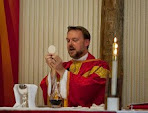
Wednesday, November 23, 2016

National Day of Thanksgiving


Luke 12:13-21; 2 Corinthians 9:6-15; Deuteronomy 26:1-11

In the Name of the Father and of the + Son and of the Holy Spirit.
There is a philosophical school of thought that claims that human beings cannot truly perform a purely altruistic act. What this means is that, when we act altruistically, that is, when we give to charity, help someone in need, speak kindly of someone, or even think good thoughts about others, our thoughts, words, and deeds are always, inescapably, tainted by some degree of egoism or selfish concern for the benefit of ourselves and our selfish interests. For example, one who volunteers in assisting the poor, the elderly, or those who are physically or mentally handicapped may, albeit subconsciously, focus upon the needs of others in order to forget about or to dismiss their own painful neediness and vulnerabilities. Similarly, one who comforts another who is hurting or praises someone who has done well may, albeit subconsciously, do so, in part, for the sake of the good feelings it gives them or for the public acclamation and praise such actions elicit from others. Now, I know that you will undoubtedly consider this an overly negative and pessimistic way of viewing things, and that you most likely will deny that your charitable giving and service, and your praise of those who do good and perform well, is in any small way motivated by self-interest – I feel the same way! Nevertheless, this is in concord with the teaching of Scripture, that even the best of our works of thought, word, and deed are but filthy rags, tainted and corrupted by sinful concupiscence that enslaves our fallen flesh and its desires, passions, and motives. This concupiscence is generally referred to as Original Sin and it is all-encompassing and enslaving. Concupiscence is what St. Paul wrestled with when he confessed that the good he desired to do according to his newborn spirit and faith, he did not do, while the evil that he desired not to do, he continually found himself doing. This is also what Jesus had in mind when he rebuked his disciples saying, “The spirit is willing, but the flesh is weak.
However, our concupiscence affects more than merely our ability to show true altruism, truly selfless love, mercy, and compassion to others, it also affects our ability to be truly grateful and to truly offer, give, and show thankfulness. There is always a small part of us that believes that we have earned, deserved, and merited the good things that we have. After all, we work hard to earn money with which to purchase our homes, cars, clothing, food, education, comfort, reputation, retirement, health, and everything else we have. No doubt, our western American worldview and values of independence and freedom foster and perpetuate in us this sense that we have no one to thank but ourselves. Now, I am not making a case for socialism or any political mechanism that would force you to give and to share. Indeed, if the contradiction in such thinking is not obvious, charity by force is not charity! No, but the point I am trying to make is that you must freely give of what you have freely received, without compulsion, resentment, sorrow, or any such thing. Neither must we offer up thanks and show gratitude under compulsion, but such is the natural faith-response of one who recognizes and confesses that all he has comes to him as a gracious gift of God through Jesus Christ. This is, in fact, what we confess in the First Article of the Creed when we say, “I believe in God the Father Almighty, maker of heaven and earth.” Luther explains this article in terms of the First Article gifts we receive from God because of His true and pure altruism and goodness: “I believe that God has made me and all creatures; that He has given me my body and soul, eyes, ears, and all my members, my reason and all my senses, and still takes care of them. He also gives me clothing and shoes, food and drink, house and home, wife and children, land, animals, and all I have. He richly and daily provides me with all that I need to support this body and life. He defends me against all danger and guards and protects me from all evil. All this He does only out of fatherly, divine goodness and mercy, without any merit or worthiness in me. For all this it is my duty to thank and praise, serve and obey Him. This is most certainly true.” Under a system of Socialism or some other tyranny, it would be the government that grants all these things to you, for which you, by fear of law and compulsion of punishment, must submit and oblige. Not so with your gracious and merciful Creator, God, and LORD who gives all these things even to those who do not fear, love, and trust in Him.
I think we often consider giving thanks to God as a debt that we owe to Him. Therefore, we do it reluctantly and under compulsion in fear of punishment or in the false belief that we earn and merit His favor by showing mercy and by giving thanks. This is the work of the devil who, with his lies and deceit, takes your concupiscence and corruption and uses it to twist your heart and minds to think in such a way. In this way, the devil tempts you to self-righteousness, that you do well and have merited, earned, and deserved His favor and blessings, or into despair that you have not, and cannot have, done enough.
In our Old Testament reading tonight, the LORD tells the children of Israel how they should consider all the things they possess, by means of a confessional creed. Before they make their thank offering they are to confess, “A wandering Aramean [Jacob] was my father. And he went down into Egypt and sojourned there, few in number, and there he became a nation, great, mighty, and populous. And the Egyptians treated us harshly and humiliated us and laid on us hard labor. Then we cried to the LORD, the God of our fathers, and the LORD heard our voice and saw our affliction, our toil, and our oppression. And the LORD brought us out of Egypt with a mighty hand and an outstretched arm, with great deeds of terror, with signs and wonders. And He brought us into this place and gave us this land, a land flowing with milk and honey.” Only then, following this confession, were the Israelites to present their offerings of the first fruits of the land and the harvest the LORD had given them. Truly, we continue this worship of the LORD in our Divine Service still today. We still make confession of our sins and of our unworthiness before we are able to return to the LORD thanksgiving and praise for all that He has done. Indeed, before we return to the LORD thanksgiving and praise, we are first forgiven, restored, refreshed, nourished, and strengthened by Him with the gifts of Christ in Word and Sacrament. Only then do we have something to return to the LORD in thanksgiving and praise, a portion of the goodness and blessing He has poured out upon us.
Such is our Lord’s teaching in tonight’s Gospel reading as well. In response to a man who desired to use the force of Law to make his brother share his inheritance, Jesus told a parable about a foolish man who selfishly put his fear, love, and trust in his labors and the material wealth he had stored up for himself in perishable grain. The LORD had blessed him with such a tremendous harvest that he could not store all his grain. Rather than give thanks to the LORD and share from the abundance to help others and glorify the Name of the LORD, the fool decided to tear down his barns and build bigger ones to house the grain, and then rest in comfort and peace upon his works. But then, the rug is pulled out from under him, and the LORD called back what he had given, even the man’s life. Then, what became of his grain and wealth in which he trusted? It spoiled, or it fell into the hands of others who did not earn it. The lesson being this: All wealth and health and even life come to you by the grace, love, and mercy of your LORD. It is all His, given to you that you may be a faithful steward of the goods entrusted to you in service of your family and your neighbor to the glory of God. When you freely share and give of what the LORD has freely given you, you make a confession of your faith in Him and you glorify Him. When you return thanks to Him, again you confess that He is your LORD and God, the Creator and Giver of all things, and you glorify Him. In a very true sense, returning thanks to God is obedience under the First Commandment, “You shall have no other Gods.” For, we must confess that we too often put our fear, love, and trust in material possessions and wealth, in reputation and health, and in fleshly and worldly things that do not, will not, and cannot last. Too often we make the gifts of God’s grace to be our gods.
Truly this Divine Service is catechetical, teaching us and reminding us that all we have is a gift of God’s grace, and that He fills us to overflowing with His abundant grace, mercy, love, and forgiveness so that these overflow in our lives, words, and deeds towards others to the glory of His most Holy Name. In this Holy Eucharist, a word which means “Thanksgiving,” we both receive His gifts and return thanks to Him, reminding, reinforcing, and equipping us for the proper stewardship of His gifts as we live daily in our vocations. “He who supplies seed to the sower and bread for food will supply and multiply your seed for sowing and increase the harvest of your righteousness. You will be enriched in every way to be generous in every way, which through us will produce thanksgiving to God. For the ministry of this service is not only supplying the needs of the saints but is also overflowing in many thanksgivings to God.” Let us give thanks unto the LORD our God for He is good and His steadfast love endures forever.

In the + Name of Jesus. Amen.

Sunday, November 20, 2016

Homily for The Last Sunday of the Church Year (Sunday of the Fulfillment)


Matthew 25:1-13; 1 Thessalonians 5:1-11; Isaiah 65:17-25

In the Name of the Father and of the + Son and of the Holy Spirit.
Our Old Testament lesson today is pure Gospel. The Prophet foretells a new heaven and a new earth in which there is no inequity or strife, weeping or sorrow, and no more death. Now, who wouldn’t want that? Who wouldn’t do anything they could to obtain it? Who wouldn’t pray earnestly for that day and kingdom to quickly come? People like you and me, that’s who. Oh, sure, we talk about the promised kingdom of heaven in wistful and dreamy ways, imagining it not unlike the Edenic artwork on the Jehovah’s Witness’ Watchtower literature sitting on our coffee tables, but do we really believe in it? Do we really believe it will come soon? Do we really even want it to come, particularly if it means giving up and losing what we have now? Perhaps we have become a bit too content and complacent in our lives and in this world, which are passing way, which are stored up for fire on the Last Day?
You are not alone in feeling this way. Indeed, Christians, and Messianic Jews before them, have felt this way ever since Jesus began His ministry of teaching and miracles. His disciples and the crowds all thought He was the promised Messianic King who had come to establish God’s kingdom on earth now. However, when He failed to lead the people in uprising against their Roman occupiers, when He failed to set them free from tyranny and oppression, when He failed to restore worldly glory to Israel and reestablish David’s throne, the vast majority rejected Him and cried out for His blood. He was not the kind of king they were looking for. And, after He had been tried, convicted, condemned, crucified, and buried, they thought that was that. No one expected Him to rise from the dead. The women came to the tomb Sunday morning in order to finish the job of preparing a dead body for burial. The disciples gathered in fear and grief behind closed doors awaiting their own arrest, trial, and conviction at the hands of the Jewish Council. They, like us today, would prefer that the LORD make this present world better and more comfortable, release us from suffering and sorrow, war and bloodshed, disease and death. However, the LORD did not promise to make a paradise on earth again, but He promised to create a new heaven and a new earth, and that this old world that we both hate and love will be burned with fire and dissolve. Jesus said, “Behold, I make all things new.” He wasn’t kidding. Believe it and receive it for Jesus’ sake.
In many ways, that is what the end of the Church Year and the beginning of the new Church Year with Advent is all about – watching, waiting in patient hope and expectation, and being prepared for the day of Jesus’ coming, the Last Day, the end of this world and the beginning of the new heavens and earth that will not fade away. That is what the Parable of the Wise and Foolish Virgins is all about. Jesus told this parable to His disciples during the week of His Passion, during Holy Week before His betrayal and arrest. Jesus told them this parable so that they would be prepared for His delay in returning, by human standards. After Jesus’ Resurrection and Ascension, the disciples were all on board with Jesus. Nevertheless, they expected His prophesied return to come quickly. That is why the first Christians sold all their possessions and put them in a community chest to care for those who could not care for themselves. That is why they shared all things in common. It’s not that they were socialists or communists, but they sincerely believed that they wouldn’t need such worldly and material things much longer, for Jesus would be coming soon ushering in His new Kingdom. That’s why Jesus told them, and us, this parable. He was encouraging us, exhorting us, even warning us to not grow weary in our waiting and watching, for He is coming soon – though, to the LORD a day may be as a thousand years, and a thousand years as one day.
The Parable of the Wise and Foolish Virgins is yet another Parable of the Kingdom. This time, the Kingdom of Heaven is like “ten virgins who took their lamps and went to meet the Bridegroom.” As in the other parables of the kingdom, the virgins were all invited, they were all in, they were all going to the wedding feast. However, Jesus tells us that, though they were all invited, though they were all in, “five of them were foolish, and five were wise.” The difference between the wise and the foolish virgins, Jesus says, was that the wise brought extra oil with them. Already, the oil is a matter of significance. At the beginning of the parable, all ten virgins have oil in their lamps. All seems well and good – and it is! However, then comes the crux of the parable: The Bridegroom is delayed. There they stand, all ten of the virgins, lamps filled with oil, burning brightly, and the Bridegroom hasn’t come. They were all ready to enter the Wedding Hall and partake of the Feast, but now they have to wait. Surely this is how the disciples and the first Christians felt following Jesus’ Ascension and Pentecost. They were full of anticipation and excitement. They were ready to enter the Kingdom of Heaven and celebrate the Feast with their Bridegroom Jesus. But then, days, weeks, months, and years went by, and no Bridegroom. After a while, they began to resume their work-a-day lives, going to work, preparing meals, caring for their families, building homes and churches, still waiting, still watching, but not as fervently or expectantly as before. And, as years turned into decades and centuries and millennia, many stopped watching and waiting altogether. They became the scoffers St. Peter warned us about last Sunday saying, “Scoffers will come in the last days with scoffing, following their own sinful desires. They will say, “Where is the promise of his coming? For ever since the fathers fell asleep, all things are continuing as they were from the beginning of creation.” Neither are you and I immune to such thoughts and emotions. Some days we act as scoffers, as though we do not believe that Jesus is coming, as though we do believe that this life and world is all there is. Therefore, Jesus encourages, exhorts, and warns us still, “Watch therefore, for you know neither the day nor the hour.”
All ten virgins were invited. All ten virgins were in. All ten virgins had oil in their lamps, burning brightly. All ten virgins were on their way to the Wedding Feast to meet the Bridegroom. But, when the Bridegroom was delayed, all ten virgins fell asleep. We are all tempted, spiritually speaking, to succumb to weariness and sleep. It’s hard to wait and watch perpetually with hopeful expectation. Even Jesus’ closest disciples failed to wait and watch, and they fell asleep while He prayed in Gethsemane. Whereas Jesus most likely has in mind spiritual slumber – preoccupation with fleshly, worldly, and material concerns, idolatry – another possible interpretation of sleep is death. All ten virgins died, and all ten virgins rose up when “at midnight there was a cry” and the Bridegroom arrived. Either way, it is clear that falling asleep was not the gravest problem for the virgins, but not having extra oil. Jesus says that five of the virgins were wise, and that five of the virgins were foolish. What made the five wise virgins wise was that they brought extra oil with them as they went to meet the Bridegroom.
Once again, I must emphasize the fact that all ten virgins had oil, that all ten virgins were invited, were in, were on their way to the Wedding feast – they were all baptized Christians, purchased in the blood of Jesus. All ten virgins fell asleep. They grew weary in their watching and waiting, or perhaps they died. However, when the Bridegroom arrived, they all rose up and tended to their lamps. That is when a distinction is made: Five virgins are said to be wise because they brought extra oil. All of this begs the question, of course, “What, then, is the oil, and how do we get it?”
Well, whereas I’ve heard and considered many answers to that question, the only one that really seems to work, that is the most supported by the Church’s interpretation throughout the ages, that is consistent with the witness and teaching of Holy Scripture, is that the oil is faith. While faith is something that can be measured to a certain extent – the Scriptures speak of great faith, little faith, faith like a mustard seed, etc. – any amount of faith in Christ at all receives justification, the fullness of all of Christ’s benefits, and the kingdom of heaven: “He who believes and is baptized will be saved.” Therefore, it is not a question of how much faith you have, but rather, that you have it, that you have faith, period. The five foolish virgins had faith as they made their way to the Wedding Feast. However, when the Bridegroom was delayed, over time they ran out. In contrast, the five wise virgins, who also ran out of faith so to speak, brought extra with them, which enabled them to abide the time of the Bridegroom’s delay. So, if the oil is faith, the question is still begged, “How and where do you get it?”
First most, it is clear that the faith of another Christian cannot help you. No, you must have faith for yourself. Thus, the five wise virgins could not share their oil, their faith, with the five foolish virgins. Still, just having faith at one time or another is not sufficient, but you must remain in faith, so you must be sustained in faith until Jesus’ returns. St. Paul describes this truth in terms of a foot race, “Run the race in such a way that you may obtain the prize.” Those runners who stop midway and do not cross the finish line receive no prize. Consequently, in this race, all who cross the finish line, all who endure and persevere in faith until the end, win the prize, life eternal in the kingdom of heaven. And so, this parable is Jesus’ encouragement, exhortation, and even a warning to maintain and strengthen, to preserve and to keep your faith alive and shining with light until He returns. And, where and how do you do that? You do that by doing what you are doing right now – by receiving the Lord’s gifts in Word and Sacrament. These are your true food, your true bread and meat and drink throughout your earthly lives which forgive, renew, nourish, strengthen, sustain, equip, and send you as the light of Christ in a world of darkness until He comes. The Holy Spirit first filled the lamp of your body and soul when you were baptized and first believed – just like little Brinley, Griffin, Tobin, and Ellianna Saturday evening. Then, throughout your life, the Holy Spirit continues to nurture and strengthen and preserve you in faith throughout your life, even today, here in Christ’s Church with His Word of forgiveness and His lifegiving and sustaining body and blood. The faith created in you, you made confession of before God and men, just as Heather is about to do, when you were Confirmed in faith whether as a youth or as an adult. Yet, Confirmation is not graduation, but the beginning of a fuller participation in the life and ministry of Christ’s body, the Church, both within these walls and, even moreso, outside of these walls in your Spirit-given vocations. Which brings us to yet another important teaching in this parable – works.
The purpose of a lamp is shine forth light and lighten paths and rooms so that you do not stumble, so that others do not stumble in the darkness. The people of Israel were called and chosen and elect to be Light for the Gentiles. You too have been called, chosen, and elect that you might be the Light of Christ in a world of darkness – “For once you were darkness, but now you are Light in the Lord. Walk, therefore, as children of Light. That is why Brinley, Tobin, Griffin, and Ellianna were given burning candles with these words: “Receive this burning light to show that you have received Christ who is the Light of the world. Live always in the Light of Christ, and be ever watchful for His coming, that you may meet Him with Joy and enter with Him into the marriage feast of the Lamb in His Kingdom, which shall have no end.” You keep your lamps full of oil, shining forth with the Light of Christ in good works and deeds which serve others and glorify God, showing that you are Christians by your love for one another and for all.
Still, Jesus’ encouragement, exhortation, and warning to remain full of the oil of faith and good works remains, for the day of His return will come on an unknown day and hour, and those whose lamps are shining forth with the Light of faith and works will enter the Wedding Feast with their Bridegroom Jesus, but those whose lamps have gone out, who have no more faith, will find themselves outside the gates of the Wedding Hall where there is weeping and gnashing of teeth. And, there will be nowhere to obtain the oil of faith and rekindle their light, for the Church will be closed, its purpose fulfilled and complete. Though they cry and plead at the gates, the Lord will say to them, “I never knew you,” for the Lord knows His people by their faith, faith that is shown to be living by good works and love.
The extra oil is needed NOW in this life. We must never think that we have enough and become complacent and content, but we must be vigilant in maintaining and sustaining our faith. Therefore, O Christian, do not delay in repentance or in receiving the gifts of Christ that strengthen and sustain your faith. Rather, embrace them often, and receive them with thanksgiving. For, through Word and Sacraments the Church fills Her lamp full with the oil of faith and trust in the Lord, that She will be ready to receive her Bridegroom when He comes again in glory. O Lord, preserve us in faith in You and make us ever to hunger and thirst for Your righteousness. Make us to shine with your True Light in our lives, words, and deeds to the glory of God our Father, through Jesus Christ our Redeemer, in His most Holy Spirit our Sanctifier and Sustainer.

In the + Name of Jesus. Amen.

Sunday, November 13, 2016

Homily for The Second-Last Sunday of the Church Year (Trinity 26)


Matthew 25:31-46; 2 Peter 3:3-14; Daniel 7:9-14

In the Name of the Father and of the + Son and of the Holy Spirit.
“With the Lord one day is as a thousand years, and a thousand years as one day.” What does this mean? This does not mean that when the Scriptures state that God created the heavens, the earth, and everything in them in six days that we are to understand the word day to mean millions of years. That is a clever sophism of the devil who delights in twisting and misapplying God’s Word in order to deceive you and to lead you into unbelief. Christians who are quick to appease the world and human reason are all too ready to embrace this Satanic teaching in order to somehow make evolutionary theory appear compatible with the Word of God so that they might not feel so uncomfortably out of step with the world and our culture. However, evolutionary theory and the Word of God are not compatible. In fact, to embrace evolutionary theory is to do extreme violence to God’s Word. It is, in fact, to overthrow it completely, insisting that the word day doesn’t mean an ordinary 24 hour day, which, consequently, means that the word incarnation doesn’t mean that God became a human man, that the word virgin birth doesn’t mean that a virgin miraculously conceived and bore the Son of God, and that the word resurrection doesn’t mean that Jesus really and truly rose from the dead in a glorified flesh and blood body and that you will, likewise, be raised from the dead in a glorified flesh and blood body. No, that, to the Lord, “one day is as a thousand years, and a thousand years as one day,” does not mean that all of God’s Word is metaphorical and is not to be taken literally. Quite the opposite, these words mean precisely and exactly what they say.
The LORD does not experience time the way we do. How could He, for the LORD is the author and creator of time? The LORD is not part of time, or bound up in time, the way we are, but He stands outside of time and He views every moment of time at the very same time. That is what it means that He is “the Alpha and the Omega,” “the First and the Last,” “the Beginning and the End” – and truly He is everything in between as well. This is the LORD our God who has revealed His Name to be YHWH, “I AM,” which means something like, “I AM He who exists, or I AM He who is existence.” The LORD is the source and origin, the Creator and sustainer of all things. All things that are are, and continue to be, because of the ongoing creative and upholding activity of God through the power of His Word which has gone out from His mouth and will not return until He has completed all for which He was sent. This means that the LORD knows you intimately. It is He who created you and formed you and redeemed you, who knit you together in your mother’s womb, who has numbered the very hairs upon your head, who knows your sitting down and your rising up, in whose Book were written every one of the days formed for you when as yet there were none of them. Before you were conceived and born, the LORD knew you and loved you and set in motion a plan of redemption to purchase you back from sin and death and the devil in the holy, innocent shed blood of His Son Jesus. The LORD can do this because he sees all time at the same time, because to the LORD, “one day is as a thousand years, and a thousand years as one day.”
And so, let us keep this in mind as we consider today’s lections concerning judgment on the Last Day when Jesus returns in the flesh, in glory and with great power as King. In a very real sense, this judgment has already occurred. The LORD sees it now, before it happens, and He saw it before you were made. Before you were conceived and born in sin, before you committed your first actual sin of thought, word, or deed, the LORD had redeemed you in Jesus. That is why Job could confess over 2000 years before Jesus’ birth, “I know that my Redeemer lives.” That is why Abraham was called and Israel was chosen – they were called and chosen in Jesus who, alone, is the Chosen and Elect One. All who are called and chosen, predestined and elect are called, chosen, predestined, and elect in the Called, Chosen, Predestined and Elect One Jesus Christ. That is why, when you show mercy and love and compassion to the least of your brothers you do it to Jesus, for they are called, chosen, predestined, and elect in Him even as you are. Likewise, if you refuse to show your brother mercy and love and compassion, so you refuse, neglect, mistreat, and reject Jesus who dwells in them. To reject your brother is to reject Jesus, and to reject Jesus is to reject His Father, your LORD and God, who sent Him. The end for those who reject their brother in whom Jesus dwells, who reject Jesus and who reject the LORD is eternal punishment in the “eternal fire prepared for the devil and his angels.”
Truly, the LORD’s judgment was rendered in Jesus’ death upon the cross. There, the LORD judged Jesus guilty and condemned Him to death for your sin, and my sin, for the sin of all people of all times and all places, for the sin of the world. Jesus satisfied that debt and its punishment until it was finished and was no more. Jesus’ death was God’s judgment of “Not guilty!” upon humanity in Jesus Christ, but only in Jesus Christ. Jesus Christ is the Book of Life. Those whose names are written in Him were written there before the foundation of the world and will never be blotted out. Some falsely devise a doctrine of eternal security or “once saved, always saved,” from this truth, but that is the result of rationalism and of man’s fallen reason. Eternal security and confidence are not to be found in your name being written in the Book of Life, but eternal security and confidence are to be found in Jesus Christ alone received through faith. Many who once had faith and believed nevertheless rejected Jesus and believe no more. Many others who did not believe were brought to faith in Him or will be brought to faith in Him. Either way, the LORD knew His own before the foundation of the world, and He called, chose, predestined, and elected them in His called, chosen, and elect One, Jesus Christ. Their names were written in Him, the Book of Life, and they will not be blotted out.
Thus, you are saved by grace alone, through faith alone, in Jesus Christ alone. And, this is true freedom. Nothing is required of you. It is all grace, all gift, free and without strings or condition. Therefore, you are free to love and to serve your brother. Therefore, you must love and serve your brother, for the love and mercy, grace and forgiveness of Jesus has been given to you and fills you and flows through you. Loving and serving your neighbor should not even be something you have to think about, but it should be natural, flowing from you and through you because you are filled with more love and mercy, grace and compassion than you can possibly contain. But, there is a great temptation to be greedy and selfish, to be only self-interested and not selfless and sacrificial, because the deceiver deceives you into believing that the Lord is not coming, at least not soon, and that this life and its pleasures and pursuits is all there is. Don’t you believe it! It is a lie, and you know it! St. Peter warns you that scoffers will come in the Last Days with scoffing. They will say, “Where is the promise of His coming? Things only continue on as they have before.” And, you know that this is true. But, “The Lord is not slow to fulfill His promise as some count slowness, but is patient toward you, not wishing that any should perish, but that all should reach repentance.” Likewise you must be patient with your brother and your neighbor. “But the day of the Lord will come like a thief, and then the heavens will pass away with a roar, and the heavenly bodies will be burned up and dissolved, and the earth and the works that are done on it will be exposed.”
What “will be exposed” are your works. But, you need not fear that embarrassment anymore than you should put your trust in your works, for your works are not meritorious, but they are the fruit of your faith in Jesus. Your works are, in fact, the work of the Lord performed through you. For, you are a branch grafted into the True Vine Jesus, and it is His lifeblood that flows through you to make you fruitful with His fruits, the fruits of faith which are all good in the eyes of the LORD. And, because your works are the fruit of the True Vine Jesus borne in you and through you, oftentimes you are not even aware that you are performing and bearing them, no more than an apple tree is aware that it is producing apples. It is simply what you do because you are a branch of the True Vine Jesus, because you are a Christian. That is why those on the right, the sheep, in Jesus’ prophetic parable do not recall feeding their hungry Lord or giving Him drink. They do not remember welcoming Him, clothing Him, or visiting Him. Yet the Lord replies that, whenever they did these things to the least of His brothers they did it to Him.
The point is that, when the Lord returns in glory on the Last Day to judge the sheep and the goats, they, we, are already sheep and goats. This is easily discernable to the Lord, though it is difficult for us to discern. The Lord will know His sheep by their works of love, mercy, compassion, and forgiveness – sheep do sheepy things. However, the sheep are simply being sheep, doing what sheep do. Therefore, they are surprised when the Lord praises them and rewards them for simply being sheep. This is how it is for those in Christ: Doing good works, loving and serving your neighbor, forgiving and bearing with and enduring one another – this is simply what you do, without thinking of it, without counting the cost, without resentment or sense of loss. For, there truly is nothing to lose, for this world and life are passing away and are “stored up for fire, being kept until the day of judgment and destruction of the ungodly.” Just keep doing sheepy things, all the while being cared for and protected, fed and nourished and equipped by your Good Shepherd in the pasture of His Church.
The LORD sees you and He knows you. He sees and knows your works and your fruit. He sees and knows your faith and your trust in Jesus that make you fruitful. It is your faith that He sees and knows, which His Holy Spirit created in you and sustains even still, but the LORD did not predestine, call, choose, and elect you in view of your faith, but, rather, you have faith because you are predestined, called, chosen, and elect in the LORD’s Elect One Jesus Christ. For, once you were a goat, but the LORD has called you to be a sheep. And, the LORD’s sheep do sheepy things. They are meek and humble, they are selfless and sacrificial, they are gracious and merciful, just like their Shepherd. And, they are cared for and nourished, strengthened and protected in the goodly pastures of Christ’s Church, in which they are washed clean in holy water and His precious blood, are fed, nourished, and strengthened by His holy Word and body, and are equipped and sent by His Holy Spirit to be His hands and His heart, His mouth and His voice in the world, but not of the world. Indeed, you have been predestined, called, chosen, and elect to dwell in His kingdom now, and to inherit it in Jesus Christ as an heir when the King comes in power and great glory on the Last Day. Come, Lord Jesus. Come quickly. Come.

In the + Name of Jesus. Amen.