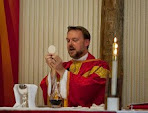
Sunday, October 30, 2011

Homily for The Festival of the Reformation (observed)

Due to an October Nor’ Easter, church was canceled and this sermon was not preached, thus, there is no audio.

Matthew 11:12-19; Romans 3:19-28; Revelation 14:6-7

In the Name of the Father and of the + Son and of the Holy Spirit.

We celebrate the Festival of the Reformation, not because of the birth of the Evangelical Lutheran Church, not because of the translation of the Holy Scriptures into the vernacular German, nor even because of the great deeds and bold confession of Martin Luther and other reformers, but we celebrate the Festival of the Reformation because of the eternal Gospel proclaimed to those who dwell on earth, to every nation and tribe and language and people. And the eternal Gospel is this: The righteousness of God has been manifested apart from the law, […] the righteousness of God through faith in Jesus Christ for all who believe.

Thus, what Luther and reformers both before and after him accomplished through their reforms served to strip away the layers of man-made law, tradition, and superstition that had enshrouded and obscured the pure Gospel message that men are justified, not by works and obedience under the Law, not by their personal piety and devotion, but by God’s grace alone through faith alone in Jesus Christ alone whom God put forward as a propitiation by His blood.

But the Gospel had become obscured long before the corruption known as indulgences had become normal practice. In fact, the Gospel had become obscured long before the Pharisees and the teachers of the Law began to layer their own laws and traditions upon the Gospel. In fact, the Gospel had become obscured long before the incarnation and birth of Jesus, long before Moses and the Ten Commandments, long before Abraham, Isaac, and Jacob, all the way back to at least Cain and Abel. In fact, from the moment that God first promised that He would send a Savior who would crush the serpent’s head and remove our guilt and the sting of death, man has striven to offer something of his own to God as payment for his sin and to reject the gift of grace that God Himself has provided.

The eternal Gospel proclaimed by the angelic messenger is exactly that, eternal. It is a message that was proclaimed before the foundation of the world and it is a message that remains unchanged then, now, and always, world without end: The hour of [God’s] judgment has come. When God sent forth His only-begotten Son to be subject to the Law that binds all men, to suffer and die to remove the guilt of all men, it was finished. All that was necessary to justify men before God was accomplished without any work, merit, or even faith from men. That is the eternal Gospel message proclaimed God’s angels, His messengers, be they angelic spirits, prophets, apostles, and evangelists, ministers and pastors in the Church of Christ, or even you, dear Christian, as you share this Good News with your neighbors in word and in deed. How beautiful are the feet of those who proclaim the Good News!

The eternal Gospel is extra nos, outside of us, and that is why it is Good News. Your justification does not depend upon you in any way. Your standing before God does not depend upon your good works. It does not depend upon your obedience to the Law. It does not depend upon your piety, your tithing, or your attendance at church. It does not even depend upon your faith, but it depends only, solely, and completely upon the Lamb of God Jesus Christ whom God put forth as the propitiation for your sins. If your justification were to depend on anything at all from you, then you could never know comfort or peace, for there would always be uncertainty that you have done enough or believed enough or given enough. If your justification were to depend on anything at all from you then there would be no Good News, no Gospel, but only the rigid, inflexible, and condemning Law of God that you cannot keep.

Yet, that is exactly what sinful man wants to believe, that there is some way in which we can justify ourselves. Whether you believe that Jesus died for your original sin so that you can pay God back for your actual sins or that you can purchase God’s forgiveness with tithes, prayers, or time, you are, in effect, saying, that Jesus, in His obedience, suffering, and death, did not do enough. You are saying that Jesus’ suffering and death was not sufficient to make you right with God. You are saying, “Thanks for the gift of Your Son, God, but that’s not enough, so here’s what I’ll give you to make up the difference.” Or, to put it another way, any gift that you have to earn, buy, or deserve is not a gift at all. If it’s not a gift then it’s not grace. And if it’s not grace, then you are still in your sins, bound under the Law, and condemned to eternal death and separation from God.

Jesus taught in our Gospel lesson that “From the days of John the Baptist until now the kingdom of heaven has suffered violence, and the violent take it by force.” That is to say that, while God desires to give men the kingdom of heaven for free, by grace, as a gift, men desire to take the kingdom of God on their own, according to their own terms. Indeed, the generation of men from the time of John the Baptist, even from the time of the Patriarchs, and yes, even from the time of Cain are dissatisfied with God’s plan of salvation, the Gospel “Good News” of Jesus Christ. This generation of men are like children who will not dance before a happy flute or mourn at the sound of a funeral dirge. They rejected John the Baptist because he did not eat and drink and they rejected Jesus because He did.

What is it that you tell God you will or will not do? What is it that you tell God He can or cannot do. What is it that you tell God and the whole world you will or will not believe? What part of His Good News do you reject and say, “That’s all fine and good, but it’s not enough?” Have you not heard that the foolishness of God is wiser than man’s wisdom? That God alone is God, and you are not? Indeed, that is the central doctrine of the Holy Scriptures and the First Commandment of the Law of God. It is meant, not to encourage you and embolden you to justify yourself, but it is meant to condemn you in your guilt so that you despair of self-justification. For, only when you confess that you cannot justify yourself can you truly receive grace for what it is, a gift – a pure, and perfect gift. And, when you do receive God’s grace as a pure and perfect gift, then He is glorified as just and the justifier of the one who has faith in His pure and perfect gift of grace, Jesus Christ.

There is a Latin phrase that says ecclesia semper reformanda, the Church is always being reformed. Indeed, this is most certainly true. The Reformation that we commemorate today began, symbolically, on October 31, 1517. But, in truth, it was but the rolling boil of a reformation that had begun much, much earlier, as faithful men of God, His holy angels and messengers, called men to repentance and proclaimed to them the one and eternal Gospel of our justification by grace through faith in Jesus Christ. It is the nature of sinful man to desire to justify himself, and thus, the Church is always, continually in a state of reformation. Today the Church of Christ needs reformation every bit as much as it did in 1517, and today God still raises up prophets and evangelists, angelic messengers to proclaim the Good News to those dwell on earth, to every nation and tribe and language and people. Indeed, God has raised you up for this purpose promising, “Whoever confesses me before men, him will I confess before my Father in heaven.”

There is no higher worship of God than to receive His gifts. And the most precious, pure, and perfect gift He has given is righteousness in His Son, Jesus Christ. Strive, not to please God by your works or to earn His favor by your words, deeds, and piety, but strive to not let anything or anyone obscure the eternal Gospel of justification by grace through faith in Jesus Christ, whom God put forth as a propitiation by His blood that He might be just and the justifier of the one who has faith in Jesus. Ecclesia simper reformanda, the Church is always being reformed; so too are all the members of the Church which is the body of Christ, that is you, dear Christians. Let every day of your God-given lives be a Festival of the Reformation in which you repent of your sins and receive God’s holy absolution by grace through faith in Jesus Christ.

In the + Name of Jesus. Amen.

Sunday, October 23, 2011

Homily for The Eighteenth Sunday after Trinity (Trinity 18)

(Audio)

Matthew 22:34-46; 1 Corinthians 1:1-9; Deuteronomy 10:12-21

In the Name of the Father and of the + Son and of the Holy Spirit.

When it comes to which is the greatest commandment in the Law, perhaps surprisingly, there is complete agreement between the Pharisees and Jesus. Indeed, the oft disparate Rabbi and the Pharisees agree: You shall love the Lord your God with all your heart and with all your soul and with all your mind. And you shall love your neighbor as yourself. Thus, when Jesus gave this answer to the lawyer who questioned him, the teachers of the Law had to be satisfied; Jesus gave the correct answer, just as any of them would have answered themselves.

Indeed, Jesus’ answer is agreed upon as true and good amongst all three of the great Abrahamic religions: Judaism, Christianity, and Islam. All three of the world’s greatest religions agree that the greatest commandment in the Law is that you should love God above all things and that you should love your neighbor as yourself.

Why, then, if they agree, did the lawyers and the Pharisees reject Jesus as God’s anointed one, the Messiah, the Christ of God? Why, then, if they agree, do both Jews and Muslims reject Jesus? Well, that is precisely the question that Jesus asked the Pharisees after He had correctly answered their question to Him concerning the greatest commandment of the Law. Jesus asked, “What do you think about the Christ? Whose Son is He?” For, your answer to that question reveals how you understand the Law of God. Indeed, your answer to that question reveals if you understand the purpose of the Law at all.

Jesus’ question is not a new question. In fact, it is a question that He seems to have routinely asked people. Indeed, it was a pivotal point in the Gospel when Jesus asked His disciples a form of this same question saying, “Who do people say that I am?” They said to Him, “Some say John the Baptist, others say Elijah, and others Jeremiah or one of the prophets.” Then Jesus asked them, “But who do you say that I am?” Peter answered, “You are the Christ, the Son of the Living God.” Jesus praised Peter for his bold confession saying, “Blessed are you, Simon Bar-Jonah! For flesh and blood has not revealed this to you, but my Father who is in heaven.”

But, what did Peter say that elicited such praise from our Lord? Peter confessed Jesus to be the Christ, the anointed of the Lord, and the very Son of God. That is precisely what the lawyers and the Pharisees did not confess the Christ to be. They answered that the Christ was the son of David, that is, a man, but they did not believe the Christ to also be the Son of God. What they were looking for in the Christ was a great and holy man, a great example of faith and obedience to the Law, a great rabbi or prophet, but not the Son of God.

They believed that the Christ would be a great leader and teacher who would show them how to fulfill the Law of God and be justified by their obedience to the Law. Because they strove so very hard to be obedient, naturally they looked down on others whom they judged to be less obedient, particularly notorious sinners, prostitutes, the sick and unclean, and other outcasts. They did not love these less-than-righteous and they believed that they were justified in their lovelessness because there was nothing in them meriting their love. And so, you can see how men who claimed to uphold the great commandment of the Law, to love God with all that they are and to love their neighbor as themselves, in actuality did not love their neighbor, and therefore they did not love God.

If the Christ were merely a man, even a perfectly obedient and sinless man, then we sinners would still be in our sin. We would still be bound under the Law to perfect and sinless obedience, and thus, we would stand condemned and consigned to death and hell. But, if the Christ were also the Son of God in human flesh, incarnate by the Holy Spirit of the Virgin Mary, crucified for us under Pontius Pilate, suffered unto death and was buried and on the third day rose again from the dead, then we are freed from the condemnation of the Law and we live in the grace, mercy, and loving forgiveness of God and can freely love our neighbors with His love, needing not to worry about our own standing before God.

To set the lawyers and the Pharisees straight, Jesus quoted the words of King David in Psalm 110, “The LORD said to my Lord, ‘Sit at my right hand, until I put your enemies under your feet’?” If this seems confusing to you, that is because, in our contemporary English, the two uses of the word “Lord” seem to be the same. However, in the original Hebrew in which the Psalm was written, the first “Lord” is the divine name of God, YHWH, or ADONAI which pious Jews would use to replace the divine name which they would not speak. Thus, what David has truly said is, “God said to my Lord, ‘Sit at my right hand, until I put your enemies under your feet’.” And so, the Christ, whom the lawyers and the Pharisees see only as the son of David, the son of a man, David himself calls his Lord. Further, this Lord of David is seated at the right hand of God to rule over all things. Clearly, the Christ is much more than the son of David, but He is the Son of God Himself.

Every single human being who lives, has lived, and ever will live knows the Law of God, for all of creation testifies to it and it is written on our very hearts. But the Law of God cannot save, but it only condemns. The Law of God causes us to despair of life and salvation because of our disobedience and unworthiness or it causes us to become puffed up with self-righteousness and pride believing that we are so much better than the disobedient sinners we see all around us. Thus, to believe in the Christ of God, even Jesus, as the best of men, the best at keeping the Law of God, a great example of piety, obedience, and faith is a no-brainer. Indeed, many believe Jesus to be a great moral and ethical teacher, but that does not make him any different than other great moral and ethical teachers such as the Dalai Lama, Mahatma Gandhi, or Mother Theresa. They are all men, they all sin, they all die, and none of them can save you. But, to believe that the Christ of God, even Jesus, is no mere man but the holy Son of God in human flesh, that is a truth revealed only by the Holy Spirit of God.

Jesus said that David confessed this truth “in the Spirit” just as did St. Peter of whom Jesus said, “Blessed are you, Simon Bar-Jonah! For flesh and blood has not revealed this to you, but my Father who is in heaven.” Likewise, as we near the end of this Church Year, we are building to the proclamation of the fullness of our confession, in the Spirit, that Jesus is the Christ, the Son of the Living God and the King of the universe who fills and sustains all things. And then, as we begin a new Year of Grace with the beginning of Advent, we will confess in the Spirit, once again, our Lord’s incarnation when the Word became flesh and made His dwelling amongst us and the Son of God became the Son of Man, even the son of David, the Christ. Blessed are the eyes that see what you see and the ears that hear what you hear.

In the + Name of Jesus. Amen.

Tuesday, October 18, 2011

The Feast of St. Luke, Evangelist

Acts 1:1-8; Isaiah 52:7-10; Psalm 96

In the Name of the Father and of the + Son and of the Holy Spirit.

St. Luke, the beloved physician and companion of St. Paul, addressed both the Gospel bearing his name and the Acts of the Apostles to an unknown Christian by the name of Theophilus. While many biblical scholars believe Theophilus to be a wealthy and respected Roman patron, some suggest that, given the catechetical nature of Luke’s Gospel and the Acts, it is likely that Theophilus, a name which means “lover of God”, is but a symbolic name and therefore suggest that Luke’s intended audience is actually all lovers of God seeking healing, life, and immortality in the Words and the Wounds of the Divine subject of his work, Jesus Christ, who is at once the very Medicine of Immortality and the Great Physician of both body and soul.

As it is, the combined works of St. Luke that are his Gospel and the Acts of the Apostles constitute more than one-third of the New Testament. Thus, it should not be surprising that many of the most beloved stories and accounts in the New Testament come to us by the hand of St. Luke. Some of these beloved stories include The Good Samaritan, The Prodigal son, The Rich Man and Lazarus, and the Pharisee and the Tax Collector. A common theme amongst these accounts is the paradoxical nature of the Gospel of Jesus Christ: Only sinners can be forgiven. Only the lost can be found. Only the dead can be raised. Indeed, though the Medicine of Immortality that is the forgiveness of sins in Jesus Christ is available to everyone, absolutely free, by grace alone, nevertheless, there will be those who deny that they are sin-sick unto death and thus will not receive it, be healed, and live.

For, the truth is, the Gospel of Jesus Christ is not received well by the world. It is resented. It divides people. It instills hatred and violence. It brings out the true colors of people – both those who repent and those who reject the preaching of the Gospel. This truth is illustrated in the life of St. Luke Himself, for tradition tells us that Luke was sent out by Jesus as one of the seventy-two preachers of the Good News and that he repeatedly suffered for the faith along with St. Paul. Indeed, Paul Himself says: “Luke alone is with me” – even as many abandoned Paul in his own suffering for Christ and the Gospel. And yet still, preachers are sent, the Gospel is proclaimed, and sinners repent and receive the Good News of the forgiveness of their sins. As so it is that, as the Prophet has proclaimed, beautiful are the feet of those who bring the Good News.

And, the Holy Gospel according to St. Luke is filled with the Good News of Jesus Christ. Perhaps Luke’s most beloved account is his telling of the Nativity of Our Lord. It is from St. Luke’s hand that we receive the stories of the Annunciation, the Visitation, the birth of Jesus, and of the shepherds quaking in fear at the angel’s announcement. And, from the first two chapters of Luke’s Gospel the Church has received four great canticles (songs) of faith: The Gloria in Excelsis, the Magnificat of Mary, the Benedictus of Zechariah, and the Nunc Dimittis of Simeon.

Additionally, a little known eastern tradition also claims that St. Luke was the first iconographer of the early Christian Church. That is to say that St. Luke was the first to write (or to paint) an icon of Our Lord Jesus and His Virgin Mother Mary, the Theotokos (God-bearer). Indeed, icons of St. Luke often portray him writing this first icon of our Lord. But also, St. Luke is depicted in iconography and in ecclesial art as a sacrificial ox or bull. This is because St. Luke’s Gospel so vividly portrays our Jesus as the atoning, sacrificial Lamb of God whose self-offering has taken away the sin of the world.

And so, on this Feast Day of St. Luke, we give thanks to God for the example of faith displayed in the beloved physician, learned scholar, gifted artist, and faithful preacher of the Good News who was chosen by our Holy God to reveal to us His Son that we might be turned from our sin in repentance and receive the Medicine of Immortality in the Words and Wounds of Jesus and then glorify God by sharing His love, mercy, grace, and forgiveness with others that they too might be healed and live and glorify God.

Therefore, let us pray with the Church of Christ of all times and in all places: Almighty God, our Father, Your blessed Son called St. Luke the physician to be an evangelist and physician of the soul. Grant that the healing medicine of the Gospel and the Sacraments may put to flight the diseases of our souls that with willing hearts we may ever love and serve You; through Jesus Christ, Your Son, our Lord, who lives and reigns with You and the Holy Spirit, one God, now and forever. Amen.

Sunday, October 16, 2011

The Seventeenth Sunday after Trinity (Trinity 17)

(Audio)

Luke 7:11-17; Ephesians 3:13-21; 1 Kings 17-24

In the Name of the Father and of the + Son and of the Holy Spirit.

The First Table of the Law, the first three commandments, establish our relationship with God: You shall have no other gods. You shall not misuse the name of the Lord your God. Remember the Sabbath Day by keeping it holy. In sum, you should fear, love, and trust in God above all things. Or, to put it another way, you are to love the Lord your God with all your heart, with all your soul, and with all your mind.

The rest of the commandments, numbered four through ten, establish our relationship with our fellow man, our neighbor. Thus, the Second Table of the Law can be summed up in this way: Love your neighbor as you love yourself. However, our obedience to the Second Table of the Law, our love of our neighbor, depends upon and flows from our obedience to the First Table, our fear, love, and trust in God above all things.

As it is, then, the Third Commandment, “Remember the Sabbath Day by keeping it holy,” serves as a transitional commandment from obedience to the First Table of the Law to obedience to the Second Table of the Law, for, the Sabbath Day of rest is a day to rest from the labors of serving one’s self that you might be freed to serve your neighbor. And, in God’s wisdom and by His design, in serving your neighbor, you serve and glorify God, thus placing your fear, your love, and your trust in Him above all things and loving your neighbor as yourself.

This understanding of the purpose of the Sabbath Day, a day of rest from self-service that you may be freed to serve your neighbor, serves to illumine the merciful healing Jesus performed on the particular Sabbath Day depicted in our Gospel lesson. Jesus celebrated that Sabbath with a group of Pharisees at the house of a ruler of the Pharisees. These teachers of the Law still respected Jesus and considered Him one of their own, but Luke is certain to point out to us that they were watching Him carefully. Coincidentally, or not, Luke tells us that a man suffering from dropsy, a retaining of water in the tissues of the flesh known today as Edema, appeared before Him. Luke’s use of “Behold,” seems to indicate the surprise nature of this man’s appearance. Perhaps, however, it was no surprise at all, but the man was intentionally brought into the house to see what Jesus would do. Why else would this unclean man be in the house of a ruler of the Pharisees? Thus, Jesus responded to the lawyers and Pharisees and He asked them a question in accord with what He knew they were thinking in their hearts, “Is it lawful to heal on the Sabbath, or not?” But they remained silent.

Remember the Sabbath Day by keeping it holy. That’s what the Law of God commands. But, how did the Pharisees and the lawyers interpret this Law? Well, from other Sabbath encounters with Jesus recorded in the Gospels, it is apparent that they interpreted the Law by the letter without understanding the spirit of the Law at all. If Jesus would heal this man with dropsy on the Sabbath, then, they concluded, He could not be the Prophet or the Messiah for, in their eyes, He would have broken the Law. Their answer to Jesus’ question would be, “No, it is not lawful to heal on the Sabbath.” However, they knew that they couldn’t say that, right? So, they remained silent. They would watch and see what Jesus would do (as if they didn’t already know). Then, they would go and stir up the people and bring charges against Him before the Sanhedrin.

So, Jesus took the man and healed him and then sent him away. And, then He said to the lawyers and Pharisees, “Which of you, having a son or an ox that has fallen into a well on a Sabbath day, will not immediately pull him out?” Once again, they could not answer Him a word. They couldn’t answer Jesus because they knew that He was right. They would, immediately and without hesitation, help out their son or beast of burden that was in need. However, Jesus knew that they would object to His Sabbath healing of the poor man suffering from dropsy. But, why?

It is because they know the letter of the Law, but they do not know the spirit of the Law. Further, in their attempt to obey the letter of the Law they disregard the First Commandment, that is, they do not fear, love, and trust in God above all things. Oh, they fear God, but they do not honor Him and revere Him, they do not love God, but they fear Him as tyrant and as a merciless lord. They do not trust in His promises of mercy and grace. Therefore, the Law of God is a rigid rule placing burdensome, impossible demands upon them. Since they know that they cannot possibly obey, they have to water them down and make them more doable. Then they could stand up with pride before others and boast of their holiness and piety. Additionally, in their denial of grace and mercy they would use the Law of God against people, adding their own laws to it, so that they appeared all the more deserving of honor and praise while imprisoning others, along with themselves, under the Law’s judgment. The lawyers and the Pharisees would not lift a finger to help someone in need because they interpreted the Law of the Sabbath only in terms of what they must do to merit God’s favor. God said to rest and not to work. So they rested and they would not help someone in need, and they were ready to condemn anyone who would. But their hypocrisy is exposed by Jesus’ question, “Which of you, having a son or an ox that has fallen into a well on a Sabbath day, will not immediately pull him out?” And they could not reply to these things.

What the lawyers and the Pharisees could not understand and did not believe was the spirit of the Sabbath Law. The day of rest was meant to be a day of rest from self-serving activities, working to earn a wage, working to earn merit with God, so that one could be free to selflessly serve others and to glorify God. Their eyes were blind to the spirit of God’s Law. They could not see that the letter of the Law meant their death, thus they could not see that only by surrendering to the Law and being crushed by it, only by dying, could they be raised to new life in God’s mercy and grace. No, the lawyers and the Pharisees had constructed a law unto themselves, their own rules, their own morality, where they were the judge of right and wrong, good and evil, and by their law they judged themselves good, and they judged Jesus to be evil. They abhorred Jesus’ disregard for the law as they imagined it. They abhorred the mercy and grace that He showed to unclean, diseased, and demon-possessed sinners. Jesus literally turned the tables of the Law upside down and showed that the only fulfillment of God’s Law is love – love toward God and love toward your neighbor.

The letter of the Law is meant to expose your selfishness, how you are turned in to yourself and are motivated by selfish desires and passions. But the spirit of the law frees you from obedience to the Law in order to earn or merit God’s favor. In His Law God says to you, “There is no hope of earning or meriting My favor. There is nothing that you can do to remove your sin. You are spiritually dead, cut off, like a branch withering by the roadside. But take heart and be comforted, I love you, I have always loved you, and I will take away your sin, and I will die your death, and I will give you My life. I will draw you into Me and you will be My people, and I will be your God. In Holy Communion with Me, you will love with My love, you will give with My gifts, and you will forgive with My forgiveness. I will restore in you My image, and they will know that you are Mine when you have love for one another.”

Selfishness and self-interest is the very opposite of love. One who thinks only of his own wants, needs, desires, and passions cannot consider the needs of others. The lawyers and the Pharisees need not to worry about breaking the letter of the Law if they would only act in love. As St. Paul has written, “against such things there is no law.” Symbolically, the self-centered will always choose the best seats at a banquet and the place of honor. They are motivated by an ungodly standard of measurement, a law of men that values such things. They are concerned only with themselves and their own honor and glory. But the one who lives by the spirit of the law is concerned with elevating others and will take the lowest position for themselves, being thankful to be at the banquet at all. Jesus concludes His teaching saying, “everyone who exalts himself will be humbled, and he who humbles himself will be exalted.”

Remember the Sabbath Day by keeping it holy. Find rest from your labors in God’s mercy and grace and be freed to serve your neighbor in selfless love and thus glorify God. As the Lutheran Confessions state, the highest worship of God is to receive His gifts. For, only by receiving from God do you have something to share. You can give to others only of what God has given to you. You can be merciful to others only as God has been merciful to you. You can forgive others only as God has forgiven you. And, only by finding your rest in the Lord from having to earn or merit His favor can you be truly refreshed and equipped to serve others and truly worship and glorify Him.

Today is a day of rest. “Come to me, all who labor and are heavy laden, and I will give you rest,” says your Jesus. Here, at the altar this day, and in His Word and Absolution, is the rest that you need and the rest that your soul craves and desires. Here is the merit of Jesus’ labor and the fruit of His work which is finished. “Come, everyone who thirsts, come to the waters; and he who has no money, come, buy and eat! Come, buy wine and milk without money and without price,” says the Lord. Ask not what you must do, but only receive what He has done.

In the + Name of Jesus. Amen.

Sunday, October 9, 2011

Homily for The Sixteenth Sunday after Trinity (Trinity 16)

(Audio)

Luke 7:11-17; Ephesians 3:13-21; 1 Kings 17-24

In the Name of the Father and of the + Son and of the Holy Spirit.

The scene is descriptive. You can picture it in your mind with supreme clarity. A funeral procession is winding down the hillside away from the walled city on a hill. Men are carrying the body of a young man upon a bier. A great crowd follows, wailing in grief and sorrow because a young man is dead and a young mother is widowed and childless. No one can do anything to change the situation. No one can offer any real comfort. It is an utter tragedy, senseless and inexplicable. But it is real. It is all too real.

But, by chance, there was another procession that day, one approaching the walled city on a hill. In this procession, no one is wailing in grief and sorrow and no one is dead. In fact, the great crowd was dancing and skipping and shouting out in joy and laughter, and the one leading the procession is the Lord of Life Himself, Jesus. The great crowd accompanying Jesus had heard his teaching in the Sermon on the Mount and had followed Him through the region of Capernaum as he healed the sick and cast out evil spirits. They had witnessed Jesus’ power and authority in releasing all manner of men from their captivity to sin and death. Now they would witness Jesus’ power and authority over death itself.

Jesus’ saw the grieving mother from a distance and He had compassion for her. You must understand that He did not simply feel bad for her, but He was filled with gut-wrenching compassion for her in her lostness and the real and necessary wages of sin, death, that had been paid out to her young son and her husband before him. Jesus said to her, “Do not weep,” for the weeping, the grief and the sorrow, would be borne by Him. And then He reached out and touched the bier, for the uncleanness of sin and death would be borne by Him as well. But the real miracle was in His Word, as it always is, “Young man, I say to you, arise.” “And the dead man sat up and began to speak, and Jesus gave him to his mother.”

The scene is descriptive. You can picture it in your mind with supreme clarity. Martin Luther once put it this way in his hymn Christ Lag in Todesbanden (Christ Jesus Lay In Death’s Strong Bands): It was a strange and dreadful strife when life and death contended; the victory remained with life, the reign of death was ended. Holy Scripture plainly saith that death is swallowed up by death, its sting is lost forever.

Death is all too real. In a sense, we are all part of that funeral procession winding down the hillside away from the Garden of Eden. There the poisonous venom of sin first entered our First Parent’s veins. Now it flows through the veins of all of us who live and breathe and die. That day it was a young man who received his wage in death, tomorrow it is an old man, the day after a wife and mother, and the day after that a newborn child. But, the young man that day represented the best of us, alive in health and vigor of youth, all the world open to us and ripe with potential and possibility. But he was taken by death, the inarguable due wage we all earn for sin. If that young man cannot escape death, then what hope is there for any of us?

On our own, left to our own devices, there is no hope. We are dead. Even while we live, we live each day in the knowledge that death is coming, sooner or later, at a time we cannot know. There is no hope…, until we set our eyes on Jesus. When we lift up our eyes out of this life and world of death, the trappings of worldly idolatries and corruption, when we admit that we are dead, or at least the living dead, and lift up our eyes, then we can see Jesus who has come, and who comes to us now, as the Lord of Life, our Redeemer and Savior.

Jesus has compassion, gut-wrenching compassion, on you in your grief and sorrow, your sin and death. And He does the unthinkable, the unimaginable, and the incredible – He touches your bier. He takes your sin, He takes your uncleanness, He takes your death upon and into Himself. He didn’t raise the dead boy to life until He first took from him that which caused his death. Jesus didn’t cast death away, He took it into Himself, He swallowed it up as scripture plainly saith. He drank your cup of poison for you, to the bitter dregs, so that you could live. He sucked the poisonous venom from your wounds and He became what you are, the living dead, so that you could become what He is, truly and eternally alive.

And, just as that dead young man represented the best of us, doomed to die despite how alive we believe ourselves to be, so Jesus has become the living man for all of us so that in and through Him we are alive now and we will live, even through death, forevermore. Jesus is our true Adam, in whom we are all one, who has defeated death by dying for you, His Eve, His Bride. When faced with the serpent’s temptation He overcame by the Word of God and faith. And when you were threatened by the devil, Jesus, our Second Adam, took the serpent’s bite Himself. He laid down His life in love, unto death, for you.

Life died that you might live. Life died for you, young and old and newborn. The Bridegroom died that His Bride might live. But the victory remained with life, the reign of death was ended.

The funeral procession that day was heading to the tomb, and nowhere else. There was no expectation of encountering Life; there was no hope that anything or anyone could change that hopeless situation. But, when Jesus came, incarnate in human flesh, when Jesus came as a man, that changed everything: The Son of God became the Son of Man. The highest in God’s glory divested and humbled Himself and became the lowest. He who was sinless was made to be sin for us. He who is Life became obedient to death, even death on a cross.

The great crowd that followed Him did so because they saw in Jesus power and authority over all manner of disease and evil spirits. And when Jesus met that somber funeral procession, they witnessed His authority over death itself. But His power and authority did not come simply from might or will, but Jesus had power and authority over sin and death because of His perfect and obedient fear, love, and trust in God His Father above all things and because of His perfect and obedient love for all men. Jesus bore the fruit of the Spirit which is love, joy, peace, patience, kindness, goodness, faithfulness, gentleness, self-control; against such things there is no law.

In Jesus, people began to turn from fear, hopelessness, and despair to faith in God’s promises finding their fulfillment in Jesus. And so, they followed Him, they listened to His teaching, they witnessed His miracles, they told others, and ultimately, they brought their sick and their dying, their demon-possessed loved ones, and they brought their children to Jesus that He might touch them with His holy hands and speak His life-creating Word of blessing upon them, that He might raise them spiritually, and physically, from death to His eternal life.

In a similar way most of you were brought to Jesus in Holy Baptism. And, in a similar way many of you have brought your own young sons and daughters to Jesus in Holy Baptism. There beside the still waters, through the hands and the voice of His undershepherd, Jesus touched you with His holy hands and Jesus spoke His life-creating Word of blessing upon you. In Holy Baptism the procession of death was met head-on by Jesus’ procession of life in a strange and dreadful strife, but the victory remained with life, the reign of death was ended. In Holy Baptism Jesus has touched you with His holy hands and has spoken His Life-creating Word of blessing upon you, “Young man, I say to you, arise.” And, as it was in the beginning, so it is now, His Word brings into being what He says. And then, Jesus returned you to your Mother, the Church.

Yes, we all have the same Mother, for there is one body and one Spirit – just as you were called to the one hope that belongs to your call – one Lord, one faith, one baptism, one God and Father of all, who is over all and through all and in all. We all have the same Mother, the Bride of Christ, the Church, which is one body, and of which Christ is Her Head. As the Fathers have taught us, extra ecclesiam nulla salus, there is no salvation outside of the Church. There cannot be salvation or life outside of the Church, for the Church is the body of Christ and there is no salvation outside of Him. We are saved by His humble and obedient perfect life, death, and resurrection, not merely in an external and objective way, but we are saved by being grafted into Him, born again from His death into His life, living in, to, and from Him in selfless, sacrificial love and service to our neighbor, especially those of the one body of faith, the Church. And if we would bring people to Jesus that He might touch them with His Holy Hands and bless them with His life-creating Word, then we must bring them to where He is present with His Words and His Wounds to heal and to bestow life and to bless; we must bring them to where He is present with His body as Her Head; we must bring them to Holy Baptism, we must bring them to Confession and Absolution, we must bring them to the Word of God preached, we must bring them to the Word of God confessed, we must bring them to the Word of God eaten and drunk, that is, we must bring them into Holy Communion with the Lord and Giver of Life, Jesus Christ, to whom be glory with the Father and the Holy Spirit now and forevermore.

In the + Name of Jesus. Amen.

Sunday, October 2, 2011

Homily for The Fifteenth Sunday after Trinity (Trinity 15)

(Audio)

Matthew 6:24-34; Galatians 5:25 – 6:10; 1 Kings 17:8-16

In the Name of the Father and of the + Son and of the Holy Spirit.

Everyone has a master, and most of us have many masters; but, nonetheless, everyone has a master. As Americans, however, we don’t like to think that way. We don’t like to think of our boss as a master and we don’t like to think of our possessions as a master. But, we do like to think of ourselves as masters of ourselves. Indeed, the American dream is to work hard, to earn a respectable wage for your labor, to purchase for yourself a home and a car and to put food on the table for yourself and for your family. We think that at the end of each eight hour day a man ought to be able to sit at the dinner table with his wife and his children and say “Life is good. I’m the master of my house. I have built for myself a family, a home, and a life. I am the king of my castle. Life is good.” But, we deceive ourselves. We are not kings unto ourselves and neither are we masters of ourselves. And yet, everyone has a master, and most of us have many masters, but, everyone has a master.

What it comes down to is this: You cannot serve God and mammon. Yes, I know that many Bible translations say money, and that’s a fair translation, but the Greek word is mammon and it denotes much more than just money. Mammon is all manner of material wealth and possessions. Further, the connotation of the word mammon is negative: lust, greed, and avarice. In the New Testament, mammon is often personified as a false god that is worshiped by men in their lust, greed, and avarice and in their anxious worrying about acquiring and preserving material wealth and possessions.

You cannot serve God and mammon. And you cannot, despite what you think and feel, you cannot serve two masters, for either you will hate the one and love the other, or you will be devoted to the one and despise the other. You cannot serve God and mammon. Whether you are a willing servant of your master or an unwilling slave, it doesn’t really matter, for, either way your master is he (or it) that you depend upon for your life and for your livelihood, and thus you fear him (or it), and you trust in him (or it), and maybe you even love him (or it). And so, you cannot serve God and mammon, and you cannot have two masters, for, if your master is not the true and only Triune God, and if it is not He alone that you fear, love, trust, serve, and worship, then your master is the false god mammon and you are an idolator who worships that which has been created rather than the One who has created all things.

We Americans cherish our freedom, but we deceive ourselves, for we make ourselves to be slaves to the false god mammon. We worship mammon by fearing the loss of our material wealth and possessions, by loving our material wealth and possessions, and by trusting in our material wealth and possessions for safety, health, and happiness. But who amongst you has not felt at times that the things you possess, in truth, possess you? Who amongst you cannot relate to the idea expressed in that anti-drug commercial on tv several years ago where the cocaine-addict dialogues with himself saying, “I do coke so I can work longer, so I can earn more, so I can do more coke, so I can work longer, so I can earn more, so I…, so I…, so I….”? Particularly in this time of economic uncertainty, three years now into a recession, when fuel prices and food prices keep going higher and the stock market keeps going lower, when your personal income has plateaued, if you managed to keep your job at all, and the cost of everything you need and want keeps climbing higher and higher, people are afraid and they are worried and they are anxious about tomorrow. Well, when you fear, love, and trust in mammon, that is what you are left with – fear, worry, and anxiety. You are servant and a slave of a false god that cannot hear you or answer your prayers, that cannot comfort you, relieve your fear, worry, and anxiety, or add an hour to your life.

When you worship the creature you cannot worship the Creator; you cannot serve God and mammon. Mammon makes you a slave to material wealth and possessions. You are in chains to these because you can only be concerned with acquiring more and protecting what you have. Mammon keeps you incurvatus in se, turned inward to yourself, therefore you are not, and cannot be, concerned about your neighbor. In contrast, the true worship of the true God frees you from these chains so that you are not worried and anxious about food and drink, house and home, clothing and shoes, and all other material and bodily needs because you recognize that God provides all these out of Fatherly divine goodness and mercy without any merit or worthiness in you. Only by serving God alone as your master are you freed to live and love without fear, worry, and anxiety and to love your neighbor freely and without coercion. And, in serving your neighbor, you serve your God – not the false god of material wealth and possessions, but the true God who lovingly provides you with all that you need to sustain your body and life now and forever.

God has made you and all creatures and still takes care of them. He provides for the birds of the air and the lilies of the field which are here today and gone tomorrow, and you are much more precious to God than they. And God provides for the Gentiles and unbelievers as well as you, but how much more will you receive if you seek first the kingdom of God and His righteousness? All the things of creation are passing away. The money you work so hard to earn is worth less today, and less still tomorrow, than when you earned it. The car, tv, computer, and appliances you purchase today will last five to ten years, but they will be out-of-date and out-of-style long before that. The clothes that you wear get a little thinner and less beautiful with each wear and wash. Your home needs constant repair and maintenance and still it slowly decays. And need I remind you of your body and your health? No, you know the transient nature of the flesh well enough. Like the prophet has spoken: All flesh is grass, and all its beauty is like the flower of the field. The grass withers, the flower fades when the breath of the LORD blows on it; surely the people are grass. The grass withers, the flower fades, but the word of our God will stand forever.

But your Father in heaven, your Creator and God, has not created you to wither, decay, and die; that was not God’s will for you, but Satan’s will for you. Rather, God has created you for life, eternal life in communion with Him. You were conceived and born in sin, and the wages of your sin is death, thus, you die. But in Holy Baptism, your sin-corrupted spirit has already died and has been raised to new life in Jesus Christ. Your new spirit, your new man, knows his God, fears, loves, and trusts in his God and therefore loves his neighbor as well. But your flesh, well, that’s a different matter altogether. The flesh is still corrupted by sin and it will die. But it too will be raised in the resurrection of the dead on the Last Day. Until then, however, God has called you to live and to walk by the spirit, bearing one another’s burdens, sharing all good things with one another, and doing good, especially to those of the household of faith. To live according to your corrupted flesh is to serve mammon and to worship mammon in fear, worry, and anxiety. But to live according to the spirit is to live Christ’s holy life in thought, word, and deed, to know the Truth incarnate and to be truly free. If you abstain from your fleshly desires and passions and seek first the kingdom of God and His righteousness, all that you need to support your body and life will be added to you and you will be content and at peace, which is unspeakably better than the fleeting pleasures and peace that the world and material wealth and possessions can give.

And, as the flour and the oil belonging to the widow of Zarephath was not depleted or spent, but nourished those of her household throughout the prophet’s stay, so even now, where God is feared, loved, and trusted above all things, these simple elements of mammon are pressed into bounteous service in bread, which is Jesus’ body that you may eat and be of one flesh with Him, and in simple wine, which is Jesus’ blood shed for you for the forgiveness of your sins. Likewise, the oil of the Holy Spirit has christened you to be God’s own beloved child in Jesus Christ so that you are clothed in raiment more glorious than that of Solomon, the holy and perfect righteousness of God’s own Son, our Savior Jesus Christ. For, you are of more value to God than anything else in the world that He has made. May He, likewise, be of the greatest value and of love to you.

In the + Name of Jesus. Amen.

Sunday, September 25, 2011

Homily for The Fourteenth Sunday after Trinity (Trinity 14)

(Audio)

Luke 17:11-19; Galatians 5:16-24; Proverbs 4:10-23

In the Name of the Father and of the + Son and of the Holy Spirit.

There were ten lepers. All ten were healed. But, one leper returned to give thanks to God. Now, you, go and do likewise. Amen. Have you heard that sermon before? I know I have. I’ve probably even preached that sermon before. And, to be sure, there’s a bit of that teaching in the story of the ten lepers. However, if that is all that you take away from Jesus’ teaching today, then what you will have received is but a nice lesson in morality, a teaching in the Law that says to you, “You, go and do likewise,” a command that you do not and cannot keep, but you will have missed out on the rich and profound Gospel that Jesus would lavish upon you today. For, the story of the ten lepers is about thanksgiving only in a secondary, or even a tertiary, way. But what the story of the ten lepers is truly about is finding life in death.

For, the ten lepers in the story were dead. Because of the disease which ravaged their skin and made them unclean, they were dead to their families, they were dead to their friends and their community, they were dead to all manner of livelihood and providence, and they were dead to worship and prayer and making the necessary sacrifices at the temple. In fact, their flesh was literally dead and dying, for leprosy is a disease caused by an infection which deadens the skin to feeling, particularly pain. Thus, lepers would accidentally cut, tear, and puncture their flesh without knowing and the wounds would become infected. In some severe cases, lepers became living, stinking, decaying, corpses of men.

But, what should get your attention immediately in this story is Jesus’ response to the lepers’ cry for mercy. Jesus doesn’t acknowledge their leprosy, He doesn’t wave His hands or touch them or do anything physical at all, He doesn’t even give them His typical “I am willing, be healed,” but He tells them to go and show themselves to the priests. Now, showing one’s self to the priests is what the law required after one had been healed from leprosy. A healed leper must show himself to the priests in order to be pronounced clean and thus restored to their families, communities, and the rites of the temple. But Jesus didn’t heal the lepers. Rather, He instructed them to go, in their leprosy and uncleanness, and present themselves to the priests. What must they have been thinking? What would happen when they appeared before the priests? Wouldn’t they be sent away in disgrace, maybe even arrested, or worse?

Nevertheless, away they went. What faith they must have had in Jesus to go, in their leprosy, to show themselves to the priests as He commanded? Yes, it appears that all ten lepers trusted in Jesus despite what their eyes and their ears told them. I posit to you, however, that these ten lepers could only place such faith in Jesus because they were effectively dead to this life and this world. That is to say, they had nothing to offer, they had nothing to boast of, they had nothing to fall back on, therefore they had nothing to lose. The ten lepers were so lost that they had nothing to lose by trusting in Jesus with all their heart, all their soul, and all their mind. They were brothers in faith with both the Good Samaritan of last week’s Gospel and the man left half-dead in the ditch. Did they know that they would be healed on the way? I don’t think so. But, you see, it didn’t matter! They couldn’t be any worse off by trusting Jesus and obeying His command. What, would they become even more leprous, more cut off, more dead than they already were? No, of course not.

But, then the story takes a turn. As the ten lepers journeyed to show themselves to the priests, all ten were cleansed and healed. Then, one leper, when he realized that he has healed, returned to Jesus and fell at His feet giving thanks and praising God. Presumably the other nine continued on their way to show themselves to the priests and return to their lives and livelihoods. And therein lies the crux of the story. Jesus doesn’t raise the dead so that they can return to their old way of life, living to themselves and to the flesh and the world, but Jesus raises the dead to live a new life in Him. All ten lepers believed and trusted in Jesus. All ten lepers went at Jesus’ command to show themselves to the priests despite what their own eyes and ears told them. But when they discovered that they were healed and clean once again, nine of the cleansed lepers thought to themselves “Hallelujah! I’m free! Now I can get back to living once again!” But, the one leper realized that, despite his healing and being made clean, he was still a leper – a cleansed leper, to be sure – but a leper nonetheless. That is to say that his cleanness and his healing was because of, and dependent upon, Jesus, even still. Alone, he knew that he was nothing, that he was dead in his sin and uncleanness. But in Jesus alone, and still, was he clean and whole. And, because of this, the cleansed leper returned to Jesus and laid down his life before Him, thanking Him and praising God. He would not return to his former life, for, there was no former life to return to. Only by confessing his deadness could he receive and live a new life, Jesus’ life, in the world but not of the world.

You see, to understand the story of the ten lepers as a story about giving thanks is really to miss Jesus’ point altogether. As wonderful and precious to God as thanksgiving is, thanksgiving is but a fruit and a response to the even greater and more precious thing that has happened, which God Himself has worked, faith itself, bringing life out of death. The thankful leper returned to Jesus because he knew that he was alive, in every way that you can understand that word, in, through, and only because of God’s Word in Jesus Christ. Now, I’m fairly certain that the other nine lepers were very thankful for their healing and cleansing too. But the difference is that they thought that they had been raised from death to live a life like their old life, to continue to love all the same things they used to love and to desire all the same things they used to desire, to live as if this life were our own to do with as we please in amassing possessions and pleasures and platitudes and power. In contrast, the thankful leper knew that he shouldn’t be alive at all, thus the life he lived, he lived to Christ, and his death was, and is, and will be, only gain.

But, are you not often more like the nine healed lepers who did not return to give thanks than you are like the one leper who returned and fell at Jesus’ feet? Do you not treat your forgiveness as the beginning of a new life, a second chance to go forward and live a better life in this world much like the life you had before you believed? Do you give thanks for the mercy and forgiveness shown to you, for the life given you, or do you take that for granted? How have you lived differently from when you first believed? How have you lived differently from when you last received absolution?

Do these questions make you uncomfortable? Good! They should, for that is the Law of God reflecting how far you fall short of what the He in His Law demands. That is why you should focus much less on the giving thanks in this story and much more upon the deadness of the leper who returned. For, the leper who returned was truly grateful because he realized how dead, how truly lost he was, and he realized how found, healed, and alive he was made to be. Likewise you are found lost sheep, healed and cleansed lepers, and raised dead. That is to say that you always live in Christ as forgiven sinners and that you carry your failings, even after mercy and forgiveness, as glorious scars. Along with the thankful leper at Jesus’ feet you may see yourself whole: dead and risen, an outcast and accepted, a leper and cleansed.

Ten lepers received life that day two thousand years ago, but only one recognized that the life He received was Jesus’ life. Nine of the lepers understood their new life as a second chance to try do better. Only that one leper was willing to confess that he was still dead, still a leper and an outcast, but that, despite this, by grace alone, he was blessed to live a new life that was not his own, not merely a second chance to better himself, but a chance to live to Christ and in Christ, and through Christ to his neighbor.

The Samaritan leper returned to give thanks to Jesus and to praise God. This was not the first work of his new life but it was the first fruit of his death. Only those who are truly dead to themselves can bear the fruit that the True Vine Jesus causes them to bear. One of those Christ-borne fruits is thankfulness, but the first fruit to be borne in death is faith itself. You are carried to Jesus as helpless infants. You are found by Jesus as lost sheep. You are raised by Jesus out of death. And you are restored by Jesus to sonship with the Father even though you are prodigal sons and daughters. And, as St. Paul teaches, the fruit of the Spirit is love, joy, peace, patience, kindness, goodness, faithfulness, gentleness, self-control – against such things there is no law. And those who belong to Christ Jesus have crucified the flesh with its passions and desires and have died to themselves, for whoever would save his life will lose it, but whoever loses his life for Jesus’ sake will save it.

For you to live is Christ and to die is gain, for, Christ and His Word are life to those who find them, and healing to all their flesh. And, your Jesus, who is Himself alive out of death is present for you now in His life-giving Word and healing Wounds for the forgiveness of your sins, the strengthening of your faith, and for your communion in His holy and perfect life. Return to your Great High Priest who has raised you from death to His most glorious life and has washed you clean in His precious blood. Give thanks to Him in this Holy Eucharist and live in Him who is life today, tomorrow, and forevermore.

In the + Name of Jesus. Amen.

Sunday, September 18, 2011

Homily for The Thirteenth Sunday after Trinity (Trinity 13)

(Audio)

Luke 10:23-37; Galatians 3:15-22; 2 Chronicles 28:8-15

In the Name of the Father and of the + Son and of the Holy Spirit.

The Gospel lesson assigned for this day is the so-called Parable of the Good Samaritan. I imagine that about half of you will soon tune me out and begin thinking about today’s football game, where to have lunch, or what you need to pick up at the grocery store because you’ve heard this parable many times before and you believe that you understand it well enough. But I say to you, you’ll want to pay attention to this sermon today, for I venture that you haven’t heard it taught quite this way before.

As for the other half of you, I imagine that you will be listening extra attentively today because you love this parable and you receive a considerable amount of comfort in believing that you imitate the Good Samaritan in the parable pretty well and thus obey Jesus’ command to “Go, and do likewise”. But I say to you, you’ll want to pay attention to this sermon today, not because it will confirm you in your justification by works, but because it will teach you how to receive and to give grace.

For, this so-called Parable of the Good Samaritan is not a parable of the Law and judgment, nor is it a lesson in morality concerning how you should treat others, but it is a parable of grace – free and boundless grace. And, contrary to popular opinion, the so-called Parable of the Good Samaritan is not really about the Samaritan at all, but it is about the naked and beaten half-dead man lying in the ditch.

No, the parable is not about the Law, for the Law cannot help you. The Law must, and will always, leave you alone, naked, and dying in a ditch. The Law cannot help you. That is why the Priest and the Levite pass by on the other side of the road. It’s not necessarily that they don’t want to help you, maybe they don’t, but they probably do. Either way, it doesn’t matter, because they represent the Law and they can’t help you. They can’t even help themselves.

And there’s the crux of the situation: Because of the Law, we are all like the poor fellow in the ditch, wounded, bleeding, dying, and utterly alone with no ability to remedy our situation. If we’re going to get out of the ditch, be bandaged up, healed and restored to life, someone’s going to have to help us, someone’s going to have to lift us up out of the ditch and carry us and care for us at their own expense. Thus, the crux of the situation is this: Do you confess that you are the man in the ditch? Do you confess that you are dead in your sins and trespasses, unable to change your dead and sinful condition? Do you depend and trust upon the grace and mercy of God in Jesus Christ to step into your sin and death and to raise you up to new life? Or, do you insist upon your self-righteousness and good works, believing that you are not dead in your trespasses, but that there is at least something about you that makes you better than others and more worthy in the sight of God? That is to say, do you identify with the good, pious, and self-righteous Priest and Levite? Or, do you identify with the selfless Good Samaritan? I say to you today, it doesn’t matter, either way you remain in your sins. For, the Law cannot help you. And, no works, no matter how good they may be, no matter how pure and selfless your motives may be, no works can save you from sin and death. No works can raise you from the ditch of the grave to new and eternal life. Only Jesus can do that. And Jesus has done that, not because He was the Good Samaritan and was better than most, but because He became what you are, the man in the ditch, and He died your death and God the Father raised Him to life because He loves Him, because He laid down His life for you.

Now, I recognize that this is a somewhat unorthodox treatment of the so-called Parable of the Good Samaritan, but I make no apologies for that. For, despite what you’ve heard, despite what I’ve heard, Jesus is not teaching you in this parable to imitate the Good Samaritan when He says to you, “You go, and do likewise.” Rather, Jesus commands you to imitate Him and Him alone. Yes, Jesus did indeed act like the Good Samaritan many times throughout His life and ministry. Yes, He most certainly did step down into the ditch with unclean sinners with absolutely no concern for himself and lift them up, care for, and heal them. But Jesus never saved anyone by His selfless acts of kindness anymore than you can save anyone, even yourself, by imitating the Good Samaritan. Rather, Jesus saved the man in the ditch, and Jesus saved you and all men, by becoming what you are, by becoming that man who fell among robbers, who stripped him and beat him and departed, leaving him half dead. And it is that kind of selflessness, it is that kind of good works that Jesus calls you to imitate and to go, and do likewise.

For, the way of Jesus is not the way of good, pious, or even gracious and merciful works, but the way of Jesus is the way of death and resurrection. Jesus came to save sinners, and only sinners can be saved. Jesus came to seek the lost, and only the lost can be found. And Jesus came to raise the dead, and only the dead can be raised. In fact, Jesus Himself exemplifies the least amongst men, the poorest amongst men, the weakest amongst men, the most pitiable amongst men, and the most unrighteous amongst men as men and the world count these things. He came from the heights of the heavenly Jerusalem into the ditch of our Jericho and there He fell among robbers, who stripped him and beat him and left him half dead upon the cross. But He did this willingly, He did this selflessly with no concern for Himself and His own well-being. He had everything to lose and He willingly lost it all for you.

Now, what keeps you from going and doing likewise? Is it not that you believe that you do have something to lose? Is it that you have your money to lose? Your health? Your reputation? Your life? What is it that you love more than you love God? What is it that you love more than love your neighbor? Jesus invites you to lose it. Jesus invites you to become a loser like Him. For, Jesus’ “You go, and do likewise” is not a command of the Law, but it is an invitation to receive grace like the naked, half-dead man lying in the ditch. When Jesus says, “You go, and do likewise,” it is tantamount to the call, “Take up your cross and follow me.” No, this is not a parable meant to inspire us to go out and do good and then feel good about ourselves because we have been good neighbors. This is a parable about entering the way of Christ.

In baptism you died with Jesus and in baptism you have been raised with Jesus. The life you now live is His life and you live it to God and to your neighbor. Jesus sends you out to your neighbor as lambs in the midst of wolves, that is, He sends you out to die to yourselves for the sake of your neighbor. He has not called you to good works. He has not called you to virtuous worship. He has not called you to outward piety. But He has called you to die with Him and to live with Him in selfless, sacrificial service.

As St. Paul writes in today’s Epistle, “promises were made to Abraham and to his offspring.” One of those promises was that an heir of Abraham’s own flesh would inherit the blessing of the covenant God made with Abraham that in him all the nations of the world would be blessed. Abraham believed God and God counted it to him as righteousness. Thus, Paul writes, the righteous will live by faith. When you confess that you are in the ditch, naked, helpless and half-dead, then you sinners will be forgiven, you lost will be found, and you dead will be raised. Only when you have lost everything are you in a position to receive everything by grace. Only when you have received everything by grace are you in a position to lose everything for your neighbor. The man in the ditch had nothing to lose and everything to gain. The Good Samaritan had everything to give because he had nothing to lose. To embrace Jesus (the biggest loser) is to be lost to the world and to everything in it. But the promise remains that “He who loses his life will find it.” And, your lostness is the one thing no one will ever be able to take away from you.

Losing is the name of God’s game, and it’s the only game in town: follow Me, or follow nothing. Following Jesus does not mean imitating the Good Samaritan, but it means taking up your own cross and dying to yourself. It means being so lost that you have nothing to lose so that you can be truly merciful to your neighbor. Don’t worry about imitating the Good Samaritan and his works, as good as they are. Rather, spend your time and energy losing the things that keep you from being lost, dying to the things that keep you from being dead, and then join Jesus in His Passion for sinners, the lost, and the dead. For, the highest worship of God is not in your praises, thanksgivings, and works, but the highest worship of God is in receiving His gifts. Then, when you have died to yourself, repeatedly, present your bodies as a living sacrifice, holy and acceptable to God, which is your spiritual worship.

In the + Name of Jesus. Amen.

Sunday, September 11, 2011

Homily for The Twelfth Sunday after Trinity (Trinity 12)

(Audio)

Mark 7:31-37; 2 Corinthians 3:4-11; Isaiah 29:17-24

In the Name of the Father and of the + Son and of the Holy Spirit.

Two little eyes to look to God; two little ears to hear His Word; two little feet to walk in His ways; two little lips to sing His praise; two little hands to do His will; and one little heart to love Him still.

Perhaps some of you have sung or read this little hymn to your children or perhaps you remember it from your own childhood. This hymn teaches us that God has given us our eyes, ears, feet, lips, hands, and heart that we might praise Him with our whole lives as a living sacrifice. But too often are our eyes focused, not upon God, but in greed and jealousy or lust upon what belongs to another. And too often our ears are tuned, not to God’s Word and His Will, but to the siren song of the world and its values and ideals. And too often our feet are upon a path that leads us away from God and His way. And too often do our lips utter lies and curses and blasphemy instead of singing God’s praise. And too often our hands are taking from or harming our neighbor instead of serving our neighbor and glorifying God. And, need I ask you about your heart? For, what does Jesus say about your heart? Out of the heart come evil thoughts, murder, adultery, sexual immorality, theft, false witness, slander.

In at least one way the deaf mute man in today’s Gospel lesson was better off us. At least his lips and tongue were not spouting off lies, curses, and blasphemy. However, not only could he not sing God’s praise, neither could he hear God’s Word. But, he was completely in silent bondage and he had to be brought to Jesus for healing. Apparently the deaf mute was born this way. Similarly, each of us is conceived and born in sin and is likewise unable hear the Word of God and to sing His praise until we are brought to Jesus in Holy Baptism and He speaks His “Ephphatha,” that is, “Be opened” upon us.

Ephphatha is the very Word of creation which is creatively powerful to bring into existence that which it speaks ex nihilo, out of nothing. Ephphatha is God’s “Let there be…, and there was.” Thus, when Jesus speaks “Ephphatha, be opened” to the deaf mute, He speaks His creative Word and He opens ears that have never heard and looses tongues that has never spoken, and the result is praise of the Lord of Creation, the Word of God made flesh, dwelling amongst us, Jesus.

But you should note that, though Jesus’ Word was sufficient to open the ears and to loose the tongue of the deaf mute, Jesus graciously touches the man with His own flesh and blood hands and shows Him the Creator’s love. First He took the man aside in private, and then He put His fingers into his ears, and after spitting touched his tongue. These actions were for the deaf mute himself and not for the crowds. It was an act of tenderness and love to a man who could not hear the Word or speak a plea for help, let alone praise God. Then Jesus looked up to heaven, He sighed and said to him “Ephphatha,” that is, “Be opened.” For, the creative Word of God the Father in heaven alone produces ears that can hear and lips that can sing.

The healing of the deaf mute clearly demonstrates the divine monergism of God in justification, conversion, and faith, that is to say, these works are God’s work alone and they involve no cooperation from sinful men. Thus, it should not be surprising that the early church connected this Gospel account with the Sacrament of Holy Baptism since the deaf mute, unable to hear or to speak from birth, was completely passive in receiving Jesus’ gracious Word and sacramental action. Indeed, a part of the ancient baptismal rite is called the Ephphatha. That very word Ephphatha was spoken by the priest as he touched both the ears and the mouth of the baptismal candidate. It was only after the opening of the ears and the loosing of the tongue that the baptismal candidate was then asked to renounce the devil, all his works, and all his ways and to confess his faith in the Apostle’s Creed.

A similar expression from Psalm 51 is utilized at the beginning of the Matins liturgy as we chant together, “O Lord, open Thou my lips, and my mouth will show forth Thy praise.” Since Matins is the first office prayed upon waking in the morning, these first words uttered at the beginning of the day are a confession that, apart from the Lord’s merciful action, our lips cannot praise Him. Traditionally, Matins would be prayed daily, even before the Divine Service on Sunday mornings, so that, each and every day, God would be invoked to restore us to baptismal purity and grace so that we are able to sing His praise. Indeed, the idea of a daily return to our baptisms is what is behind Luther’s exhortation “In the morning when you get up, make the sign of the holy cross and say: In the Name of the Father and of the + Son and of the Holy Spirit. Amen.” Then Luther instructs us to repeat the Creed and the Lord’s Prayer and to pray the Morning Prayer. All of this is, in a sense, a return to our Holy Baptism and to God’s gracious forgiveness and life which He gave us in Holy Baptism however long ago.

When it comes to justification, being made right with God, and when it comes to your conversion and even faith itself, you are like the deaf mute in today’s Gospel, and you are like the newborn infant or even an older candidate in Holy Baptism, you are passive. Your justification, conversion, and faith is a new work of God’s ongoing re-creation by His powerful, life-bestowing Word. He creates life where there was only death. He opens ears that could not hear His Word. And He looses tongues to sing His praise. Or, as the children’s hymn puts it: Two little eyes to look to God; two little ears to hear His Word; two little feet to walk in His ways; two little lips to sing His praise; two little hands to do His will; and one little heart to love Him still.

The objectivity, the externality, the extra nos (outside of us) nature of our justification, conversion, and faith is not a hindrance to our faith, but it is the very source and reason for the confidence and comfort we enjoy. This is what St. Paul wrote to the Corinthians saying, “Such is the confidence that we have through Christ toward God. Not that we are sufficient in ourselves to claim anything as coming from us, but our sufficiency, is from God.” This is why Job can confidently say “I know that my Redeemer lives!” and this is why St. Paul can boldly say “I am convinced that nothing can separate us from the love of God in Christ Jesus our Lord.”

Why then do so many insist that they have chosen to believe, or have decided to follow Jesus, or have earned or merited God’s favor in at least some small way? Why? Because the flesh is sinful and corrupt and it conspires with the devil to keep you in sin and death. If you trust in yourself for justification, conversion, or faith, then you build your house on shifting sand. For, you are in continual flux emotionally, mentally, physically, and spiritually. What you believed was right yesterday you know to be wrong today. What you felt two hours ago has changed and now you feel differently. You are ruled by your fickle and impulsive passions and desires and by your flesh which wants what it wants because it wants it, not because it is true, right, or good. Like Paul exclaimed, the good that you want to do, that you do not do; but the bad that you do not want to do, that is what you find yourself doing! That is what the flesh is like. It desires to keep on taking and eating from the forbidden Tree of the Knowledge of Good and Evil and to be like a god unto itself. The flesh says “No God, I won’t do it your way.” And so, a choice and a decision is made, but it is always, always, a choice and a decision to follow the way of the flesh that leads to death and it is always a choice and a decision against God and against God’s Will and God’s commands.

Repent and be turned from the way of the flesh that leads to death. Repent and be turned back to God. For, even now your Jesus is present with His Words and His Wounds to unstop your ears and to loose your tongue that you may sing His praise. He speaks to you His “Ephphatha, be opened” and, as it was in the beginning, so it is now and every shall be, His creative Word brings into being what it says.

And when He has opened your ears and your mouths, He will not leave them empty, but He will fill them with His Word and with His Word made flesh and blood so that you will be justified, so that you will be converted, and so that you will have faith anew. He will return you to the grace and purity He once gave you in Holy Baptism, as many times as is necessary, every day of your life until you live with Him eternally in the presence and glory of God the Father and the Son and the Holy Spirit.

In the + Name of Jesus. Amen.

Wednesday, September 7, 2011

Homily for the Funeral of Joyce Kullman

(Audio)

John 15:1-17; Romans 8:31-39; Isaiah 40:1-11

In the Name of the Father and of the + Son and of the Holy Spirit.

All flesh is grass, and all its beauty is like the flower of the field. The grass withers, the flower fades when the breath of the LORD blows on it; surely the people are grass.

But you did not need to be reminded of that fact today. For, each of you gathered here this day knows this to be true. Today you are only too familiar with frailty of your own flesh and of how each of your lives is but a breath in the sweeping history of this world. For, you are here this day because your beloved wife and mother, your cherished sister, and your dear nana, and a sister in Christ to us all, has been struck down in shocking suddenness so that we have all been reminded that our flesh is surely grass that is here today and gone tomorrow.

But I would have you know today this truth as well: Though you are grass, you are God’s grass, sown by His own gracious will and hand. He has planted each and every one of you in a family, in a community, in a nation, in this world of His making, that you would grow and mature and bear much, and good fruit. For, God is a gardener and He is a farmer, He is a shepherd, and He is a father and a husband. He tills the rocky soil your hearts, He prunes your gangly, fruitless branches, he leads and chastens you, His wayward sheep and children, and He forgives you and redeems His oft adulterous Bride. For, He is a God of life and He is a God of love, and you are His precious planting in which He delights.

Moreover, God did not create you to die, but He created you to live for Him, in Him and with Him. Your God is not a god of the dead but the true and only God of the living. Death is but the fruit of disobedience and rebellion against His will and Law, against God Himself. It began with Adam and Eve, but it continues through all of us sons and daughters of Adam, and it brings us much heartache and pain, suffering and sorrow. For, death is not natural and it is not God’s will, but death now belongs to God and it is not outside of His will and His power.

This is because God so loved the world, God so loved you His precious planting, that He planted His Son Jesus into this world as a grain of wheat that would die and bear much fruit. He made Him to be sin that knew no sin, so that in Him we might become the righteousness of God. Then God raised Jesus from the dead, the first fruits of those who die in Him. And because He lives, we will also live. And even though we die, death has lost its sting and we shall never die.

This truth is what drives St. Paul to write in boldness: I am sure that neither death nor life, nor angels nor rulers, nor things present nor things to come, nor power, nor height nor depth, nor anything else in all creation, will be able to separate us from the love of God in Christ Jesus our Lord. He also puts it this way: If God is for us, who can be against us? And this way: For me to live is Christ and to die is gain.

Remembering that all flesh is grass is good for you! It helps you to put things into their proper perspective. It helps you to put your life into the proper perspective. You are a precious planting of the LORD, sown to bear good and much fruit. And, through Holy Baptism you have been grafted into the True Vine Jesus Christ so that His death is your death and His life is your life. Likewise, His fruit is your fruit; if you abide in Him He will abide in you and you will bear much fruit. And the fruit of Jesus Christ is love.

God is love. In love, God sent His Son to die that you might live. In love, Jesus laid down His life in death for your sin. In love, God raised Jesus up so that you might be raised from the dead and live eternally in His love. God is love. Greater love is not possible than this: that a man should lay down His life for His friends. Jesus has laid down His life for you. Now He commands you and empowers you to love one another as He has loved you. You are a precious planting of the LORD, sown to bear good and much fruit – and the fruit you bear is love, that your joy may be full.

Dear Russ, Tracie, Jen, Ken, Chris, and Maria; dear Karen, Eric, and Nina; dear family and friends, brothers and sisters Christ, our sister in Christ Joyce was and is a precious planting of the LORD, sown to bear good and much fruit – and the fruit that she has borne is love, and her joy was and is and ever shall be full.

True, God-given love is not so much an emotion as it is an action or a deed. Love is self-sacrifice, and that is why no greater love is possible than to lay down one’s life for another. But selfless, sacrificial love need not only be borne in such a final way, but the love of God is made manifest in us whenever we sacrifice our own personal, material, financial, and emotional needs to help with the needs of another.

Such selfless and sacrificial love marked every facet of Joyce’s life and deeds. Joyce lived to help others because she long ago had died to her self and lived her life for Christ. She was and is a gleaming example of Jesus’ teaching, “By this all people will know that you are my disciples, if you have love for one another.”

Joyce showed love for all people regardless of age, gender, race, financial status, or creed. She was a loving and patient teacher of children and youth with special needs, learning, and behavioral disorders. Kids that others would right off as unteachable, Joyce taught and loved. She helped senior citizens, going well beyond just checking in, taking them to doctor appointments, sometimes in Manhattan (!) and spending her own money, time, and self with no concern. She and Russ adopted you five grown children as infants and gave you a loving home, a good education, and set you on the path to self-sufficient adulthood you each enjoy now. And Joyce was absolutely a pillar in this little church, teaching Sunday School, Confirmation, and countless other things for countless years, serving on the Church Council, and ministering to church members and families in their times of need. All of this she did without a hint of self-concern or self-interest out love for her Lord and for the people He died to redeem.

Joyce is a precious planting of the LORD, sown to bear good and much fruit. She has abided in Jesus throughout her life and He has abided in her. She knew that her flesh was grass, therefore she trusted in her Lord. Though today we will commit her body to the earth, we take comfort that her soul is with Jesus and that her joy is full. On the Last Day she will be raised with a new body like the resurrected body of Jesus and we with her will behold Him with our own eyes face to face. For, our victory over death is secured in Christ’s victory over death and our resurrection is secured in Christ’s resurrection.

Now we walk through the valley of the shadow of death surrounded by enemies and we are comforted, for our LORD goes with us to guide, feed, refresh, and protect us. But Joyce, she has passed through that valley and now dwells in the house of the LORD.

In the + Name of Jesus. Amen.