John 1:19-28; Philippians 4:4-7; Deuteronomy 18:15-19
In the Name of the Father and of the + Son and of the Holy Spirit.
“Who are you?” – That was the question the priests and Levites asked John. It was a legitimate question. Moses had relayed God’s promise to the people of Israel that He would raise up another Prophet like himself. John flatly denied that he was that Prophet, the Messiah, the Christ of God. Then Malachi had prophesied in the closing words of the Old Testament that God would send Elijah the prophet before the coming of the Messiah. John denied that he was Elijah too, though Jesus would later teach His disciples that John was indeed the prophesied Elijah come to prepare the way before Him.
“Who are you?” “By what authority do you preach and baptize if you are neither the Christ nor Elijah the Prophet?” – John replied, “I am a voice” and that’s all. John was a voice sent to cry out in the wilderness “Make straight the way of the Lord.” This was not John’s message, he was just the voice, but this was God’s message, the Word of the Lord, “Prepare the way for the coming of the Lord by repentance and humility. Repent, that your mountainous pride may be leveled and that the valleys of your hopeless despair might be filled, that, when the Lord comes, He might find a straight and level path.” John was a voice, a prophet, a mouthpiece for the Lord sent to prepare His way by preaching repentance and by baptizing, an outward sign of repentance. And John was sent to point the way to the Lord who was at hand saying,“Among you stands one you do not know,” and then, the very next day, “Behold, the Lamb of God who takes away the sin of the world.”
“Among you stands one you do not know.” To think that the prophesied Messiah, the one to whom all patriarchs and prophets pointed, the Son of God become the Son of Man, born of the Virgin and dwelling in the midst of men who had searched the Scriptures and studied the prophecies, who had watched and waited for His coming – to think that the Messiah could come amongst them and not be known by them is amazing and discomforting to say the least. How could this be? How could they be so blind?
The answer is plain enough: sin. From the moment their eyes were opened to know good and evil in the Garden of Eden, through patriarchs, judges, kings, and prophets, men’s hearts became hard, their ears became stopped, and their eyes became dim as the fruits of sin so that hearing they did not hear and seeing they did not see. The prophets were silent for four hundred years before the coming of John the Baptist – four hundred years not unlike the four days Lazareth lay dead in the tomb. The people of the world were spiritually dead, they stinketh. And the dead don’t raise themselves anymore than the earth plows itself; hard soil must be broken and worked just as hardened hearts. Only the powerful Word of God, the Word that once brought everything out of nothing could change the situation of men’s hearts.
Thus, God sent forth Elijah, John the Baptist to prepare the way by preaching repentance, to break up the hardness of men’s hearts that the Word of God could penetrate and begin to grow and bear fruit. But spiritual death and physical death are not the same thing – yet. Men were still quite alive to pursuing men’s ways, thoughts, and deeds. Men had dreamt up their own ideas for what the Messiah would be like and what He would do – men’s ideas, not God’s, men’s values and expectations, not God’s. So, when the Messiah came, men did not recognize Him, for He did not come in the ways and appearance that they expected. Unless men are turned, unless they repent, they cannot see Jesus for who He is, they cannot receive Him, for they reject Him because He doesn’t meet their expectations.
What about you today? Do you see and hear the one who is present, who stands amongst you now with His gifts of forgiveness, life, and salvation? Or do you insist on having it your way, believing that Christ cannot be present unless you feel a certain way, unless we sing your favorite songs, or unless people flock to this church so that we don’t have room to seat them? Who do you think this Jesus is whose birth we are about to celebrate? Is He merely a concept, an icon of Peace and Love that we should emulate? Is He but a wise sage from ancient times who had some good ideas about being kind and charitable toward each other? Is He your spiritual friend and buddy, kind of like Santa Claus for the Church, who’s always looking out for you though you can never see Him or touch Him? Then I will be a voice crying out in your wilderness, “Among you stands one you do not know! – Repent. The Lord is at hand.”
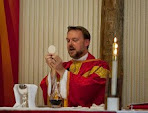
Why did John preach? To point to the one who was present, whom men did not know, the Lord who was at hand. Why did John baptize? To point to the one who was present to baptize with the Holy Spirit and to the Lamb of God who was taking away the sins of the world. John is still preparing the way for the coming of the Lord through the preaching of repentance for the forgiveness of sins and through baptism, but these have become vehicles, means for the work of the one who is in our midst, Jesus the Christ. His Word opens the ears of the deaf and the eyes of the blind, releases those in prison in sin and death, and proclaims to the poor in spirit the Good News of redemption. And, John the Baptist still points to the Lamb of God who takes away the sin of the world as we sing with him and kneel before our Lord who is present amongst us with His body and His blood that we may know Him as He is and live in Him and He in us to the glory of God the Father in His most Holy Spirit.
In the + Name of Jesus. Amen.