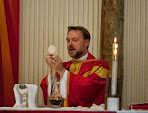
Sunday, November 14, 2010

Homily for the Second-Last Sunday in the Church Year

(Audio)

Matthew 25:31-46; 2 Peter 3:3-14; Daniel 7:9-14

In the Name of the Father and of the + Son and of the Holy Spirit.

Dearly beloved in our Lord Jesus Christ, we have entered hereunto the last days of the Church’s Year of Grace wherein, as we prepare for the annual commemoration of the nativity of our Lord at Christmas, we, simultaneously, prepare for His second coming as King and Judge. Indeed, the last three Sundays of the Church Year and the four Sundays of Advent serve together as a time for such preparation not unlike our Lenten preparation for Holy Week and Easter. In northern European tradition, these six weeks have been known as St. Martin’s Lent, named for the fourth century Father of the Church, St. Martin of Tours, who is commemorated on November 11th and for whom our more recent Father and namesake Martin Luther, whose birthday we celebrated on November 10th, was named.

Why does the Church set aside so much time for preparation? Why all the waiting for something to happen? Because preparation, waiting, and patience are what the Christian faith and life are all about – waiting on the Lord, trusting Him in patience, preparing for His return. When St. Peter warns of Christ’s return and judgment, he rhetorically asks “What sort of people ought you to be?” Then, he answers, live lives of holiness and godliness, waiting for and hastening the coming of the day of God. Here, the Biblical metaphor of leaven is useful for understanding. Leaven is put in place by the baker and then the dough is set aside for a while to rise. It is during this set aside time that the leaven does its work of causing the dough to rise – and, as we know, a little leaven leavens the whole lump. The leaven simply does what leaven does, it leavens. Slowly, and in an unseen way, the whole lump of dough is affected and is transformed.

This is what the kingdom of God is like. To unbelievers, it seems like foolishness, for the world appears to go on as it always has, filled with evil and wickedness, wars, disease, and death as the sun rises and sets day after day. And, this is true, in many ways it is the same old world filled with the same kinds of sinful men. But, slowly, patiently, in a hidden and unseen way, change has been taking place, beginning with God’s first promise of a savior after the fall of Adam and Eve, all the way to the death of the Son of God on a Friday afternoon two thousand years ago, to today, and tomorrow, and as many tomorrows as the Lord may grant us. A transformation is taking place, a leavening, and it is God who is doing the work, in God’s way, in God’s time, patiently, that all should reach repentance.

Now, waiting in patience is only reasonable if you expect that something is going to happen. Most of you would not wait an hour and a half in the doctor’s office if you didn’t believe that you were going to get to see the doctor. In a similar way, we wait patiently for the coming of the Lord, trusting in God’s promise that He will come. And, the question, then, for us, is not “What do we do while we wait?” but, it is “What sort of people ought we to be?” For, the Son of Man is coming in glory, and all the angels with Him. Then He will sit on His glorious throne. Before Him will be gathered all the nations, and He will separate people one from another as a shepherd separates the sheep from the goats. And He will place the sheep on His right, but the goats on the left.

This judgment and separation is going to happen, that’s a bonafide guarantee. All people are either sheep or goats, and the Lord, and only the Lord, knows who’s which. And, moreover, it has nothing to do with people being either good or bad, and it has nothing to do with their works. For, the sheep and the goats exist together in the one flock of the Good Shepherd just as the wheat and the tares are permitted to grow together in the same field until the harvest. But, then the sorting, then the judgment, and that is done only by the Lord. So, again, it is not being good or being bad that makes one a sheep or a goat, a stalk of wheat or a tare, and, it is not about works, but, it is about what you are – are you righteous? And, no one can make themselves righteous, no one can work their way into righteousness anymore than a goat can make itself into a sheep or a tare into wheat. If you are righteous, that is because you have been made to be, declared to be righteous by God. And, God has already declared, already judged all men to be righteous in Jesus’ blood. So, if you are not righteous, if you are a goat or a tare, then you have rejected God’s external righteousness for yourself. For, righteousness comes by grace through faith in Christ alone, just as it came to Abraham: And, Abraham believed God, and God counted that to Abraham as righteousness.

But, doesn’t Jesus credit the righteous for their good works, that they gave Him food and drink, welcomed Him, clothed Him, and visited Him? Sure He does! But, their good works did not make them righteous, God did! Their works were the fruit of their righteousness, and the righteous one’s didn’t even know they were doing them, let alone did they know that they were doing them to Jesus. They are like leaven that leavens because it is leaven, placed in the world, but not of the world, by God, to leaven it. Furthermore, their blessedness and inheritance, and, do take note of the passiveness of those words, was prepared for them before the foundation of the world. Thus, the good works of the sheep are counted to them as righteousness – they are not righteousness, but Jesus treats them that way! The righteous sheep are praised, not for their good works, but for their faith, their trust in Jesus all along, throughout their lives.

But, what about the goats? Well, the terrible truth is that they, too, have been declared righteous in Jesus Christ, they are in the flock of the Good Shepherd, but they do not trust in Christ but in their works. They cry out “Lord, when did we see you hungry or thirsty or a stranger or naked or sick or in prison, and did not minister to you?” And Jesus will answer them, “As you did not do it to one of the least of these, you did not do it to me.” You see, the goats put their trust in their works, not in Jesus, therefore they are judged by their works, and, necessarily, they come up short. But, again, the terrible truth is that they, like the sheep, have been declared to be, made to be righteous in the blood of Jesus. But, because of the blindness of their unbelief, they will have cut themselves off from the salvation they already had – from the favorable judgment that, but for the noise of their own works, they would otherwise have heard.

For, in the end, salvation is not about works, it’s not even about being good or bad, sheep or goats, but salvation is about faith, faith in Christ Jesus, blind trust in His acceptance: The one who believes in Him is not judged: but the one who does not believe has been judged already because he has not believed in the name of the only begotten Son of God. The goats on the left are not bad people loaded down with sins of omission. The sheep on the right are not do-gooders. Jesus habitually avoids depicting badness as an obstacle to the kingdom, just as he carefully steers clear of making goodness one of its entrance requirements. The kingdom is not taken by force and violence, nor is it merited by works, but, rather, it is received in faith and is entered in no other way.

Thus, the Church, in Her wisdom, has established times of waiting and preparation so that all will have the opportunity to stop focusing so much upon what they do and to focus, instead, upon what God, in Christ, has done, that, when He comes, we might be found patiently waiting, without spot or blemish, and at peace – waiting and trusting, not in our works, but in Christ alone, that in His suffering and death, He has made us to be righteous and His holy sheep. This is the time to stop all doing and to recommence being – being blessed, being righteous, being godly, begin holy, being a sheep, being leaven in the world but not of the world. God has put you here, and, yes, He has a purpose for you, but, you don’t have to discover it, chose it, experience it, or wrangle over it, anymore than a sheep wrangles over what it means to be a sheep. Sheep eat and sheep drink, sheep walk and sheep rest – sheep do sheepy things. Sheep do not worry or think too much about what they’re doing, but sheep trust, sheep believe, and sheep have faith in their Good Shepherd to lead them, feed them, guard them, and protect them. And, this, your Good Shepherd does for you here, today, now, with His Word and His Wounds – His holy body and His precious blood – that you may be well prepared for His return and may inherit the kingdom prepared for you from the foundation of the world.

In the + Name of Jesus. Amen.

Friday, November 12, 2010

The troops are not amused.

A gem from Robert Capon:

As any preacher who seriously preaches the Gospel of grace can tell you, the troops are not amused by the prospect of absolutely free salvation. The first instinct of most Christians, after they have smiled indulgently at the preacher’s charmingly easygoing concept of salvation, is to nail him to the wall for knocking the props out from under divine retribution for nasty deeds. They do not want grace, they want law.

From Kingdom, Grace, Judgment by Robert Farrar Capon.

Wednesday, November 10, 2010

Forgiveness–The Christian Difference and the Proper Office of the Holy Ministry

If one asks what the one characteristic feature of the Christian faith is, distinguishing it from all religions in the world, then we would have to say: It is the forgiveness of sins. The pious Jew and even a pious Mohammedan may hope for God’s pardon. Forgiveness as a real gift, the full assurance of forgiveness, that is the gift of the Gospel.

To proclaim the Gospel of forgiveness, to declare to repentant sinners the forgiveness of their sins, to distribute the Sacraments with all the gifts of divine grace contained in them, this and nothing else, is the proper task o the minister of Christ as it was the officum proprium [ proper office] of Christ Himself. This the Church had to learn in the great crisis of the second century…. The church administration in Europe follows the patterns of the administration of the state, while in America the great business organizations seem to be unknowingly imitated by the churches. The consequence is that also the parish minister becomes more an more of an administrator and organizer who rushes from meeting to meeting and has not enough time for his proper calling as a shepherd.

Hermann Sasse – From Treasury of Daily Prayer pp899-900.

Sunday, November 7, 2010

Homily for the Feast of All Saints (observed)

(Audio)

In the Name of the Father and of the + Son and of the Holy Spirit.

It is said that familiarity breeds contempt. Perhaps, when it comes to well known and beloved Bible passages, it can be said that familiarity breeds a sort of “been there, done that, bought the t-shirt” kind of contempt, a contempt that causes us to neglect revisiting the text and wrestling with it, so as to “suck the marrow” out of it, assuming that we know it well enough and understand it well enough so that there is no need to study it again.

It seems that the opening words of Jesus in His Sermon on the Mount in Matthew chapter five, the Beatitudes, are like that. “Blessed are the poor in spirit…. Blessed are those who mourn…. Blessed are the meek…, etc., etc.” You know those words well. Perhaps you believe that you understand them well enough? Well, maybe you do, and, maybe you don’t.

The common and popular understanding of Jesus’ teaching in the Beatitudes goes something like this: If you want to be blessed, then be meek, mild, poor, and merciful, etc., and you will be. In other words, the Beatitudes are a guide to living the Christian life or a sort of moral checklist by which you can chart your progress towards achieving blessedness. Though it may be common and popular, however, this understanding of Jesus’ teaching is dead wrong. This understanding makes the Beatitudes to be all Law and, it makes Jesus out to be a new Law-giver. But, worse yet, it makes your blessedness a work that you do. And, so we come full circle, and, we can understand why this understanding is so common and so popular. For, you like to think you can contribute to your sanctification. You like to think that you are making progress in becoming more and more blessed. Well, you’re not alone. In fact, you are in good company, for, the Pharisees thought this way too, especially, when they compared themselves to others whom they judged to be less sanctified and less blessed than themselves. It’s only human; sinful and damned, to be sure, but, human.

But, blessedness is not something that you progress toward or that you achieve by your works, rather blessedness is a state of being in which you find yourself wholly apart from your works, merit, or worthiness. Blessedness is not something that you achieve, it is something that you receive and thus you are, blessed. And, the first step in receiving such blessedness is to recognize that you are not it, and that you do not have it, in and of yourself, and that you cannot gain it by your merits, and that you do not deserve it, because you are a sinner. So, if you are to be blessed, then you must receive blessedness as a gift; you must be made to be, declared to be blessed by the one and the only one who is blessed, Jesus Christ, the Son of God, your Savior. Thus, it is, that the people whom Jesus addresses as blessed are not the “haves” of this world, but they are the “have-nots,” they are the crowds, the hoi polloi, both Jews and gentiles. “Blessed are the poor in spirit .... Blessed are those who mourn…. Blessed are the meek … Blessed are those who hunger and thirst … Blessed are the merciful … Blessed are the pure in heart … Blessed are the persecuted… etc.” The great crowds came from all over, from Galilee and the Decapolis, and from Jerusalem and Judea, and from beyond the Jordan, even from the land of Syria, and they brought to Jesus their sick, those afflicted with various diseases and pains, those oppressed by demons, epileptics, and paralytics, and He healed them.

Jesus’ blessing brings comfort and fulfillment at once now and not yet. In the now of this life, those who are emptied of self-righteousness and are impoverished of spirit are filled with the righteousness and the Spirit of Christ. Their hunger and their thirst are sated and quenched by His life-giving Word, body, and blood. In their mourning they are comforted in the Peace that is Christ Jesus and His victory over sin, death, and the devil. In persecution and reviling they do not strike back in anger or revenge, but, they remain steadfast in faith in the Christ who has suffered for them, the Christ who suffers with them now, and the Christ who is their unconquerable strength in weakness. That is now, in this life, this side of heaven.

What we see in the Revelation, however, is the other side of the coin, the not yet for us, but, the reality now in heaven for the Saints in Christ. Once again Jesus, the Lamb of God, stands in the midst of a great crowd of people, a multitude that no one could number, from every nation, from all tribes and peoples and languages, standing before the throne and before the Lamb, clothed in white robes, with palm branches in their hands. “Who are these, clothed in white robes, and from where have they come?” asks the Elder. “These are the ones coming out of the great tribulation. They have washed their robes and made them white in the blood of the Lamb.” It is said that this great crowd, this multitude that no one can count, no longer hunger, no longer thirst, and no longer mourn. They are in the kingdom of heaven and they see God with their own eyes. “Who are these, clothed in white robes, and from where have they come?” They are the remnant of Israel and countless gentiles from the east and the west, the north and the south. They are the blessed of the Lord, made clean in the blood of the Lamb, gathered together around the throne of God and the Lamb in ceaseless worship now, for them, and not yet for us.

All who have died in the Lord, they are part of that blessed throng, they have come out of the great tribulation that is this life and have entered into Life Himself. They are your mothers and your fathers, your sisters and your brothers, your sons and your daughters, all who have died in the Lord. But, they are not dead, in fact they are more alive than you! They enjoy in full, now, what you only know in part, but that doesn’t make it any less real and true for you who live in the not yet. Indeed, you blessed of the Lord in the now also live in the not yet; it as though you have one foot in the grave and the other in heaven. But you are destined for heaven, when, with both feet, you will stand with that blessed throng, with angels and archangels and all the company of heaven, before the throne of God and the Lamb in ceaseless worship. That is a guarantee, backed by the blood of Jesus, sealed in baptismal waters. And, until that day when you come out of this great tribulation into heaven, heaven comes down to you as you kneel before this altar, the throne of the Lamb of God, who is truly present, and you behold with your own eyes, hear with your own ears, handle with your own hands, and taste with your own tongues, and you receive, as foretaste of the feast to come, blessedness Himself in holy communion with your flesh and blood.

For, you are His saints, made holy in His blood, and you are His blessed, now and not yet, destined for life with Him, in Him, and through Him for all eternity. “See what kind of love the Father has given to us, that we should be called children of God; and so we are. […] Beloved, we are God’s children now, and what we will be has not yet appeared; but we know that when he appears we shall be like him, because we shall see him as he is.” Your Lord Jesus guarantees, “And everyone who thus hopes in him purifies himself as he is pure,” and that is blessedness. And all the Saints of the Church of Christ in heaven and earth cry out, “Come, Lord Jesus, come quickly, come.”

In the + Name of Jesus. Amen.

Sunday, October 31, 2010

Homily for the Festival of the Reformation

(Audio)

John 8:31-36; Romans 3:19-28; Revelation 14:6-7

In the Name of the Father and of the + Son and of the Holy Spirit.

“And ye shall know the truth, and the truth shall make you free.” Or, so reads the motto carved in granite inside the main lobby of the old CIA building in Langley, Virginia. That institution’s use of these words of our Lord is somewhat telling. It is telling in that it reveals how men feel about the truth. The truth is a means to an end. The truth is something that is to be discovered. It has to be discovered because there are men who desire to keep it hidden. But, of course, the men who desire to discover the truth themselves desire to keep certain truths hidden, to withhold certain truths, and to dispense as truth what are actually half-truths, and, sometimes, not truth at all.

Less than a century ago, men still believed that there was truth underlying all observable things and phenomena. That was the great Modern Age when science and human knowledge replaced the need for superstition and religion, for God. As men formulated and tested their theories, little by little, year after year, the space for God seemingly became smaller and smaller. It was believed that, ultimately, a single theory for everything would be formulated and that then men would finally know the truth of all things and would be truly free at last – free from the tyranny of God, and free from the unenlightened simpletons who believe in Him. Today, however, in these so-called Post-Modern times, it is popular to believe that there is no universal or absolute truth, but that there is no possible theory of all things, but, only personal truth or emotional truth, that is, subjective truth. Indeed, it appears that the truth did not set us free, but, rather, that we have set ourselves free from the truth.

For, the truth is this, men don’t care much for the truth. The truth is, the truth makes men uncomfortable, because their deeds are wicked. For, the truth is a rule, the truth is a measure, outside of one’s self, that judges men’s thoughts, words, and deeds and condemns them. So, wicked men flee from the truth, the way cockroaches flee from the light, for fear that their wicked deeds be exposed.

And, Jesus knows this about you. He knows how you fear the truth too, how you seek to hide from the truth, to bend the truth, to deny the truth. And, that is why He says to you “If you abide in my word, you are truly my disciples, and you will know the truth, and the truth will set you free.” Jesus knows that you are not free, but, that you are in slavery to sin and death. And, Jesus knows how this truth terrifies you. But, Jesus speaks of another truth, a truth that sets you free from all that, a truth that is known by abiding in His word. And, Jesus is the Word, and Jesus is the Truth, and Jesus is the Truth that sets you free from slavery to sin and death. The Jews to whom Jesus spoke these words wouldn’t believe the truth standing right there before them in their very presence. They were afraid of the truth, so they told themselves half-truths and false-truths to comfort themselves. But, the truth is, they remained in slavery to sin and death, while Truth Incarnate, Jesus Christ was present to free them from all that.

Nearly fifteen hundred years later, men continued to fear the truth, to hide from the truth, to bend the truth, and to deny the truth because their deeds continued to be wicked. Some things never change. But, even worse, men also feared, hid, bent, and denied the Truth that had in truth set all men free from sin and death, Jesus Christ. For fear of losing power and influence to both foreign and regional political forces, and for a multitude of other social, cultural, and political reasons, the Church had covered over, had hidden and conditionalized, the Gospel Truth of men’s justification by faith in Jesus Christ. They exchanged the Truth for a lie and kept men in slavery to sin and death. It was this long social, cultural, and political process that set the stage for the Reformation in the 16th century.

There had been numerous reformers before Martin Luther including John Wycliffe and Jan Hus. Most of them and their efforts had been stamped out and some of the reformers were even executed. But, all of them were martyrs, that is, witnesses, for the Gospel Truth. They were sowers of the Gospel seed who would not live to see the fruits of their labors. But, when the time was right, God, and God alone, saw that His message would ring out to the ends of the world.

Again, the reasons for the Reformation were multitude. Politically, the Holy Roman Empire was in decline and was threatened by the Turks and barbarians from without and by territorial unrest from within. Socially, there was increasing strife between peasants and landowners. And, then there was spiritual strife within the Church as the forgiveness of sins was being sold as a commodity through the sale of indulgences and even the sale of the holy sacraments. Arguably, however, the greatest factor in the rapid spread and success of the Reformation was the invention of the movable type – Gutenberg’s printing press of the mid 15th century.

For, what did the printing press serve to do but to spread the Word of God? In all likelihood, were it not for the press, Martin Luther would be but another footnote in pre-Reformation history. Indeed, the Reformation was God’s doing, in His way, at His time, in the place of His choosing. And, as hard as men may strive in fear to hide, bend, and deny the truth, the Eternal Gospel of the Truth still stands and will continue to ring out to the ends of the earth. Again, Jesus said “If you abide in my word, you are truly my disciples, and you will know the truth, and the truth will set you free.” Ultimately, it was the truth of the word that was uncovered in the Reformation and, thanks to the press, rapidly spread throughout Europe and the rest of the world. Wycliffe had translated the entire Bible into English and Luther translated it into German. In addition, numerous commentaries and theological tracts were read by more and more people. The Word of the Truth was out of the bag, proclaimed, as it were, by one of God’s holy angels to those who dwell on earth, to every nation and tribe and language and people “Fear God and give him glory, because the hour of his judgment has come, and worship him who made heaven and earth, the sea and the springs of water.”

“The hour of his judgment has come,” for, God has judged men to be righteous in Jesus Christ – and that is the truth. So, there is nothing to fear from the truth unless what you fear is losing your enslavement to sin and death. The truth is that you are set free from all your secret sins, from having to hide them and cover them up, from having to fear their being exposed, from having to bend the truth to make yourself look better in the eyes of men and of God. Therefore, confess your dark sins, expose them to the light of the Truth, and watch them disappear like vapor in the full light of the sun. Be free from sin and death and do not submit yourself again unto a yoke of slavery. For, the Son has set you free, and you are a son, not a slave. The righteousness of God has be shown in that He is just and the justifier of the one who has faith in Jesus. So, you are free from performing works of the Law to merit salvation through the blood of God’s sacrificial Lamb. You are free to worship Him without fear, holy and righteous in His sight all the days of your life to the glory of God the Father.

In the + Name of Jesus. Amen.

Friday, October 29, 2010

Magic, Sorcery, Witchcraft, and Alchemy–A Natural Science Rather than A Spiritual One?

Opponents of Christianity often point to supposed atrocities committed in the Name of Christ, particularly during the so-called “Dark” Ages and the Late-Medieval Period, such as the Spanish Inquisition and witch trials, to demonstrate that Christian faith is inherently superstitious, ignorant, and violent. Once again, however, David Bentley Hart masterfully and scholarly demonstrates the historical aberrations, misconceptions, and exaggerations in such claims in his book Atheist Delusions – The Christian Revolution and Its Fashionable Enemies. Hart demonstrates that heresy and sorcery during this time was much more a concern of the state rather than of the church. The Inquisition and, later, witch hunts, were more about maintaining political power than fending off the powers of darkness. This is not, however, to exonerate the Church completely of periodic complicity with the state in the violence of early modernity, but the contemporary portrait of this period and the Church looks nothing like that which emerges when honest historical scholarship commands the palette and brush.

In the following paragraph, Hart demonstrates that magic, sorcery, witchcraft, and alchemy were not spiritual or religious by nature but were more akin to an emerging modern scientific understanding in which there is no transcendent, spiritual realm but rather subtler, hidden material forces and substances to be discovered and manipulated by men to achieve ever-increasing dominance over the material world. This is always sinful man’s greatest desire – to be god unto himself.

In truth, the rise of modern science and the early modern obsession with sorcery were not merely contemporaneous currents within Western society but were two closely allied manifestations of the development of a new post-Christian sense of human mastery over the world. There is nothing especially outrageous in such a claim. After all, magic is essentially a species of materialism; if it invokes any agencies beyond the visible sphere, they are not supernatural – in the theological sense of “transcendent” – but at most preternatural: they are merely, that is to say, subtler, more potent aspects of the physical cosmos. Hermetic magic and modern science (in its most Baconian form at least) are both concerned with hidden forces within the material order, forces that are largely impersonal and morally neutral, which one can learn to manipulate, and which may be turned to ends fair or foul; both, that is to say, are concerned with domination of the physical cosmos, the instrumental subjection of nature to humanity, and the constant increase of human power. Hence, there was not really any later modern triumph of science over magic, so much as there was a natural dissolution of the latter into the former, as the power of science to accomplish what magic could only adumbrate became progressively more obvious. Or, rather, “magic” and “science” in the modern period are distinguishable only retrospectively, according to relative degrees of efficacy. There never was, however, an antagonism between the two: metaphysically, morally, and conceptually, they belonged to a single continuum.

David Bentley Hart, Atheist Delusions – The Christian Revolution and Its Fashionable Enemies, p82

Sunday, October 24, 2010

Homily for the Twenty-First Sunday after Trinity (Trinity 21)

(Audio)

John 4:46-54; Ephesians 6:10-17; Genesis 1:1 – 2:3

In the Name of the Father and of the + Son and of the Holy Spirit.

There’s a lot of talking going on in that first chapter of Genesis. There’s a lot of talking going on, but, there’s no people, it’s all God. And, yet, look at all the stuff that happens: The heavens and the earth are created. There is light. There are oceans, seas, and land. There are stars, the moon and the sun, and all the celestial bodies. And, then there are living things, first grass, plants, and trees, but, then, birds and fish, and, finally, land animals of all kinds --- all this from God, and from God alone, talking, speaking His creative and life-giving Word, bringing all things out of nothing. As St. John the Evangelist writes in the Prologue to His Gospel, “All things were made through [the Word], and without [the Word] was not anything made that was made.” All things were made through the Word of God, the Word that was with God in the beginning, the Word that was God and is God still.

It was that Word that became flesh and, in the person of Jesus, made His dwelling amongst us. So, God continued to talk, God continued to speak His creative and life-giving Word, and creation continued to happen, through the Words of Jesus, who is the Word of God become flesh. The people of Israel understood that God created all things out of nothing by His powerful and creative Word, but they did not understand that God’s creative and life-giving Word could possibly stand right there in their very midst to re-create His fallen creation. Jesus, the Word of God made flesh, was able to turn water into wine, to heal the sick, and to raise the dead by His Word alone, still the people demanded signs and wonders in order to believe. Sometimes Jesus granted them signs and wonders, but ultimately He invited them to believe that He was the Word of God incarnate, the glory of God and His Word of creation, present in their very midst. It’s still all God, and it’s still all by God’s Word. As it was in the beginning, is now, and ever shall be, world without end.

When Jesus healed the sick, raised the dead, and cast out demons it was by the power of the Word of God. In all such cases it was God’s creative Word re-creating His creation ruined by sin and the temptations of the devil. Each and every case was a confrontation between the Word of Life and the powers of darkness. When Jesus Himself was tempted by the devil in the wilderness, Jesus drove away the devil by the Word of God alone. In His death on the cross, the Word of God, Jesus, was triumphant over the devil, destroying his power forever.

Your old evil foe is defeated, but still he tempts you, and often convinces you, to believe that this is not so. Each day of your life, therefore, you are under siege from his temptations. Yet, still, for you, now, the Word of God alone can drive away the devil. Thus, Paul instructs you to “Put on the whole armor of God, that you may be able to stand against the schemes of the devil.” Such armor is defensive, not offensive, for, it is not you who will be doing the fighting. Indeed, the fight is already over and the victory is won for God through Christ’s death and resurrection. But, you need protecting, still, from the temptations of the evil one; you need defensive armor. God supplies you that armor in Jesus Christ: He supplies you with the belt of truth, the breastplate of righteousness, the gospel of peace as shoes for your feet, the shield of faith, and the helmet of salvation. These are defensive armor; they will protect you from the assaults of the devil if you trust in them. Indeed, the only offensive weapon that is given you is the sword of the Spirit, which is the Word of God. It is the Word alone that heals the sick, that raises the dead, that casts away demons, that drives off the devil.

So, it was not necessary that Jesus go to the official’s dying son, but for Him only to speak His Word. The official sought out Jesus because he believed Him to be a healer, otherwise he would not have come to Jesus. The official believed that Jesus could and would heal his dying son, but he wrongly believed that it was necessary for Jesus to be physically present. “Unless you see signs and wonders,” Jesus says to him, “you will not believe.” Jesus was not sent to receive glory for Himself but glorify His Father who sent Him by restoring His fallen creation and by redeeming men who He created in His own image.

There is a similar account in St. Matthew’s Gospel of a Roman centurion who asked Jesus to heal his servant who was tortured with palsy. In that account, Jesus answers straightway “I will come and heal him.” But, the centurion replied, “Lord, I am not worthy that You should come under my roof, but only speak Your Word and my servant will be healed.” Why is it that when the official asks Him to come to his son Jesus refuses to go their bodily, while, though not asked to come to the servant of the centurion, He offers to go there at once? Is it not to rebuke man’s sinful pride? Is it not to show that the ways of men are not the ways of God? Is it not to strengthen men’s faith in the Word of God alone and to demonstrate that the Word of God made flesh in Jesus is everywhere present as He fills all things? Is it not to show that faith that demands signs and wonders to believe is a little faith or no faith at all? The official came to Jesus seeking healing for his son; he went home that day with so much more, true, unshakable, unwavering faith. He who had faith to come needed a greater faith to go away, faith that believes without seeing, faith that finds peace in the Word of God alone.

“All things were made through [the Word], and without [the Word] was not anything made that was made.” Jesus is the Word of God made flesh and dwelling amongst. Forty days after His resurrection from the dead, Jesus ascended to the right hand of His Father in Heaven. In Christ’s Ascension, it was not that Jesus was taken away from His disciples and that He was no longer with them, but it was simply that they would no longer see Him in the same way. Indeed, during those forty days after His resurrection, Jesus willfully appeared and disappeared before the presence of His disciples, first at His empty tomb, then in the upper room behind closed doors, with the disciples on the road to Emmaus, and with his disciples on the shores of the lake. Though He has now ascended to the right hand of the Father, in so doing He fills all things and is present everywhere as He promised, “I will be with you always, even unto the end of the age.”

So, the Word made flesh, Jesus Christ, is with you, now, to forgive, to nourish and strengthen, and to feed you, His disciples, with His creative and life-giving Word and His precious body and holy blood that you may believe and have peace and live to the glory of His Father in His most Holy Spirit.

In the + Name of Jesus. Amen.

Sunday, October 17, 2010

Homily for the Twentieth Sunday after Trinity (Trinity 20)

(Audio)

Matthew 22:1-14; Ephesians 5:15-21; Isaiah 55:1-9

In the Name of the Father and of the + Son and of the Holy Spirit.

God is holy, and God commands that you must be holy as He is holy. But, what does it mean to be holy? For God to be holy means that He is not like you. God is wholly other than you; His holiness is the state of His being. And, for you to be holy is not what you think, it is not to be moral. Holiness is not morality, and sanctification is not moral improvement or self-improvement. Holiness is a state of being in which you share something of God’s holiness, for only God is holy. Your Holy God makes you holy in the cleansing blood of Jesus Christ. The pre-requisite for sharing in God’s holiness is purity, being cleansed of stain of your sin guilt – it is to be justified, before being sanctified. Only God is holy. Thus, when He commands that you must be holy as He is holy, He is not commanding something for you to do, He is commanding something for you to be. In fact, He is declaring something about you that is true – you are holy – because God has made you holy in the atoning death and resurrection of His Son. In Christ, you are clean and you are holy, you are justified and you are sanctified. And this is entirely God’s work, done for you, done to you, in Jesus Christ your Lord.

To shed more light upon this truth, let us consider these very familiar words of Jesus: For God so loved the world, that He gave his only Son, that whoever believes in him should not perish but have eternal life. Now, this is not merely a description of God’s great affection for you, His love for you, though it is that, but, first and foremost, this is an explanation of the very way in which God has loved you – God has loved you like this: He gave His only Son for you. God gave His Son, not for His chosen people, not for the moral and the upright, not for the faithful and the good, but, God gave His Son for the world – that the world, and everyone in it, would be holy as He is holy.

This is the doctrine of objective justification – That is to say that the reason that you are pure and clean before God lies entirely outside of you in the objective death and resurrection of God’s Son Jesus Christ. Jesus, the Lamb of God, died for the sins of the entire world. This is the doctrine of Universal Atonement – That is to say that Jesus Christ’s death and resurrection was for the entire world and for everyone it. There is no one who has not been cleansed in the blood of the Lamb of God. Therefore, there is reconciliation with God the Father, there is forgiveness, there is cleanness from sins, there is purity and there is holiness for everyone. This is an objective fact for you, for everyone you know, and for everyone that has ever lived or will ever live.

But, do not be confused, that Jesus Christ died for all, that all are cleansed in His holy blood, does not mean that all will join in the marriage feast of the Lamb and His Bride the Church, for, as Jesus said in the parable, many are called but few are chosen. That is to say that, though all are invited through the blood of Jesus, all are atoned for, cleansed, and made holy through the blood of Jesus, many still refuse to come to God, many still refuse to receive His gifts. In the parable, some persecute and kill the Lord’s servants sent to call them to the feast. Others try to come on their own terms, by their own worth and merit and they are cast out into utter darkness. Still, all were invited, the prominent land owners and business men first, then the commoner, then the strangers, sojourners, and outcasts from the highways and the byways. All were invited, all have been cleansed, purified, and sanctified in Jesus’ blood; still, so very many refuse. So, if you find yourself in the kingdom of heaven, that is entirely to God’s credit and glory, not yours; but, if you find yourself in darkness and damnation, well, that is entirely your fault.

For, that is what the kingdom of heaven is like. The kingdom of heaven is like a king who gave a wedding feast for his son, and sent his servants to call those who were invited to the wedding feast, but they would not come. They were invited, that was a fact, by the king’s love and grace; all they had to do was come and receive the gifts the king desired to bestow, but they refused. Some were simply disinterested. Others were too preoccupied, to busy with work, possessions, and play. Others were belligerent, angry, and violent; they mocked the king’s servants, treated them shamefully, and killed them. They were in God’s grace, but now they have incurred God’s wrath. Jesus says that they were not worthy, but that is only because they despised the Lord’s gracious invitation. They counted their own affairs of greater value than the Lord’s invitation. Therefore, they are judged according to their own works and merits and worth, and they are condemned. The King orders the destruction of those murderers and the burning of their cities. They will be as stubble.

But, then the king sent his servants, amazingly, to gather both the good and the bad and to invite them to the feast, for, the good and the bad, alike, are holy in Jesus’ blood, and the wedding hall was full of guests. Yet, there was one man who did not have a wedding garment. Now, you must remember that none of these guests was prepared to attend a great wedding banquet; just moments earlier they were out and about their business, presumably in their normal day to day attire. So, it was the king who provided his guests with the proper wedding attire upon entering his hall. This, in fact, was a custom in Jesus’ day. Then, how is it that this one invited guest does not have on a proper wedding garment. He was an invited guest. The king addresses him as friend. He was provided clothing just like all the other guests, but he refused to wear it; he rejected the king’s provided clothing. Again, the king is angry; He commanded his servants to “Bind him hand and foot and cast him into the outer darkness” where there is “weeping and gnashing of teeth.” Perhaps the weeping and the gnashing is due to the fact that the souls there were invited guests, they had everything, and they willfully chose to reject it because of their pride, envy, sloth, or whatever. It was their own damned fault.

For, God is holy, and God commands that you must be holy as He is holy. And, God has made you holy in the death and resurrection of His Son Jesus Christ. You are invited to the wedding feast and you have been clothed in Christ’s righteousness that covers all you sins. If you refuse God’s gracious invitation and do not come to Him, if you reject the garment of Christ’s righteousness, then you stand only with what you have to offer, your sin-tainted works, your sin-corrupted flesh and blood. God is holy, and God commands that you must be holy as He is holy. And, God has made you holy in the death and resurrection of His Son Jesus. But, you are not holy on your own. And, to accept God’s invitation and His garment of righteousness is not a choice that you make or a work that you do, but, it is the way things are, a true and present reality, by God’s grace, mercy, love, and holy will. The only choice that you make is to say “No”, to reject God’s grace, mercy, and justification. God has already judged you holy and righteous in Jesus Christ, to reject this is to stand in His condemnation and wrath. All persons in the parables that end up being judged were first chosen.

God is not like you, He is wholly other. God is holy, but He is not remote. God is with you, and He has invited you to this foretaste of His wedding feast now. For, the Holy Spirit has called you by the Gospel, enlightened you with His gifts, sanctified and kept you in the true faith. He has clothed you in the baptismal garments of Christ’s righteousness and you are clean. And, now He feeds you with the choicest of meats and the finest of wines in the holy body and the precious blood of the Son of God become Man, Jesus Christ, your Savior. The invitation reads: Come, everyone who thirsts, come to the waters; and he who has no money, come, buy and eat! Come, buy wine and milk without money and without price.

In the + Name of Jesus. Amen.

Wednesday, October 13, 2010

David Bentley Hart on the New Age Movement

In a chapter of his book Atheist Delusions dealing with the nature of perceived free will, Hart posits that, almost universally, “the inviolable liberty of personal volition” or “choice” is the first principle of perceived human freedom, “often seeming to exercise an almost mystical supremacy over all other concerns.” Hart observes that, due to our belief that personal choice is the “highest good,” we fear that subscribing to some established tradition, belief, worldview, etc. is to limit our freedom to choose. Thus, the great claim today is to be spiritual and not religious. It is popular to string together bits and pieces of religion, philosophy, political views, scientific theories, etc. as if we were choosing selections from a cafeteria buffet. Hart writes:

This is especially obvious at modern Western religion’s pastel-tinged margins, in those realms of the New Age where the gods of the boutique hold uncontested sway. Here one may cultivate a private atmosphere of “spirituality” as undemanding and therapeutically comforting as one likes simply by purchasing a dream catcher, a few pretty crystals, some books on the goddess, a Tibetan prayer wheel, a volume of Joseph Campbell or Carl Jung or Robert Graves, a Nataraja figurine, a purse of tiles engraved with runes, a scattering of Pre-Raphaelite prints drenched in Celtic twilight, an Andean flute, and so forth, until this mounting congeries of string, worthless quartz, cheap joss sticks, baked clay, kitsch, borrowed iconography, and fraudulent scholarship reaches that mysterious point of saturation at which religion has become indistinguishable from interior decorating. Then one may either abandon one’s gods for something new or bide with them for a time, but in either case without any real reverence, love, or dread. There could scarcely be a more thoroughly modern form of religion than this. It certainly bears no resemblance to the genuine and honorable idolatries of old, or to the sort of ravenous religious eclecticism that characterized the late Roman Empire. The peoples of early and late antiquity actually believed in, adored, and feared their gods. No one really believes in the gods of the New Age; they are deities not of the celestial hierarchy above but of the ornamental étagère in the corner, and their only “divine” office is to give symbolic expression to the dreamier sides of their votaries’ personalities. They are purchased gods, gods as accessories, and hence are merely masks by means of which the one true god – the will – at once conceals and reveals itself.

From Atheist Delusions – The Christian Revolution and Its Fashionable Enemies by David Bentley Hart, pp 23-24

Tuesday, October 12, 2010

Killing is a human constant.

I’ve been reading off and on a book by David Bentley Hart entitled Atheist Delusions – The Christian Revolution and Its Fashionable Enemies. In this book, Hart takes to task the so-called “Four Horsemen” of the further so-called “New Atheist” Movement: Christopher Hitchens, Richard Dawkins, Daniel Dennett, and Sam Harris. Hart’s is the first Christian response that I’ve seen whose arguments are not just as ignorant and foolish as those he is responding too. On the contrary, Hart has a great command of history, sociology, and philosophy, particularly logic, and mastrerfully exposes the false presumptions, premises, reasoning, etc. of his opponents. Hart’s book, for me, is not a quick read. It’s one of those books that is simply chock full of rich tidbits that I find my mind wandering off on inspired tangents so that a page, or a paragraph, a day is about all I can process. I make no promises, but I hope to share a few gleanings from this thoughtful book.

Today, I share with you Hart’s reflections on why men kill. Proponents of the New Atheist movement like to claim that religion is inherently violent and has been responsible for the world’s greatest number of deaths by persecution, war, etc. Hart demonstrates, from common sense and a simple historical awareness, that killing is a human constant wholly apart from religious belief or unbelief:

… the broader, even more general, and yet more pertinent truth is that men kill (women kill too, but historically have had fewer opportunities to do so). Some kill because their faiths explicitly command them to do so, some kill though their faiths explicitly forbid them to do so, and some kill because they have no faith and hence believe all things are permitted to them. Polytheists, monotheists, and atheists kill – indeed, this last class is especially prolifically homicidal, if the evidence of the twentieth century is to be consulted. Men kill for their gods, or for their God, or because there is no God and the destiny of humanity must be shaped by gigantic exertions of human will . They kill in pursuit of universal truths and out of fidelity to tribal allegiances; for faith, blood and soil, empire, national greatness, the “socialist utopia,” capitalism, and “democratization.” Men will always seek gods in whose name they may perform great deeds or commit unspeakable atrocities, even when those gods are not gods but “tribal honor” or “genetic imperatives” or “social ideals” or “human destiny” or “liberal democracy.” Then again, men also kill on account of money, land, love, pride, hatred, envy, or ambition. They kill out of conviction or out of lack of conviction. […] Does religious conviction provide a powerful reason for killing? Undeniably it often does. It also often provides the sole compelling reason for refusing to kill, or for being merciful, or for seeking peace; only the profoundest ignorance of history could prevent one from recognizing this. For the truth is that religion and irreligion are cultural variables, but killing is a human constant.

From Atheist Delusions – The Christian Revolution and Its Fashionable Enemies by David Bentley Hart, pp12-13