Sunday, October 14, 2012

Homily for The Twenty-First Sunday after Trinity (Trinity 21)

(Audio)

John 4:46-54; Ephesians 6:10-17; Genesis 1:1 – 2:3

In the Name of the Father and of the + Son and of the Holy Spirit.

“Unless you see signs and wonders you will not believe.” These words Jesus spoke to an official who pleaded that He would come to Capernaum and heal His son who was near death. I can almost imagine Jesus sighing and shaking in His head in disappointment. However, this probably wasn’t the first time that He had encountered weak faith in men, and it certainly wouldn’t be the last. As it was, the constant refrain of the people to whom He was sent, the chosen people of God, the children of Israel, was “What sign will you do so that we may believe!” Earlier in Cana, Jesus had changed water into wine in a quiet and decidedly unspectacular way, simply by speaking His Word. Initially, at least, this fact was lost on the official as he insisted that Jesus come down to his house. Likewise, even after feeding 5,000 with five loaves of bread and two fish, the crowds cried out for a sign like that of Moses and the manna in the wilderness. And, we cannot forget Jesus’ disciple, Thomas, who, upon hearing of His Lord’s resurrection from the dead infamously proclaimed, “Unless I see in His hands the mark of the nails, and place my finger into the mark of the nails, and place my hand into His side, I will never believe.”

Are you so unlike the official whose son was dying? Are you so unlike the hungry crowds in the wilderness? Are you so unlike Thomas, wrangling with his doubt? I know that I’m not. In fact, I am Thomas. I need to see and to touch Jesus’ wounds to believe. Thankfully, graciously, Jesus comes to me, and Jesus comes to you, not by Word alone, but also in the seeable, touchable, and tastable means of water, bread, and wine to forgive our sins, especially the sin of unbelief, to strengthen our faith, and to give us life in and through Him. Your Creator, God, and LORD so loves you so as to condescend to come to you, who cannot come to Him, even though His creative Word alone brought forth creation out of nothing, spoke light into the darkness, and brought forth life where there was no life. Jesus is God’s creative Word become man and dwelling amongst us; His Word is forgiveness, life, healing, and salvation – with, or without seeable, touchable, and tasteable means which are bonus and icing on the cake.

What if you pray, but the cancer remains? What if you pray, but the baby dies? What if you pray, but the divorce still happens? What if you pray, but the job never comes? Did God fail you? Did He not hear your prayers? Is he cruel, vindictive, or simply impotent? Or, do you question whether He truly exists at all? If you are honest with yourself, and you need to be, then you will confess that you have thought these thoughts, entertained these doubts, and felt this way from time to time. Doubt is one of the ramifications of sin. Sin has separated you from God so that you cannot be in His presence, you cannot see Him or hear Him or touch Him. Though you are deaf, dumb, and blind in your sin, and though you cannot come to God or enter His presence because of your sin, your God comes to you, and He unstops your ears, looses your tongue, and opens your eyes that you may see, hear, touch, taste, and speak once again. However, doubt hinders your trust and weakens your faith so that you suffer from uncertainties, misgivings, and temptations to sinful fear and pride. Doubt causes you to need a sign, and to fall into greater doubt, eventually into unbelief, if you do not get what you think you want.

The official in today’s Gospel lesson was struggling with doubt. He had faith – faith enough in what he had heard about Jesus, about the miracle He had performed at a wedding in Cana, in order to compel him to go to Jesus and to plead for His help. But, still he was looking for a sign; he wanted Jesus to come to where his son was, maybe speak an incantation, call on some angels, wave His hands in the air, something. Though Jesus called him to faith saying “Unless you see signs and wonders you will not believe,” the official continued to plead, “Sir, come down before my child dies.” But, you see, Jesus was right. In fact, Thomas was right too. You, I, we, mankind – we do need to see and touch and taste! Though the Word is sufficient in itself, though God’s grace is sufficient for us in all things, we need the Word of God made flesh, Jesus. God knows this, and He has delivered, and He delivers Jesus to us still in Word, water, body, and blood.

For your sake, God sent forth His Son, His Word, to become a man, to fulfill the Law, and to suffer and die for your sins and the sins of all mankind, and to be raised, victorious over death and the devil. For your sake, the Word of God became flesh, died in the flesh, was raised and ascended in the flesh, and will come again and remain forever in the flesh. While the official knew that he needed Jesus, he didn’t know that Jesus was God’s Word in the flesh. Thus, Jesus took the official’s faith in the Man, and He added to it faith in the Word of God that had become that Man. Bo Giertz wrote, “Jesus had never worked miracles to impress people or to make himself popular or to be believed. To do this was one of the temptations of the devil that he resisted. He used his power to help others, but never himself. He used it to reveal the mercy of God and God’s presence. For those who had eyes to see, his miracles revealed that the kingdom of God was at hand and that the Messiah had come.”

To show this to the official, and to show this to you, Jesus said to him, “Go; your son will live.” The man believed the Word that Jesus spoke to him and he went on his way. Before he arrived at home, his servants met him and told him that his son was recovering, precisely at the hour in which Jesus said, “Your son will live”. The official did not need to see his son healthy and standing in order to believe, but now he trusted, not only in the Man who could heal, but he trusted in the Word of God made flesh who is healing and eternal life. The man and his entire household believed in Jesus.

Your Lord Jesus calls you to such a faith – a faith that clings to His Word without seeing and without touching. Nevertheless, He has compassion for you in your weakness of faith and in your doubts and He gives you so much more than even His disciples and Apostles enjoyed, His glorified flesh and blood to see, to touch, to taste that you may commune with Him and dwell in Him and He in you. Still He directs you to the Word made flesh and dwelling amongst us that you may believe that you will live, even if you die, because He has died and yet lives. Jesus is the resurrection and the life. He says to you, “Whoever believes in me, though he die, yet shall he live, and everyone who lives and believes in me shall never die.” And then He asks you, “Do you believe this?” May your answer be the same as my answer, and the same as another father of a boy possessed by a demon: Lord, I believe. Help me in my unbelief. And, He does; and, He will.

In the + Name of Jesus. Amen.

Sunday, October 7, 2012

Homily for The Twentieth Sunday after Trinity (Trinity 20)

(Audio)

Matthew 22:1-14; Ephesians 5:15-21; Isaiah 55:1-9

In the Name of the Father and of the + Son and of the Holy Spirit.

You are invited. Only, you can say “No, thank you”. You are in. Only you can make yourself to be out. Such is the nature of kingdom of heaven. Everything is prepared. God has done it all. He has slaughtered His Lamb. He has done what was necessary so that you could come. He has sent His servants to you with this Good News, that you are invited, that you are in. It’s done! It’s finished! Only you can say “No”. Only can make yourself to be out.

The invitation was sent first to the King’s chosen ones, those ordinary, sinful, idolatrous people upon whom God chose to show His mercy and shower upon His grace. The invitation went to Abram and to his descendents, a people who were no nation, whom He made to be a nation, even His own children, by grace. Their history has been one of faith and prosperity followed by betrayal, idolatry and denial, leading to judgment, repentance, restoration, repeat. But then, when the time was right, God sent His only-begotten Son to end that vicious cycle by fulfilling God’s holy Law and by suffering and dying in the place of men. It’s done! It’s finished! God, the King, sent His servants to call His children to the feast, but they would not come. Some were distracted by the pleasures of life and they paid no attention. Some were embroiled in their work, their wealth, and their possessions. Some violently opposed Him, and treated His servants shamefully and killed them. The King was angry. He sent His troops and He destroyed those murderers, and He burned their city. They were invited. They said “No, thank you”. They were in. They made themselves to be out.

But, the King did not prepare the feast for nothing. His only-begotten Son did not suffer and die in vain. His wedding hall will be filled. Therefore, He sent His servants to the main roads to invite as many as they would find there. And those servants went out into the roads and gathered all whom they found, both bad and good, for the wedding invitation is not based on the qualifications of those invited, but it is based upon the grace and mercy of the King and the merit and work of His Son. The feast is free, as the Prophet Isaiah declared saying, “he who has no money, come, buy and eat! Come, buy wine and milk without money and without price.” You are invited. Only you can say “No, thank you.” You are in. Only you can make yourself to be out.

Thus far, this parable of our Lord Jesus proclaims the universal grace and mercy of God the Father, and the universal atonement accomplished by the selfless, sacrificial, and substitutionary suffering and death of His Son. There is no one who has ever lived, or who will ever live, that is left out of the LORD’s gracious invitation. There is no one for whom the Lord Jesus did not suffer and die. There is no one for whom is not provided the wedding garment of Christ’s holy, innocent, and righteous blood. But, that garment is necessary. Jesus’ blood is necessary for admittance into the wedding hall of heaven.

It is here that our Lord’s parable takes a slightly unexpected turn. There was a man there in the hall that had no wedding garment. He had been invited. Likely he was one of those good or bad found walking on the main roads. He was there at the LORD’s invitation and as His guest. But, he was not wearing the proper wedding garment. Perhaps to your ears this seems a light, pardonable offense, and perhaps you are taken aback at the King’s response to the man found without a wedding garment? The King said to him, “Friend, how did you get in here without a wedding garment?” You see, the man was not even expected to come wearing the proper garment, but wedding garments were provided all of the guests. The implication is that this man refused to wear the garment. He insisted on participating in the feast on his own terms, according to his own will, desire, and wisdom. Can you now see the great offense this was to the King? However, the offense is seen even more clearly when the spiritual meaning of this parable is understood, that the wedding garment is the sacrificial blood and righteousness of the King’s Son, Jesus Christ. Through Jesus’ atoning blood, you are invited. Only you can say, “No, thank you.” You are in. Only you can make yourself to be out.

The ungarmented man had no answer, he was speechless. Then the King said to the attendants, “Bind him hand and foot and cast him into the outer darkness. In that place there will be weeping and gnashing of teeth.” This is the King’s righteous and just judgment. Does it seem harsh. Yes, indeed it does. But, as much as we misjudge the breadth and depth of God’s mercy, grace, love, compassion, and forgiveness in Jesus, so too do we misjudge His holiness, righteousness, and justice. God’s holiness and righteousness cannot permit even the smallest sinful imperfection – that’s simply the nature of who God is, His holiness, and what it means to be God. Yet, He has made it possible for all of us and everyone to stand before Him without fear by covering us with the cleansing, holy, innocent, and righteous blood of Jesus. This is the garment that is absolutely necessary to enter His presence. You receive that garment when you believe what God has done for you in Christ Jesus and do not reject Him. Baptism is a sacramental sign and seal of God’s promise made and kept for you in Jesus. To reject Jesus, or to attempt to enter God’s presence apart from Jesus, without His cleansing blood, is to stand before God naked in your sin. Thus, it is not wickedness on God’s part that casts you out, but it is your own refusal and rejection of the atonement He provided for you at great cost in the blood of His own Son, Jesus.

And, what of the weeping and gnashing of teeth? Is this not the fruit of the knowledge of what could have been and what should have been? Those who reject the LORD’s gracious invitation and the garment of Christ’s righteousness, when they find themselves locked outside of the feast in the wedding hall of heaven, they will weep and gnash their teeth in the full knowledge of what they gave up entirely of their own free will and of their own fault. As the time will be too late then to repent and receive God’s gifts of love and forgiveness, grief and sorrow over their self-chosen fate consumes and contorts them so that they are bound hand and foot in anger and fury and grief in the darkness of separation from the God of light, holiness, and righteousness. For many are called, but few are chosen. Indeed, all are called through the chosen One, Jesus Christ. And, rejection of Him alone is the cause of being cast into darkness.

So, what are you to make of this parable? What does it mean for your lives today? Well, you can take great comfort in the breadth and height of God’s love for all mankind in Jesus Christ, that He has invited all to the wedding feast in heaven and that He has provided in His Son Jesus all that is necessary to stand in His holy and glorious presence. And, you know that His invitation is for you today, now, as St. Paul has taught you, “Now is the day of salvation.” Further, Isaiah teaches you, “Seek the LORD while he may be found; call upon him while he is near,” and St. Paul exhorts you, “Look carefully then how you walk, not as unwise but as wise, making the best use of the time, because the days are evil.” For, if you are invited – and you are, and, if you are in – and you are, then what do you have to fear? Nothing! What do you have to be anxious about? Nothing! All that you need, all that is necessary for your eternal life and salvation has been accomplished for you, and no one can take it away from you. You are sealed and clothed in Christ’s holiness and righteousness, cleansed and purified in His innocent shed blood – You are in! What does this mean for your life now? Live like you believe and know that this is true! Live like you already have one foot in heaven and that you’re patiently looking forward to standing there with both feet, body, and soul. That is to say, live like the Christ you have been given, the Christ you have received, and, indeed, the little-Christ you have been made to be – now! – making the best use of the time, because the days are evil, not being foolish, but understanding what the will of the Lord is, not getting drunk with wine, but being filled with the Spirit, addressing one another in psalms and hymns and spiritual songs, singing and making melody to the Lord with your heart, giving thanks always and for everything to God the Father in the name of our Lord Jesus Christ, submitting to one another out of reverence for Christ. For, the time is short, and while the Enemy seeks to lead men astray by means of lies and deceit, let yourselves, people of God, work to lead your brothers and sisters and your neighbors to believe and receive the LORD’s gracious invitation and live, now, and forevermore.

In the + Name of Jesus. Amen.
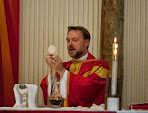
Sunday, September 30, 2012

Homily for The Feast of St. Michael and All Angels (observed)

Angel55

(Audio)

Matthew 18:1-11; Revelation 12:7-12; Daniel 10:10-14; 12:1-3

In the Name of the Father and of the + Son and of the Holy Spirit.

You have heard the proverb “Pride goeth before the fall.” This saying is a colloquialism of Proverbs 16:18, which reads in the King James Version of the Bible, “Pride goeth before destruction, and an haughty spirit before a fall.” How many fables, moral lessons, and anecdotal stories are based upon this Proverb, which we all know to be true? Those who are puffed up with pride and are full of themselves often rise to lofty heights, yet too often do they also meet with a precipitous fall. Lucifer’s great sin, and the cause of his fall, was his pride. Though he was one of the highest of God’s angels, an angel of light as his name means, he begrudged the LORD to be a servant, particularly as servant to God’s most treasured creatures, man.

Did Lucifer want to be a god himself? Quite likely, yes. But, this much is certain, he did not want to serve mankind, whom he deemed to be beneath him. Yet, God loved mankind and gave him dominion over all things that He had made, even the heavenly ranks of holy angels. Lucifer’s pride could not tolerate that truth. His pride consumed him and filled him with anger and resentment and the darkness of hatred for God, and, even more, hatred for man loved by God. Lucifer’s pride caused him to fall from the highest ranks of God’s holy angels to the darkest depths of hellish separation from God’s presence.

In his fall, Lucifer became Satan, which means adversary or enemy, the accuser of men. He knew that he could not defeat God, therefore He attacked and defeated mankind whom God loved. Cunningly, he tempted our First Parents by appealing to their pride. He promised them that by disobeying God they would become like God. But, that was a lie. They were already like God, made in His image, the highest of all that He had made. Though they were the highest of the high, Adam and Eve gave into their pride and they fell precipitously, just as Satan who deceived them.

However, God’s love for mankind moved Him to right this situation. Though our First Parents rebelled and fell from grace, God had compassion for them and showed them mercy. He set in motion a great plan of redemption through the sacrificial offering of His Son. Mysteriously, and beyond human wisdom and understanding, God pre-ordained before the foundation of the world that His own Son would become a man, would fulfill the holy Law of God in perfect obedience and righteousness, and would suffer and die in man’s place, redeeming him from his sin, restoring a right relationship with God once again.

Though Satan was undoubtedly aware of God’s plan, once again his pride blinded him and he truly believed that he could thwart God by destroying Jesus. Thus, when Jesus died on the cross, Satan thought he had won, but truly the opposite was the case. Jesus knew no sin, but God placed upon Him the sins of all mankind. Taking our sins to the cross with Him, they died there with Him and were buried, while He alone rose from the dead. Truly the cross of Jesus Christ is the sign of Satan’s defeat. In His selfless, sacrificial, and innocent suffering and death, the Seed of the Woman, the Son of God, Jesus Christ, crushed the ancient serpent’s head. He rose from the dead on the third day, just as He had said, the living proof of Satan’s defeat and the forgiveness of man’s sins through faith in the victorious and atoning death and resurrection of Jesus Christ.

The war in heaven of Revelation chapter twelve describes the result of Jesus’ victory on the cross. Satan, the accuser of men, has been thrown out of the presence of God. No longer can he accuse you before the Father, for your sins are atoned for and forgiven in the blood of the Lamb of God, Jesus Christ. Satan cannot accuse you, judge you, or condemn you any longer, for you have been justified, wholly apart from yourself, by the obedience, suffering, and death of Jesus for you.

However, though Satan cannot accuse you before God, now he roams and prowls the earth in a violent rage, for he knows that his time is short. Satan cannot harm you, for you have been sealed in the blood of Jesus Christ, yet, he does have one powerful and dangerous weapon that he uses against you – lies and deception. Satan cannot defeat God. He cannot defeat Jesus. But, he can, and he does, attack you by lying and deceiving, tempting you to disbelieve that you are forgiven and righteous before God in the blood of Jesus. He tempts you to sin, he makes sin seem attractive to you, even the right thing to do. But then, when you do it, he accuses you of your sin, and he tempts you to believe that you are not forgiven, that you cannot be forgiven, that you are beyond God’s forgiveness and outside of His grace. This is a lie, a deception! But, how often do you believe it? How often do you allow Satan to cause you to disbelieve God’s love and forgiveness? How often do you allow Satan to cause you to doubt God’s goodness and mercy?

Satan’s purpose in lying to you and deceiving you is to separate and isolate you from your brothers and sisters in Christ, from your neighbor, and, ultimately, from God. He has no other reason for doing this than hatred for God and for you whom God loves. There is no victory for him to win. There is no power or glory for him to gain. There is only his evil, twisted, hatred, and the anger and fury which fuel it. He wants to see you destroyed eternally, and he relishes in the irony that it is all a lie and a deception, for he knows that you already have eternal life in heaven with God as a free gift through faith in Jesus Christ.

Thus, Satan is your enemy. He is your only enemy. Indeed, it is true to say that no man is your enemy, but all men have the same enemy. It was pride that caused his fall. He was too filled with pride be your servant. He was jealous of God’s love for you. His pride and jealousy consumed him, and it corrupted him and transformed him into a self-loving, self-worshipping, and self-righteous demon. But, he was not a demon before, but an angel, a messenger, as that word means, to bring the Word of God to men. For, that is the work of God’s holy angels, to proclaim His Word to men. Often the Holy Scriptures use that same word to describe pastors, for they too proclaim the Word of God to men. However, while pastors perform the message-bringing function of angels, they are not angels in an ontological or essential sense. God’s holy angels also protect and defend His children from the attacks, lies, and deceptions of Satan. Truly, angels guard and watch over you, just as Luther teaches you to pray for both in the morning and evening. Yet, they are servants – servants of God, and your servants – therefore, you are not to pray to angels or to worship them, but you are to thank God for their service and honor and glorify Him.

Further, you may emulate the angels of God by serving your brothers and sisters in Christ and your neighbor in need. Put away your pride, and serve all in the faith and knowledge that, when you serve the least of your brothers, you are serving Jesus. You must bear with all your brothers, sisters, and neighbors in patience and kindness, even those who do evil to you or hate you, believing and knowing that God alone is judge and that He works all things, even the evil things men do, for the good of those He has called in Jesus Christ. For, God has ordained and constituted the service of angels and men in a wonderful order that you will be helped and defended here on earth.

Do not be afraid! No matter what befalls you in this life, nothing can separate you from the love of God in Jesus Christ. That is the truth! Anything else is a lie of Satan! But, he is ceaseless in his attempts to cause you not believe that! He never sleeps or rests, but he prowls the earth like a lion seeking prey to devour. He will try to isolate you and separate you from your brothers by tempting your pride, causing you to judge and condemn and hate others and thereby separate from them. Then he has you, then he has them, to work on in private, in isolation, without the support of the body of Christ and the family of God. He will lie to you and deceive you so that you take your eyes off the cross of Jesus Christ and forsake the redemption He won for you there.

Therefore, pray that God send His angels to protect you and defend you, and pray for the Church of Jesus Christ to persevere. And, more than anything else, continue to gather around the Words and the Wounds of Jesus Christ as His body and receive the forgiveness of your sins again and again; be strengthened and encouraged in His Word, and commune with your Lord and Redeemer who laid down His life in selfless, sacrificial service for you to purchase, win, and redeem you for eternal life with Him, His Father, and His most Holy Spirit in the courts of heaven. There, as now, in a foretaste of that great feast to come, you will worship with angels and archangels and with all the company of heaven, God, and the Lamb upon His throne, Jesus, to whom be blessing and glory and wisdom and thanksgiving and honor and power and might forever and ever! Amen.

In the + Name of Jesus. Amen.

Sunday, September 9, 2012

Homily for The Fourteenth Sunday after Trinity (Trinity 14) – Rally Day

jesushealstenlepers6

(Audio)

Luke 17:11-19; Galatians 5:16-24; Proverbs 4:10-23

In the Name of the Father and of the + Son and of the Holy Spirit.

The fear of the LORD is the beginning of wisdom. This Proverb is one of the best known passages in all of Holy Scripture. But, what does it really mean? What is the fear of the LORD? And, why does it bring wisdom? First and foremost, the fear of the LORD is reverence and awe. Reverence and awe are our natural response when we recognize and acknowledge the LORD to be God and the Creator of all things. When we recognize that our existence is not happenstance, but that each of us is fearfully and wonderfully made, apart from any will or intention of our own, even that of our parents, then we are caused to look outside of ourselves to the LORD, and to begin to seek Him and to know Him. What we know about Him by observing ourselves and the world we live in is that He is powerful and creative – and that compels our reverence and awe. However, when His Spirit calls us in faith, then we begin to see that, not only He is powerful and creative, but He is also loving, merciful, and gracious. Then we truly begin to fear the LORD in the fullness its meaning, and that is the beginning of wisdom.

And so, wisdom is a relationship and an order, and the fear of the LORD is the beginning of that relationship and order – when we come to realize and to recognize the God who has always been there, who is the very Creator and Source of our lives and of all things that exist. Then we begin to discover a Divine Law that has always been there as well, a Law that we had misappropriated to other things, other men, and other gods, but now we appropriate to the true and only God. For, we all have our laws, and we all have our gods. For many, god is an incomplete version of the true God. For many others, god is an impersonal force or energy that we can learn to utilize to our benefit or for the benefit of others. For so-called atheists and secular humanists, god is more personal (and subjective) than that – you are your own god, and man’s reason, intellect, wisdom, and experience are the only truth.

Last week, in the Parable of the Good Samaritan, we heard about two men who were so concerned about the letter of the Law as they understood it that they could not, and would not, obey the spirit of the Law to help a brother in need. But then, along came a Samaritan, a man who, in many ways, could be said to not be under the Law – for he was not a Jew, at least, not fully, and his people were not of the covenant or bound by God’s Law as the priest and the Levite were – and, in his freedom, he was able and willing to step down into the ditch with his half-brother and help him.

Fast forward to this week – you just heard Jesus’ story of the ten lepers. All ten appealed to Jesus for mercy. All ten were commanded to go show themselves to the priests. All ten were healed on the way. But one, a Samaritan, returned to Jesus to offer Him thanks and to praise God. Now, if all you take away from this story is that it is good to give thanks to God, then you’re missing about ninety-five percent of the story. There’s much more going on than that. How must the Samaritan have felt when Jesus commanded him to go to the priests? He couldn’t do that; he was a Samaritan. By law, he wasn’t permitted in the temple. Thus, when the Samaritan leper saw that he was healed, he returned to the man who had healed him, Jesus, and he worshipped God there, at his feet. The Samaritan leper was free from the law to worship God without fear, recognizing His merciful and gracious presence in Jesus.

The fear of the LORD is the beginning of wisdom. The Samaritan leper awoke from his spiritual death to see that the LORD God was standing right before Him, not to destroy him, not to judge him, not to condemn him, but to forgive him and heal him and restore him. And all this was the LORD’s gift to him, free, no strings attached, by grace flowing from the boundless love, mercy, and compassion of God. The forgiven Samaritan leper was wizened to see that the Law could not condemn him when the LORD God forgave him and treated him as His own son. Arguably, the other nine, faithful Jews, still sought to win God’s favor by obedience to the Law. They saw Jesus as a Rabbi, a teacher of the Law, and they dutifully obeyed his command to go and show themselves to the priests. Only the healed and forgiven Samaritan leper could see with eyes of faith that Jesus is the LORD’s Great High Priest. Therefore, the thankful leper went to see the only Priest who could ever forgive sins and restore sonship with God; he went to see Jesus, and falling down at his feet, he thanked Him and He worshipped God who, in Jesus, has graciously visited His people.

St. Paul says in our Epistle lesson today, “If you are led by the Spirit, you are not under the Law.” Please understand what this means, and what it does not mean: What this means is literally that “you are not under the Law”. That is to say that the Law no longer condemns you, because Jesus has fulfilled the Law for you. However, what this does not mean is that you are free to disregard the Law, that you may willfully disobey it without penalty. No, you are not under the Law’s condemnation, but you have been freed from the Law that you may do it without fear of condemnation when you fail.

Likewise, Solomon gives you instruction in wisdom in today’s reading from Proverbs: Keep hold of this instruction; do not let go; guard her, for she is your life. Do not enter the path of the wicked, and do not walk in the way of the evil. Avoid it do not go on it; turn away from it and pass on. […] The path of the righteous is like the light of dawn, which shines brighter and brighter until full day. The way of the wicked is like deep darkness; they do not know over what they stumble.

The wicked walk in darkness, and they stumble upon they know not what, because they are driven and compelled by fearful obedience to, or willful rebellion against, the Law of God and / or the self-created laws of men. To walk in the way of the wicked is to walk without recognition of the LORD, the source of light, the knowledge of whom is wisdom. This is why we have prayed with the Church this morning, “O Lord, keep Your Church with Your perpetual mercy; and because of our frailty we cannot but fall, keep us ever by Your help from all things hurtful and lead us to all things profitable to our salvation.” Therein we confess that, on our own, we will stumble and fall. Therefore, we pray for the Lord’s mercy, believing and trusting that we receive it through Jesus Christ, and we return to the Lord, not only to give thanks, but we return to our Lord Jesus, recognizing and confessing in Him, God’s gracious visitation.

As we this day celebrate the commencement of another year of Christian education, we do so in recognition and acknowledgement of our LORD and God as the very source of our life and the giver of all things good and needful. We are thankful for His mercy, compassion, and love; we are thankful for His forgiveness and grace; and we are thankful for His gracious visitation of us in Jesus Christ. As parents and pastor, Sunday School teachers, assistants, and Christian brothers and sisters, let us commit ourselves anew to teaching our children to fear the LORD and to grow in wisdom. Let us teach them the love of the Law done under the freedom of the Gospel. And let us teach them God’s Word that He may instill in them the fruits of His Holy Spirit: love, joy, peace, patience, kindness, goodness, faithfulness, gentleness, and self-control, for, against such things there is no Law.

By teaching our children the way of wisdom, by leading them in the path of uprightness, the LORD promises that, when they walk, they will not be hampered, and if they run, they will not stumble – for, they will be free from the traps and snares of legalism, and they will be protected against self-righteousness and contempt for the Law, but they will walk and run and live in the light of the Gospel, the Good News of God’s Law fulfilled, His wrath turned away, and His life bestowed through the obedience and self-sacrifice of His Son Jesus the Christ. He is not a God that is far off, but He is very near, even here in your midst. Come, kneel before Him and give thanks, praise, and worship to the LORD, and come, receive from Him anew forgiveness, life, and salvation.

In the + Name of Jesus. Amen.

Sunday, September 2, 2012

Homily for The Thirteenth Sunday after Trinity (Trinity 13)

watanabe_good_samaritan

(Audio)

Luke 10:23-37; Galatians 3:15-22; 2 Chronicles 28:8-15

In the Name of the Father and of the + Son and of the Holy Spirit.

Today’s parable of the Good Samaritan is an illustration of the nature of God’s love shown to mankind. Jesus offered the parable in response to a young lawyer’s question, “What must I do to inherit eternal life?” Now, by all counts, that’s simply a bad question. Why? Well, it’s a bad question because “doing” concerns labor and merit, while “inheriting” concerns being given and receiving. That is to say that you do not do anything when you inherit, but someone else has given you an inheritance because of who you are – because you are a son or a daughter, a grandchild, a nephew or a niece, or at least a close family friend. You inherit because the giver has recognized that you are related to him, and what he has he gives to you, whom he considers to be his own flesh. That’s why the lawyer’s question was bad. It betrayed a fundamental misunderstanding about the passive nature of inheritance, that you cannot do anything to inherit eternal life, but you must receive it, as a gift, by being related to the giver, part of his family, flesh of his own flesh.

But, the man was a lawyer, therefore he asked a question about the law – “What must I do?” Therefore, in turn, Jesus directed him back to the Law – “What is written in the Law? How do you read it?” The lawyer answered correctly saying, “You shall love the Lord your God with all your heart and with all your soul and with all your strength and with all you mind, and you neighbor as yourself.” That was the correct answer. That was what Moses taught as a summary of the entire Law of God – love. Jesus told the young lawyer that he had answered correctly and He said, “Do this, and you will live.”

Now, of course, therein lies a problem. Jesus’ command is a bit too open ended for our liking. We want to ask, “What do you mean by ‘do this’? How much do I have to love? Whom shall I love? When shall I love?” We want to narrow the Law of God down a little (maybe a lot!). We want to make it more precise, more do-able. But, Jesus didn’t let the lawyer off the Law’s hook, and neither does He let you off. You want to do the Law? Then, do it. But, the lawyer isn’t comfortable with Jesus’ open-ended command. He wants to narrow it down and make it more do-able. Thus, in an attempt to justify himself, the lawyer asked Jesus, “And who is my neighbor?” The trap is sprung. It is then that Jesus replies by telling His disciples and this young lawyer the Parable of the Good Samaritan. It is not a parable about works that you should do, but it is a parable about, and it is the answer to, the question “Who is my neighbor?” It is a parable about relationships. And, it is a parable about mercy, compassion, charity, and grace, which is to say, it is a parable about love, which is the fulfilling of the Law of God.

Who is my neighbor? That question has a sour ring to it, doesn’t it? It’s the kind of question a child asks when he’s trying to get out of something. It’s the kind of question a defendant in court asks when he’s trying to justify himself and appear not guilty. It’s the kind of question, let’s face it, that we all ask all the time. Historically, the Jews of Jesus’ day considered other Jews to be their neighbor, beginning with their own family and relatives, extending to friends and neighbors – but only Jews. They did not consider their half-brothers, the Samaritans, to be their neighbor. They Jews felt justified in walking past a Samaritan in need; they felt no obligation to help. The irony in Jesus’ parable, then, is that two upstanding Jews, a priest and a Levite, both passed by a man beaten and bloodied and left for dead in the ditch, and that man was not a Samaritan, but a Jew himself, a son of Abraham and a neighbor. Further, the person who finally does stop and help the man is not a Jew, but a despised Samaritan.

Do you see how twisted and contorted things become when we do not love? We try to narrow down our Lord’s command to love, to exclude some persons, to narrow the definition of our neighbor so that the Law appears more do-able, so that we can feel good about ourselves, that we’re doing pretty good, helping, caring for, and loving those few persons within our narrow definition of neighbor. Then, we think, we can stand on our own goodness, our own good works, our own justification and righteousness, as we judge ourselves to be, if not perfect, better than most.

No doubt the priest and the Levite had lots of reasons for not helping their brother in distress. Some of those reasons, they had convinced themselves, were actually faithfulness to the Law. For instance, the Law said that they could not touch a dead body or they would be ceremonially unclean. After all, that man in the ditch could very well have been dead. However, Jesus states that they were coming down the hill from Jerusalem to Jericho. They had already been to the Holy City for worship and now they were on their way home. They had nothing to fear about becoming ceremonially unclean. Further, they showed their hypocrisy upon leaving worship, where in Word and prayer they heard about God’s mercy and compassion, by not showing the same mercy and compassion to the man lying in the ditch. Likewise, so do you trump up reasons and justifications for not helping your neighbor: “He’ll just use my money on drugs or booze.” “Somebody else will come along to help.” “I’ve helped others, it’s someone else’s turn.” “He might jump me and take my money or worse.” Come on, I know that you’ve felt it. I have too. At least be honest about. Confess it. Bring it into the light. Then the Lord can forgive you and take away the guilt. But, don’t try to justify your thoughts and deeds. Don’t try to bend, stretch, or compromise the Law to make yourself feel better. Don’t try to narrow the definition of who is your neighbor. For, your neighbor is anyone and everyone who is near you, who you can help. Your neighbor is your husband or wife, your son or daughter, your next door neighbor, your friends, and even your enemies, and your neighbor is the stranger you do not know.

“Love the Lord you God with all your heart and with all your soul and with all your strength and with all your mind, and your neighbor as yourself.” You know, I have always been somewhat uncomfortable with the teaching “Love your neighbor as you love yourself” mainly because I do not always love myself. Often, I find myself quite unlikeable and unlovable. But, that too is a sinful falling short of what God has called us to be. Truly, we are called to a higher love of both the self and our neighbor, a love that truly sees no man as enemy, but each man as a brother or a sister, flesh and blood, as my own body, having common parents, washed in the same blood of Jesus Christ, having the same God and Father. The unknown person on the street is but another brother for whom Christ died. That brother is of the same flesh and blood as I, having the same Redeemer and Father as I. And, as St. Paul has taught, “No man ever hates his own flesh but nourishes and cherishes it.”

When we attempt to narrow the definition of neighbor, we commit a two-fold error. First, we deny that all men are our neighbor, brother, and common flesh and blood. Second, we falsely believe that we can keep God’s Law if we narrow it down and make it more do-able. When you encounter a neighbor in need, you should see yourself in that man or woman, even as you should see Christ in him. Jesus teaches that by serving your neighbor in need you are truly serving Him. The point of His teaching in Matthew 25, however, is much less what you should do than how it is that you should view other men – as brothers, as flesh and blood relatives, as family, let alone neighbors. In fact, Christ is in each and every person on this planet, regardless of their nationality, race, gender, or religion. Jesus Christ died for the justification of each and every one of them as much as for you. Do not consider unclean those brothers and sisters Jesus has made clean.

This is the Law of Love – to be merciful as He, Jesus Christ, is merciful; to be charitable as He is charitable, to show compassion as He has shown compassion, and to love as He has and is love. This is not a Law that you can do, but it is the Gospel that you must be in Him. You cannot justify yourself by doing this Law, but you must show your justification by being it. God is love, and to live in the right relation to God through faith in Christ means to have His love shed abroad in our hearts. He who does not love his brother whom he has seen, cannot love God whom he has not seen. Everyone who loves the parent loves the child. No one can force us to love. The only way is for us to receive the love of God when He showers it upon us in and through His means of grace. Then we can love as He first loved us.

Though the Samaritan had every human reason to reject and pass by the Jewish man in the ditch, nevertheless he recognized his brother in need, and he recognized his own pitiable self in that stranger, and he stepped into that ditch with the man, bound up his wounds, pouring on oil and wine, and took him to an inn and paid for his care. Because he could empathize with the man, he had compassion and showed him mercy, knowing that there, but for the grace of God, laid he. That was before the passion, death, and resurrection of Jesus. Now, when you encounter your brother in need, you see in him, not only your own lowliness and need, but the poverty, humility, and suffering of your Lord Jesus Christ. It is an opportunity for you to serve your Lord, showing to Him a portion of His own mercy, compassion, charity, and love that He has richly and abundantly showered upon you, by serving your neighbor and brother in need.

Indeed, Jesus does command you to “Go, and do likewise.” But that command comes only after He has stepped into the ditch of sin and death with you, bound up your wounds and poured on the oil of His Holy Spirit and the wine of His Precious Blood to heal you and restore you, paying to the last penny all that was required to set you free from your debt of sin and guilt. Thus, Jesus’ “Go, and do likewise” is much more akin to Him saying “A new commandment I give to you, that you love one another: just as I have loved you, you also are to love one another.” And He invites you to eat of His flesh and to drink of His blood that He may dwell in you and you in Him, that His love, mercy, charity, and compassion may dwell in you and flow through you, filling you to the brim and to overflowing into the lives of your brothers, your neighbor, your flesh and blood to the glory of God the Father, through His Son Jesus Christ, in His most Holy Spirit. Amen.

In the + Name of Jesus. Amen.

Sunday, August 26, 2012

Homily for The Twelfth Sunday after Trinity (Trinity 12)

(Audio)

Mark 7:31-37; 2 Corinthians 3:4-11; Isaiah 29:17-24

In the Name of the Father and of the + Son and of the Holy Spirit.

Jesus teaches you that it is not what goes into your mouth that defiles you, but it is what comes out of your mouth. For, what comes out of your mouth proceeds from your heart, and this is what defiles you. For, it is out of the abundance of your heart that your mouth speaks, and out of your heart come evil thoughts, murder, adultery, sexual immorality, theft, false witness, and slander. These are what defile you.

As you were when you came into your life, and then, with what you have done with it since, it would have been better that you were born deaf and could not hear, that you were mute and could not speak. For then these evils in your heart would not be unleashed upon the world. But then, also, you would remain alone, isolated, and cut off from family and friends, cut off from life as it was meant to be, unto death and eternal isolation and solitude, which may be the worst hell imaginable.

But, thanks be to God, He did not leave you alone in that state, but having boundless mercy, love, and compassion for you, He visited you in your own flesh and blood and He spoke His creative and life-giving Word into the deadness of your ears. He opened them and He loosed your tongue to speak, not the wickedness of your sin-corrupted heart, but His praise rising from a heart cleansed by His holy blood shed for you, a new heart of flesh to replace your heart of stone.

Jesus’ touch is powerful and healing to be sure, but even the touch of His hands is empowered by His creative and life-giving Word. And so, you need not worry that Jesus hands are not present that He may place His fingers into your ears, that He does not spit and touch your tongue, for you have His creative and life-giving Word, you have His ephphatha spoken to you in and through His holy Word in the Holy Scriptures, and through the lips and mouths, hands and touch of pastors and priests in Law and Gospel preaching, in Holy Baptism, in Holy Absolution, and in Holy Supper. Through these humble means He is present to serve you with greater gifts than hearing and speech, but with the forgiveness of sins, eternal life, and salvation.

“O Lord, open my lips, and my mouth will declare your praise.” The Church sings these words of King David at the beginning of the day in the Matins liturgy. They come from Psalm 51, the great penitential Psalm of David, which he composed after he was brought to repentance through the words of Jonathan. In Psalm 51, King David confessed that he was in need of a new heart, and he asked that the LORD would create a clean heart within him and renew a right spirit within him, words that the Church still sings at each Divine Service in the Offertory. For, along with David, each Christian must confess that he was conceived and born in sin, spiritually deaf to the Word of God and unable to speak His praise until the LORD opens our stopped ears and looses our mute tongues. It is nothing less than an act of creation and a resurrection each and every time a sinner repents. He who was deaf can hear. He who was mute can sing. He who was blind can see. He who was lame can leap like a deer. He who was dead lives, all because of the creative and life-giving Word of a Book spoken into death and nothingness.

You and I need to be cleansed and healed, resurrected, and created anew from the inside out. That good work has already been begun in you, and your LORD will bring it to completion in the day of Jesus Christ. Thus, we are God's children now, yet what we will be has not yet appeared; but we know that when He appears we shall be like Him, because we shall see Him as He is.

What you are now is God’s new creation. God has spoken His ephphatha into you. He has opened your ears to His Word and He has filled you with His Holy Spirit so that you are His temple, free from the bondage of sin and death, free to live life in the Spirit of God, the life of Christ to the glory of God the Father. This is what St. Paul means when he says that “we are not sufficient in ourselves to claim anything as coming from us, but our sufficiency is from God, who has made us competent to be ministers of a new covenant, not of the letter but of the Spirit.” “Such is the confidence we have through Christ toward God,” believing, trusting, and knowing that He has done all things well for us in Christ. No longer is the Law of God cause for fear or a cause for self-righteousness, for Christ has fulfilled it and satisfied it for you, but now you are free to do it without fear of punishment when you fail or misplaced faith in your own works unto death. You are free to serve and love God by serving and loving your neighbor knowing that you cannot lose what has been given to you by grace, and that all that you have is God’s, who gives to you in abundance that you may give from the abundance of your heart what He has given to you: love, mercy, grace, compassion, and forgiveness.

The creative and life-giving Word of God that first clove the darkness in the beginning, that brought forth life out of death and nothingness, that opened deaf ears and blind eyes, that loosed mute tongues still calls out to you, still fills you, still feeds you, still strengthens you, and still re-creates you that you may live and be fruitful in the fruit of the Spirit of God: “love, joy, peace, patience, kindness, goodness, faithfulness, gentleness, self-control. Against such things as these there is no law. But, the desires of the flesh are against the Spirit, and the desires of the Spirit are against the flesh, for these are opposed to each other, to keep you from doing the things you want to do. […] Now the works of the flesh are evident: sexual immorality, impurity, sensuality, idolatry, sorcery, enmity, strife, jealousy, fits of anger, rivalries, dissensions, divisions, envy, drunkenness, orgies, and things like these.” St. Paul warns you that “those who do such things will not inherit the kingdom of God.”

What this means is that, your God, who would not leave you alone in isolation unto sin and death, but in mercy, love, and compassion visited you in your own flesh and blood and spoke His creative and life-giving Word into the deadness of your ears and loosed your tongue to speak His praise, your God also will not leave you or forsake you, he will not give up on you, but continually calls you, again and again, and cares for you to preserve you and keep you that you may remain His child and heir forever. He knows your flesh all too well. He knows your weakness and the temptations you face. Therefore He gives you His Word and His Spirit and He dwells in you and with you, He joins you into a family of faith, the Church, the very body of Christ for mutual support and fellowship to keep you from straying into harmful beliefs and behaviors.

Likewise, you are indeed your brother’s and your neighbor’s keeper. Just as the disciples brought the man who was deaf and mute to Jesus that He might heal him, so too should you share the goodness, love, and forgiveness you have received from Jesus with others. More than that, bring them to the creative and life-giving Word of God in the Holy Scriptures read and preached and the Holy Sacraments which are the very means through which God bestows His gifts of forgiveness, life, and salvation. You are not like Cain, self-centered and a solitary wanderer upon this earth, but you are a member of the body of Christ and the family of faith in Him.

The ears that He has opened, the tongues that He has loosed, they cannot help but hear and speak and sing His Word and His praise. This is who you are – healed sick, raised dead, forgiven sinners, called out of death into life and sent out into the world as salt, leaven, and light that God may be glorified. It is His Word that has called you. It is His Word that has raised you. It is His Word that sustains, empowers, and enlightens you – that makes you a blessing unto others. His Word is your life and your salvation. Read it. Hear it. Eat it. Live it. It is your life, for the life of the world.

In the + Name of Jesus. Amen.

Sunday, August 19, 2012

Homily for The Eleventh Sunday after Trinity (Trinity 11)

(Audio)

Luke 18:9-14; 1 Corinthians 15:1-10; Genesis 4:1-15

In the Name of the Father and of the + Son and of the Holy Spirit.

Why did the LORD have regard for Abel and his offering, but not for Cain and his offering? Abel was a shepherd, and he offered to the LORD the firstborn of his flock. Cain was a farmer, and he offered to the LORD a portion of his harvest of the fruit of the ground. Both offerings were appropriate, and both were God-pleasing in content, but the LORD had regard for Abel’s offering alone. But, why? The preacher to the Hebrews explains that it was a matter of faith and trust; he writes, “By faith Abel offered to God a more acceptable sacrifice than Cain, through which he was commended as righteous, God commending him by accepting his gifts.” And so, we learn that it was not the offering that was the problem, but rather it was the heart of Cain. And, what was the problem of Cain’s heart? Perhaps Cain trusted in his offering. Perhaps he trusted in the fruits of his labor. Perhaps he trusted in his own righteousness. But, whatever it was that he placed his trust in, he did not place his trust in the LORD for his righteousness. Thus, he placed his trust in himself. And, thus, the LORD had no regard for Cain’s offering.

The rest of that Old Testament account truly deals with the poisonous fruit of Cain’s self-righteousness. Cain became jealous and angry of his brother Abel, and that the LORD had regard for Abel’s offering and not his own. Further, he became angry with God. Nevertheless, the LORD said to Cain that if he did well, he would be accepted. But, He also warned him that if he did not do well, sin was crouching at the door, and that its desire was for him, and therefore he must rule over it. Now, that is a key statement. Truly, there was no outward difference between Cain and Abel. They both experienced the same temptations to sin, temptations that are common to all men, the same temptations that you and I face every day. They are the temptations of fear, greed, selfishness, jealousy, anger, judgment, and hatred. They are the temptation to self-righteousness, which is nothing other than transgression of the First Commandment, to have a god before and above the LORD – namely, yourself. All such temptations serve to drive you into yourself, and to drive a wedge between you and others. Such are the tactics of Satan, who prowls around like a lion, seeking to divide the flock and to prey upon those who become separated and stray.

You know the story all too well. Cain rose up against his brother Abel while out in the field and he murdered him. Cain had already murdered his brother in his heart, now he had murdered him physically as well. When the LORD inquired about Abel, Cain infamously answered, “Am I my brother’s keeper?” This too is the fruit of self-righteousness – judgment, condemnation, separation – as Cain forsook his stewardship and care for his own brother, flesh of his own flesh, and blood of his own blood. Fear, greed, selfishness, jealousy, anger, judgment, and hate – these are the fruits of self-righteousness. These are the temptations we face daily which Satan uses to cause us to judge, condemn, and hate our neighbor so that we will separate from them, avoid them, and fail to love and serve them. Self-righteousness is contradictory and antithetical to love, and it receives, not God’s blessing, but His curse. To hate your neighbor, let alone your brother, is to hate God, and it is to worship your self. The only relief from this curse is to do well and be accepted, which is to say, repent of your sin, be turned from your hateful self-righteousness and idolatry back to God, in humility and selflessness, and He will accept you, just as He regarded Abel’s offering in faith and trust. He will accept you, not because of your faith, but because of the object of your faith, Jesus. Abel’s faith, so many millennia before the advent of Christ, was faith in the goodness and faithfulness of the LORD, that He would keep His promise to send a savior from the seed of a woman. Your faith is in that seed who has come, and who has been planted in the soil in death, who now is risen to new and eternal life, bearing fruit a hundredfold.

In today’s Gospel lesson, Jesus taught a parable to illustrate this point. Once again there were two men, one a Pharisee and the other a tax collector. Both men did the appropriate and pious thing to do, they went to the temple to pray. The Pharisee prayed, giving thanks to God for many good things in his life: being one of God’s chosen, not an extortioner, unjust, an adulterer, or a tax collector. He was a good and pious man, well thought of as an outstanding example of godliness and holiness. He wasn’t perfect, but he did recognize God as having set him apart. But, there was a problem in his attitude – a problem with his faith and trust, just as there was a problem with Cain’s faith and trust. The Pharisee thanked God for setting him apart from other men. He even thanked God for making him a holy and pious man. However, the Pharisee’s faith and trust was not in God, but in what God had made of himself – God had set the Pharisee apart from other men and provided him gifts that made him pious and holy, but, instead of trusting in God the giver of the gifts, he trusted in himself and the gifts he had received. Is this a subtle distinction? Perhaps, but it is a significant and important one.

Consider the Pharisee’s attitude towards the tax collector, who also had done the appropriate and pious thing to do, going to pray in the temple. In his prayer of thanks to God, the Pharisee actually used the pious tax collector as an example of the type of person he was thankful not to be. The Pharisee viewed the tax collector much in the way that Cain viewed his brother Abel – with contempt, judgment, anger, condemnation, and hatred. His attitude rather should have been that of St. Paul’s who said, “I am the least of the apostles, unworthy to be called an apostle… But by the grace of God I am what I am, and his grace toward me was not in vain. On the contrary, I worked harder than any of them, though it was not I, but the grace of God that is with me.” In contemporary parlance we might say, “There but for the grace of God go I.” The Pharisee boasted of his tithing to the temple. He trusted in his works, not in God. And, the Pharisee viewed the tax collector as beneath him, standing in judgment and condemnation over him, not recognizing that the same grace, mercy, love, and forgiveness that he enjoyed from the LORD was showered upon the tax collector as well.

In contrast to the Pharisee, the tax collector stood far off and would not even lift up his eyes, but he beat his breast and confessed his sinfulness and unworthiness of God’s grace and mercy saying, “God, be merciful to me, a sinner!” The tax collector did not boast of anything at all. He did not offer anything to God but his broken and contrite heart. He trusted in God to be merciful to him. He trusted in God’s good will towards him. And Jesus concludes his parable saying that “this man [the tax collector] went down to his house justified, rather than the other [the Pharisee]. For everyone who exalts himself will be humbled, but he one who humbles himself will be exalted.”

Next to the Lord’s Prayer, this prayer of the tax collector, and many other sinners, lepers, blind persons, and people in need of help and healing, Kyrie eleison, Lord, have mercy, is the finest prayer in all of scripture. When we pray this prayer in worship, we are praying like the humble tax collector, offering nothing to the LORD, but trusting in Him and receiving from Him mercy and forgiveness. As Martin Luther said in his dying words, “We are all beggars, every one.” This prayer is a confession that all that we have, all that we are that is good, just, and godly is His gift to us, by grace, received in, and clung to, in faith in Jesus Christ. We may judge actions and deeds by the Law of the LORD – for example, tax collectors notoriously extorted the people they collected from, and this was wrong, it was stealing, and perhaps a host of other sins – however, when it comes to justification before God, no man may judge another, for we are all in the same sin-boat together. There is no difference between Pharisee and tax collector, Cain and Abel, leper, adulterer, pastor, or layman – all have sinned and fall short of the glory of God, and all are justified by His grace as a gift, through the redemption that is in Christ Jesus.

One can look as this Sunday’s lessons as a study in contrasts: Cain and Abel; Pharisee and tax collector; the house of prayer that is the temple and the house of prayer that is the soul of a man. Last Sunday you heard Jesus’ words concerning the temple in Jerusalem, “My house shall be a house of prayer, but you have made it a den of robbers”. Today you have heard the spiritual meaning of those words. Your body is the temple of the LORD; what kind of spirit dwells in it? Is it filled with the Holy Spirit of God, the Lord and giver of life, who graciously gives to all things needful, or is it filled with your own self-righteousness? When you pray, when you give an offering, when you serve God, do you return to Him with acknowledgement and thanksgiving what you know belongs to Him and is His gift to you, or do you rob God and claim for yourself what is His, offering to Him your own works, your own gifts, your own righteousness? Is the temple of your body and soul the LORD’s house of prayer, or is it a den of robbers? As Jesus taught in His parable, there were two men who went to the temple to pray. Both men returned to their homes, but only the humble and repentant tax collector returned to his home justified. For everyone who exalts himself will be humbled, but the one who humbles himself will be exalted.

The tax collector wasn’t a bad man by human standards. Indeed, he was not an extortioner, unjust, an adulterer, or even a tax collector. And yet, in his heart, he had done all these evil things and more against God: robbing God of His glory and righteousness, betraying God’s holiness and faithfulness, stealing from God by claiming His gifts and His works as his own. Like Cain, the Pharisee trusted in himself that he was righteous. In so doing he exalted himself and now must take a lower place. In contrast, the humble tax collector boasted of nothing in himself except his sinfulness and unworthiness. The house and temple of his body and soul were full only of God’s Holy Spirit. As he prayed in the temple with his eyes and face cast down, already he was exalted higher than the self-righteous Pharisee. And when he died he was exalted to the host of angels, archangels, and all the company of heaven around the throne of the Lamb.

You, dear Christian, too are the house and temple of the LORD. Daily purge your soul of self-righteousness and spiritual extortion and adultery, praying day and night Kyrie eleison, Lord, have mercy. And the Lord will exalt you and will make His home with you. He will settle you in a home and a family so that you are not alone. All this He has accomplished for you in the gracious visitation of His Son Jesus Christ. He is your righteousness, an alien righteousness, come from outside you, but credited to you when you receive, believe, and confess Him as Lord and God. And God is in His temple now, this House of Prayer, to fill you with all good things. Bring to Him nothing but your broken and contrite heart, and He will give you a new heart and all things beautiful and holy.

In the + Name of Jesus. Amen.

Sunday, August 12, 2012

Homily for The Tenth Sunday after Trinity (Trinity 10)

jesus-lament-jerusalem1

(Audio)

Luke 19:41-48; 1 Corinthians 12:1-11; Jeremiah 8:4-12

In the Name of the Father and of the + Son and of the Holy Spirit.

Today’s Gospel theme is a reoccurring theme throughout the Church’s Year of Grace. The theme of our Lord Jesus’ visitation, or His parousia, is heard in Advent as John the Baptist prepares the way, it is heard at the beginning of Holy Week following Lent when Jesus enters the Holy City Jerusalem riding upon a donkey, and it is heard at the end of the Church Year as Christ’s Church reflects upon and prepares for Her Lord’s return on the Last Day in glory, power and great might. And, while these are three distinct modes or manners of coming and visitation, the Visitor is one and the same, our Lord Jesus Christ who has come, who is coming, and who comes amongst us even now to bring you peace with God.

All four of the Gospels include the account of Jesus’ entry into Jerusalem on the Sunday before His crucifixion on Good Friday. The three synoptic Gospels, Matthew, Mark, and Luke, also include our Lord’s cleansing of the temple as He chased out the moneychangers and the peddlers of sacrificial animals saying, “My house shall be a house of prayer, but you have made it a den of robbers.” In John’s Gospel, Jesus’ entry into Jerusalem follows directly on the heels of His great and incontrovertible miracle of raising Lazarus from the dead. But, it is only in Luke’s Gospel, which you heard a moment ago, that Jesus weeps over Jerusalem prior to His entry saying, “Would that you, even you, had known on this day the things that make for peace! But now they are hidden from your eyes. For the days will come upon you, when your enemies will set up a barricade around you and surround you and hem you in on every side and tear you down to the ground, you and your children within you. And they will not leave one stone upon another in you, because you did not know the time of your visitation.”

What Jesus was prophesying about was the destruction of Jerusalem by the Romans in 70 A.D. Within forty years of Jesus’ lament over Jerusalem, all that He prophesied came to pass. At first, the Roman Emperor Vespasian sent his son Titus to surround and lay siege to Jerusalem, prohibiting all persons and supplies from entering, and all persons, living or dead, from exiting. Within a short period of time, food and clean water became scarce, and soon disease began to spread and, as the dead could not be removed, epidemic and plague were unleashed. All of this was compounded by the fact that it was the Passover and Jews from all over the known world were in the Holy City for the Feast. History has left us a trustworthy and visually terrible account of the destruction in the writings of a first century Jewish-Roman historian named Josephus. Here is a brief summary of some of the horrors Josephus preserved for history:

The famine had grown so bad that elders and children were beaten for their bread, some were reduced to eating the leather from shoes and belts, and some even succumbed to cannibalism of their own infants. According to Josephus, this was the worst suffering since the beginning of the world. Those who were caught venturing outside the city to forage for food were crucified until there was no more room for crosses, nor anymore wood to build them. When a man was observed picking gold coins from his own excrement, they began butchering all who tried to escape in search of loot. One evening 2,000 Jews were disemboweled in this way.

At this same time, an innumerable multitude of people died of hunger. The best of friends would often come to blows over a small piece of bread; children would often rip food from their parents' mouths. Neither brother nor sister had mercy upon the other. A bushel of corn was more precious than gold. Driven by hunger, some ate manure; some, the cinches of their saddles; some, the leather stripped from their shields; some still had hay in their mouths when their bodies were found; some sought to escape starvation by means of their own filth. So many died of starvation that 115,000 corpses were found in the city and buried. Hegesippus reported that, at one gate alone, several thousand were carried out, and that 600,000 died because of the siege.

Finally, the entire city of Jerusalem was conquered, neither young nor old were spared. From the host of captives Titus sent seventeen thousand healthy, young and strong men to Alexandria as quarry slaves. Many Jews were sold as cheaply as animals. Two thousand were distributed across the entire Roman Empire to become players in the spectacles, and to be torn apart by wild beasts in the arenas. The total number of captives who remained alive came to ninety-seven thousand; however, at the beginning of the siege, ten times one hundred thousand were in the city, the majority of them strangers and not residents, although all were of Jewish descent and blood. Thus Jerusalem, the most celebrated city in all of the East, came to a miserable and lamentable end, as had been prophesied, in the seventieth year after the birth of Christ our Lord.

This was the LORD’s judgment upon Jerusalem. This was why Jesus wept and lamented over the Holy City nearly forty years before its fall. He had come to bring peace with God, not a sword. He had come to bring mercy and forgiveness, not judgment and death. But, the Holy City did not know the things that made for peace, and it did not know the time of its visitation. Men sought peace in their own righteousness, by their own works and deeds. But they were still under the curse of Eden and at enmity with God. In Jesus, God had visited His people to bring them knowledge of salvation by the forgiveness of their sins, but He was rejected and killed by His own people, by the Romans, by Jews and Gentiles alike, and by you and me as well.

Like Jerusalem, you have a choice: You will receive Jesus in faith unto forgiveness and salvation and peace with God, or you will reject Him in unbelief, remain in your sins and in enmity with God. The Lord has visited His people in the Messiah Jesus, in humility, mercy, and compassion. The Lord is visiting you, His people, now in His faith-creating, forgiveness-giving, and life-bestowing Word, Baptism, Absolution, and Supper. And the Lord will visit His people once again in power and great glory, and then every eye will see Him, and every tongue will confess Jesus Christ as Lord, to the glory of God the Father.

He has come. He comes. And, He is coming. Therefore, cleanse the temple of your soul from all self-righteousness, from trust in money and worldly possessions, from whatever idols you have created for yourself and submitted yourself to. For, today you stand in His forgiveness, at peace with God through Jesus Christ. He is unchanging, faithful, and true; He will never leave you or forsake you or break His covenant promise with you. Only you can reject Him, for He will not, and He cannot reject you.

And, His gracious visitation amongst you now is for the purpose that your faith would be renewed and strengthened and that you would be preserved in His parousia, His presence and His gracious visitation today, and every day, until He reveals Himself in glory for all to see and know. For, the peace that He brings to you, the peace that He is for you, is not a light peace, peace as the world gives, but it is true peace, peace with God who, in and through Jesus, is not your enemy and judge, but your loving Father who graciously gives you all things needful for your body, life, and soul. You are members of His body of which He is the head. You are blocks in the walls of His holy temple of which He is the cornerstone and foundation. Your Lord Jesus was torn down in your death so that not one stone was left standing upon another, and He was raised again on the third day to life that never ends. He is present for you now in this house of prayer. His gates are open and His feast is prepared. Come and eat at His banquet and know His peace.

In the + Name of Jesus. Amen.

Monday, August 6, 2012

The Church is Christ’s, and the Church is Christ

That which carries God’s Israel and makes it God’s people is therefore God’s own actions, over which none of us can rule, nor be entitled to. That a human being can be a member in God’s Israel is entirely a result of God’s merciful dealing with her, receiving her into that immense chain of events, which encompasses all time from the beginning of the world to the end of the world. The first Christians clearly understood that it was not they who had “become Christians” or “formed” a church. Everything had come to them, prepared from eternity, carried out by God according to a plan covering thousands of years. The Christians have been taken up by God into that huge drama of salvation, that began at the fall, was prepared through Abraham, Moses and the prophets, culminated on Calvary, and finally will be completed, when the kingdom of God comes in its power. They were chosen in Christ. And Christ existed before the creation of the world. Everything in heaven and on earth has been created through Him and to Him. He was present in everything which happened in the Old Testament. He accompanied Israel during its desert journey. He spoke through the prophets. He was prefigured by Melchizedek. He was sung of in the psalms. All the scriptures bore witness to Him. He was the goal and purpose of world history.

Bo Giertz, Christ’s Church – Her Biblical Roots, Her Dramatic History, Her Saving Presence, Her Glorious Future, Resource Publication, 2010

http://www.amazon.com/Christs-Church-Biblical-Dramatic-Presence/dp/1608997030

Sunday, August 5, 2012

Homily for The Ninth Sunday after Trinity (Trinity 9)

H-63 Trinity 9 (Lu 16.1-9)

(Audio)

Luke 16:1-13; 1 Corinthians 10:6-13; 2 Samuel 22:26-34

In the Name of the Father and of the + Son and of the Holy Spirit.

We are all managers and stewards of God’s possessions. All that we have is truly His, from His gracious providence. Whether it be physical possessions of money, food, shelter, and clothing, relational possessions of husband, wife, children, family, and friends, or spiritual possessions of grace, mercy, love, and forgiveness – all is the LORD’s who graciously provides us all that we need for our bodies and our lives, with overflowing abundance to manage, to use, and to distribute for the benefit of ourselves and our families and for the benefit of our neighbor in need.

However, we, like the manager in Jesus’ parable, are guilty of wasting our Master’s possessions. Sometimes we are selfish and greedy, fearfully guarding, protecting, and hoarding for ourselves what we think we need and lusting after what we think we want. But, more often than not, we are simply lazy, careless, and foolish in our stewardship, thinking only of the present, our present needs, wants, and desires, and thinking only of ourselves because those are the needs, wants, and desires we know the best.

Your LORD and Master would have you receive and recognize all things as His good and gracious gifts to you and, therefore, trusting in Him, in His goodness and love for you, use them to His glory and praise, for yourself and your family, and in service of others in their need. But fear is the very opposite of love, and the fruits of fear are selfishness, greed, envy, and hatred. Love and fear have no fellowship together because perfect love casts our fear. Thus, in truly loving God, trusting in Him, in His goodness and loving providence, all those fruits of fear may be driven away. That is why the fear of the Lord is the beginning of wisdom. A right relationship with your LORD will drive away the fruits of sinful fear and you will truly live in freedom without fear. You will be able to manage your Master’s possessions without fear of losing or going without, without fear of need or someone else having more, but you will find contentment, peace and joy in what you have, and you will be content and at peace and in joy in doling out your Master’s goods to others.

The manager in Jesus’ parable realized his predicament. He held no illusion that when he turned in his account of his management that he would not be out of a job and utterly on his own. The problem for us, however, is that we are too often not willing to confess the same about ourselves. We try to blame someone else for our failings and we try to rationalize and explain away our mismanagement. But the manager in Jesus’ parable doesn’t do that, but he knows that he is guilty as charged. He offers no excuses, and he blames no one but himself. However, the manager does something that is unexpected, something that his master will later call shrewd and will commend him for. Knowing that he has no excuse and has no one to blame but himself, he places all of his faith and all of his trust, he commends his entire livelihood and life, unto the goodness and mercy of his master.

Though he was already fired and out of work, the manager went to each of his master’s debtors and he slashed their debts by twenty and fifty percent. Needless to say, the debtors, who didn’t know that the manager had been fired, were very pleased with the master, whom they assumed had been so gracious and merciful with them. Likewise, they were pleased with the manager who delivered this good news to them. However, what would the master say when he discovered that his manager had let his debtors out of their debts? Would he not have his manager thrown in prison, or worse? And here, Jesus’ parable takes yet another unexpected turn, for not only does the manager do the unthinkable, but his master does the unthinkable as well – he commends his dishonest manager for acting so shrewdly.

Though this unexpected turn of events is surprising, it should not be confounding to you. Jesus is not praising the dishonest manager’s dishonesty, but rather He is painting for you a portrait of faith. The dishonest manager never dreamed that he might somehow get away with short-changing his master, but instead he was banking on something altogether different – his master’s goodness and mercy. When all was said and done, by slashing his master’s debtor’s debts he had won for himself favor with the debtors and also their praise and love for his master. When he turned in the account of his management, the master, recognizing that the manager had trusted in his goodness and mercy and that his debtor’s were now praising him, commended the dishonest manager for his shrewdness. And Jesus adds to the end of the parable the following summary: “And I tell you, make friends for yourselves by means of unrighteous wealth, so that when it fails they may receive you into the eternal dwellings.” “You cannot serve God and money.”

What does this mean? Well, it goes back to what was stated at the beginning: We are all managers and stewards of God’s possessions. All that we have is truly His, from His gracious providence. Do you believe this? And, if so, what does this mean for your life? If all things truly belong to God, and they do, then the question is, what do you place your fear, love, and trust in – God, or money? If your fear, love, and trust is in money and material wealth and possessions, then that is what you serve – You serve the possession instead of the Possessor; you serve the gift instead of the Giver; you serve creation instead of the Creator. You may think that both are important, and that you can honestly serve both, but Jesus teaches you that you cannot serve two masters; you cannot serve God and money. For, either you will hate the one and love the other, or you will be devoted to the one and despise the other.

In effect, Jesus says to you, “Don’t use people to serve money, but use money to serve people;” “Make friends for yourselves by means of unrighteous wealth, so that when it fails they may receive you into the eternal dwelling.” You are a manager, you are a steward, God is the owner and Master. He is good and gracious, merciful and loving. He gives to you so that you may live and enjoy life and praise Him, and He gives to you in abundance so that you may give to others without fear of losing, without fear of being shorted, without fear of being taken advantage of, without fear of being taken for granted, without fear…, but full of love, Christ’s love, for your brother, your sister, and your neighbor in need. To not be able to give it away is to serve money, mammon, and material wealth as a master. Don’t let money be your master. The LORD is your only Master, and He loves to give you all that you need for your body and life and more that you might make friends for yourself, and that He might make disciples for Himself through you, to the glory of His holy Name.

The dishonest manager had nothing to lose, but everything to gain by making friends for himself amongst men and by trusting in his good and gracious master. So too you have nothing to lose and everything to gain by giving, sharing, and blessing others with God’s gifts. For the day is coming when all unrighteous wealth will fail, when no amount of money, wealth, or possessions will be able to help you or bring you comfort. Therefore, live today as if it were that day. Be shrewd in your stewardship of your Master’s possessions now, and He will entrust you with true riches in His holy kingdom. Indeed, those riches are laid aside for you even now, sonship, righteousness, and eternal life, and no one can take them from you. For, Jesus Christ is the true Steward who has canceled all your debts. And, His Father, your Master, has commended Him and has given Him His kingdom and authority. And, even now, He transforms the unrighteous mammon of bread and wine and ordinary water into a lavish feast and anointing of grace to preserve and keep you until His return. You are His stewards and His faithful managers. He provides you all you need and more. He will never leave you or forsake you. When you face temptation, He will always provide you a way of escape. He is that Way, and the Truth, and the Life, and He is your Daily Bread.

In + the Name of Jesus. Amen.