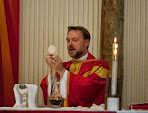
Sunday, February 5, 2017

The Feast of the Transfiguration of Our Lord


Matthew 17:1-9; 2 Peter 1:16-21; Exodus 34:29-35

In the Name of the Father and of the + Son and of the Holy Spirit.
“...and we have seen His glory, glory as of the only Son from the Father, full of grace and truth.” That is how St. John recounted his experience on the Mount of Transfiguration: John confessed that he had beheld the Shekinah Glory of God in the person of Jesus, and he lived to tell about it. Surely that experience defined John’s apostolic ministry in a deep and profound way. Hence John began his Gospel, not with the familiar infancy narratives of Matthew and Luke concerning Joseph and Mary, angels, shepherds, wise men, and a Bethlehem manger, but with the eternal, primordial being, and with the creative work of the Holy Trinity, and with the Shekinah Glory of God becoming a man, living in our midst as one of us, as our brother.
This was the same Shekinah Glory of God beheld by Moses on Mount Sinai that caused his own face to shine so that it must be veiled before he spoke to the people of Israel. Moses beheld that glory first in the burning bush, before which he was commanded to remove his sandals, for he stood upon holy ground. And yet, the glory of the LORD could only be seen and experienced through means, and not directly, for sinful man may not see God and live. Thus, when Moses asked to see the full glory of God, he was given to see only God’s backside, and that only after the LORD first hid him in a cleft in the rock. The Patriarch Jacob wrestled with a man all through the night until that man put his hip out of socket. When daylight arose and he realized that man was God, Jacob exclaimed in fearful wonder, “I have seen God face to face, and yet my life has been delivered.” Likewise Isaiah trembled in fear and despaired of his life when He beheld the Shekinah glory of God in a vision saying, “Woe is me! For I am lost; for I am a man of unclean lips, and I dwell in the midst of a people of unclean lips; for my eyes have seen the King, the LORD of hosts!” The LORD absolved Isaiah, sending a Seraph with a burning coal taken from the altar of sacrifice to touch Isaiah’s lips to atone for his sin and to cleanse him of his guilt. What these men of faith each knew and confessed was expressed concisely by the Preacher to the Hebrews: “It is a fearful thing to fall into the hands of the living God,” “for our God is a consuming fire.”
And so, when Jesus led Peter, James, and John up the mountain and was transfigured before them so that “His face shone like the sun, and His clothes became white as light,” and “there appeared to them Moses and Elijah, talking with Him,” they were amazed. Peter, always quick to speak, excitedly suggested that they build three tabernacles for the holy trio and preserve that glorious mountaintop experience. But, when a bright cloud tabernacled over them and the LORD Himself spoke from the cloud saying, “This is my beloved Son, with whom I am well pleased; listen to Him,” “they fell on their faces and were terrified” before the presence of the Shekinah glory of the LORD. Shortly before His Transfiguration, Jesus had asked His disciples, “Who do you say that I am?” Then Peter answered, “You are the Christ, the Son of the Living God.” But, now, on the Mount of Transfiguration, God Himself answers the question and shows the disciples precisely who Jesus is as His Shekinah Glory shines from, in, and through Him, the express “image of the invisible God” as a man.
The presence of both Moses and Elijah with Jesus at His Transfiguration is pregnant with meaning. First, Moses, who brought the Ten Commandments of the LORD to the people of Israel, is symbolic of the entirety of the Law of God. Likewise, Elijah, the greatest of the Old Testament prophets is symbolic of all the prophets of the Holy Scriptures. Together, Moses and Elijah stand for the Law and the Prophets, that is, for the testimony of the Holy Scriptures, which, Jesus instructed the Emmaus disciples, all testify about Him. Second, both Moses and Elijah died, or were translated to heaven, in unusual ways: Moses died and was buried in a secret location by God Himself! Elijah was taken up to heaven in a whirlwind! Yet, on the Mount of Transfiguration both men are present, alive, and conversing with Jesus in the fullness of the Shekinah Glory of God, a preview of the promise of life beyond death fulfilled. Additionally, whereas because of his sin and the rebellion of the people of Israel, Moses was permitted to see, but not to enter, the Promised Land of Canaan, now he stands upon that promised ground in the presence of the LORD in His glory. Third, Moses and Elijah were not merely having a casual conversation with Jesus, but St. Luke tells us that they were discussing with Him “His departure which He was about to accomplish at Jerusalem.” The Greek word translated as departure is exodus. Thus, Moses, the leader of the Exodus out of captivity and slavery in Egypt is discussing with Jesus the exodus He is about to lead, through His death and resurrection in Jerusalem, out of captivity and slavery to sin, death, and Satan.
The Transfiguration of Our Lord Jesus Christ stands at the end of Epiphanytide as a final manifestation of Jesus as both God and man in one person before we descend with Him down from the mountain and prepare to enter Jerusalem to die throughout Lent and Passiontide. Our Lord grants us this preview and foretaste of His glory, this mountaintop experience, that we may believe in Him and that our faith may be strengthened and persevere as we journey with Him through trial and tribulation in the Valley of the Shadow of Death in which we live our lives, that we might resist temptation and be comforted and persevere through Satan’s furious and hateful assaults. This purpose of His Transfiguration, too, follows upon Jesus’ question to His disciples, “Who do you say that I am?” For, immediately following Peter’s bold confession, “You are the Christ, the Son of the Living God,” Jesus “began to show His disciples that He must go to Jerusalem and suffer many things from the elders and chief priests and scribes, and be killed, and on the third day be raised.” This preview and foretaste of Jesus’ glory is offered to strengthen and encourage His disciples, to strengthen and encourage you, that, when the horrible and humiliating events of Jesus’ arrest, trial, scourging, crucifixion, death, and burial occur, and when trials and tribulations, heartaches, diseases, tragedies, and deaths occur in the lives of Jesus’ disciples, and in your own lives, you and they will remember and be comforted in the knowledge that Jesus foretold this and that “we have seen His glory, glory as of the only Son from the Father, full of grace and truth.”
As Moses lead the Israelites in the Exodus out of Egypt by the blood of the Passover Lamb, so now Jesus, the Passover Lamb of God leads His Israel, that is all of His Father’s children through faith in His Son, by the shedding of His own holy, innocent blood poured out upon the world from Calvary’s cross. And, as Elijah was taken up into heaven in a whirlwind, so was Jesus taken up in a cloud forty days after His resurrection to be seated at the right hand of the Father in heaven where He now rules over heaven and earth and all things until He comes again in glory as Judge and King.
Nevertheless, Peter did not fully understand until the Holy Spirit was poured out upon him and the Church at Pentecost. Peter wanted to enshrine the glory, to preserve it, to bask in it now, to avoid the suffering and humiliation that must come before the glory. Because of our sinful concupiscence, we all desire the same; even Jesus experienced the temptation to avoid the cross according to His human nature as He prayed to His Father, “Take this cup from Me.” However, Jesus resisted and overcame even this temptation for you and for all saying, “Yet, not My will, but Your will be done.” Truly, among our greatest temptations is to seek glory now in our lives and in our faith and in our church, and to shrug off and reject the crosses our LORD has chosen for us to bear that His power might be made perfect in our weakness. Peter could not make a tabernacle for the LORD anymore than David could build Him a house. For, truly, Jesus’ flesh and blood body is the Tabernacle and Temple of the Shekinah Glory of the LORD of which He said, “Destroy this temple, and in three days I will raise it up.” The Glory of the LORD does not reside in a house built by human hands, wisdom, and strength, but in the flesh and blood body and person of Jesus Christ, a tent and tabernacle made without human hands. Within the Tabernacle of Jesus stand Moses and Elijah, Peter, James, and John, the repentant thief on the cross, your mother, grandfather, daughter, and all the saints that have gone before us, all those who have come out of the great tribulation having washed their robes and made them white in the blood of the Lamb.
And yet, life in the Tabernacle of Jesus’ flesh and blood are not only something yet to come, but it is a Tabernacle and life that you live in even now in the Valley of the Shadow of death, for you have been baptized into Jesus’ death and resurrection. You have, even now, one foot, so to speak, firmly planted in that heavenly Tabernacle, while having also one foot buried in the grave. But, we look forward to that day, by the assistance of the Holy Spirit and in the certainty of faith, when we will stand with both feet firmly planted in the tabernacle of Jesus in the full presence of the Shekinah Glory of God in heaven. Again, you have been provided this preview and foretaste of Jesus’ glory that your faith may be strengthened and that you may persevere through temptation and even death. Thus, St. Paul confesses that “the sufferings of this present time are not worth comparing with the glory that is to be revealed to us.”
Like Moses, Jacob, and Isaiah, Peter, James, and John were terrified by the presence of the Shekinah Glory of the LORD shining from, in, and through Jesus. However, whereas Isaiah had a seraph touch his lips with a burning coal from the altar of sacrifice, Jesus, the sacrificial Lamb of God Himself reached out and touched His disciples and raised them up, casting away all their fear. Jesus is what the burning coal on the altar foreshadowed for Isaiah. He is the one who take the guilt of our sin away, atoning for our sins.
“And when they lifted up their eyes, they saw no one but Jesus only.” Jesus alone remains. Our trust is not in Moses or Elijah, our trust is not in works or even our faith, but our trust in in Jesus alone, crucified, risen, ascended, and returning. Behold, our Lord is coming, even as He is present with you now, tabernacled in bread and wine, that you may eat His flesh and drink His blood in the midst of our Satanic foes in the Valley of the Shadow of Death, and be preserved, kept, strengthened, and protected in faith unto life everlasting, that you may be made partakers of His Divine Nature. To God alone be the glory, in Jesus Christ His Son our Lord, through His Most Holy Spirit.

In the + Name of Jesus. Amen.

Sunday, January 29, 2017

The Fourth Sunday after the Epiphany (Epiphany 4)


Matthew 8:23-27; Romans 13:8-10; Jonah 1:1-17

In the Name of the Father and of the + Son and of the Holy Spirit.
You might be surprised to learn that the U.S. Navy Hymn, “Eternal Father, Strong to Save,” is even in our hymnal. In fact, in just a little bit, our choir is going to sing it during the collection of our offering. It is a most fitting and appropriate hymn corresponding to today’s Gospel theme concerning Jesus manifesting His glory as the LORD of heaven and earth and of wind, sky, land, and sea. Hundreds and thousands of miles out to sea, at the mercy of tempestuous winds and perilous oceans and seas, truly our sailor soldiers know and respect the terrible power and the mighty forces that nature can inflict upon those who travel upon the sea. Indeed, William Whiting, the author of the hymn’s text, attributes the creation and control of such insurmountable powers and forces to God our Eternal Father. Just as there are no atheists in foxholes, apparently there are no atheists “in peril on the sea” either. For, it is God the Father “whose arm hath bound the restless wave, who bidd’st the mighty ocean deep its own appointed limits keep.” And, it was God the Son “whose voice the waters heard and hushed their raging at [His] Word.” And, it was God the Holy Spirit “who didst brood upon the chaos dark and rude, and bid its angry tumult cease, and give, for wild confusion, peace.”
Thus, what our Lord Jesus Christ manifested when He calmed the storm and the raging seas that threatened and terrified His disciples was that He is the LORD God in human flesh, in their midst, still defining and limiting, controlling and using the forces of nature for His own purposes and for the good of His people whom He loves. Even when it appeared that He was unaware, asleep, and impotent, Jesus is the God who is present and LORD of heaven and earth and of wind, sky, land, sea, and all of creation. While the disciples were overcome with fear and despair, believing that they were perishing, the LORD was in control working all things, even evil things, for the good of those whom He has called according to His purpose.
It is all too easy to become fearful, anxious, and despairing when the storms of life come crashing upon you and you feel as if you are perishing. In such times when your health is at risk, when finances are meager, when your children rebel and curse you, when the news media continually report of terrorism, murder, natural disasters, and war, it is all too easy to believe that God is not present, that He cannot help, that He doesn’t care, or that He isn’t even real. However, this is but the weakness of your flesh and your faith, which your all too real enemy, Satan, delights to use against you to lead you into unbelief, hopelessness, and despair. In your fear, he tempts you to trust only in your own strength and wisdom, to be your own god and savior, or to despair of these and to surrender to hopelessness and perish. Only consider the rash and foolish decisions that you have made under fear, anxiety, and despair. What good has come of them in the past? And, when you have trusted in the LORD, has He not provided, often in ways you never could have expected? Truly, your LORD is with you even when you do not see Him. He is awake, aware, in control, and directing all things in heaven and earth for your benefit and good, even when He appears to be sleeping. “Why are you afraid, O you of little faith?” Jesus’ disciples were fearful and despairing even while Jesus Himself was physically with them in their boat. But, how much more is your Lord Jesus with you all the time? Has He not promised you that, in your Holy Baptism, He “is with you always, to the end of the age?”
In contrast, Jonah was not afraid that the LORD was not with Him, but he, in fact, believed that the LORD was indeed with him. For, the LORD had commanded Jonah to go to Nineveh to preach His Word to the wicked and unrepentant people there. But, Jonah didn’t want to go, not because he feared the Ninevites, but because he believed that the LORD would indeed convert the people of Nineveh through his preaching, and he didn’t want such notoriously wicked people to repent and to be saved. And so, Jonah fled from his calling and from the presence of the LORD. He bought a ticket on the first ship he could find to Tarshish, fleeing from the presence of the LORD. Then, the LORD commanded the wind and the sea to threaten the ship and its sailors so that they each cried out to their own gods – Indeed, there are no atheists in peril on the seas. As the sailors desperately threw their cargo overboard in order to stabilize the ship, Jonah hid himself in the bowels of the ship in fear of the LORD and fell fast asleep. As the storm raged on and continued to threaten the ship, the captain came to Jonah and demanded that he wake up, arise, and pray to his god that they would not perish. And, when the captain learned that Jonah was fleeing from the presence of the LORD, he and his crew threw Jonah overboard as Jonah himself had directed them, for he knew that it was the LORD who had brought the forces of wind and wave upon the ship because of his willful disobedience. When they cast Jonah into the sea, immediately the sea ceased from its raging. Then the men feared the LORD and they offered sacrifices to the God of Jonah, “and the LORD appointed a great fish to swallow up Jonah. And Jonah was in the belly of the fish three days and three nights.”
Now, only consider the number of variables the LORD controlled and manipulated in order that His will would be accomplished and that unbelievers would be turned in repentance and believe. The LORD sent the wind and the waves to threaten the ship and her crew. The LORD caused the lot to fall upon Jonah. The LORD caused Jonah to be thrown overboard. And the LORD caused a great fish to swallow him whole and to deliver him to Nineveh, where the LORD had commanded Jonah to go and preach in the first place. So it is that Jonah is set in direct contradiction to Jesus. Earlier that same day Jesus had healed a Jewish leper and the servant of a Roman Centurion, whom we heard about in last Sunday’s Gospel Lesson. After that, Jesus healed Peter’s mother-in-law and countless others who were sick or oppressed by demons. Though He is true God, Jesus is also true man, and so Jesus was exhausted, according to His humanity, and He slept in the bow of the boat in the presence of His disciples. However, even when He appears to be sleeping, the LORD is awake and active upholding heaven and earth and the laws of nature and all things. When the storm came upon them and the seas began to threaten, the disciples cried out to Jesus in faith mixed with fear, despair, and unbelief. Yet, still they cried out to Jesus. They had faith, even if it was little faith. And, though He was tired and exhausted, Jesus rebuked the wind and the sea and brought about a great calm both upon the forces of nature and within the hearts and minds of His disciples. Whereas Jonah was thrown overboard into the tumultuous and churning sea and spent three days in the belly of a great fish, so Jesus was thrown into Satan’s jaws and died for you. Jesus spent three days in the belly of the earth and emerged victorious over sin, death, and Satan, your victor guaranteeing you life through and forever after your death. The grave could not hold Him, and neither cannot it hold you.
Whether the storms come from the LORD or from Satan doesn’t really matter, for the LORD is in control. In the case of Jonah, it is clear that the LORD brought the storm to bear upon the ship and its crew. However, in the case of Jesus and His disciples, it may well have been Satan who afflicted them by wind and wave. What you must remember is that the devil is God’s devil. Satan cannot tempt, harm, afflict, or kill unless the LORD permits Him to do so. In this way, the LORD works all things, even evil things, even the works of the devil, for the good of those whom He has called according to His purpose. For the LORD is the LORD of all His creation: Heaven and earth, wind, sky, and sea, beasts, men, angels, the devil and his demons. There is no thing and no one that is not under His power and control.
When you are tempted to cower in fear, hopelessness, and despair at what is befalling you and the world, and when you are tempted to flee from the presence of the LORD and His will, remember that He is awake and active, upholding heaven and earth and the laws of nature and all things for you, His beloved. “Do not fear those who kill the body but cannot kill the soul. Rather fear Him who can destroy both soul and body in hell.” That one, mind you, is not the devil, but it is the LORD alone who made you and who sustains your life. Truly, not even a sparrow can fall to the ground apart from the will of the LORD, and you, whose every hair upon your head He has numbered, are of much greater value to your Eternal Father than are the sparrows. Your LORD will not reject you because of your weak faith, but He is gracious and merciful towards you, He will hear and answer your prayer, sometimes “Yes,” sometimes “No,” and often “Later,” as He strengthens you in your faith that you may persevere through whatever storms you might face, even through death, unto life never-ending in Jesus Christ.
God permits storms and trials to come upon you, but He also rescues you in them so that you may see clearly His protection. Jesus’ kingdom, His Church, is strengthened and grows by sorrow and trial as by these the LORD calls you to turn your attention away from yourself and back towards Him. The LORD uses storms and trials to perfect your faith and to strengthen your weak and little faith. Your Lord is present with you always, even if unseen or seemingly inactive and asleep. He is in this place, this boat, this ship, this ark, His Church, commanding the natural elements of Word and Water, Bread and Wine to serve you, to absolve you, to strengthen you, to equip you and to send you. Do not be afraid. Your LORD, Your God, is present to save you.

In the + Name of Jesus. Amen.

Sunday, January 22, 2017

The Third Sunday after the Epiphany (Epiphany 3)


Matthew 8:1-13; Romans 12:16-21; 2 Kings 5:1-15

In the Name of the Father and of the + Son and of the Holy Spirit.
It is a lesson about faith. It is a lesson about authority. It is a lesson about the creative power of the Word of God. It is a lesson about true healing in the forgiveness of sins. It is a lesson about the Gospel extended to the Gentiles. It is a lesson about Jesus made manifest as the Son of God in our own human flesh. It is a lesson about humility and repentance in receiving mercy from God and in showing mercy to our neighbors. Indeed, our Gospel lesson today is about all these lessons and many, many more, all at the same time, for the Word of God is an inexhaustible fountain of life and an inviting mystery that draws the faithful ever deeper into the life of God Himself.
In the Gospel lesson we are presented first with a Jewish leper and then with a Roman centurion, a commander of a hundred men, both of whom appeal to Jesus, the leper for cleansing and the centurion for the healing of his dying servant. Clearly the leper is a man of great faith. He dared to approach His Lord in his uncleanness and appealed to the Lord’s will saying, “Lord, if you will, you can make me clean.”  His words are an outstanding confession of faith in the good will, nature, and essence of His Lord. His confession is like unto Job’s – the Lord gives and the Lord takes away; blessed be the Name of the Lord – in that, even if it were not the Lord’s will to cleanse, the good will, nature, and essence of the Lord would not be changed in any way. But, the centurion outdid the leper in his confession. The centurion, initially, did not confess anything about Jesus, but merely laid his concern for his dying servant before the Lord. Without hesitation, Jesus said that He would go to his servant and heal him. But, this is when the centurion makes his great confession saying, “Lord, I am not worthy to have you come under my roof, but only say the word, and my servant will be healed.” What made the centurion’s confession great was not so much what he said about his Lord as it was what he said about himself – I am not worthy.
I am not worthy. I do not deserve your healing and forgiveness. I a poor and miserable sinner confess…. My brothers and sisters, we come before our Lord with no expectation of entitlements and with nothing of our own to offer. Rather, we come before the Lord as idolaters, as prodigals, as murderers, adulterers, and thieves. In humility and repentance we confess our sins and our iniquities against the Lord. We confess that we are worthy only of temporal and eternal punishment. We confess that to remain an unclean leper is too good for us. And, we confess our repentance and contrition and pray for the Lord’s mercy for the sake of the holy, innocent, bitter sufferings and death of Jesus Christ alone. “Lord, I am not worthy,” we confess. “I forgive you all your sins,” our Lord replies. “Truly, I tell you, with no one in Israel have I found such faith.”
In a beautiful display of the unity and concord of the Holy Scriptures, the Church, in Her wisdom, has assigned as the Old Testament lesson for this day the complimentary narrative concerning Naaman of Syria. Whereas, in the Gospel we were presented with a Jewish leper and a Roman centurion, Naaman is at once a Syrian commander and a leper. Now, Naaman was a powerful man of great authority and influence, and, yet, he was also a leper. Apparently, it seems, the disease of leprosy had not the same social stigma amongst the Syrians as it did amongst the Jews. Further, this may be indicative of the corruption of the pagan Syrian culture. Thus, when Naaman was informed that there was a prophet in Israel who could heal him, despite his leprosy, he was bold to go directly to the king of Israel. But, having, himself, no power to heal, the king of Israel was distraught. Thus, Elisha the prophet counseled the king to send Naaman to him. So, Naaman then came to Elisha with his horses and chariots and stood outside his house awaiting an audience with the prophet. But, Elisha sent out a messenger instead. The messenger instructed Naaman to wash in the Jordan seven times and that his flesh would be restored and he would be clean. But, Naaman was angry that neither the king nor the prophet would come to him in person. And, he expected ceremonial invocations and showy hand-wavings to accompany such a miracle. Also, he was repulsed by the lowly waters of Israel in comparison to the rivers of Damascus. And, so we see that Naaman is the exact opposite of the Roman centurion. Naaman came to the king and then to Elisha with expectations of entitlement and with a sense of self-worth that he merited respect and honor. He was offended and scandalized that a mere messenger and not the prophet himself would speak to him. He was offended and scandalized that he was given only the command to wash. And he was offended and scandalized that he was to submit himself to washing in such lowly and common waters as the Jordan in Israel. He would not accept the word delivered through subordinates and he would not surrender his own expectations, desires, and will even for the promise of healing.
How like Naaman are you, thinking that the uncleanness of your sin is no big deal and that you are entitled to be heard and served by your Lord on your own terms, according to your own preferences and expectations? How often are you offended and scandalized by the means and the messengers through which your Lord ministers to you, thinking them old fashioned, irrelevant, outdated, and foolish? How often do you think that what is desirable, beautiful, glorious, and pleasurable in your eyes should determine how we worship before our Lord? How often do you leave in a huff and grumble in anger, inciting others to join in your malcontent? Of this you must repent daily, for you are not worthy that the Lord should enter under your roof.
Nevertheless, thanks be to God, He does speak His Word and you are healed. And, it is a great Word that your God has spoken to you, the Word become flesh, dwelling amongst us, whose Name is Jesus, God’s salvation. Thou you were not worthy that He should come under your roof, He has come into your flesh and has joined you into Him. Though He had no uncleanness of His own, He submitted Himself to be baptized in the Jordan for you, to become the Lord’s anointed scapegoat, taking your leprous sin, and the sin of the whole world, upon Himself, to defeat Satan’s temptations and to destroy death by His own death upon the cross. All this He gives you freely in Holy Baptism without ceremonial hand-wavings and impressive flair, but with humble, common water and His mighty, creative, and life-giving Word delivered by humble and common messengers and servants.
The Lord does indeed have authority, as confessed by the centurion, over heaven and earth, yet it is not evidenced in the worldly ways desired by Naaman, but in and through humble means does the Lord exercise His authority to forgive sins and heal, cure, and raise up men afflicted by sin’s poison and death. Though the wages of sin is, universally, death, and though all afflictions, disease, and sufferings are but the symptoms of sin, Jesus is the victor over death. Thus He is the Great Physician of your body and soul and He is the Medicine of Immortality who brings life to all who receive Him. You are not worthy that He should enter under your roof, nevertheless, He has come amongst you and has drawn you into Himself. Even now He is present with His life-giving Word to cleanse and forgive you, to feed and sustain you, and to send you as His messengers of mercy for the life of the world.

In the + Name of Jesus. Amen.

Sunday, January 15, 2017

The Second Sunday after the Epiphany (Epiphany 2)


John 2:1-11; Romans 12:6-16; Exodus 33:12-23

In the Name of the Father and of the + Son and of the Holy Spirit.
There are three that testify: The Water, and the Blood, and the Spirit.
Water. Water is essential to life. A human body can live maybe three weeks without food, but only three days without water. Indeed, our bodies consist of 60% water, and every cell and organ in our bodies requires water to properly function and to remain alive. St. Peter even suggests in his Epistle that God created all material and living things out of created primordial water by the creative power of His Word and Spirit. It should be no surprise then that, in the Holy Scriptures, water is associated with cleansing, purification, and restoration. Thus, John the Baptist was out in the wilderness, calling people to repentance, purification, and restoration with God by the forgiveness of their sins through baptism with water at the Jordan River.
That is also why there were six stone jars of water at the wedding in Cana. The water was for the purification and restoration of the wedding party and the guests that they might eat the feast and participate in the wedding ceremony. The jars of water were there because of the Law of God, and because of the sin and guilt of the people. The jars of water were there because man’s sin had made ruin of his relationship with God. But, God, in His grace and mercy, had promised to look away from their sins and guilt if they were cleansed and purified by water. The water had no such power in itself, neither did the sacrifices in the temple and the tabernacle before that, but God had attached His Word of promise to the water, promising that He would look away from their sins – and so, He did. Thus, the water was not merely a symbol of the Law of God, but it was the Law of God. Even in the joyful occasion of a wedding feast, the Law stood threatening and demanding to be kept and fulfilled. For, the wages of sin is always and only death, a debt that we will all pay eventually.
And so it is that a proper understanding of Jesus’ first miraculous sign, changing water into wine, begins, not with Jesus, nor with the wine, but with the water and with the Law of God and with man’s transgression of God’s Law. The Law of God, and sin, and death hung over the wedding feast and the guests. The Law of God hung over the bride and the the groom. And yet, into this bittersweet occasion entered the Son of God Himself, the Word of God become flesh. Indeed, God so loved the world and the people whom He created that, instead of punishing and destroying His rebellious creatures, He became one of them, one with them, in order to cleanse, purify, and restore them. Jesus would do this, ultimately, not by the washing of water, but by the shedding of His holy, innocent, and righteous blood. For, the Law must be fulfilled. And, the water must be replaced, not with wine, but with Jesus’ blood which takes away the sins of the world. But, Jesus’ hour, the hour of His Passion, had not yet come. Therefore, for now, He would provide a miracle, a sign, that His people might believe in Him and trust in Him.
The occasion for this miraculous sign? The wedding feast had run out of wine. Now, Jewish wedding feasts were multi-day events, often lasting a week long. Family, friends, and guests had come from all around and they needed to be provided food and drink and water for purification for the duration of the wedding feast. It was early in the feast and they were already out of wine. This would have been a tremendous social embarrassment for the bride and groom and for their families. Mary, the Mother of our Lord, likely a relative or a close friend, was moved to relieve the situation, and she called upon Jesus to do something about it. What she expected Him to do is uncertain, but it is clear that Mary believed that Jesus could help. Jesus’ answered His Mother saying, “Woman, what does this have to do with me? My hour has not yet come.” Jesus’ reply seems strident and rude in our ears. Culturally, it was likely nothing of the sort, but Jesus did communicate something important to His Mother concerning His being the Son of God, His mission and purpose. Mary asked Jesus to perform a miracle, to use His divine power as the Son of God to solve the problem of the wine. Jesus addressed Mary as “woman” rather than as “mother” because she was asking Him to do this as the Son of God and not as the Son of Mary. The time would come for Jesus to solve the problem of the lack of wine, but that time had not yet come.
In the Old Testament times, wine was a symbol of both physical and spiritual joy. Wine was associated with the blessing of God’s presence and His favor upon His people. Jesus took the occasion of a wedding feast that had run out of wine to provide a revelation, an epiphany, of His true nature as both God and Man. Jesus turned the water set aside for the purification of the people under the Law of God into wine, the symbol of God’s favor, blessing, and presence with His people. This was a sign, a miracle, and a symbol of something even greater yet to come, for, when His time came, Jesus would pour out water, His blood, and His Spirit upon all people that they might be purified, cleansed, forgiven, and restored to a right relationship with God His Father.
“Jesus said to the servants, ‘Fill the jars with water’. And they filled them up to the brim.” In His Incarnation, Circumcision and Name, Baptism, perfect life of obedience, faith, and trust in God, Suffering, and Death, Jesus would fulfill all that the Law demanded. “And He said to them, ‘Now draw some out and take it to the master of the feast’. So they took it. When the master of the feast tasted the water now become wine, and did not know where it came from (though the servants who had drawn the water knew), the master of the feast called the bridegroom and said to him, ‘Everyone serves the good wine first, and when people have drunk freely, then the poor wine. But you have kept the good wine until now’.” The wine that Jesus provides is the very best imaginable! The cleansing, purification, forgiveness, and restoration with God Jesus will provide for His people in water, His Blood, and His Spirit poured out for entire world upon the cross will be all-sufficient, complete, perfect, and final. The joy that He will provide for His people will be perfect and forever and for all who will trust in Him for forgiveness, life, and salvation and bear His fruits in their lives, words, and deeds.
In this, Jesus’ first sign at the wedding in Cana, we see God’s backside, that is, a foretaste of His glory manifested in His Son Jesus Christ, the promised Messiah. We see God’s anointed King of heaven and earth beginning to restore His Creation. It is also significant that Jesus’ first miraculous sign occurs at a wedding, for His death and resurrection will be celebrated with a Wedding Feast in heaven, the wedding of the Holy Bridegroom Jesus and His Holy Bride the Church.
There are three that testify: The Water, and the Blood, and the Spirit. When Jesus surrendered His life upon the cross He gave up His Spirit. Fifty days later, on the Feast of Pentecost, the Holy Spirit was poured upon His Bride, the Church, anointing and sealing Her as His own. When the centurion pierced the side of Jesus’ dead body upon the cross, from it issued forth water and blood, cleansing and purifying all the world, a blessing of cleansing, purification, forgiveness, and restoration with God for all who will believe and trust in Him and bear His fruits in their lives, words, and deeds. The Water, the Blood, and the Spirit – that is what Jesus’ first miraculous sign at the wedding at Cana pointed to. There will be joy in Jesus, and there is joy even now in Jesus, for all who believe on Him. Through Holy Baptism and faith, through His Word and the Holy Supper of His Body and Blood, you are a new creation. Even though you die, you will live, for those who believe in Him will never die.
Each and every Lord’s Day, and on Feast days, we, the Bride, gather here to participate in and to receive into ourselves this foretaste of the Great Marriage Feast of the Lamb and His Bride the Church in the Holy Eucharist. We join in Cana’s Feast until the Great Day of the Lord comes when we will no longer need this miraculous sign to cleanse and purify and restore us, but we will see our LORD and God and our Bridegroom and Redeemer Jesus face to face. But, until that day, we have this sign, this Sacrament, along with Holy Baptism, His Holy Word, and Holy Absolution to cleanse and purify and restore us anew that we might abide in faith, hope, and love towards God, towards our neighbor, and towards each other to the glory of God the Father, through faith in Jesus Christ His Son or Lord, by His Holy Spirit poured upon us and into us to enlighten, sustain, keep, and protect us in faith until He comes. By the Holy Spirit of the Living God, the Bride, the Church cries out, “Maranatha! Come, Lord Jesus! Come quickly! Come!”

In the + Name of Jesus. Amen.