Wednesday, September 26, 2018

Christian Funeral For David Dean Wescott


John 14:1-6; 2 Timothy 4:6-8; Job 19:21-27

In the Name of the Father and of the + Son and of the Holy Spirit.
You meet a lot of people and personalities in this world and life. Occasionally, you run across someone who’s just a good person. They’re not perfect, of course, but they are kind, humble, always ready to help, always willing to give you the shirt off their back if need be; everybody likes them, and they have lots of friends. And yet, as good as they are, as kind, caring, and giving as they are, things just never seem to go easy for them; in fact, things frequently seem to go very poorly for them. Still, you wouldn’t know it by looking at their smiling faces, for they seem at peace, content, even happy; and they still care more about you and others than they do themselves. I think that you’ll agree with me that this describes our brother Dave fairly well. It also describes our brothers Job and Paul. And, save the part about him not being perfect, it also describes their, and our, Lord and Savior Jesus Christ who did all things well, and laid down His own life in selfless, sacrificial love for Dave, and for you and me, and for all the world.
Dave’s two loves in life were farming and trucking, through which he loved and served a whole lot of people. He was an active participant in FFA from back in high school to the present. Dave judged sheep at the State Fair, and he loved helping and encouraging young people, our future farmers. Similarly, Dave served over twenty years on the Blue Ribbon Foundation for the Iowa State Fair, of which he was a founding member, and he served on the Bremer County Fair Board for over thirty years. Through these boards Dave worked to create good, clean family fun and to advance the causes of agriculture and farming among the next generations. Dave was an active advocate for farmers and farming. Through his service with FFA and the State and County Fair Boards, Dave touched countless lives and had many, many friends. He was loved by both the Cattlemen and the Pork Producers, and that’s saying something! Dave was as comfortable behind the wheel of a combine as he was an eighteen-wheeler. In his youth he farmed with his uncle, and he was known to participate in the wheat harvest as it made its way from South to North. Of course, Dave spent his “summer vacation” farming with Merlin. Merlin was like a second father to Dave and he said of him, “I couldn’t have done without him.” Dave worked for Schneider’s Milling in Waverly for over thirty years where he did practically everything there was to do at one time or another; they called him their “#1 Man.” More recently he drove for Jensen’s trucking where he was so loved that Dave’s boss, Jim, called him every day in the hospital.
“Dave would help anyone at anytime.” “Dave would literally give you the shirt off his back.” “Dave had a big heart.” “Dave was concerned about others and not himself.” “Dave never said no.” Those are the kinds of things people say about Dave. Now, if only one or two people said that, there might be cause for doubt. But, nearly everyone I’ve talked to says these things. People don’t just say things like that to be nice, but they say things like that because they’re true, because they’ve seen it first hand, because they’ve been the recipients of Dave’s selfless, sacrificial kindness. But, why was Dave like that? What caused him to be so humble, caring, and giving? Was it just the way he was, like an accident? No, I don’t believe so. For Dave, it was just the right thing to do; and, for Dave, it was his faith in action.
Dave wasn’t a church-goer, mainly because he was always on the road. I hadn’t even met him until after his surgery down at Iowa City a few months ago. However, after a few minutes talking with Dave, I was filled with peace, recognizing the presence of the Holy Spirit inspiring Dave’s confession of Christ as his Lord and Savior. He was so humble, and he so appreciated my visit, even though he didn’t know me and hadn’t been to church in a long time. It didn’t really matter who I was, all Dave wanted was Jesus – and that’s precisely what I gave him. Dave wanted Jesus. He wanted Jesus’ mercy and grace. He wanted the forgiveness of his sins and the strengthening of his faith. He received all those things and more as we prayed together, and listened to God’s Word, and ate and drank Jesus’ body and blood together in Holy Communion. The last time I visited Dave his disposition had changed. Before, he had some hope that he might recover enough to return home and maybe resume driving again. However, the last time I visited him he had resigned himself to the reality that his earthly days were to be numbered in terms of weeks and days rather than years and months. That time for confession and absolution I used a rite in which the pastor asks the parishioner questions. It’s an opportunity for reflection upon one’s condition. “Do you confess to almighty God that you are a poor, miserable sinner?” Silence. Then Dave, almost groaning, said, “Yes Jesus.” “Do you confess to our merciful Father that you have sinned against Him in thought word, and deed?” “Yes.” “Do you confess that you justly deserve His temporal and eternal punishment?” “Yes.” “Do you believe that our Lord Jesus Christ died for you and shed His blood for you on the cross for the forgiveness of all your sins?” Silence. “Oh, yes.” Do you pray God, for the sake of the holy, innocent, bitter sufferings and death of His beloved Son, to be gracious and merciful to you?” Silence. “Oh, yes.” “Finally, do you believe that my forgiveness is God’s forgiveness?” “Yes.” Let it be done for you as you believe.” Then I laid my hands upon Dave’s head and pronounced the absolution, “In the stead and by the command of my Lord Jesus Christ I forgive you all your sins in the Name of the Father and of the Son and of the Holy Spirit. Amen.” Silence. “Oh, wow!”
Most of you likely do not know, but Dave pretty much lost everything he had in the last few months of his life. Why is that? It’s because of the kind of guy he was – giving, loving, selfless, and humble. It’s frustrating, but if he only would have asked for help, many would have been happy to respond. But, Dave being the kind of guy he was, wasn’t concerned about himself. Dave simply wasn’t concerned with earthly possessions. Easy come, easy go, was his attitude. In this sense, Dave reminds me of the patriarch Job. As you know, the LORD permitted Job to be afflicted in terrible ways. Job lost his possessions, his wealth, his family, and finally his health. When it was all said and done, Job confessed, “The LORD has given, and the LORD has taken away. Blessed be the Name of the LORD.” Even when his flesh had been reduced to sores and ashes, Job confessed, “I know that my Redeemer lives, … and after my skin has been thus destroyed, yet in my flesh I shall see God.” Dave’s was a Job-like faith. In the midst of tragedy and suffering, Dave took account of his blessings and was thankful and content. Dave’s treasures were not worldly things that rust and break, that thieves break in and steal, but Dave’s treasures were heavenly things: His Lord and Savior, his friends, people who needed his help, you. Though he should lose everything else, even his health, Dave still had all those things, and they can never be taken away from him.
Like Paul, Dave was tired and stretched thin, poured out like water. He knew the time for his departure had come. It was like someone flicked a switch from on to off. That’s how quickly Dave changed his outlook from one of hope for recovery to one of contented acceptance of his impending death. This change was accompanied by a story, a vision, a dream, likely many of you have heard. Dave saw his grandfather, just as clear as you see me – no, clearer, more brilliant and alive than that – and his grandfather said to him, “Come home.” It was after that moment that Dave began to prepare to go. Dave had fought the good fight. Dave had finished the race. Dave had kept the faith. Now was the time for rest – true Sabbath rest; to be comforted in the presence of His Lord and Savior Jesus, awaiting the Day of Resurrection when Dave and all who love His appearing will receive His crown of righteousness.
Let not your hearts be troubled. Believe in God; believe also in God’s Son Jesus as your Lord and Savior. Jesus, who had everything, gave it all up for Dave, and for you, taking up your poverty, your weakness, your sin and guilt, your death, and giving you in exchange His holiness, innocence, and righteousness, life that cannot die, and sonship with His Father that cannot be taken away. Jesus did this out of love for you and for His Father who loves you so much that He sent His only Son to die for you that you should be restored to Him. Jesus became what you are so that you can become what He is. Jesus walked through the valley of the shadow of death and suffered death for you. But, He was righteous and innocent and death could not hold Him. Jesus’ knocked down the gate that would have kept you in your grave and made it an open door into His Father’s house. He has gone there before you to prepare a place for you who trust in Him. Jesus is the Way, the Truth, and the Life; there is no other way. But, for those who put their trust in Him – those like Dave – they are with Him when their earthly race is run. And, more than that, the Lord will raise them up on the Last Day in a glorified, immortal body to join with their immortal souls and live with Him, Father, Son, and Holy Spirit, in His heavenly kingdom forevermore. There you will see Dave once again, face to face, with your own eyes, hug him with your own arms, and no one will take your joy from you ever again.
In the + Name of Jesus. Amen.

Sunday, September 23, 2018

The Seventeenth Sunday after Trinity (Trinity 17)


Luke 14:1-11; Ephesians 4:1-6; Proverbs 25:6-14

In the Name of the Father and of the + Son and of the Holy Spirit.
The First Table of the Law, the first three commandments, establish our relationship with God: You shall have no other gods. You shall not misuse the name of the Lord your God. Remember the Sabbath Day by keeping it holy. In sum, you should fear, love, and trust in God above all things. Or, to put it another way, you are to love the Lord your God with all your heart, with all your soul, and with all your mind.
The rest of the commandments, numbered four through ten, establish our relationship with our fellow man, our neighbor. Thus, the Second Table of the Law can be summed up in this way: Love your neighbor as you love yourself. However, our obedience to the Second Table of the Law, our love of our neighbor, depends upon and flows from our obedience to the First Table, our fear, love, and trust in God above all things.
As it is, then, the Third Commandment, “Remember the Sabbath Day by keeping it holy,” serves as a transitional commandment from obedience to the First Table of the Law to obedience to the Second Table of the Law, for, the Sabbath Day of rest is a day to rest from the labors of serving one’s self that you might be freed to serve your neighbor. And, in God’s wisdom and by His design, in serving your neighbor, you serve and glorify God, thus placing your fear, your love, and your trust in Him above all things and loving your neighbor as yourself.
This understanding of the purpose of the Sabbath Day, a day of rest from self-service that you may be freed to serve your neighbor, serves to illumine the merciful healing Jesus performed on the particular Sabbath Day depicted in our Gospel lesson. Jesus celebrated that Sabbath with a group of Pharisees at the house of a ruler of the Pharisees. These teachers of the Law still respected Jesus and considered Him one of their own, but Luke is certain to point out to us that they werewatching Him carefully. Coincidentally, or not, Luke tells us that a man suffering from dropsy, a retaining of water in the tissues of the flesh known today as Edema, appeared before Him. Luke’s use of “Behold,”seems to indicate the surprise nature of this man’s appearance. Perhaps, however, it was no surprise at all, but the man was intentionally brought into the house to see what Jesus would do. Why else would this unclean man be in the house of a ruler of the Pharisees? Thus, Jesus responded to the lawyers and Pharisees and He asked them a question in accord with what He knew they were thinking in their hearts, “Is it lawful to heal on the Sabbath, or not?” But they remained silent.
Remember the Sabbath Day by keeping it holy. That’s what the Law of God commands. But, how did the Pharisees and the lawyers interpret this Law? Well, from other Sabbath encounters with Jesus recorded in the Gospels, it is apparent that they interpreted the Law by the letter without understanding the spirit of the Law at all. If Jesus would heal this man with dropsy on the Sabbath, then, they concluded, He could not be the Prophet or the Messiah for, in their eyes, He would have broken the Law. Their answer to Jesus’ question would be, “No, it is not lawful to heal on the Sabbath.”However, they knew that they couldn’t say that, right? So, they remained silent. They would watch and see what Jesus would do (as if they didn’t already know). Then, they would go and stir up the people and bring charges against Him before the Sanhedrin.
So, Jesus took the man and healed him and then sent him away. And, then He said to the lawyers and Pharisees, “Which of you, having a son or an ox that has fallen into a well on a Sabbath day, will not immediately pull him out?”Once again, they could not answer Him a word. They couldn’t answer Jesus because they knew that He was right. They would, immediately and without hesitation, help out their son or beast of burden that was in need. However, Jesus knew that they would object to His Sabbath healing of the poor man suffering from dropsy. But, why?
It is because they know the letter of the Law, but they do not know the spirit of the Law. Further, in their attempt to obey the letter of the Law they disregard the First Commandment, that is, they do not fear, love, and trust in God above all things. Oh, they fear God, but they do not honor Him and revere Him, they do not love God, but they fear Him as tyrant and as a merciless lord. They do not trust in His promises of mercy and grace. Therefore, the Law of God is a rigid rule placing burdensome, impossible demands upon them. Since they know that they cannot possibly obey, they have to water them down and make them more doable. Then they could stand up with pride before others and boast of their holiness and piety. Additionally, in their denial of grace and mercy they would use the Law of God against people, adding their own laws to it, so that they appeared all the more deserving of honor and praise while imprisoning others, along with themselves, under the Law’s judgment. The lawyers and the Pharisees would not lift a finger to help someone in need because they interpreted the Law of the Sabbath only in terms of what they must do to merit God’s favor. God said to rest and not to work. So they rested and they would not help someone in need, and they were ready to condemn anyone who would. But their hypocrisy is exposed by Jesus’ question, “Which of you, having a son or an ox that has fallen into a well on a Sabbath day, will not immediately pull him out?” And they could not reply to these things.
What the lawyers and the Pharisees could not understand and did not believe was the spirit of the Sabbath Law. The day of rest was meant to be a day of rest from self-serving activities, working to earn a wage, working to earn merit with God, so that one could be free to selflessly serve others and to glorify God. Their eyes were blind to the spirit of God’s Law. They could not see that the letter of the Law meant their death, thus they could not see that only by surrendering to the Law and being crushed by it, only by dying, could they be raised to new life in God’s mercy and grace. No, the lawyers and the Pharisees had constructed a law unto themselves, their own rules, their own morality, where they were the judge of right and wrong, good and evil, and by their law they judged themselves good, and they judged Jesus to be evil. They abhorred Jesus’ disregard for the law as they imagined it. They abhorred the mercy and grace that He showed to unclean, diseased, and demon-possessed sinners. Jesus literally turned the tables of the Law upside down and showed that the only fulfillment of God’s Law is love – love toward God and love toward your neighbor.
The letter of the Law is meant to expose your selfishness, how you are turned in to yourself and are motivated by selfish desires and passions. But the spirit of the law frees you from obedience to the Law in order to earn or merit God’s favor. In His Law God says to you, “There is no hope of earning or meriting My favor. There is nothing that you can do to remove your sin. You are spiritually dead, cut off, like a branch withering by the roadside. But take heart and be comforted, I love you, I have always loved you, and I will take away your sin, and I will die your death, and I will give you My life. I will draw you into Me and you will be My people, and I will be your God. In Holy Communion with Me, you will love with My love, you will give with My gifts, and you will forgive with My forgiveness. I will restore in you My image, and they will know that you are Mine when you have love for one another.”
Selfishness and self-interest is the very opposite of love. One who thinks only of his own wants, needs, desires, and passions cannot consider the needs of others. The lawyers and the Pharisees need not to worry about breaking the letter of the Law if they would only act in love. As St. Paul has written, “against such things there is no law.”Symbolically, the self-centered will always choose the best seats at a banquet and the place of honor. They are motivated by an ungodly standard of measurement, a law of men that values such things. They are concerned only with themselves and their own honor and glory. But the one who lives by the spirit of the law is concerned with elevating others and will take the lowest position for themselves, being thankful to be at the banquet at all. Jesus concludes His teaching saying, “everyone who exalts himself will be humbled, and he who humbles himself will be exalted.”
Remember the Sabbath Day by keeping it holy.Find rest from your labors in God’s mercy and grace and be freed to serve your neighbor in selfless love and thus glorify God. As the Lutheran Confessions state, the highest worship of God is to receive His gifts. For, only by receiving from God do you have something to share. You can give to others only of what God has given to you. You can be merciful to others only as God has been merciful to you. You can forgive others only as God has forgiven you. And, only by finding your rest in the Lord from having to earn or merit His favor can you be truly refreshed and equipped to serve others and truly worship and glorify Him.
Today is a day of rest. “Come to me, all who labor and are heavy laden, and I will give you rest,”says your Jesus. Here, at the altar this day, and in His Word and Absolution, is the rest that you need and the rest that your soul craves and desires. Here is the merit of Jesus’ labor and the fruit of His work which is finished. “Come, everyone who thirsts, come to the waters; and he who has no money, come, buy and eat! Come, buy wine and milk without money and without price,”says the Lord. Ask not what you must do, but only receive what He has done.
In the + Name of Jesus. Amen.

Sunday, September 16, 2018

The Sixteenth Sunday after Trinity (Trinity 16)


Luke 7:11-17; Ephesians 3:13-21; 1 Kings 17:17-24

In the Name of the Father and of the + Son and of the Holy Spirit.
The scene is descriptive. You can picture it in your mind with supreme clarity. A funeral procession is winding down the hillside away from the walled city on a hill. Men are carrying the body of a young man upon a bier. A great crowd follows, wailing in grief and sorrow because a young man is dead and a young mother is widowed and childless. No one can do anything to change the situation. No one can offer any real comfort. It is an utter tragedy, senseless and inexplicable. But it is real. It is all too real.
But, by chance, there was another procession that day, one approaching the walled city on a hill. In this procession, no one is wailing in grief and sorrow and no one is dead. In fact, the great crowd was dancing and skipping and shouting out in joy and laughter, and the one leading the procession is the Lord of Life Himself, Jesus. The great crowd accompanying Jesus had heard his teaching in the Sermon on the Mount and had followed Him through the region of Capernaum as he healed the sick and cast out evil spirits. They had witnessed Jesus’ power and authority in releasing all manner of men from their captivity to sin and death. Now they would witness Jesus’ power and authority over death itself.
Jesus’ saw the grieving mother from a distance and He had compassion for her. You must understand that He did not simply feel bad for her, but He was filled with gut-wrenching compassion for her in her lostness and the real and necessary wages of sin, death, that had been paid out to her young son and her husband before him. Jesus said to her, “Do not weep,”for the weeping, the grief and the sorrow, would be borne by Him. And then He reached out and touched the bier, for the uncleanness of sin and death would be borne by Him as well. But the real miracle was in His Word, as it always is, “Young man, I say to you, arise.” “And the dead man sat up and began to speak, and Jesus gave him to his mother.”
The scene is descriptive. You can picture it in your mind with supreme clarity. Martin Luther once put it this way in his hymn Christ Lag in Todesbanden (Christ Jesus Lay In Death’s Strong Bands): It was a strange and dreadful strife when life and death contended; the victory remained with life, the reign of death was ended. Holy Scripture plainly saith that death is swallowed up by death, its sting is lost forever.
Death is all too real. In a sense, we are all part of that funeral procession winding down the hillside away from the Garden of Eden. There the poisonous venom of sin first entered our First Parent’s veins. Now it flows through the veins of all of us who live and breathe and die. That day it was a young man who received his wage in death, tomorrow it is an old man, the day after a wife and mother, and the day after that a newborn child. But, the young man that day represented the best of us, alive in health and vigor of youth, all the world open to us and ripe with potential and possibility. But he was taken by death, the inarguable due wage we all earn for sin. If that young man cannot escape death, then what hope is there for any of us?
On our own, left to our own devices, there is no hope. We are dead. Even while we live, we live each day in the knowledge that death is coming, sooner or later, at a time we cannot know. There is no hope…, until we set our eyes on Jesus. When we lift up our eyes out of this life and world of death, the trappings of worldly idolatries and corruption, when we admit that we are dead, or at least the living dead, and lift up our eyes, then we can see Jesus who has come, and who comes to us now, as the Lord of Life, our Redeemer and Savior.
Jesus has compassion, gut-wrenching compassion, on you in your grief and sorrow, your sin and death. And He does the unthinkable, the unimaginable, and the incredible – He touches your bier. He takes your sin, He takes your uncleanness, He takes your death upon and into Himself. He didn’t raise the dead boy to life until He first took from him that which caused his death. Jesus didn’t cast death away, He took it into Himself, He swallowed it up as scripture plainly saith. He drank your cup of poison for you, to the bitter dregs, so that you could live. He sucked the poisonous venom from your wounds and He became what you are, the living dead, so that you could become what He is, truly and eternally alive.
And, just as that dead young man represented the best of us, doomed to die despite how alive we believe ourselves to be, so Jesus has become the living man for all of us so that in and through Him we are alive now and we will live, even through death, forevermore. Jesus is our true Adam, in whom we are all one, who has defeated death by dying for you, His Eve, His Bride. When faced with the serpent’s temptation He overcame by the Word of God and faith. And when you were threatened by the devil, Jesus, our Second Adam, took the serpent’s bite Himself. He laid down His life in love, unto death, for you.
Life died that you might live. Life died for you, young and old and newborn. The Bridegroom died that His Bride might live. But the victory remained with life, the reign of death was ended. 
The funeral procession that day was heading to the tomb, and nowhere else. There was no expectation of encountering Life; there was no hope that anything or anyone could change that hopeless situation. But, when Jesus came, incarnate in human flesh, when Jesus came as a man, that changed everything: The Son of God became the Son of Man. The highest in God’s glory divested and humbled Himself and became the lowest. He who was sinless was made to be sin for us. He who is Life became obedient to death, even death on a cross.
The great crowd that followed Him did so because they saw in Jesus power and authority over all manner of disease and evil spirits. And when Jesus met that somber funeral procession, they witnessed His authority over death itself. But His power and authority did not come simply from might or will, but Jesus had power and authority over sin and death because of His perfect and obedient fear, love, and trust in God His Father above all things and because of His perfect and obedient love for all men.Jesus bore the fruit of the Spirit which is love, joy, peace, patience, kindness, goodness, faithfulness, gentleness, self-control; against such things there is no law.
In Jesus, people began to turn from fear, hopelessness, and despair to faith in God’s promises finding their fulfillment in Jesus. And so, they followed Him, they listened to His teaching, they witnessed His miracles, they told others, and ultimately, they brought their sick and their dying, their demon-possessed loved ones, and they brought their children to Jesus that He might touch them with His holy hands and speak His life-creating Word of blessing upon them, that He might raise them spiritually, and physically, from death to His eternal life.
In a similar way most of you were brought to Jesus in Holy Baptism. And, in a similar way many of you have brought your own young sons and daughters to Jesus in Holy Baptism. There beside the still waters, through the hands and the voice of His undershepherd, Jesus touched you with His holy hands and Jesus spoke His life-creating Word of blessing upon you. In Holy Baptism the procession of death was met head-on by Jesus’ procession of life in a strange and dreadful strife, but the victory remained with life, the reign of death was ended. In Holy Baptism Jesus has touched you with His holy hands and has spoken His Life-creating Word of blessing upon you, “Young man, I say to you, arise.”And, as it was in the beginning, so it is now, His Word brings into being what He says. And then, Jesus returned you to your Mother, the Church.
Yes, we all have the same Mother, for there is one body and one Spirit – just as you were called to the one hope that belongs to your call – one Lord, one faith, one baptism, one God and Father of all, who is over all and through all and in all.We all have the same Mother, the Bride of Christ, the Church, which is one body, and of which Christ is Her Head. As the Fathers have taught us, extra ecclesiam nulla salus,there is no salvation outside of the Church. There cannot be salvation or life outside of the Church, for the Church is the body of Christ and there is no salvation outside of Him. We are saved by His humble and obedient perfect life, death, and resurrection, not merely in an external and objective way, but we are saved by being grafted into Him, born again from His death into His life, living in, to, and from Him in selfless, sacrificial love and service to our neighbor, especially those of the one body of faith, the Church. And if we would bring people to Jesus that He might touch them with His Holy Hands and bless them with His life-creating Word, then we must bring them to where He is present with His Words and His Wounds to heal and to bestow life and to bless; we must bring them to where He is present with His body as Her Head; we must bring them to Holy Baptism, we must bring them to Confession and Absolution, we must bring them to the Word of God preached, we must bring them to the Word of God confessed, we must bring them to the Word of God eaten and drunk, that is, we must bring them into Holy Communion with the Lord and Giver of Life, Jesus Christ, to whom be glory with the Father and the Holy Spirit now and forevermore.
In the + Name of Jesus. Amen.                                
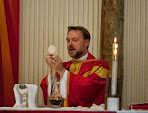
Sunday, September 9, 2018

The Fifteenth Sunday after Trinity (Trinity 15)


Matthew 6:24-34; Galatians 5:25 – 6:10; 1 Kings 17:8-16

In the Name of the Father and of the + Son and of the Holy Spirit.
“I’m about to prepare the evening meal for my family, so that we might eat it and die.” I think my wife has said something like that from time to time. But, do you hear the desperation in the widow’s remark? Do you hear the hopelessness and the despair in her words? “All I’ve got left is a handful of flour and a little oil, enough only for my son and I to eat tonight, and now you want me to bake you a little cake. Well, why not! It all ends the same way anyway. At least it will come a little quicker!”
We’ve all felt like that from time to time. The money is tight – no, the money is gone – but there’s still a pile of bills to be paid. Our little church is in that position right now! All you see and hear on the news and the internet is the continuing dissolution of values and morals in America, the uprising and advance of extremists and people who hate us and want to kill us, drugs and violence, graphic displays of pornography and sex in every thing from music awards ceremonies to fast food restaurant commercials. It’s easy to be become anxious and worried. It’s easy to become overcome by hopelessness and despair. It’s easy to want to throw in the towel, to give up, to let it all go to hell, to just let death come, the sooner the better.
You see, you cannot serve two masters. And, whether you realize it or not, that is exactly what you are doing. You are serving your master the devil. Well, you’re not serving God with your fretting, worrying, anxiety, and despair, so just who did you think you were serving? Jesus says that you cannot serve God and mammon. I know, our English translation says “money.” Sure, mammon is money, but it is much more than that. Mammon is all manner of material wealth, and fleeting and worldly things that we are tempted to possess and amass and put our fear, love, and trust in. Mammon includes money and possessions, but it also includes fame, power, popularity, respect, and honor. Understand, these things are not evil or sinful in themselves, but they are, in truth, God’s blessings upon you. However, what you do with them, what you make with them, and how you receive them is what makes the difference. It’s truly a spiritual matter: Do you receive the LORD’s blessings as gifts over which you have been given stewardship in your vocations, or do you believe them to be the fruits of your own labors for which you have merited money and possession, fame, power, popularity, respect, and honor before your fellow man and before God?
Satan tempts you towards the latter. Thus St. Paul exhorts you saying, “If we live by the Spirit, let us also walk by the Spirit.” This is to say, you must walk and think and choose and decide to use your gifts in the right way, in accordance with the purpose God entrusted you with them. But, if you give into the devil’s temptation, then you will become conceited, thinking too highly of yourself and your fruits, and envious of others and their gifts. Then, God’s gifts become your master instead of God who gave them to you. Then your fear, love, and trust is in mammon, and not in God above and before all things. You will be tempted to believe that you are free and independent, but mammon is no easy master, but it is a cruel tyrant and you are its slave. And, the fruits that your master mammon will produce in you are against the Spirit. Therefore, St. Paul exhorts you to test your own work to see if it is pure and in accord with God’s will and command.
In this regard, we are here to help each other. St. Paul also exhorts you saying, “Brothers, if anyone is caught in any transgression, you who are spiritual should restore him in a spirit of gentleness. Keep watch on yourself, lest you too be tempted. Bear one another’s burdens, and so fulfill the law of Christ.” You are your brother’s keeper; thus, St. Paul says, “So then, as we have opportunity, let us do good to everyone, and especially to those who are of the household of faith.” They say, charity begins at home. Well, this place is your spiritual home, and these people are your spiritual brothers and sisters. Right here, in your family of faith, is where your walking in the Spirit begins and is honed and perfected so that you will be empowered and well-trained in guiding others to life in the Spirit.
Now, what does all this have to do with worry and anxiety? Everything! For, worry and anxiety are the worship you pay to a false god, to a tyrannical slave master, to mammon, and to Satan. In contrast, peace and contentment are the fruits of fear, love, and trust in God above all things, and, they are also the proper worship of God. In today’s Gospel, Jesus is not speaking something mysterious, but He is speaking plain old common sense, though in a profoundly perceptive and ontologically true way. Jesus says, “Do not be anxious about your life, what you will eat or what you will drink, nor about your body, what you will put on. Is not life more than food, and the body more than clothing? Look at the birds of the air: they neither sow nor reap nor gather into barns, and yet your heavenly Father feeds them. Are you not of more value than they? And which of you by being anxious can add a single hour to his span of life?” No one improves or extends their life in any way by being anxious and worried. In fact, you will most certainly shorten your life and make your living less enjoyable. So, why do it? Why give in to this temptation?
I know it’s hard. And, your Lord Jesus knows it’s hard too. That’s why He has gathered you into this family, His body, the Church. You are not alone. And, when you suffer the affliction of temptation, and even when you fall – especially when you fall – your brothers and sisters in Christ are supposed to be here to pick you up, to direct you to the healing oil of Baptism, Confession, and Absolution, and to the cleansing wine and nourishing food of the Lord’s Supper. And, your LORD promises you that, until He returns, “The jar of flour shall not be spent, and the jug of oil shall not be empty.”
Do not be afraid! Rather, in faith, reach out, go out, do the loving thing, the merciful thing, the compassionate thing, even if it seems the foolish thing, the thankless thing, or even the dangerous thing. When the widow expressed her despair and hopelessness that she was down to her last rations and was about to die, Elijah directed her to her faith in the LORD and in His promise, “The jar of flour shall not be spent, and the jug of oil shall not be empty, until the day that the LORD sends rain upon the earth.” Elijah said to her, “Do not fear; go and do as you have said. But first make me a little cake of it and bring it to me, and afterward make something for yourself and your son.”
Goand do. Those are words that, as Lutheran Christians, you have been somewhat conditioned to hear as Law and not as Gospel. I say to you, that is a good thing. You must always be on guard against legalism and the slavery to works and the works righteousness that it produces – a fear, love, and trust, not in God, but in yourself and your own faith, piety, and works. And, yet, the Holy Scriptures, even the Gospels, the Apostles, and Jesus Himself regularly command you to goand do. As I spoke to you two weeks ago concerning Jesus’ Parable of the Good Samaritan, how you hear and understand Jesus’ goand dohas everything to do with what you believe about Jesus, His Father, and the Holy Spirit. For the baptized, for the regenerated, for the faithful, for you, Jesus’ goand dois not a commandment of the Law, but a fruit of the Gospel. The Holy Spirit equips you to perform these works of love and service for your brothers and sisters in Christ and for your neighbor, not for merit before God, but in love of God and the people He loves, and to His glory above all things. Jesus gives you what you need to goand do, and He works in you and through you as you goand dothem.
However, if you are filled with anxiety, worry, and fear, then you will be unfruitful, but not fruitless. You will bear fruit, to be sure, but not the fruit of the True Vine Jesus, but the fruit of the evil one: pride, envy, jealousy, wrath, lust, sloth, greed, hatred, etc. Jesus would have you live by the Spirit. Jesus would have you live, not in slavery and its trappings – fear and bitterness and resentment –, but in true freedom and its fruits – love, mercy, compassion, charity, selflessness, etc. “Do not be deceived,” writes St. Paul, “God is not mocked, for whatever one sows, that will he also reap. For the one who sows to his own flesh will from the flesh reap corruption, but the one who sows to the Spirit will from the Spirit reap eternal life.”
The answer lies in Jesus’ words, “But seek first the kingdom of God and His righteousness.” You shall have no other gods. You shall fear, love, and trust in God above all things. “No one can serve two masters.” “You cannot serve God and mammon.” Do not let yourself be overcome with fear and anxiety, hopelessness and despair. These are the temptations of the evil one, and your flesh is weak to withstand them. But, instead, be filled with the gifts of Jesus – faith and forgiveness, life, now and for eternity – and serve Him by being served by Him and by serving others with what He has served you. Goand dothis, not in fear, or out of coercion, with resentment or pride, but goand dothem out of freedom and love.
“Seek first the kingdom of God and His righteousness.” Well, you’ve found it! The kingdom of God is right here with you now, before your very eyes, to clothe you and to comfort you and to empower you with His righteousness that you may live without fear, in love and freedom, all the days of your life, glorifying God the Father, Son, and Holy Spirit in service of your brother and sister and your neighbor in Jesus Christ. Here, “The jar of flour shall not be spent, and the jug of oil shall not be empty, until the day that the LORD sends rain upon the earth.”
In the + Name of Jesus. Amen.

Sunday, September 2, 2018

The Fourteenth Sunday after Trinity (Trinity 14)


Luke 17:11-19; Galatians 5:16-24; Proverbs 4:10-23

In the Name of the Father and of the + Son and of the Holy Spirit.
“What must I do to inherit eternal life?” That was the question a lawyer asked Jesus in last Sunday’s Gospel. The lawyer wanted a quick fix to his problem, just like you. He didn’t want some open-ended, ongoing regimen or discipline for the rest of his life, but he wanted something he could do, check off his list, and then get on with his life – just like you. Because of this, many Christians think that once they’re baptized, that’s it, there’s nothing more to do, and they’re in like flint. Others rationalize a “once saved, always saved” doctrine in which, once they’ve “given their heart to Jesus,” He’ll never let you fall away. Then, they go on their merry way, placing their trust in “eternal security” rather than in a lifelong, ongoing relationship with Jesus.
And so, there were ten lepers who pleaded with Jesus, “Jesus, Master, have mercy on us.” And, Jesus had mercy on them. He told them, “Go and show yourselves to the priests.” And as they went they were cleansed. They each got what they wanted. They got a quick fix and were healed. All they had to do was show themselves to the priests. Check! Done! Fini! Then, they were off on their merry way, having nary a thought about Jesus – save one. One leper turned back to return thanks to Jesus. This thankful leper knew that Jesus had done something precious and miraculous for him. He also knew that Jesus didn’t have to do it, but that it was an act of mercy, just as he and the others had pleaded for. However, the thankful leper did not only thank Jesus, but he fell down at Jesus’ feet and he worshipped Him. And, to place the thankful leper in even more stark contrast to the others, St. Luke tells us that he was not a Jew like the others, but he was, once again, a Samaritan.
The thankful Samaritan leper was a changed man. No longer was he a leper, and no longer was he a foreigner. Now he had a relationship, a family, and a life as a follower of Jesus. For, no one has an encounter with the Lord Jesus and walks away unscathed. You either receive Him in faith to your great blessing, or you reject Him in unbelief to your judgment and condemnation. There is no gray area, there is no fence-straddling, and there is no lukewarm faith when it comes to Jesus. He who is not with Him is against Him, and He who does not gather with Him scatters.
You see, the Christian faith and life is not a “one and done” sort of thing, but it is an ongoing relationship with Jesus and with His body the Church. It is a walking together in Jesus who is the way, the truth, and the life. Your Holy Baptism was not a deed, but it was a birth; you were literally born again of water and the Spirit to a new life that will never die. Your new life must be fed and nourished, protected and kept in and with Jesus, in His body the Church. If God will be your Father, then the Church, the Bride of Christ, must be your Mother, for in the Church is found the womb of the font from which you were born, the breasts of the Word and Supper from which you feed and are nourished, and the Holy Spirit of God working through these means, joining you together as a family of faith in koinonia, in fellowship, with the Father, Son, and Holy Spirit and with each other.
So, where does your “eternal security” lie? It lays in koinonia, in fellowship, with Jesus and with His Bride, the Church. To boast in your salvation by grace, through faith in Jesus Christ and to neglect His Church, Confession and Absolution, His Word, and His Supper is, at the very least, to cut yourself off from the spiritual food and life and divine protection your faith and new spiritual life require in order to survive. And, if prolonged, your neglect of koinonia and fellowship with Jesus and with His body the Church will lead to apathy and disdain, not only for the Holy Things, but also for the Holy One Himself – and then there will be no hope for you. The thankful Samaritan leper understood this, and so he returned to the source of his healing, his life, and his salvation, and he offered thanks and he worshipped Jesus.
Leprosy was a disease of the flesh that made you unclean and cut you off from koinonia, from fellowship with God and the temple, the family of faith, the Church. You and I and all people suffer a spiritual leprosy of the flesh, sin and sinful rebellion, which serves to cut us off from koinonia with God and with the Church. Merciful Jesus has washed you clean in His holy, innocent shed blood. You have been born again of water and the Spirit to a new life that cannot die. Will you live it with Jesus, the giver and source of your new life? Or, will you go your own way, the way of your flesh and the world that leads only to life apart from koinonia, fellowship, with God and the Church.
It is in this regard St. Paul exhorts you today to, “Walk by the Spirit, and you will not gratify the desires of the flesh. For the desires of the flesh are against the Spirit, and the desires of the Spirit are against the flesh, for these are opposed to each other, to keep you from doing the things you want to do.” Just as the leprous man could not free himself from the effects of his leprous flesh, so too you cannot free yourself from the temptations and the weakness of your sinful and rebellious flesh. While you have been cleansed by the cleansing blood of Jesus in Holy Baptism, your flesh cannot be cleansed but must die and be raised anew. And, the only way that you will be able to resist the corruption of the flesh is by remaining in the way, the truth, and the life of Jesus in koinonia with Him and with His body the Church. St. Paul exhorts you to beware of the sins of the flesh, “sexual immorality, impurity, sensuality, idolatry, sorcery, enmity, strife, jealousy, fits of anger, rivalries, dissensions, divisions, envy, drunkenness, orgies, and things like these,” with the warning that “those who do such things will not inherit the kingdom of God.” This means that you cannot willfully pursue such things and hope to be saved, even though you may be baptized and receive the Sacraments every now and then. Yes, by confessing your sins and being absolved, and by receiving the Sacraments faithfully and regularly, Jesus’ blood cleanses you from all sin, however, to willfully pursue and practice such sins of the flesh is to break koinonia with Jesus and with His Church. It is to despise the Lord and His grace and mercy and to go your own way, the way of sin and death apart from God.
In contrast, however, St. Paul proclaims, “But the fruit of the Spirit is love, joy, peace, patience, kindness, goodness, faithfulness, gentleness, self-control; against such things there is no law. And those who belong to Christ Jesus have crucified the flesh with its passions and desires.” You see, there’s no going back. The way of the forgiven is the way of the Spirit. The way of the cleansed leper is the way of Jesus, the way of humility, peace, and thanksgiving. The way of forgiveness is not a quick fix or a “one-and-done,” “once saved, always saved,” work, but it is a new life and a new way of living. It is a life lived in, and upon, Jesus Christ and His gifts. It is a life that is first and foremost receiving, and then giving thanks, and then giving to others as you have received. Now, rinse and repeat every day, every Lord’s Day, and every Feast and Festival day for the rest of your earthly life with your brothers and sisters in Christ, your new family of faith enjoying koinonia, fellowship, in the Word and water, body and blood of Jesus in His body and Bride the Church.
For, just as you were born into a family and a community, having a father and a mother, grandparents, and likely siblings, uncles and aunts and cousins, etc., so were you born again into a family, a community, a body, and a koinonia, a fellowship. You are not an island, and you are not alone, but you are a member of the body of Christ, the Church, and you draw your life in Her from Christ through Word and Sacrament. Your life is His life lived in and through you. Apart from Him you cannot live. But, with Christ, in Christ, and through Christ you are alive with a life that cannot die. Come, eat and be strengthened. Come, drink and be forgiven. Come, with your brothers and sisters in holy koinonia with Jesus and be His holy, spotless, sinless, and beloved Bride. Receive and believe, give thanks, and live – not as you once lived, but live in Christ, in humility and service to your neighbor, bearing the fruits of His life in your life to the glory of God.
In the + Name of Jesus. Amen.

Sunday, August 26, 2018

The Thirteenth Sunday after Trinity (Trinity 13)


Luke 10:23-37; Galatians 3:15-22; 2 Chronicles 28:8-15

In the Name of the Father and of the + Son and of the Holy Spirit.
There are many ways to understand and to speak about sin. Sin can be defined as disobedience or rebellion, the breaking of moral rules or “missing the mark,” or simply falling short of God’s commands and expectations for your behavior and life. However, there is another way to understand and to speak about sin that, I believe, gets straight to the heart of the matter: Sin is a failure of love. We love the wrong things, or we love the right things in the wrong way. Either way, sin is a failure of love.
This understanding of sin gets straight to the heart of the matter, because it gets straight to the heart of the First Commandment, “You shall have no other gods.” Luther explains the First Commandment in his Small Catechism in this way: “You shall fear, love, and trust in God above all things.” Concerning fear and love, St. John writes in his first epistle, “There is no fear in love, but perfect love casts out fear. For fear has to do with punishment, and whoever fears has not been perfected in love.” Likewise, concerning trust and love, St. Paul writes in his first epistle to the Corinthians, “Love bears all things, believes all things, hopes all things, endures all things.” Even Luther’s use of fear and trust in God in his explanation of the First Commandment directs you to love, the fulfilling of the Law.
Thatyou love, whatyou love, and howyou love is directly connected to what you believe about God, what you think about God, and whether you trust in God above all things. Thatyou love, whatyou love, and howyou love is what is at the heart of Jesus’ teaching today in the Parable of the Good Samaritan. For, what you fear, what you love, and what you trust in will permit, or prohibit, you from loving your neighbor. Fear, love, and trust in God above all things frees you to love in any, and all, situations, any, and all, of your neighbors, without fear.
Jesus had just sent out the seventy-two before Him to proclaim peace and that the kingdom of God was near. He sent them with this promise alone, “The one who hears you hears Me, and the one who rejects you rejects Me, and the one who rejects Me rejects Him who sent Me.” The seventy-two returned with joy at their success proclaiming, “Lord, even the demons are subject to us in your Name!” Jesus acknowledged this truth and rejoiced in the Holy Spirit, but He exhorted them to not to rejoice in the subjection of spirits, but to rejoice that their names were written in heaven. Then, Jesus prayed, “I thank you, Father, Lord of heaven and earth, that you have hidden these things from the wise and understanding and revealed them to little children; yes, Father, for such was your gracious will.”
This prayer of Jesus leads you directly into today’s Gospel. Turning to His disciples, Jesus said to them privately, “Blessed are the eyes that see what you see! For I tell you that many prophets and kings desired to see what you see, and did not see it, and to hear what you hear, and did not hear it.” But, what was it that Jesus’ disciples could see that the prophets and kings of old did not? Well, to put it plainly, they saw Jesus, the fulfillment of the Law and the Prophets and the covenant promises of God. More to the point, however, Jesus’ disciples saw that God was not their enemy, that they should fear Him, not as a cruel master, but as a loving Father, and that they were not slaves of legalism, but free to act in the same love they had freely received from their loving God.
Immediately, a lawyer, a student of God’s Law, stood up to put Jesus to the test. The lawyer asked Jesus, “Teacher, what shall I do to inherit eternal life?” The lawyer’s question exposed his misconceptions about God’s Law and of how men are saved. You cannot do anything to merit inheritance. An inheritance is something that you receive freely because of your relationship with the giver of the inheritance. However, the lawyer was not interested in a relationship with God. Instead, he desired to merit eternal life by his works. He did not fear, love, and trust in God above all things, but he feared, loved, and trusted in himself and in his works. Therefore, Jesus answered the lawyer’s Law question with a Law answer: He said to him, “What is written in the Law? How do you read it?” The lawyer answered, “You shall love the Lord your God with all your heart and with all your soul and with all your strength and with all your mind, and your neighbor as yourself.” Jesus replied, “You have answered correctly; do this, and you will live.”
However, the lawyer was not satisfied. Jesus had pricked his conscience by saying “Do this, and you will live.” The lawyer knew that he did not properly love God or his neighbor, and Jesus’ command to “Do this, and you will live” let him know the Jesus knew that he did not properly love God or his neighbor too. The lawyer’s sin was a failure of love – He did not love God above all things. Instead, the lawyer loved himself, and he trusted in his works. He despised God’s Law and saw Him as a cruel master instead of a loving Father. And, because he did not love God, he could not love his neighbor.
Thus, seeking to justify himself, the lawyer asked Jesus, “And, who is my neighbor.” Since he did not love God, but feared Him as a cruel master and despised His Law, the lawyer sought to find a loophole, a way around the Law’s demands so that he could justify himself. This is kind of like an employee doing only the minimal, perfunctory duties his job requires, and doing them spitefully and full of loathing for his vocation and his employer. Because he did not love God, the lawyer could not love his fellow man. However, knowing this, Jesus answered the lawyer’s question this time with a parable, the Parable of the Good Samaritan, so that seeing, he would not see, and hearing, he would not hear.
The parable goes like this: A man was attacked by robbers. They stripped him and beat him and left him for dead by the side of the road. First a priest, and then a Levite, a member of the priestly tribe, passed by. Neither man went to the aid of the man alongside the road. However, next, a Samaritan passed by. The Samaritan helped the man, pouring wine and oil upon his wounds and binding them. He placed him upon his own animal and took him to an inn, providing the innkeeper money to cover for the man’s care with the promise that he would return and pay whatever additional costs were incurred. When Jesus asked the lawyer, “Which of these three, do you think, proved to be a neighbor to the man who fell among the robbers?” the lawyer had no choice but to answer, “The one who showed him mercy.” And Jesus said to him, “You go, and do likewise.”
The parable is really quite simple. The priest and the Levite could not help the man who had fallen among robbers because they were in slavery to the Law. They, like the lawyer, were students of God’s Law, experts and teachers of the Law, and yet, they did not see the spirit of the Law, love, but they saw the Law as a cruel master and they obeyed it out of fear of punishment for breaking it and out of pride in what they deemed to be their own meritorious works. Like the lawyer, the sin of the priest and the Levite was a failure of love – they did not love God above all things, therefore they could not love their neighbor, the man who had fallen amongst thieves.
However, the Samaritan came to the man’s aid. Now, the fact that the hero of Jesus’ parable was a Samaritan was not lost on the lawyer. Jews in Jesus’ day considered Samaritans to be corrupted in terms of ancestry from Abraham and, therefore, outside of God’s covenant with Israel. And yet, the Samaritan quite obviously loved his neighbor and had mercy upon him, even as the most respected and revered religious leaders of Israel passed by and did nothing. The Samaritan could love his neighbor because he rightly loved God. He believed God to be loving, gracious, and merciful. He himself had received such love from God. Therefore, he did not view God and His Law as a cruel master, but as a loving Father. The Samaritan was not enslaved to the Law of God, but he was free to love his neighbor and come to his aid.
You see, the Law of God, the moral law of the Ten Commandments and the ceremonial laws that guided the worship and day to day practices of the people of Israel, was given 430 years after the covenant that God made with Abraham. That covenant was not a covenant of Law, but of grace. And, though the Law was given later, it did not annul the covenant of grace. As God once looked upon Abraham with favor and blessed him because Abraham feared, loved, and trusted in Him, still you are saved by grace through faith in Jesus Christ, the Word of God made flesh, and not by your works of obedience under the Law.
And, as you have freely received, so must you freely give. Jesus’ command, “You go, and do likewise,” is not a command of the Law, but it is an exhortation, even a promise and an empowerment of the Gospel. Just as He sent out His seventy-two to preach the Gospel equipped only with His gift of the authority of His Word, so Jesus sends you out to love your neighbor with His love. However, like the Parable of the Good Samaritan, how you hear Jesus’ words – as a commandment of the Law, or as a promise of the Gospel – is directly related to how you view God and His Law: Do you fear, love, and trust in God above all things? Or, do you fear and despise God and His Law as a cruel master and tyrant? Jesus would have you see Him and His Father the way the disciples and the Good Samaritan did: “Blessed are the eyes that see what you see!”
What do you have to do to inherit eternal life? You don’t have to do anything, but you do have to be something – You have to be a child of God, a recipient of His love, and a bearer of His love. You are His child, born again of water and the Spirit in Holy Baptism. You are the recipient of His love poured out for you in Jesus’ holy, innocent blood for the forgiveness of your sins. And you are a bearer of His love when you love others as He has loved you. Such love is not a work, but it is a fruit – Jesus’ fruit. Therefore, it is perfect and holy and pleasing to the Father. When you fear, love, and trust in God above all things, you need not fear God and His Law as cruel master, but receive Him as a loving Father who daily reaches down to you in your death to heal and to bind up the wounds inflicted upon you by sin and Satan. He has carried you here, to this inn, to this hospital, the Church, upon the burdens of His Son Jesus who has paid all that was necessary to heal you, to care for you, and to preserve you until He returns to save you and to take you to His Father’s home in heaven. Come, eat and drink His saving love that you may love God and neighbor and live.
In the + Name of Jesus. Amen.

Sunday, August 19, 2018

The Twelfth Sunday after Trinity (Trinity 12)


Mark 7:31-37; 2 Corinthians 3:4-11; Isaiah 29:17-24

In the Name of the Father and of the + Son and of the Holy Spirit.
Two little eyes to look to God; two little ears to hear His Word; two little feet to walk in His ways; two little lips to sing His praise; two little hands to do His will; and one little heart to love Him still.
Perhaps some of you have sung or read this little hymn to your children or perhaps you remember it from your own childhood. This hymn teaches us that God has given us our eyes, ears, feet, lips, hands, and heart that we might praise Him with our whole lives as a living sacrifice. But too often are our eyes focused, not upon God, but in greed and jealousy or lust upon what belongs to another. And too often our ears are tuned, not to God’s Word and His Will, but to the siren song of the world and its values and ideals. And too often our feet are upon a path that leads us away from God and His way. And too often do our lips utter lies and curses and blasphemy instead of singing God’s praise. And too often our hands are taking from or harming our neighbor instead of serving our neighbor and glorifying God. And, need I ask you about your heart? For, what does Jesus say about your heart? Out of the heart come evil thoughts, murder, adultery, sexual immorality, theft, false witness, slander.
In at least one way the deaf mute man in today’s Gospel lesson was better off us. At least his lips and tongue were not spouting off lies, curses, and blasphemy. However, not only could he not sing God’s praise, neither could he hear God’s Word. But, he was completely in silent bondage and he had to be brought to Jesus for healing. Apparently the deaf mute was born this way. Similarly, each of us is conceived and born in sin and is likewise unable hear the Word of God and to sing His praise until we are brought to Jesus in Holy Baptism and He speaks His “Ephphatha,”that is, “Be opened”upon us.
Ephphathais the very Word of creation which is creatively powerful to bring into existence that which it speaks ex nihilo, out of nothing. Ephphathais God’s “Let there be…, and there was.”Thus, when Jesus speaks “Ephphatha, be opened”to the deaf mute, He speaks His creative Word and He opens ears that have never heard and looses tongues that have never spoken, and the result is praise of the Lord of Creation, the Word of God made flesh, dwelling amongst us, Jesus.
But you should note that, though Jesus’ Word was sufficient to open the ears and to loose the tongue of the deaf mute, Jesus graciously touches the man with His own flesh and blood hands and shows Him the Creator’s love. First He took the man aside in private, and then He put His fingers into his ears, and after spitting touched his tongue.These actions were for the deaf mute himself and not for the crowds. It was an act of tenderness and love to a man who could not hear the Word or speak a plea for help, let alone praise God. Then Jesus looked up to heaven, He sighed and said to him “Ephphatha,” that is, “Be opened.”For, the creative Word of God the Father in heaven alone produces ears that can hear and lips that can sing.
The healing of the deaf mute clearly demonstrates the divine monergism of God in justification, conversion, and faith, that is to say, these works are God’s work alone and they involve no cooperation from sinful men. Thus, it should not be surprising that the early church connected this Gospel account with the Sacrament of Holy Baptism since the deaf mute, unable to hear or to speak from birth, was completely passive in receiving Jesus’ gracious Word and sacramental action. Indeed, a part of the ancient baptismal rite is called the Ephphatha. That very word Ephphathawas spoken by the priest as he touched both the ears and the mouth of the baptismal candidate. It was only after the opening of the ears and the loosing of the tongue that the baptismal candidate was then asked to renounce the devil, all his works, and all his ways and to confess his faith in the Apostle’s Creed.
A similar expression from Psalm 51 is utilized at the beginning of the Matins liturgy as we chant together, “O Lord, open Thou my lips, and my mouth will show forth Thy praise.” SinceMatins is the first office prayed upon waking in the morning, these first words uttered at the beginning of the day are a confession that, apart from the Lord’s merciful action, our lips cannotpraise Him. Traditionally, Matins would be prayed daily, even before the Divine Service on Sunday mornings, so that, each and every day, God would be invoked to restore us to baptismal purity and grace so that we are able to sing His praise. Indeed, the idea of a daily return to our baptisms is what is behind Luther’s exhortation “In the morning when you get up, make the sign of the holy cross and say: In the Name of the Father and of the + Son and of the Holy Spirit. Amen.”  Then Luther instructs us to repeat the Creed and the Lord’s Prayer and to pray the Morning Prayer. All of this is, in a sense, a return to our Holy Baptism and to God’s gracious forgiveness and life which He gave us in Holy Baptism however long ago.
When it comes to justification, being made right with God, and when it comes to your conversion and even faith itself, you are like the deaf mute in today’s Gospel, and you are like the newborn infant or even an older candidate in Holy Baptism, you are passive. Your justification, conversion, and faith is a new work of God’s ongoing re-creation by His powerful, life-bestowing Word. He creates life where there was only death. He opens ears that could not hear His Word. And He looses tongues to sing His praise. Or, as the children’s hymn puts it:Two little eyes to look to God; two little ears to hear His Word; two little feet to walk in His ways; two little lips to sing His praise; two little hands to do His will; and one little heart to love Him still.
The objectivity, the externality, the extra nos (outside of us) nature of our justification, conversion, and faith is not a hindrance to our faith, but it is the very source and reason for the confidence and comfort we enjoy. This is what St. Paul wrote to the Corinthians saying, “Such is the confidence that we have through Christ toward God. Not that we are sufficient in ourselves to claim anything as coming from us, but our sufficiency, is from God.” This is why Job can confidently say “I knowthat my Redeemer lives!”and this is why St. Paul can boldly say “I am convinced that nothing can separate us from the love of God in Christ Jesus our Lord.”
Why then do so many insist that they have chosento believe, or have decidedto follow Jesus, or have earnedor meritedGod’s favor in at least some small way? Why? Because the flesh is sinful and corrupt and it conspires with the devil to keep you in sin and death. If you trust in yourself for justification, conversion, or faith, then you build your house on shifting sand. For, you are in continual flux emotionally, mentally, physically, and spiritually. What you believed was right yesterday you know to be wrong today. What you felt two hours ago has changed and now you feel differently. You are ruled by your fickle and impulsive passions and desires and by your flesh which wants what it wants because it wants it, not because it is true, right, or good. Like Paul exclaimed, the good that you want to do, that you do not do; but the bad that you do not want to do, that is what you find yourself doing!  That is what the flesh is like. It desires to keep on taking and eating from the forbidden Tree of the Knowledge of Good and Evil and to be like a god unto itself. The flesh says “No God, I won’t do it your way.”And so, a choice and a decision ismade, but it is always, always, a choiceand a decisionto follow the way of the flesh that leads to death and it is always a choice and a decision againstGod and againstGod’s Will and God’s commands.
Repent and be turned from the way of the flesh that leads to death. Repent and be turned back to God. For, even now your Jesus is present with His Words and His Wounds to unstop your ears and to loose your tongue that you may sing His praise. He speaks to you His “Ephphatha, be opened”and, as it was in the beginning, so it is now and ever shall be, His creative Word brings into being what it says.
And when He has opened your ears and your mouths, He will not leave them empty, but He will fill them with His Word and with His Word made flesh and blood so that you will be justified, so that you will be converted, and so that you will have faith anew. He will return you to the grace and purity He once gave you in Holy Baptism, as many times as is necessary, every day of your life until you live with Him eternally in the presence and glory of God the Father and the Son and the Holy Spirit.
In the + Name of Jesus. Amen.

Sunday, August 12, 2018

The Eleventh Sunday after Trinity (Trinity 11)


Luke 18:9-14; 1 Corinthians 15:1-10; Genesis 4:1-15

In the Name of the Father and of the + Son and of the Holy Spirit.
The Parable of the Pharisee and the Tax Collector is not intended to teach us how to pray. Jesus gave us His own example and The Lord’s Prayer to teach us that. Thus, the Pharisee is not bad because he positioned himself for prayers at the front of the temple where all could see him, and neither is the tax collector good because he stayed in the back and didn’t draw attention to himself as he prayed. No, the parable is not really about how to pray, what to say and do when you pray, or even how to worship properly at all. What the Parable of the Pharisee and the Tax Collector is about, however, is justification, that is, how we are made right with God.
Jesus “told this parable to some who trusted in themselvesthat they were righteous, and treated others with contempt,” and He concluded the parable saying of the tax collector, “I tell you, this man went down to his house justified, rather than the other. For everyone who exalts himselfwill be humbled, but the one who humbles himselfwill be exalted.” The Pharisee placed his trust, not in God, but in his own goodness, in his obedience, in his works, in his tithes, and even in his worship in the temple – He exalted himself. Moreover, in his pride he treated others with contempt whom he considered beneath him and unworthy: extortioners, the unjust, adulterers, tax collectors, sinners of all sorts. Again, it was not the Pharisee’s outward actions that condemned him, but it was the pride and self-righteousness of his heart which prohibited him from bearing the fruits of love, mercy, compassion, charity, and forgiveness towards others. Moreover, because he trusted in his own righteousness, he could not receive “the righteousness that exceeds that of the scribes and the Pharisees,” righteousness that comes from God in Jesus Christ.
Righteousness and justification do not come from our obedience under the Law, good works, piety, prayers, worship, or anything else that we do, but righteousness and justification come from God inJesus Christ and are received by Spirit-created faith and trust in Him. It’s not about anything that we have or anything that we do, but it’s all about what God has done. That is why those who have next to nothing often find it easier to believe and receive, and why those who have much often struggle to believe. Abram’s faith was said to be great because he had great wealth, land, and possessions, and yet he believed and trusted in the Word of the LORD when He called him and sent Him to an unknown land, promising him a son and heir through whom all the nations of the world would be blessed: “Abram believed the LORD, and the LORD creditedit to him as righteousness.” Similarly, Jesus taught that it is easier for a camel to pass through the eye of a needle than for a rich man to enter the kingdom of God, not because there is anything inherently wrong with wealth and possessions, but because wealth and possessions do not make for righteousness and justification, but can actually become obstacles and hindrances.
So it was that a tax collector, who was most likely quite wealthy, having extorted and embezzled his own people under the authority of the Roman government, who maybe gave tithes to the temple, or maybe didn’t, who may have prayed and fasted, or maybe not, went down to his house justified. The tax collector knew that, when it came to a right relationship with God, he had nothing to offer, but that he was a sinner and he placed no trust in his obedience under the Law, good works, piety, prayers, worship, or anything else that he did. It was not his prayer posture of kneeling and bowing his head in the back of the temple court that justified him, for those were but the outward signs of the humility and unworthiness he felt and knew in his heart, but it was his faith and trust in God’s Word of Promise and mercy that justified Him. The tax collector believed the LORD, and the LORD creditedit to him as righteousness.
“The doctrine upon which the Church stands or falls.” That is what Martin Luther called the doctrine of justification, how we are made right with God. I believe that the Christian Church today has a fundamental problem that is the result of confusion on this fundamental doctrine of justification: We suffer from a lack of identity, of who we are and why, as Christians and as a congregation of the Lutheran Church Missouri Synod. That is why, since my arrival here just shy of one year ago, I have set myself to the task of teaching, through catechesis, Bible Studies, topical studies, sermons, meetings of the Council, the Elders, the Congregation, Altar Guild, Musicians, and through personal conversations, and also through some less obvious means such as liturgical catechesis, actions, and vestments, and more. All of this has been aimed at forming and confirming our identity in Jesus Christ crucified, risen, and reigning incarnationally through Word and Sacrament in His body, the Church, of which we are all members through baptism and faith. Through this ministry I have sought that you should find your identity in Christ first and foremost and that this identity would be self-evident in the fruits of your identity and faith in Christ, love, mercy, compassion, charity, and forgiveness towards others to the glory of God in Christ Jesus.
Many of you have no doubt heard my cliché dictum, “When visitors come to worship at St. John, at the very least, while I hope for more, at the very least I want to have them walk away saying, ‘I don’t know whatthese people believe, but it’s very clear that they believe something special and something importantis happening here’.” Visitors know this because it is self-evident in the reverence we show when we worship. It is, in fact, a confession of what we believe about Jesus’ real presence in our midst, just as the tax collector’s humility was a confession of both his unworthiness and of God’s love, mercy, and forgiveness. You see, we can’t see into anyone’s heart, which is why, seemingly, the only immutable law of our age is “Don’t judge.” However, because we can’t see into anyone’s heart, we have to go by their words and their deeds, and it is a confessional principle that what we say and what we do are an outward expression of what we believe, teach, and confess. Therefore, people expect that what they see and hear us doing is what we believe. May our worship together always communicate to visitors, to our community, and to each other, by what we say and do, that Christ is present here in a way that He is not present anywhere else, in grace, mercy, love, and forgiveness, both spiritually and physically, even as He is the Word of God made flesh for the life of the world.
There is great pressure and great temptation to change what we say and do, particularly in worship, in order to accommodate the contemporary world and culture and to bring in the lost. These temptations are often couched in very spiritual and pious sounding language, delivered always with the best intentions, and seeming all so wise according to human reason and wisdom and the best business practices of the day. Beware of such talk, as surely Satan’s temptations sounded reasonable and wise, even good, quoting the Scriptures themselves! We must remain firm on the solid rock of God’s Word and what it means, as opposed to what youthink it means, and what youthink it means, and what youthink it means, …. As a congregation, and as heads of households, as families, and as individuals, we must hear, learn, mark, and inwardly digest God’s Word as food and oxygen and water that we may be able to withstand temptation when it comes upon us. Moreover, we can only give to others what we first have ourselves. And, Christ’s Church cannot be a light shining in the darkness if it blends in with the darkness. We are called to be inthe world, not ofthe world, and to not be conformed to the ways of this world, but rather to be transformed by the renewal of our minds.
That is to say, we must keep things ordered the right way, the way of the tax collector in Jesus’ parable. The tax collector knew that he had nothing to bring to the table, unlike the Pharisee who boasted of his real and true works, which were but filthy rags before the LORD because they did not flow from faith and trust in God and His Word, but from self-righteousness and pride. The tax collector knew that he was a sinner and that he was worthy of nothing but temporal and eternal punishment. Therefore, he threw himself on the mercy of the LORD. This, in itself, is an act of great faith and trust. The LORD saw his faith, and He credited the man’s faith to him as righteousness, just as the LORD credited Abram’s faith to him as righteousness. Notice, however, that neither Abram or the tax collector, or you or I, are said to berighteous, but we are credited, counted,considered, and declaredto berighteous. Whenever we come before the LORD, we come as unworthy sinners, yet unworthy sinners forgiven and declared to be righteous in the blood of Jesus Christ. For this reason, I think of the Church of Jesus Christ in this way: “This church is not a memorial for saints, but a hospital for sinners.” Only sinners can be forgiven. Only the sick can be healed. Only the unrighteous can be declared righteous. Only the dead can be raised. Forgiven, healed, righteous, and alive forever: This is our identity in Jesus Christ, and in Jesus Christ alone.
C.F.W. Walther said “Man’s justification by the Gospel is not a deed which man himself does, but which is done to him by God. It is not something which goes on inman’s heart, but something which goes on outsideman, in God’s heart.” Walther also said “Man’s justification by the Gospel is not to be compared to an actual cleansing from stains, but to the putting on of a beautiful white garment which covers the stains.” When we come to the Divine Service, we come to be so served by our loving, gracious, merciful, and forgiving God. In Holy Absolution He forgives our sins anew and cleanses us of all impurities, restoring us to our baptismal purity. Through the reading and preaching of His Word He strengthens our faith even as He rebukes, comforts, and exhorts us in it. In the Lord’s Supper we actually commune with Jesus and share in all His blessings and benefits including Sonship with the Father, His Kingship over heaven and earth, and His life that cannot die. This is why the German Lutherans called our worship Gottesdienst, which means God’s Service; God serves us in the Divine Service, and He sends us to serve our neighbors with His Divine Gifts.
Your identity, your life, is in Jesus Christ, the Word of God made flesh, apart from whom there is no life, there is no relationship with the Father, there is no Church. As we move forward, we will continue to grow together as a family of faith, fed, nourished, sustained, protected, equipped, and sent forth with His God’s blessing to be a blessing to others as He has richly blessed us in Christ Jesus. And, as we leave His temple this day, and every Lord’s Day, we do so as the tax collector in Jesus’ parable: We return to our homes justified in the blood of Christ, and blessed to be a blessing to the glory of His Holy Name. Thanks be to God alone through Jesus Christ.
In the + Name of Jesus. Amen.