Sunday, December 9, 2018

Populus Zion - The Second Sunday in Advent (Advent 2)


Luke 21:25-36; Romans 15:4-13; Malachi 4:1-6

In the Name of the Father and of the + Son and of the Holy Spirit.
“Daughter of Zion, behold, your salvation comes!” But, what does that mean? What does salvation look like? How will salvation change how you live your lives from day to day? Those are good questions, for your lives will be indeed be changed. When your salvation comes, it will be like when Mom and Dad get home and turn the lights on in the basement where their kids and other teenagers have been partying while they were away. Whatever was going on will be exposed! There will be no time to cover up or clean up. Whatchya got is whatchya see. When your salvation comes, it will be like turning on the lights in a dark and filthy kitchen; the cockroaches will run for cover, but it will be too late – they will have been seen for what they are, dirty, disease carrying vermin.
This is what it will be like, for the day of your salvation is a day of judgment, for you and for everyone else. There is no escaping it, just as there can be no darkness where the light shines brightly. Yet, you need not be afraid of that day. For, “though the day is coming, burning like an oven, when all the arrogant and all evildoers will be stubble,” for you who fear, love, and trust in the Lord, “the sun of righteousness shall rise with healing in its wings.” Thus, the day of salvation, the day of judgment, will prove to be a very good day for you. Therefore, lift up your heads, for “you shall have gladness of heart.”
Yet still, you fear change. So do I. Indeed, all people do. You fear change because you have made idols of worldly and fleshly things: money, possessions, family, power, health, reputation, etc. You don’t want these things to change. You fear these things changing because you have placed your fear, love, and trust in them over and above, or in place of, the Lord. In some very real ways, you believe that they define you, they make you who you are. But, they do not last, and you know that to be true. You see the material things you own break, rust, and decay, become outdated and obsolete. You see and feel your own bodies become weak and frail; you don’t see as well, hear as well, or look as well as you used to; you are dying, a little more each day. You see your children age and marry and have children, and often move away, sometimes far away. But these things don’t define you. They don’t make you who you are. You came into this life having none of them. If you leave life without them, that doesn’t change who you are.
Then, who are you? You are the people, the Daughter of Zion, the New Israel, born from the side of the True Israel, God’s Son, Jesus Christ. It is to you that the LORD says the day of judgment will be a day of great joy for you! However, that does not mean that you will be left unscathed. No, not at all. You will be changed as all the idols you have oft placed your fear, love, and trust in are destroyed. Then the hearts of fathers will be turned to their children, and the hearts of children to their fathers, for that most fundamental reality of your lives, the very source and origin of your lives, imperfect and corrupted by sin as it may be, and the imperfect love and faithfulness which accompany it, will be seen as an image of the perfect, holy, and righteous source and origin of all of your lives and the perfect and holy love and faithfulness of God, your Father and Lord.
This is a call to repentance uttered from the mouthpiece of God, John the Baptist. The LORD promised that he, Elijah, would come before this great and awesome day of the LORD. But, that was nearly two thousand years ago, you say? Yes, it was – for that was when the day of the LORD occurred, in Jesus’ crucifixion and death upon the cross. That was when the Light switch was turned on and the darkness of sin and death were scattered and overcome. That was the day of judgment, when Jesus was judged guilty in your place. That was the day when it was promised and guaranteed that the ways of the arrogant and evildoers will not last, that they will be left with neither root nor branch. That was the day when the Lord began to make all things new – the ushering in of a new first day of the new creation. That was the day that everything changed. The world has changed. Your life has changed. And, this change is good and nothing to fear.
One of the first things to be changed was how you relate to each other as brothers and sisters in Christ, and to your neighbor in the world. Your heart is to be turned to your Father, and your children’s to their Father. Jesus introduced this new understanding of family in His last words to His mother and His disciple John:“Woman, behold, your son!” Then he said to the disciple, “Behold, your mother!”In those words, Jesus created a new family. Though John was not a true son of Mary, he became her adopted son. In the same way, you have been adopted into the family of Jesus Christ. Jesus had taught in this way throughout His ministry saying, “whoever does the will of my Father in heaven is my brother and sister and mother.”Look at one another.  This is your family.  This is your true family.  Yes, You were born into a family according to the flesh.  Nevertheless, here is the family God has adopted you to be a part of. You are the people of Zion, the Daughter of Zion, the children of God through faith in Jesus Christ.
Daughter of Zion, behold, your salvation has come! Your salvation comes! And, your salvation is coming! The day of judgment has come for you, and you have been judged innocent in Jesus Christ. Therefore, you have a new family and a new life, and you need not live in fear of change or loss or of the Last Day when your King returns. “For whatever was written in former days was written for your instruction, that through endurance and through the encouragement of the Scriptures you might have hope. May the God of endurance and encouragement grant you to live in such harmony with one another, in accord with Christ Jesus, that together you may with one voice glorify the God and Father of our Lord Jesus Christ.” Even now you are free to “go out leaping like calves from the stall” and to “tread down the wicked, for they will be ashes under the soles of your feet.” You are free from living like those who have no hope. You are free from the slavery of idolatry to the worldly and fleshly things the godless covet. The kingdom of God has come, it is near you now, and it is coming soon in it’s fullness, power, glory, and might. Its reign is mercy, forgiveness, grace, and love. It reigns upon you, it reigns to you, and it reigns through you into the lives of your brother, your sister, and your neighbor to the glory of God in Christ Jesus. Your Lord Jesus is the sun of righteousness, and His reigning scatters the darkness of sin and death, while it brings healing in its wings to the children of God.
In the + Name of Jesus. Amen.

Wednesday, December 5, 2018

Advent Evening Prayer - Wednesday in Ad Te Levavi (Advent 1)


Luke 1:5-25; Revelation 5:1-14; Genesis 49:8-12

In the Name of the Father and of the + Son and of the Holy Spirit.
The aged Patriarch Jacob was dying. Under inspiration of God’s Holy Spirit Jacob called his twelve sons to his bedside that he might bless them. First he called Reuben, his firstborn and the rightful heir of the lion’s share of his wealth and property. It was expected that God’s covenant promise made to Abraham, and then to Isaac, and then to Jacob would now fall upon the eldest of Jacob’s sons. But no, Reuben would not enjoy preeminence amongst the Tribes of Israel, for he had taken his Father’s wife Bilhah and had incestuous relations with her, defiling her and himself and his Father’s name and house. Thus Reuben, Jacob’s eldest son, who should have received both the priesthood and the kingdom, received neither. Instead, the priesthood was given to his brother Levi, and the kingdom, and the covenant promise of God, was given to his brother Judah.
Now, this is a story and a pattern that repeats again and again throughout the Scriptures in many and various ways. The seemingly obvious choice is passed over and the blessing is given to an unlikely and unexpected choice. Jacob himself was the younger son and yet, deceitfully, received his father’s blessing instead of his firstborn brother Esau. When the LORD sent Samuel to the house of Jesse to select a king form Jesse’s sons, young David wasn’t even brought to Samuel for consideration. Son after strong, virulent, and mighty son paraded before Samuel before the Spirit settled upon the shepherd boy David. Even with the story we are considering this evening there are still more surprises. If not the eldest son Reuben, surely the blessing would go to Joseph whose story makes up over one-third of the book of Genesis. But, no. Then surely Benjamin, the youngest son by Jacob’s most beloved wife Rachel. Still, no.
Instead, the blessing fell upon Judah. Now, not only was Judah not the firstborn of Jacob, but his own life and deeds were far from spotless. Genesis chapter thirty-eight records the account of how Judah committed incest with his daughter-in-law, Tamar, who had disguised herself as a prostitute (so, if you were inclined to excuse Judah because he was deceived, still he had no problem soliciting the services of a prostitute!). Tamar conceived twin sons and, fascinatingly, as she was giving birth to the boys, one of them, Zerah, meaning “sunrise,” reached out his hand. Tamar’s midwife tied a piece of red yarn around his wrist, marking him as the first-born. But then the boy withdrew his arm and his brother Perez, meaning “bursting forth,” was born. After Perez was born, Zerah, bearing the red string tied around his wrist, was born. In great surprise at what had happened, Tamar exclaimed of her usurping son, “Is this how you burst into the world!” Perhaps more interesting still, Judah, Tamar, and Perez all appear in the genealogy of Jesus that begins St. Matthew’s Gospel.
Jacob’s blessing upon Judah was prophetic and was most immediately fulfilled in the glorious reign of his descendant King David. The prophecies, “your brothers shall praise you; your hand shall be on the neck of your enemies; your father’s sons shall bow down before you,” and “the scepter shall not depart from Judah, nor the ruler’s staff from between his feet, until tribute comes to him; and to him shall be the obedience of the peoples,” each find their immediate fulfillment in the rise and reign of King David. Nonetheless, there was an even greater fulfillment to be realized in Jesus, descended from both Judah and David, over a millennium later.Whereas Judah would be Like a young lion in might and bravery, the mature lion of Judah would show his strength in King David, but ultimately in the coming of the Messiah Jesus the Christ. His garments of deep purple, reminiscent of wine and the “blood of grapes,” is a prophecy of Messianic royalty, that Jesus would be the King of kings and the Lord of lords. “His eyes are darker than wine, and his teeth whiter than milk” is a metaphor for the fullness and the richness of Jesus’ kingdom and reign.
St. John was granted a vision of King Jesus, “the Lion of Tribe of Judah,” reigning over heaven and earth at God’s right hand in the Revelation. What John saw was “a Lamb standing, as though it had been slain, with seven horns and with seven eyes.” This was the coronation of King Jesus, the seven horns symbolizing the complete and total power and authority of His reign, and the seven eyes symbolizing His knowledge of all things. In glory and with power, Jesus bears still the marks of His atoning crucifixion and death, a permanent and glorified reminder that all that was necessary to restore humankind to a right relationship with God was finished, completed, and fulfilled in Jesus’ death and resurrection.
In His conception, birth, adolescence and ministry, “He had no form or majesty that we should look at Him, and no beauty that we should desire Him. He was despised and rejected by men, a man of sorrows, and acquainted with grief; and as one from whom men hide their faces He was despised, and we esteemed him not.” But, the ways of the LORD are not our ways, and the foolishness of the LORD is wiser than our wisdom. We must learn to look not on the outward appearance, but according to faith in the LORD and His Word that never fails. Part of our Advent preparation for the coming of our King is that we might repent of our foolishness and stubborn insistence that God act on our terms in order for us to believe, that we, like the Wise Men from the East might recognize how humbly our King came to us, that we might recognize and be ready to receive Him when He comes again, and that we might receive Him as He comes among us now through Word and Sacrament to forgive our sins anew, to strengthen our faith, and to send us bearing His gifts for the life of the world. Stir up Your power, O Lord, and come. Stir our hearts to bold and fiery faith in you that we may bear Your Light in this world of darkness to the glory of Holy Name.
In the + Name of Jesus. Amen.

Homily for the Holy Marriage of Bruce Carl Balvanz & Ranae Lucia Clemen - November 30, 2018


Matthew 19:4-6; Ephesians 5:1-2, 22-33; Genesis 2:7, 18-24

In the Name of the Father and of the + Son and of the Holy Spirit.
God instituted marriage in the beginning, when He created the heavens and the earth and all that fills them. He made man in His image. He formed Adam from the earth and enlivened him with His own spirit-breath. Then He formed the woman, Eve, from a rib taken from Adam’s side. When God presented the woman to the man Adam proclaimed, “This at last is bone of my bones and flesh of my flesh,” for she literally was, “she shall be called woman, because she was taken out of man.”
After each of the six days of creation, God looked at what He had made and He declared it “good.” Thus, it is somewhat astonishing that following God’s creation of man in His image, God declared for the first time that something was not good – “It is not good that the man should be alone.” But, herein lies the answer to why there is something instead of nothing – because it is not good that the man should be alone, because it is not good that God should be alone. You see, God instituted marriage so that, through the one-flesh union of man and woman, husband and wife, we might know Him and the kind of love He has for us, and the kind of relationship He desires to have with us. Just as it was not good that God should be alone, so it is not good that man or woman should be alone. God’s solution to that problem was to make a woman for the man, out of his own flesh, that neither he nor she should be alone. This purpose of the LORD for marriage was stated a few moments earlier in the liturgy: “The union of husband and wife in heart, body, and mind is intended by God for the mutual companionship, help, and support that each person ought to receive from the other, both in prosperity and adversity.”
Now, that first marriage was perfect and holy, “instituted and blessed by God in Paradise, before humanity’s fall into sin.” However, we know the rest of that story, and we know that temptation and sin, and the fruits that they bear – guilt, resentment, anger, hurt, etc. – are a real part of our lives, and they are a real part of our marriages as well. We know all too well how what God has joined together in holy marriage is too often put asunder by man in divorce. And yet, chief among God’s purposes in marriage is that we might know the meaning of true love – love that is selfless and sacrificial, giving and forgiving – love like the love God has for us that moved Him to give us His life in the first place. Thus, it is possible that love that has been hurt and broken in the past can be redeemed, rekindled, renewed, and restored. And, it is possible that marriages that have been broken can be repaired, and that love can be even stronger and more pure and holy than before. For, God is gracious and merciful, and He delights in forgiveness, mercy, and grace. Jesus taught that there is rejoicing in heaven over one sinner who repents. Well, my brothers and sisters in Christ, there is rejoicing in heaven today over the re-union and re-marriage of Bruce and Ranae. They have asked that God would bless their marriage once again. He has, and He will, and He will make their marriage fruitful and a blessing to others as well to the glory of His Name.
Were mistakes made in the past? Surely there were. Now you are older and wiser. Moreover, you’ve come to see, to know, and to believe that God is merciful, gracious, and forgiving. The God who is love loves you, and He invites you to love each other with His love. God’s love is all those things that St. Paul speaks of in 1 Corinthians 13: “Love is patient and kind; it does not envy or boast; it is not arrogant or rude. It does not insist on its own way; it is not irritable or resentful; it does not rejoice at wrongdoing, but rejoices with the truth. Love bears all things, believes all things, hopes all things, endures all things. Love never ends.” Such love is selfless and sacrificial. It always sees the best in the other and covers their sinful and hurtful failings. Such love readily forgives, drawing from the deep well of God’s forgiveness they themselves have received.
Bruce and Ranae, you have the makings of a wonderful and God-blessed marriage – not because of how good, how loving, how faithful, or how forgiving you are, but because of how good, loving, faithful, and forgiving your God is in Jesus Christ, and because you have honored Him by obeying His commandments and submitting to His will for your lives and for your marriage, and because you have made Him the center of your marriage and your life together. In this regard I exhort you to keep on doing what you’re doing. Keep on coming to the Divine Service together regularly to hear the Gospel and to receive the forgiveness of your sins in the Holy Absolution and in the Lord’s Supper. Pray together before meals and before bedtime and when you awake in the morning. Study the Lord’s Word together and console and encourage each other with it. Continue to remember the third partner in your marriage, your Lord, Savior, and Bridegroom Jesus Christ. He will continue to fill you with His love, His mercy, His grace, and His forgiveness. And, He will fill you to overflowing with these, His gifts that you will have an abundance to share with each other, and with others, to the glory of His Name. You have asked His blessing upon your marriage, and He will bless it, and He will make you a blessing to others to the glory of His Name. He who has begun this good work in you will bring it to completion at the day of Jesus Christ.
In the + Name of Jesus. Amen.

Sunday, December 2, 2018

Ad Te Levavi - The First Sunday in Advent (Advent 1)


Matthew 21:1-9; Romans 13:8-14; Jeremiah 23:5-8

In the Name of the Father and of the + Son and of the Holy Spirit.
Dearly beloved, the Church of Jesus Christ is so out of step with the world that She speaks a different language, She sings a different song, She values and reveres different qualities and traits in Her members, She sees glory in weakness, lowliness, and humility, She even follows a different calendar – Happy New Year! Whereas Black Friday was the official kick-off of the secular holiday season that many call “Christmas,” though they do not fear, love, and trust in Christ or follow in His Way, the Church will observe a month-long penitential season known as Advent, a time of repentance and humble and hopeful expectation, a time in which we prepare for the Christ Mass, the annual celebration of Jesus’ incarnation, as we watch and wait for His Second Coming, even as we celebrate and give thanks for His coming among us now in the Holy Eucharist. And so, out of step with the world once again, we will refrain from singing Christmas hymns and songs, we will refrain from Christmas trees and wreaths and ribbons, from gifts, and feasts, and from Yuletide cheer. And, when Christmas finally comes as we gather in darkness and celebrate the coming of the Light of the World Jesus Christ, when the world has already chucked their trees to the curb and have taken down their decorations and have resumed their godless striving for material and fleshly pleasures, we will still be celebrating Christmas for twelve more days and nights.
The temptation to comply with and to acquiesce to the expectations of the world will be simply enormous. And, that is why you must devote yourselves even more earnestly this Advent season to hearing the Word of the Lord and to receiving His gifts. For, this is how you keep your lamps full of the oil of faith and brightly burning that those dwelling in darkness might see the Light of Christ shining in and through you and come to Him. Even as Jesus is God’s gift to the world at Christmas, so are you a gift of the Creator’s light and love, mercy, compassion, and forgiveness to your neighbor. You will be tempted to follow in the path of the world dwelling in darkness, but to do so is to fail to be the world’s light. No, the Church of Jesus Christ is not like the world. Though She is inthe world, She is not ofit. She is holy, sanctified, set apart – She is different, just as Her Lord and King Jesus is different.
And so even our Gospel reading today seems out of step and out of place. What has Palm Sunday to do with Advent and Christmas, after all? Well, quite a lot actually. In fact, today’s Gospel reading coalesces a number of Scriptural themes into one – one man, one Christ, one Lord. The days were fairly dark for Israel in the first century, nationally and culturally speaking. Their present occupation by the Romans followed immediately upon the coattails of their preceding Greek occupation. God had been silent for 400 years. For 400 years, no prophet of the LORD had spoken to Israel. The last Word of the LORD came by the Prophet Malachi, “Behold, I will send you Elijah the prophet before the great and awesome day of the Lord comes.” And, not long before that, Zechariah had prophesied the Word that St. Matthew quotes in today’s Gospel lesson, “Say to the daughter of Zion, ‘Behold, your king is coming to you, humble, and mounted on a donkey, on a colt, the foal of a beast of burden’.” There was a time when the children of Israel were full of joyful hope and expectation because of these words, however, for the vast majority, that time had passed. Now there remained but a faithful remnant who continued to watch and to wait in hopeful expectation even as they lived out their vocations, doing what they were called to do, what was necessary to do, as they waited. The hope they clung to in tenacious faith was what sustained them through the dark days, months, and years. Their hope made their sorrows less bitter and their joys more sweet.
Therefore, when Jesus entered Jerusalem on the first day of the week, on Sunday, the 10thday of Nisan, the day in which the Passover lambs were chosen for sacrifice, the faithful remnant had ears to hear the Gospel of Jesus Christ in fulfillment of the prophecies of Zechariah and Malachi and many others. However, the vast majority of Israel’s citizens had all but lost hope entirely. They were hardened in their anger and hatred against their Roman oppressors and they were divided as a people by religious sects and political parties. Their minds and hearts were closed to the idea of a humble, gentle, and kind Messiah. What they were looking for, hoping for, and demanding was a powerful king girded with power and might who would lead the people in overthrow of their oppressors and restore to Israel the power and the glory of King David’s reign. The manner of Jesus’ entry into Jerusalem was just like many kings of Israel before Him, most particularly Jehu. Jesus rode upon a colt of a donkey, on an animal that had never been ridden before, as was typical for sacred processions. And, the crowd, seeing these signs and remembering the prophecies, though interpreting them according to their faith or hardness of heart, received Jesus that day as their King. They laid down their cloaks before Him in humility and reverence and they waved palm branches in the air as He passed while singing “Hosanna,” that is, “Save us,” “Hosanna to the Son of David! Blessed is He who comes in the Name of the Lord!” All received Him as their King that first day of the week, Sunday the 10thof Nisan, the day in which the Passover lambs were chosen for sacrifice. But, by the end of the week, there was no one who stood by Him except His mother and John, and even they had lost hope.
Perhaps you feel that way today. In many respects, these are dark times. There is instability and uncertainty, conflict and strife all around us – politically, economically, religiously, socially, morally, ethically, etc. Many respond to uncertainty and fear by looking for a king, someone with power and authority, be they good or evil, who will restore order and certainty. Be careful what you ask for. The LORD has at many times permitted the people to have precisely what they asked for, to reap what they sowed. Sometimes the LORD permits us to have precisely what we have earned, merited, and deserved. Preserve us from this, dear Father, for Jesus’ sake!However, we are not like those without hope. Indeed, if Advent is about anything at all, it is about hope. But, what is hope? We commonly use the word hopein order to express a desire for something to happen in the future. However, our hope is undermined by an unspoken sense of uncertainty and doubt. For example, “I hope that I don’t get sick before Christmas.” “I hope that I’ll have enough money to pay my taxes in April.” “I hope that the economy will improve in 2017.” All of these expressions of hope are tainted with uncertainty that they will actually happen. But, this is not how the word hopeis used in the Scriptures, and this is not what I mean when I say that Advent is a season of hope. In the Scriptures, hope not only desires something good for the future; it expects it to happen. And, it not only expects it to happen; it is confident that it will happen. There is a moral certainty that the good we expect and desire will be done.
“Behold, the days are coming, declares the LORD, when I will raise up for David a Righteous Branch, and He shall reign as King and deal wisely, and shall execute justice and righteousness in the land.” There is no sense of uncertainty in this prophecy. In fact, it is stated with the sense that it is a done deal, that, in the providence and wisdom of the LORD it is already accomplished. “Behold, your King is coming to you, humble, and mounted on a donkey, and on a colt, the foal of a beast of burden.” No “ifs,” “ands,” or “buts” about that! That is hope, a desire for something good and the full expectation and certainty that it will happen. That is the hope we express and confess and take comfort in during Advent, and throughout all of the Church’s Year of Grace. We do not worship a God who is far off, but a God who is near and present, a God who does precisely what He says and promises, then, now, and always. This Advent we watch and wait in expectant hope for Christ’s coming on the Last Day even as we remember that He has come in the flesh as our brother the Son of Mary by the power of the Holy Spirit. And, we are just as hopeful, certain, confident that the Lord Jesus comes amongst us now in His Word and Blessed Sacraments to forgive our sins anew, to strengthen our weak and struggling faith, to nourish and sustain us that we may persevere and endure as we wait and watch, and to equip and send us full of the oil of faith to shine brightly with His Light in this world of darkness that others may see and know that He is the Lord.
Do you see how even our hope, the hope of Christ’s Church, is out of step with our world and culture? However, that is precisely the way it is supposed to be. The temptation Christ’s Church faces, the temptation that each of you members of Christ’s body face every day of your lives, is to accommodate and to acquiesce to this world and culture. That is why Advent is a penitential season, as is Lent. Advent is a penitential season, a time to reflect upon your sin and to repent, albeit in hopeful expectation and in certain, confident faith and trust that Christ has come, that Christ comes even now, and that Christ is coming again soon. It is the humble and the broken, the poor in spirit and those who hunger and thirst for righteousness that are able to have this hope and receive their Lord in all the ways He comes to them. It is those who confess their sins that are able to receive absolution and live. It is those who bring nothing to the Lord except themselves who receive Him as their King and all His kingdom along with Him. It is you, who believe and trust and hope in Him, who are Christ’s children, the true children of Israel and of Abraham his father, children of God.
And so, St. Paul’s exhortation is as true, valid, and relevant today as it was in the first century: “The hour has come for you to wake from sleep. For salvation is nearer to us now than when we first believed. The night is far gone; the day is at hand. So then let us cast off the works of darkness and put on the armor of light. Let us walk properly as in the daytime, not in orgies and drunkenness, not in sexual immorality and sensuality, not in quarreling and jealousy. But put on the Lord Jesus Christ, and make no provision for the flesh, to gratify its desires.” You “put on the Lord Jesus Christ” precisely by doing what you are doing right now – hearing His Word, receiving His gifts, dying to your flesh and its desires, and walking in the Light of Christ. All of these things enable and equip you to live freely, even now, in faith and hope and in love. As St. Paul famously wrote to the Corinthians, “so faith, hope, and love abide, these three, but the greatest of these is love.” “You shall love your neighbor as yourself. Love does no wrong to a neighbor; therefore love is the fulfilling of the Law.” Our hope is in God’s gift of love, Christ Jesus. Come now and receive your King who comes to you, humble and hidden within bread and wine, which is His absolving, sustaining, and life-giving body and blood. He who is the love of God incarnate will fill you with His love that you may love others without fear, that you may be His gift of hope and love to the world.
In the + Name of Jesus. Amen.

Sunday, November 25, 2018

The Last Sunday of the Church Year (Trinity 27)


Matthew 25:1-13; 1 Thessalonians 5:1-11; Isaiah 65:17-25

In the Name of the Father and of the + Son and of the Holy Spirit.
Today is the Last Sunday of the Church Year. Next Sunday is the First Sunday in Advent, the beginning of a new Church Year. It is no coincidence that the end of the Church Year is similar in theme and tone to the its beginning, for both are concerned with your being prepared for the Lord’s coming, His Advent, as King and Judge on the Last Day. You are well prepared when you have taken care to maintain the oil in your lamps, your faith, by receiving the Lord’s gifts – His Word, Absolution, and Supper – regularly and frequently, and you are actively watching and waiting for His arrival at a day and hour you do not know.
For, the reign of Jesus Christ is like this: Ten virgins took their lamps to meet the Bridegroom. Five were wise and five were foolish. The wise virgins were careful to take extra oil for their lamps; the foolish virgins were complacent and took no extra oil. All ten virgins fell asleep and their lamps went out. When the call came unexpectedly that the Bridegroom was near, they all arose. The wise filled their lamps and lit them and entered the wedding hall; the foolish went in search of oil for their lamps, and when they returned the Bridegroom had arrived and the door to the wedding hall was shut. The foolish virgins pleaded in desperation, “Lord, open to us.” But the Bridegroom answered, “Truly, I say to you, I do not know you.” “Watch therefore, for you know neither the day nor the hour.
What does this mean? This means that true faith, faith that clings to Jesus Christ alone and receives forgiveness, life, and salvation is not just any ol’ faith, but it is a living, active, and fruitful faith, a faith that is not merely received once and neglected, but a faith that is actively watching, expectantly waiting, and is being regularly and frequently maintained through reception of the Lord’s gifts in Word and Sacrament. You see, if the temptation for Roman Catholics is to have faith in their works, so, in contrast, the temptation for Protestants is to have faith in their faith. But, I tell you that faith in your faith is no better than faith in your works; both are idolatry and neither will inherit the kingdom of heaven.
But you, my Lutheran brothers and sisters in Christ are not Protestants any more than you are Roman Catholics. In fact, you are considered too Catholic for the Protestants, and also too Protestant for the Catholics. And, that’s just fine; that’s where you should be. For, you confess that you are saved by grace, through faith, in Jesus Christ, and not by your works, but you also confess that your faith is itself the work of God the Holy Spirit through His Word, maintained and sustained by regular and frequent reception of His Word and Blessed Sacraments, His Word made visible, tangible, and edible. If you do not maintain your faith by regular and frequent reception of His Word and Blessed Sacraments, it will grow weak, it will become sick, and, in time, it will die. And yet, look around you. You can see all too clearly the absent saints, the empty spaces where they used to sit. I’m not speaking of someone or a family that are absent every once in a while, but those you haven’t seen in months, years, not even on Christmas and Easter. I am telling you that they are in grave danger and that you are your brother’s keeper! And, do not quote to me the Satanic lie that you do not have to go to church to be a Christian. That is no different than saying that you do not have to eat and drink and be clothed in order to live! Yes, reading your Bible at home is a good and proper thing to do, but it is no substitute for hearing His proclaimed Law and Gospel and for communing with your family of faith in the one body and blood of Jesus Christ.
I am not saying that such persons are not Christians, but I am saying that they are fools and that they are putting their salvation at risk – and if you do not reach out to them, you are letting them do so and you will be held accountable. And, do not quote to me the Satanic lie that this is solely the work of the Pastor; it is not. But, Christian, loving care and concern for our brothers and sisters in Christ, absent or present, is what it means to be a Christian. Likewise, just because you are in church regularly and frequently does not necessarily mean that your lamps are full and you are not at risk. No, but your faith must be active and living, bearing Christ’s fruits of love for one another, mercy, grace, charity, and forgiveness. You know what happens to the fruitless branch; it is cut off and burned in unquenchable fire. Your Spirit-created, given, and sustained faith must be cared for and maintained actively, intentionally, with fear, love, and trust in God. When Christ returns He will know if you are a sheep or a goat, for this will have been displayed in your lives in the sheepy and goatish deeds you have done to your brothers and sisters in Christ and to your neighbors in the world.
Look, all ten virgins had lamps full of oil; they were all Christians. Moreover, all ten virgins fell asleep; they were all sinful and in need of forgiveness, and their works could not save them. There was no distinction between them save this one fact: The five wise virgins actually cared enough about their faith and salvation, actually loved their Lord enough to take care of their faith, to maintain it, to bring extra oil not knowing when the Bridegroom would appear. In this regard St. Paul exhorts you saying: “Now concerning the times and the seasons, brothers, you have no need to have anything written to you. For you yourselves are fully aware that the day of the Lord will come like a thief in the night.” “So then let us not sleep, as others do, but let us keep awake and be sober.” “Encourage one another and build one another up.”
No man is an island. You were not created to be alone. In fact, the LORD has spoken, “It is not good that man should be alone.” Think about it: When you were born, you had a mother and father, you had grandparents, and likely siblings. This is God’s design, His intention; it is natural. You were created and designed by God for a relationship with Him and with others – for both, one is not exclusive of the other. So, when you were born again in Holy Baptism you were born into a family, the Church, born anew for a right relationship with God and with your neighbor in Christ. If you cut yourself off from the Church you do harm to yourself and to your family. And, if you do not care about your absent brothers and sisters in Christ your faith is no faith at all.
Do not put off for tomorrow what you must be about today! The LORD has not promised you a tomorrow, therefore today is the day of salvation. You must live each and every day that is given you as though it might be your last – indeed, it truly might be. Each and every day you awake, give thanks to the LORD. Consider your sins and repent that you may receive His absolution anew. In your life today, do not cling to material and worldly things that are passing away, that are stored up for fire when Christ returns, but cling to Christ alone and love your neighbors as Christ has loved you. Be at peace with one another, and do not hate them because they have strayed, but love them and reach out to them – they are your family, they are your brothers and sisters, and you are your brother’s keeper.
That is what I am doing for you here today, my beloved brothers and sisters in Christ. Not only am I my brother’s keeper, but I am your Pastor, a called, ordained, and accountable undershepherd given the oversight and care of your souls. I will do neither you, nor myself, any good by sugar-coating the Truth and appealing to your itching ears preaching “Peace! Peace!” where there is no peace. I promise you, I will not do that. And, you must not do that either. Therefore I say to you, “Wake up! The Bridegroom is coming! Light your lamps and keep them burning. Do not be persuaded that because He is delayed that He is not coming! That is a Satanic lie and your sinful flesh wants to believe it!”
Yet, still, there is Peace with God, and it is a Peace that exceeds our human understanding, a Peace that the world cannot give, and you may bask in that Peace and commune with Him right here, right now in this place where Christ is present with His Words and His Wounds to forgive and to renew you, to strengthen you, to fill you will the oil of faith, His Holy Spirit. But, He does not fill you for your sake alone, for you were not made and designed to be alone, but He fills you to overflowing with His forgiveness, grace, mercy, and love that you will have oil to spare to share with your brothers and sisters in Christ and with your neighbors to the glory of His Name. Come, now, and clothe yourselves in the blood of Christ who is your Peace, who has made you clean that you may be His Bride, spotless, pure, holy, and righteous. Wake up! The watchmen are calling! The Bridegroom is here! Oh, where are His virgins wise? “Now come, thou Blessed One, Lord Jesus, God’s own Son, Hail! Hosanna! We enter all the wedding hall to eat the Supper at Thy call.”
In the + Name of Jesus. Amen.

Thursday, November 22, 2018

Eve of the National Day of Thanksgiving


Luke 12:13-21; 2 Corinthians 9:6-15; Deuteronomy 26:1-11

In the Name of the Father and of the + Son and of the Holy Spirit.
Psychological Egoism is the unpleasant theory that human beings are incapable of performing purely altruistic acts, but that they are always motivated by self-interest. What this means is that, when we act altruistically, that is, when we give to charity, when we help someone in need, when we speak kindly of someone, or even when we think good thoughts about others, our thoughts, words, and deeds are always, inescapably, tainted by some degree of egoism or selfish concern for the benefit of ourselves and our selfish interests. For example, one who volunteers in assisting the poor, the elderly, or those who are physically or mentally handicapped may, albeit subconsciously, focus upon the needs of others in order to forget about or to dismiss their own painful neediness and vulnerabilities. Similarly, one who comforts another who is hurting or praises someone who has done well may, albeit subconsciously, do so, in part, for the sake of the good feelings it gives them or for the public acclamation and praise such actions elicit from others. Now, I know that you will undoubtedly consider this an overly negative and pessimistic way of viewing things, and that you most likely will deny that your charitable giving and service, and your praise of those who do good and perform well, is in any small way motivated by self-interest. I assure you that I feel the same way! Nevertheless, this is in concord with the teaching of Scripture, that even the best of our works of thought, word, and deed are but filthy rags, tainted and corrupted by sinful concupiscence that enslaves our fallen flesh and its desires, passions, and motives. This concupiscence is generally referred to as Original Sin and it is all-encompassing and enslaving. Concupiscence is what St. Paul wrestled with when he confessed that the good he desired to do according to his newborn spirit and faith, he did not do, while the evil that he desired not to do, he continually found himself doing. This is also what Jesus had in mind when he rebuked his disciples saying, “The spirit is willing, but the flesh is weak.
However, our concupiscence effects more than merely our ability to show true altruism, truly selfless love, mercy, and compassion to others, it also affects our ability to be truly grateful and to truly offer, give, and show thankfulness. There is always a small part of us that believes that we have earned, deserved, and merited the good things that we have. After all, we work hard to earn money with which to purchase our homes, cars, clothing, food, education, comfort, reputation, retirement, health, and everything else we have. No doubt, our western American worldview and values of independence and freedom foster and perpetuate in us this sense that we have no one to thank but ourselves. Now, I am not making a case for socialism or any political mechanism that would force you to give and to share. Indeed, if the contradiction in such thinking is not obvious, charity by force is not charity! No, but the point I am trying to make is that you must freelygive of what you have freelyreceived, without compulsion, resentment, sorrow, or any such thing. Neither must we offer up thanks and show gratitude under compulsion, but such is the natural faith-response of one who recognizes and confesses that all he has comes to him as a gracious gift of God through Jesus Christ. This is, in fact, what we confess in the First Article of the Creed when we say, “I believe in God the Father Almighty, maker of heaven and earth.” Luther explains this article in terms of the First Article gifts we receive from God because of His true and pure altruism and goodness: “I believe that God has made me and all creatures; that He has given me my body and soul, eyes, ears, and all my members, my reason and all my senses, and still takes care of them. He also gives me clothing and shoes, food and drink, house and home, wife and children, land, animals, and all I have. He richly and daily provides me with all that I need to support this body and life. He defends me against all danger and guards and protects me from all evil. All this He does only out of fatherly, divine goodness and mercy, without any merit or worthiness in me. For all this it is my duty to thank and praise, serve and obey Him. This is most certainly true.” Under a system of Socialism or some other tyranny, it would be the government that grants all these things to you, for which you, by fear of law and compulsion of punishment, must submit and oblige. Not so with your gracious and merciful Creator, God, and LORD who gives all these things even to those who do not fear, love, and trust in Him.
I think we often consider giving thanks to God as a debt that we owe to Him. Therefore, we do it reluctantly and under compulsion in fear of punishment or in the false belief that we earn and merit His favor by showing mercy and by giving thanks. This is the work of the devil who, with his lies and deceit, takes your concupiscence and corruption and uses it to twist your heart and minds to think in such a way. In this way, the devil tempts you to self-righteousness, that you do well and have merited, earned, and deserved His favor and blessings, or into despair that you have not, and cannot have, done enough.
In our Old Testament reading tonight, the LORD tells the children of Israel how they should consider all the things they possess, by means of a confessional creed. Before they make their thank offering they are to confess, “A wandering Aramean [Jacob] was my father. And he went down into Egypt and sojourned there, few in number, and there he became a nation, great, mighty, and populous. And the Egyptians treated us harshly and humiliated us and laid on us hard labor. Then we cried to the LORD, the God of our fathers, and the LORD heard our voice and saw our affliction, our toil, and our oppression. And the LORD brought us out of Egypt with a mighty hand and an outstretched arm, with great deeds of terror, with signs and wonders. And He brought us into this place and gave us this land, a land flowing with milk and honey.” Only then, following this confession, were the Israelites to present their offerings of the first fruits of the land and the harvest the LORD had given them. Truly, we continue this worship of the LORD in our Divine Service still today. We still make confession of our sins and of our unworthiness before we are able to return to the LORD thanksgiving and praise for all that He has done. Indeed, before we return to the LORD thanksgiving and praise, we are first forgiven, restored, refreshed, nourished, and strengthened by Him with the gifts of Christ in Word and Sacrament. Only then do we have something to return to the LORD in thanksgiving and praise, a portion of the goodness and blessing He has poured out upon us.
Such is our Lord’s teaching in tonight’s Gospel reading as well. In response to a man who desired to use the force of Law to make his brother share his inheritance, Jesus told a parable about a foolish man who selfishly put his fear, love, and trust in his labors and the material wealth he had stored up for himself in perishable grain. The LORD had blessed him with such a tremendous harvest that he could not store all his grain. Rather than give thanks to the LORD and share from the abundance to help others and glorify the Name of the LORD, the fool decided to tear down his barns and build bigger ones to house the grain, and then rest in comfort and peace upon his works. But then, the rug is pulled out from under him, and the LORD called back what he had given, even the man’s life. Then, what became of his grain and wealth in which he trusted? It spoiled, or it fell into the hands of others who did not earn it. The lesson being this: All wealth and health and even life come to you by the grace, love, and mercy of your LORD. It is all His, given to you that you may be a faithful steward of the goods entrusted to you in service of your family and your neighbor to the glory of God. When you freely share and give of what the LORD has freely given you, you make a confession of your faith in Him and you glorify Him. When you return thanks to Him, again you confess that He is your LORD and God, the Creator and Giver of all things, and you glorify Him. In a very true sense, returning thanks to God is obedience under the First Commandment, “You shall have no other Gods.” For, we must confess that we too often put our fear, love, and trust in material possessions and wealth, in reputation and health, and in fleshly and worldly things that do not, will not, and cannot last. Too often we make the gifts of God’s grace to be our gods.
Truly this Divine Service is catechetical, teaching us and reminding us that all we have is a gift of God’s grace, and that He fills us to overflowing with His abundant grace, mercy, love, and forgiveness so that these overflow in our lives, words, and deeds towards others to the glory of His most Holy Name. In this Holy Eucharist, a word which means “Thanksgiving,” we both receive His gifts and return thanks to Him, reminding, reinforcing, and equipping us for the proper stewardship of His gifts as we live daily in our vocations. “He who supplies seed to the sower and bread for food will supply and multiply your seed for sowing and increase the harvest of your righteousness. You will be enriched in every way to be generous in every way, which through us will produce thanksgiving to God. For the ministry of this service is not only supplying the needs of the saints but is also overflowing in many thanksgivings to God.” Let us give thanks unto the LORD our God for He is good and His steadfast love endures forever.
In the + Name of Jesus. Amen.

Sunday, November 18, 2018

Second-Last Sunday of the Church Year (Trinity 26)


Matthew 25:31-46; 2 Peter 3:3-14; Daniel 7:9-14

In the Name of the Father and of the + Son and of the Holy Spirit.
“With the Lord one day is as a thousand years, and a thousand years as one day.” What does this mean? This does notmean that when the Scriptures state that God created the heavens, the earth, and everything in them in six days that we are to understand the word dayto mean millions of years. That is a clever sophism of the devil who delights in twisting and misapplying God’s Word in order to deceive you and to lead you into unbelief. Christians who are quick to appease the world and human reason are all too ready to embrace this Satanic teaching in order to somehow make evolutionary theory appear compatible with the Word of God so that they might not feel so uncomfortably out of step with the world and our culture. However, evolutionary theory and the Word of God are not compatible. In fact, to embrace evolutionary theory is to do extreme violence to God’s Word. It is, in fact, to overthrow it completely, insisting that the word daydoesn’t mean an ordinary 24 hour day, which, consequently, means that the word incarnationdoesn’t mean that God became a human man, that the word virgin birthdoesn’t mean that a virgin miraculously conceived and bore the Son of God, and that the word resurrectiondoesn’t mean that Jesus really and truly rose from the dead in a glorified flesh and blood body and that you will, likewise, be raised from the dead in a glorified flesh and blood body. No, that, to the Lord, “one day is as a thousand years, and a thousand years as one day,” does not mean that all of God’s Word is metaphorical and is not to be taken literally. Quite the opposite, these words mean precisely and exactly what they say.
The LORD does not experience time the way we do. How could He, for the LORD is the author and creator of time? The LORD is not part of time, or bound up in time, the way we are, but He stands outside of time and He views every moment of time at the very same time. That is what it means that He is “the Alpha and the Omega,” “the First and the Last,” “the Beginning and the End” – and truly He is everything in between as well. This is the LORD our God who has revealed His Name to be YHWH, “I AM,” which means something like, “I AM He who exists, or I AM He who is existence.” The LORD is the source and origin, the Creator and sustainer of all things. All things that areare, and continue to be, because of the ongoing creative and upholding activity of God through the power of His Word which has gone out from His mouth and will not return until He has completed all for which He was sent. This means that the LORD knows you intimately. It is He who created you and formed you and redeemed you, who knit you together in your mother’s womb, who has numbered the very hairs upon your head, who knows your sitting down and your rising up, in whose Book were written every one of the days formed for you when as yet there were none of them. Before you were conceived and born, the LORD knew you and loved you and set in motion a plan of redemption to purchase you back from sin and death and the devil in the holy, innocent shed blood of His Son Jesus. The LORD can do this because he sees all time at the same time, because to the LORD, “one day is as a thousand years, and a thousand years as one day.”
And so, let us keep this in mind as we consider today’s lections concerning judgment on the Last Day when Jesus returns in the flesh, in glory and with great power as King. In a very real sense, this judgment has alreadyoccurred. The LORD sees it now, before it happens, and He saw it beforeyou were made. Before you were conceived and born in sin, before you committed your first actual sin of thought, word, or deed, the LORD had redeemed you in Jesus. That is why Job could confess over 2000 years before Jesus’ birth, “I knowthat my Redeemer lives.” That is why Abraham was called and Israel was chosen – they were called and chosen in Jesus who, alone, is the Chosen and Elect One. All who are called and chosen, predestined and elect are called, chosen, predestined, and elect in the Called, Chosen, Predestined and ElectOneJesus Christ. That is why, when you show mercy and love and compassion to the least of your brothers you do it to Jesus, for they are called, chosen, predestined, and elect in Him even as you are. Likewise, if you refuse to show your brother mercy and love and compassion, so you refuse, neglect, mistreat, and reject Jesus who dwells in them. To reject your brother is to reject Jesus, and to reject Jesus is to reject His Father, your LORD and God, who sent Him. The end for those who reject their brother in whom Jesus dwells, who reject Jesus and who reject the LORD is eternal punishment in the “eternal fire prepared for the devil and his angels.”
Truly, the LORD’s judgment was rendered in Jesus’ death upon the cross. There, the LORD judged Jesus guilty and condemned Him to death for your sin, and my sin, for the sin of all people of all times and all places, for the sin of the world. Jesus satisfied that debt and its punishment until it was finished and was no more. Jesus’ death was God’s judgment of “Not guilty!” upon humanity in Jesus Christ, but onlyin Jesus Christ. Jesus Christ is the Book of Life. Those whose names are written in Him were written there before the foundation of the world and will never be blotted out. Some falsely devise a doctrine of eternal securityor “once saved, always saved,”from this truth, but that is the result of rationalism and of man’s fallen reason. Eternal security and confidence are not to be found in your name being written in the Book of Life, but eternal security and confidence are to be found in Jesus Christ alone received through faith. Many who once had faith and believed nevertheless rejected Jesus and believe no more. Many others who did not believe were brought to faith in Him or will be brought to faith in Him. Either way, the LORD knew His own before the foundation of the world, and He called, chose, predestined, and elected them in His called, chosen, and elect One, Jesus Christ. Their names were written in Him, the Book of Life, and they will not be blotted out.
Thus, you are saved by grace alone, through faith alone, in Jesus Christ alone. And, this is true freedom. Nothing is required of you. It is all grace, all gift, free and without strings or condition. Therefore, you are free to love and to serve your brother. Therefore, you must love and serve your brother, for the love and mercy, grace and forgiveness of Jesus has been given to you and fills you and flows through you. Loving and serving your neighbor should not even be something you have to think about, but it should be natural, flowing from you and through you because you are filled with more love and mercy, grace and compassion than you can possibly contain. But, there is a great temptation to be greedy and selfish, to be only self-interested and not selfless and sacrificial, because the deceiver deceives you into believing that the Lord is not coming, at least not soon, and that this life and its pleasures and pursuits is all there is. Don’t you believe it! It is a lie, and you know it! St. Peter warns you that scoffers will come in the Last Days with scoffing. They will say, “Where is the promise of His coming? Things only continue on as they have before.” And, you know that this is true. But, “The Lord is not slow to fulfill His promise as some count slowness, but is patient toward you, not wishing that any should perish, but that all should reach repentance.” Likewise you must be patient with your brother and your neighbor. “But the day of the Lord will come like a thief, and then the heavens will pass away with a roar, and the heavenly bodies will be burned up and dissolved, and the earth and the works that are done on it will be exposed.”
What “will be exposed” are your works. But, you need not fear that embarrassment anymore than you should put your trust in your works, for your works are not meritorious, but they are the fruit of your faith in Jesus. Your works are, in fact, the work of the Lord performed through you. For, you are a branch grafted into the True Vine Jesus, and it is His lifeblood that flows through you to make you fruitful with His fruits, the fruits of faith which are all good in the eyes of the LORD. And, because your works are the fruit of the True Vine Jesus borne in you and through you, oftentimes you are not even aware that you are performing and bearing them, no more than an apple tree is aware that it is producing apples. It is simply what you do because you are a branch of the True Vine Jesus, because you are a Christian. That is why those on the right, the sheep, in Jesus’ prophetic parable do not recall feeding their hungry Lord or giving Him drink. They do not remember welcoming Him, clothing Him, or visiting Him. Yet the Lord replies that, whenever they did these things to the least of His brothers they did it to Him.
The point is that, when the Lord returns in glory on the Last Day to judge the sheep and the goats, they, we, are already sheep and goats. This is easily discernable to the Lord, though it is difficult for us to discern. The Lord will know His sheep by their works of love, mercy, compassion, and forgiveness – sheep do sheepy things. However, the sheep are simply being sheep, doing what sheep do. Therefore, they are surprised when the Lord praises them and rewards them for simply being sheep. This is how it is for those in Christ: Doing good works, loving and serving your neighbor, forgiving and bearing with and enduring one another – this is simply what you do, without thinking of it, without counting the cost, without resentment or sense of loss. For, there truly is nothing to lose, for this world and life are passing away and are “stored up for fire, being kept until the day of judgment and destruction of the ungodly.” Just keep doing sheepy things, all the while being cared for and protected, fed and nourished and equipped by your Good Shepherd in the pasture of His Church.
The LORD sees you and He knows you. He sees and knows your works and your fruit. He sees and knows your faith and your trust in Jesus that make you fruitful. It is your faith that He sees and knows, which His Holy Spirit created in you and sustains even still, but the LORD did not predestine, call, choose, and elect you in view of your faith, but, rather, you have faith because you are predestined, called, chosen, and elect in the LORD’s Elect One Jesus Christ. For, once you were a goat, but the LORD has called you to be a sheep. And, the LORD’s sheep do sheepy things. They are meek and humble, they are selfless and sacrificial, they are gracious and merciful, just like their Shepherd. And, they are cared for and nourished, strengthened and protected in the goodly pastures of Christ’s Church, in which they are washed clean in holy water and His precious blood, are fed, nourished, and strengthened by His holy Word and body, and are equipped and sent by His Holy Spirit to be His hands and His heart, His mouth and His voice inthe world, but not ofthe world. Indeed, you have been predestined, called, chosen, and elect to dwell in His kingdom now, and to inherit it in Jesus Christ as an heir when the King comes in power and great glory on the Last Day. Come, Lord Jesus. Come quickly. Come.
In the + Name of Jesus. Amen.

Sunday, November 11, 2018

Third-Last Sunday of the Church Year (Trinity 25)


Matthew 24:15-28; 1 Thessalonians 4:13-18; Exodus 32:1-20

In the Name of the Father and of the + Son and of the Holy Spirit.
In today’s Gospel, our Lord Jesus speaks of “the abomination of desolation spoken of by the prophet Daniel.” I use that phrase frequently in reference to my daughters’ bedrooms. Indeed, as it is used in the Holy Scriptures in both the Old and the New Testaments, the word abominationmeans a detestable or a hated thing. That certainly stands in line with my usage in regard to the bedrooms. However, in the Scriptures, the detestable or hated thingis linked, particularly, with idolatry.
That is how the word is used in Daniel, where the phrase abomination of desolationfirst appears. In the second century B.C., the Syrian king Antiochus IV assumed the title “Theos Epiphanes” (god manifest) and desecrated the temple in Jerusalem by sacrificing a pig, the most ceremonially unclean of all animals, on the altar and forcing the priests to eat its flesh.Antiochus slaughtered thousands of Jews and attempted to obliterate the Jewish religion. He then set up in the temple an idol of Zeus, the pagan deity he believed himself to be. Antiochus set himself up in the place of God as an idol to be worshipped – That was the detestable and hated thing, an abomination. This abominationin turn caused the desolationin that offerings, sacrifices, and true worship could no longer be offered there to the true and only God. That was what Daniel prophesied of in the near future. However, Daniel’s prophecy was also for ages to come, fulfilled in the sacrifice of God’s Son Jesus Christ.
The history of Israel up until and including Jesus’ crucifixion is a continual up and down cycle of faithfulness and apostasy. In the time of Daniel, the Jews adulterated themselves by incorporating the worship of false gods and idols into their worship of the one true God. They performed sacrifices and made unholy alliances with pagans in order to secure power, wealth, and security for themselves. Because of their apostasy, God gave them over to their enemies, even those with whom they had made alliances. The result being that all the false things in which they had put their fear, their love, and their trust were proven to be worthless and useless, and some even were used against them to punish them.
The Jewish sacrifices had to come to an end, because they were misunderstood as man’s work instead of God’s mercy and grace. The Jews looked at their sacrifices and thought, “Look at how great is our obedience, O LORD!” instead of giving thanks in humility and repentance that the LORD had provided them a temporary way for their sins to be passed over. The sacrifices were never meant to take away sin, but only to point to the sacrificial offering the LORD Himself would make in the offering of His Son as the Lamb of God to take away the sins of the world. Even the temple was not meant to last forever, but its purpose was to point to the Temple made without hands, Jesus Christ, in whom the Spirit of God dwells bodily, uniting God and man once again in a one-flesh union. And so, the LORD used the abominationcommitted by the idolatrous Jews and the pagan Antiochus to bring the Jews to the desolationof no longer being able to offer their sacrifices in the temple. If they could not offer their sacrifices, then they could not be reconciled with God. Now the LORD could show them how He would reconcile them to Himself, not by the works of their hands or their obedience under the Law, but by His own grace, mercy, love, and forgiveness poured out in the true sacrifice of Jesus, for all people of all times and all places.
And so, Jesus reminded the people of His day, and you too, that “when you see the abominationof desolationspoken of by the prophet Daniel, standing in the holy place (let the reader understand), then let those who are in Judea flee to the mountains.” Jesus, here, interprets Daniel’s prophecy both in terms of events in the prophet’s day and in terms of events that will soon come to pass. Though the prophecy had a historical fulfillment in Daniel’s time in the apostasy of the Jews and the abominableand desolatingactions of Antiochus IV, Jesus warns His hearers to remember and to watch for the signs of a similarabominationin their own time.
Would a foreign king once again sacrifice a pig on the altar of the LORD and force the priests of Israel eat its flesh? No, not exactly. However, in the years following Jesus’ Ascension, the hubris of the Jews rose again and rebel leaders rose up to lead the people in revolt against their Roman oppressors that they might free themselves from heavy taxation and oppression and make a name for themselves among the nations of men once again. Once again, the Jewish people, the nation of Israel, sought greatness for themselves in their achievements, power, and renown, just like our First Parents before us. It may seem a subtle thing, but such is the way of idolatry, when God’s gifts become our gods, those things in which we place our fear, love, and trust before and above the LORD Himself. Idolatry is a detestable and hateful thing before the LORD, an abominationthat leads only and always to desolation. Therefore, once again, the LORD gave them over to their enemies and oppressors.
Emperor Nero dispatched the Roman governor of Syria, Cestius Gallus, to quell the Jewish revolt. Despite initial advances and conquest, the Syrian Legion was ambushed and defeated by Jewish rebels and 6,000 Romans were massacred, a result that shocked the Roman leadership. Then General Vespasian, later elected Emperor, appointed his son Titus the task of putting down the Jewish rebels. Titus laid siege to Jerusalem in 67 A.D., permitting no food or supplies to enter the city and no waste or the sick or dead to leave. Moreover, there was infighting within the city between Jewish zealots and moderates. When the Roman armies finally breached Jerusalem’s third wall and entered the city in 70 A.D., they found only horror and devastation in the numbers of the dead and the diseased, the starved and emaciated, and even evidence of cannibalism. Some commentators and historians identify the abomination of desolation standing in the holy placeas the Roman Standard, the Eagle, which was carried by the Roman armies and was worshipped as a symbol of the emperor as a god. Others place theabominationearlier when Emperor Gaius (Caligula) erected a statue of himself as a god in the temple. Either way, the true abominationwasand isidolatry – the idolatry of the Jews who placed their fear, their love, and their trust in someone or something other than in the LORD.
Yet, our Lord’s warning is something you must continue to heed to this very day. For, wherever and whenever the abominationof idolatry is identified, it must be rooted out lest desolationcome upon you. Every generation of man raises up its own idols. For our First Parents it was knowledge and wisdom and pride. For the Israelites while Moses met with the LORD on Sinai it was fear, uncertainty, and impatience, the fruits of unbelief. For the Jews of Daniel’s and Jesus’ days it was political, military, and economic might and the esteem of the nations. But, what it is it for you and for your generation? Is it your desire for a god who is tolerant and accepting of all of your sinful inclinations? Is it your desire for a god who shows himself and who works in the ways you think good and wise? Is it your desire for a god who will establish peace among the nations and eliminate poverty, hunger, and sickness? Or, is it that science and psychology have explained away God for you, and that you and each and everyone else has, at last, become their own gods, judging what is good and what is evil by your own personal standard and measure? Any of these desires, and countless others, are a detestable and hateful thing, an abomination, before the LORD. Take heed and repent, before the desolationcomes and it is too late.
Your Lord exhorts you to get out of Dodge and to waste no time to collect your possessions. Whatever it is that gets between you and God, whatever your idols may be, leave them behind and flee to the mountain of the LORD and His Temple, Jesus. Further, He continues, beware of false prophets and false Christ’s, for the Deceiver will be attractive in the ways of the world and the flesh and he will tell lies that are appealing to fallen human reason and wisdom and he will lead many astray. But, those who cling to the Lord and His Word will not be moved, for His Truth is not hidden or unclear, but flashes like lightning across the heavens from the east to the west. Such abominationswill continue to be raised up for seventy weeks, for a time, times, and half a time, for forty-two months, for 1,260 days, or, in other words, until the appointed time the LORD has set which even the Son of Man according to His flesh does not know.
But, in the meantime, in this little whileuntil your Lord returns, He calls you to gather here around His body and His blood as vultures gather around a corpse. For, Jesus has suffered and died for all your idolatries and adulteries, and He offers you His precious body and His innocent shed blood to eat and to drink for the forgiveness of your sins. Do not be deceived by His delay and turn once again to making your golden calves or to fear, love, and trust in your works, but fear, love, and trust in God above all things. He has purged your sins in the sacrifice of His Son, and He offers Him to you now that you might eat and drink and live.
The Lord has come, and He is coming, and even now He comes. For those who hide themselves in the cleft of His Rock, the LORD’s holiness and righteousness will not consume. For those who are washed in the holy water and bathed in the innocent blood of His pierced side, God’s wrath against sin passes over. For those who eat His sacrificed and resurrected flesh and drink His blood as vultures a corpse, death cannot harm you, but you will pass through it victorious even as His corpse saw not decay, but was raised glorified never to die again. For, you must die to this life and to all meritorious works. And, that is why, on the day of His coming, those who are alive will not precede those who have fallen asleep, but the dead in Christ will rise first. Then we who are alive will be caught up together with them in the clouds to meet the Lord in the air. For, those who have died in faith in the Lord cannot be tempted by idolatries and abominations, to put their fear, love, and trust in anyone or anything other than the Lord alone. Blessed are those who die in the Lord from now on. They are with the Lord and, if you do not let go and give up, you will always be with the Lord as well. Hide yourself in Him now, every day of your life, and especially on the Lord’s Day, and encourage one another with these words.
In the + Name of Jesus. Amen.
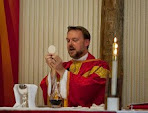
Sunday, November 4, 2018

The Feast of All Saints (observed)


Matthew 5:1-12; 1 John 3:1-3; Revelation 7:2-17

In the Name of the Father and of the + Son and of the Holy Spirit.
A saint is one who has been set apart by God for salvation in Jesus Christ. Therefore, one is not a saint because of his good works, his piety, or even his faith, but one is a saint because of the work of God in Jesus Christ – period. The Lord’s saints are both in heaven and on earth; some have died in the Lord, and some live in Him now on earth, set apart from the multitude of sinners, just as Noah and the children of Israel were set apart from the multitude of sinners around them. Again, they are not saints because they are particularly good or because they chose to follow the LORD, but rather because the LORD has called and has chosen them in His Son. Another word for saint is holy; the words saint and holy are synonyms, they mean the same thing: set apart. The saints are not holy in and of themselves, but they have been declared to be holy by God through Jesus, even as they are being made to be holy, a work that will be completed in the resurrection of their bodies on the Last Day. Thus, we are not to pray to the saints, though Scripture is clear that the saints in heaven do indeed pray for the saints on earth, the Church, even as we pray for our brothers and sisters in Christ. Nor do the saints contribute to some heavenly treasury of grace from which we withdraw in times of need, but they are recipients of the Lord’s grace and mercy, just like you. Likewise, the saints are not only those who have died in the Lord and await the resurrection, but you also are the LORD’s saints, His holy ones who have been set apart from the multitude of sinners that fill this world for life and salvation in Jesus Christ. Indeed, the saints are that countless multitude in St. John’s vision wearing white robes and holding palm branches before the throne of God and the Lamb, all those who have washed their robes and made them white in the blood of the Lamb, the Church of Jesus Christ in heaven and on earth, the one holy catholic and apostolic Church of all times and all places, the Church that will persevere until the end, over whom the gates of hell cannot prevail but must fall before the victory of the Her Lord, Jesus Christ, the Lamb.
The Feast of All Saints is a chief festival of the Church’s Year of Grace. It is a day of remembrance and encouragement for the saints on earth for whom the saints in heaven pray, “How long, O Lord until You avenge our blood?” It is a day of remembrance and encouragement that God keeps His promises, for the saints in heaven are with Him, just as He promised, and He is with us, just as he promised. It is a day of remembrance and encouragement for the saints on earth who mourn the deaths of their loved ones, for their souls are very much alive with Jesus where there is no hunger or thirst, where there is no sadness or mourning, suffering or death, and where God Himself has wiped away every tear from their eyes. It is a day of remembrance and encouragement, comfort and peace in the knowledge that, when we, the saints on earth gather here in this place, and particularly at the altar of our LORD, heaven comes down to earth and we join our voices with “angels and archangels and with all the company of heaven” in the communion of saints, both in heaven and on earth, and the Church of Jesus Christ is as one, as catholic, and as visible as it can possibly be until that day when our Lord returns and raises our bodies and reunites them with our immortal souls to feast with Him forevermore in His heavenly kingdom.
The saints in heaven are examples for us, not primarily of what the Christian faith and life look like for us to emulate in our own lives, but rather of God’s faithfulness and promises kept to those who have finished the course of their lives in faith. Thus does the preacher to the Hebrews exhort us saying, “Therefore, since we are surrounded by so great a cloud of witnesses, let us also lay aside every weight, and sin which clings so closely, and let us run with endurance the race that is set before us, looking to Jesus, the founder and perfecter of our faith, who for the joy that was set before him endured the cross, despising the shame, and is seated at the right hand of the throne of God.” Because of the promises of God fulfilled and kept in Jesus Christ, we must lay aside the desires of our fallen flesh, the values of this fallen world, and even the thoughts of our sin-corrupted reason and wisdom and listen to the Words of Jesus and copy and emulate Jesus’ faith and life.
Our Lord Jesus teaches us in the Beatitudes, the first part of His Sermon on the Mount, of what true blessedness consists. The truly blessed are those who are poor in spirit, hungering and thirsting for righteousness. It goes without saying that poverty, hunger, and thirst are not considered a blessing in our world and culture, but rather a curse. But, then, it is not physical and material poverty, hunger, and thirst our Lord has in mind, but spiritual. The problem is that, when we are satisfied, comfortable, and fat with worldly and material blessings, we often forget and deny that we are spiritually impoverished and starving to death. Jesus also teaches that there is blessedness in mourning, for only those who truly mourn the loss of holiness and what we have truly earned, merited, and deserved for our sin, death, can appreciate the comfort that comes from the free gift of God’s grace in Jesus who suffered and died in our place, giving us His life in exchange for our death. We are to be meek and merciful, pure in heart, and peaceful. Truly, these are fruits of the Spirit borne in those who are empty of themselves and all self-righteousness and are in turn filled by Jesus with His grace, mercy, love, and forgiveness. Such saints will suffer reviling, persecution, and evil at the hands and mouths of this world, just as Jesus did for you out of love for you and His Father. When such things happen, Jesus teaches, you should rejoice and be glad, for your reward is great in heaven, for so they persecuted the prophets who were before you. However, do not treat these Beatitudes as a commandments or as prescriptive, turning them into works that you must do; rather, they are descriptive, first of Jesus, and second of you who are in Jesus through Baptism and faith. What Jesus has described in these Beatitudes is Himself, and in so doing He has described His saints who are in Him.
So, being a saint means to be set apart by God from the sinful masses all around you. This means that you often will not participate in the godless things that they do. This means that you will show mercy when others are unmerciful, that you will show love when others show hate, that you will call God’s commandments right and good even when the world calls them wrong, backward, intolerant, and evil. This means that you will likely not be popular and praised by others, but more likely will be reviled, mocked, ridiculed, hated, and even persecuted. Guess what, you’re in good company! For so they treated the prophets, the saints, and your Lord Jesus before you. Blessed is he whose fear, love, and trust are in the LORD, who is His child, having God as his Father. The world has not known Him, rejects and reviles Him, therefore the world does not know you, rejects and reviles you. But, you are God’s children now, and what you will be will be revealed when He appears. You will be like Him and you will see Him and all His saints face to face. And, no one will take your joy from you.
We gather here as God’s holy saints, set apart from the world of unbelievers and sinners. We come here in meekness and poverty, hungering and thirsting for the Lord’s righteousness. He fills us to overflowing and He sends us back into the world to share His love, mercy, grace, and forgiveness with others to the glory of His Name. And, we are not alone; not only do we have each other in this family of faith, but we kneel here at the altar and receive Jesus with the saints in heaven who are with Him always. Only here, in the communion of saints, does heaven come down to earth to encourage and preserve the saints on earth in faith. For, God has knit His faithful people of all times and places into one holy communion, the mystical body of His Son, Jesus Christ.
In the + Name of Jesus. Amen.