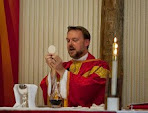
Sunday, August 21, 2022

The Tenth Sunday after Trinity (Trinity 10)

Luke 19:41-48; Romans 9:30 – 10:4; Jeremiah 8:4-12


In the Name of the Father and of the + Son and of the Holy Spirit.

In 2019 I had the immense blessing of visiting the Holy Land. I went with my mother who was eighty-three at the time. She invited me to go with her after a friend had to cancel. I have to admit that, initially, I was not all that enthused by the idea. Of all the places I might have hoped to travel someday, the Holy Land wasn’t anywhere near the top of the list. However, having now visited the Holy Land, I have a very different perspective. Quite literally, that visit changed my life and my ministry, because it changed my perspective on the stories of the Holy Scriptures and how I understand them and now teach about them. Seeing the general locations where historical biblical events took place, experiencing firsthand the culture of the people who live there, witnessing the actual distance, near or far, between villages, cities, territories, and nations all served to put “flesh on the bones,” so to speak, of stories that, at times, seemed foreign, distant, and abstract. I will go so far as to say that my visit to the Holy Land was incarnational in that seeing these places and reconsidering the biblical accounts in this new light drove me even closer to my incarnate Lord Jesus Christ who really and truly lived there and walked there and wept there and laughed and suffered there and died there, and really and truly rose again from death to life that cannot die. That matters. That matters very much.

Let me illustrate just a bit regarding our Gospel reading this morning which tells of Jesus’ visit to Jerusalem on Palm Sunday. Though I suppose I already knew it, I certainly didn’t give much consideration to the fact that Jesus did not live in Jerusalem and that most of His three-year ministry was not in Jerusalem but in Galilee approximately eighty miles northeast. As an observant Jewish male, Jesus likely visited Jerusalem three times per year for the high feasts of Passover, Shavuot (Pentecost), and Succoth (Feast of Tabernacles), maybe staying a week in Jerusalem for each feast. The rest of the year Jesus spent his days traveling from village to village primarily in Galilee and east of the Mount of Olives in Jericho and Bethany. In fact, if you read but a few verses earlier in Luke 19 you will read about Jesus entering Jericho and His healing of blind Bartimaeus. Next Jesus is in Bethpage and Bethany on the east side of the Mount of Olives where his friends Mary, Martha, and Lazarus lived. Indeed, Jesus’ triumphal Palm Sunday entry is not in Jerusalem at all, but it begins in Bethany and travels up and over the Mount of Olives culminating in the verses we have heard this morning from St. Luke’s Gospel, “And when He drew near and saw the city, He wept over it, saying, ‘Would that you, even you, had known on this day the things that make for peace!” When Jesus saw Jerusalem, He had just passed over the Mount of Olives from Bethany and was coming down the other side, likely near the Garden of Gethsemane where He often prayed with His disciples. From there he could see the Holy City and the Temple Mount across the Kidron Valley. There is a church on that traditional spot called Dominus Flevit (“The Lord Wept”). The church is even constructed in the shape of a teardrop and upon its altar is a mosaic of a hen gathering her chicks under her wings recalling the words of Jesus in Luke chapter thirteen, “O Jerusalem, Jerusalem, the city that kills the prophets and stones those who are sent to it! How often would I have gathered your children together as a hen gathers her brood under her wings, and you were not willing!” Behind the altar is a window overlooking the Temple Mount over which Jesus wept as He made His Palm Sunday visit to Jerusalem. A cross in the center of the window is centered over, not the Muslim Dome of the Rock which stands on the Mount where the Temple once stood, but a little to the right, over the blue domed roofs of the Church of the Holy Sepulcher built over Golgatha and Jesus’ empty tomb.

Jesus wept over Jerusalem because He was sent by her gracious and merciful LORD to call His people to repentance and to forgive them for their idolatry and apostasy. Jesus’ visitation was a visitation of grace, but they rejected Jesus and would soon hand Him over into the hands of the Gentiles to be crucified. Because they had rejected the LORD’s gracious visitation, within a generation they would experience the visitation of the LORD’s righteous wrath when the Romans laid siege to Jerusalem and destroyed the city and the temple leaving not one stone standing upon another. I saw the evidence of that destruction when I visited the Holy City. All that remains of the temple is rubble. It is merely a perimeter wall built by Herod the Great at which Jews continue to wail and pray today. Jesus wept over Jerusalem because His people did not acknowledge the time of their gracious visitation.

The Greek word for visitation is ἐπισκοπῆς, from which we get the English words episcopy, bishop, visitor, and even pastor. All of these titles and offices imply a certain God-given authority to visit the Church and her congregations to see that all is being conducted according to the Word and Commandments of the LORD and in accord with orthodox doctrine and confession, that the Law is being proclaimed in its severity and that the Gospel is being proclaimed in its truth and purity. If anything is amiss, it is the vocation of the ἐπισκοπoς to reprove, correct, and train in righteousness. Old Testament history is the record of our LORD’s gracious and merciful patience, His gracious visitation if you will, culminating in the sending of His own Son, just as Jesus taught in the Parable of the Tenants and the Vineyard. But Israel killed the prophets the LORD sent to her, and when He sent His Son they rejected Him and handed Him over to the Gentiles to be crucified. Jesus was God’s ἐπισκοπoς sent in gracious visitation. From the Mount of Olives Jesus wept over Jerusalem because they did not acknowledge the time of their visitation.

The incarnation of the Son of God Jesus Christ was a visitation of God’s grace, mercy, and love. Jesus’ procession from heaven to Galilee, from Galilee to Jericho, from Jericho to Bethany and the Mount of Olives overlooking Jerusalem was a procession of love incarnate. Love incarnate came to visit His people to gather them as chicks under His wings, but they were not willing. Jesus wept over Jerusalem because they had rejected His visitation, they rejected the God of love.

God has visited His people, and His people rejected Him. But God is still visiting His people, God is still visiting you! For this reason God has sent you your Pastor in the stead and by the command of Jesus to proclaim that you are forgiven, to gather you to Himself again and again, to heal your wounds of sin and guilt, washing you clean in His holy, innocent shed blood, feeding you with His Word, body and blood, and forgiving your sins anew each and every time you gather here in this place in which He is really and truly present with His gifts! Your God comes to you who cannot, who would not, come to Him, to serve you with His gifts of love, mercy, grace, and forgiveness. Yours is a visitation of grace offered again and again, but not forever. Today is the day of salvation. Do not put off to tomorrow what you must believe and receive today, for God has not promised you a tomorrow, but He has promised to be with you here, today, in this place with His gifts of forgiveness, life, and salvation.

Dominus Flevit, “the Lord wept.” Our Lord wept over Jerusalem for the destruction that would soon come upon her. For she did not recognize the time of God’s gracious visitation in Christ, who had come to bring her peace. Destruction was not what the Lord desired. Destruction was not the purpose for which He was sent. But Jerusalem rejected and killed the Prophets who came before Him, and they would reject and kill Jesus too. Jesus did not weep for Himself. Willingly He went to the cross out of love for His Father who loves you so much that He gave His only Son unto death that you might live. No, Jesus did not weep for Himself, but He wept for the children of Israel, and He wept for you and me, His children even now. Jesus wept because we are so easily deceived by the desires of our flesh, by our fallen reason, and by the devil. We so easily believe that we are righteous and justified by what we do or how we feel. We are lulled into believing we are at peace with God because we go to church or behave better than others. But, if our peace is not in Christ, and in Christ alone, then we have a false peace, which is no peace at all. The Lord has visited His people in the Messiah Jesus, in humility, mercy, and compassion. Repent; be turned, and find true Peace with God in Jesus.

For, the Lord is visiting you, His people, right now in His faith-creating, forgiveness-giving, and life-bestowing Word, Baptism, Absolution, and Supper. And the Lord will visit His people once again in power and great glory, and then every eye will see Him, and every tongue will confess Jesus Christ as Lord, to the glory of God the Father. He has come. He comes. And He is coming. Therefore, cleanse the temple of your soul from all self-righteousness, from trust in money and worldly possessions, from whatever idols you have created for yourself and submitted yourself to. For, today you stand in His forgiveness, at peace with God through Jesus Christ. He is unchanging, faithful, and true; He will never leave you or forsake you or break His covenant promise with you. Only you can reject Him, for He will not, and He cannot reject you.

And His gracious visitation amongst you now is for the purpose that your faith would be renewed and strengthened and that you would be preserved in His Parousia, His presence and His gracious visitation this day, and every day, until He reveals Himself in glory for all to see and know. For, the peace that He brings to you, the peace that He is for you, is not a light peace, peace as the world gives, but it is true peace, peace with God who, in and through Jesus, is not your enemy and judge, but your loving Father who graciously gives you all things needful for your body, life, and soul. You are members of His body of which He is the head. You are blocks in the walls of His holy temple of which He is the cornerstone and foundation. Your Lord Jesus was torn down in your death so that not one stone was left standing upon another, and He was raised again on the third day to life that never ends. He is present for you now in this house of prayer. His gates are open and His feast is prepared. Come and eat at His banquet and know His peace.

In the + Name of Jesus. Amen.

Sunday, August 14, 2022

The Ninth Sunday after Trinity (Trinity 9)

(Audio)


Luke 16:1-13; 1 Corinthians 10:6-13; 2 Samuel 22:26-34


In the Name of the Father and of the + Son and of the Holy Spirit.

We are all managers and stewards of God’s possessions. All that we have is truly His, from His gracious providence. Whether it be physical possessions of money, food, shelter, and clothing, relational possessions of husband, wife, children, family, and friends, or spiritual possessions of grace, mercy, love, and forgiveness – all is the LORD’s who graciously provides us all that we need for our bodies and our lives, with overflowing abundance to manage, to use, and to distribute for the benefit of ourselves and our families and for the benefit of our neighbor in need.

However, we, like the manager in Jesus’ parable, are guilty of wasting our Master’s possessions. Sometimes we are selfish and greedy, fearfully guarding, protecting, and hoarding for ourselves what we think we need and lusting after what we think we want. But, more often than not, we are simply lazy, careless, and foolish in our stewardship, thinking only of the present, our present needs, wants, and desires, and thinking only of ourselves because those are the needs, wants, and desires we know the best.

Your LORD and Master would have you receive and recognize all things as His good and gracious gifts to you and, therefore, trusting in Him, in His goodness and love for you, use them to His glory and praise, for yourself and your family, and in service of others in their need. But fear is the very opposite of love, and the fruits of fear are selfishness, greed, envy, and hatred. Love and fear have no fellowship together because perfect love casts our fear. Thus, in truly loving God, trusting in Him, in His goodness and loving providence, all those fruits of fear may be driven away. That is why the fear of the Lord is the beginning of wisdom. A right relationship with your LORD will drive away the fruits of sinful fear and you will truly live in freedom without fear. You will be able to manage your Master’s possessions without fear of losing or going without, without fear of need or someone else having more, but you will find contentment, peace and joy in what you have, and you will be content and at peace and in joy in doling out your Master’s goods to others.

The manager in Jesus’ parable realized his predicament. He held no illusion that when he turned in his account of his management that he would not be out of a job and utterly on his own. The problem for us, however, is that we are too often not willing to confess the same about ourselves. We try to blame someone else for our failings and we try to rationalize and explain away our mismanagement. But the manager in Jesus’ parable doesn’t do that, but he knows that he is guilty as charged. He offers no excuses, and he blames no one but himself. However, the manager does something that is unexpected, something that his master will later call shrewd and will commend him for. Knowing that he has no excuse and has no one to blame but himself, he places all of his faith and all of his trust, he commends his entire livelihood and life, unto the goodness and mercy of his master.

Though he was already fired and out of work, the manager went to each of his master’s debtors and he slashed their debts by twenty and fifty percent. Needless to say, the debtors, who didn’t know that the manager had been fired, were very pleased with the master, whom they assumed had been so gracious and merciful with them. Likewise, they were pleased with the manager who delivered this good news to them. However, what would the master say when he discovered that his manager had let his debtors out of their debts? Would he not have his manager thrown in prison, or worse? And here, Jesus’ parable takes yet another unexpected turn, for not only does the manager do the unthinkable, but his master does the unthinkable as well – he commends his dishonest manager for acting so shrewdly.

Though this unexpected turn of events is surprising, it should not be confounding to you. Jesus is not praising the dishonest manager’s dishonesty, but rather He is painting for you a portrait of faith. The dishonest manager never dreamed that he might somehow get away with short-changing his master, but instead he was banking on something altogether different – his master’s goodness and mercy. When all was said and done, by slashing his master’s debtor’s debts he had won for himself favor with the debtors and also their praise and love for his master. When he turned in the account of his management, the master, recognizing that the manager had trusted in his goodness and mercy and that his debtor’s were now praising him, commended the dishonest manager for his shrewdness. And Jesus adds to the end of the parable the following summary: “And I tell you, make friends for yourselves by means of unrighteous wealth, so that when it fails they may receive you into the eternal dwellings.” “You cannot serve God and money.”

What does this mean? Well, it goes back to what was stated at the beginning: We are all managers and stewards of God’s possessions. All that we have is truly His, from His gracious providence. Do you believe this? And, if so, what does this mean for your life? If all things truly belong to God, and they do, then the question is, what do you place your fear, love, and trust in – God, or money? If your fear, love, and trust is in money and material wealth and possessions, then that is what you serve – You serve the possession instead of the Possessor; you serve the gift instead of the Giver; you serve creation instead of the Creator. You may think that both are important, and that you can honestly serve both, but Jesus teaches you that you cannot serve two masters; you cannot serve God and money. For, either you will hate the one and love the other, or you will be devoted to the one and despise the other.

In effect, Jesus says to you, “Don’t use people to serve money, but use money to serve people;” “Make friends for yourselves by means of unrighteous wealth, so that when it fails they may receive you into the eternal dwelling.” You are a manager, you are a steward, God is the owner and Master. He is good and gracious, merciful and loving. He gives to you so that you may live and enjoy life and praise Him, and He gives to you in abundance so that you may give to others without fear of losing, without fear of being shorted, without fear of being taken advantage of, without fear of being taken for granted, without fear…, but full of love, Christ’s love, for your brother, your sister, and your neighbor in need. To not be able to give it away is to serve money, mammon, and material wealth as a master. Don’t let money be your master.  The LORD is your only Master, and He loves to give you all that you need for your body and life and more that you might make friends for yourself, and that He might make disciples for Himself through you, to the glory of His holy Name.

The dishonest manager had nothing to lose, but everything to gain by making friends for himself amongst men and by trusting in his good and gracious master. So too you have nothing to lose and everything to gain by giving, sharing, and blessing others with God’s gifts. For the day is coming when all unrighteous wealth will fail, when no amount of money, wealth, or possessions will be able to help you or bring you comfort. Therefore, live today as if it were that day. Be shrewd in your stewardship of your Master’s possessions now, and He will entrust you with true riches in His holy kingdom. Indeed, those riches are laid aside for you even now, sonship, righteousness, and eternal life, and no one can take them from you. For, Jesus Christ is the true Steward who has canceled all your debts. And, His Father, your Master, has commended Him and has given Him His kingdom and authority. And, even now, He transforms the unrighteous mammon of bread and wine and ordinary water into a lavish feast and anointing of grace to preserve and keep you until His return. You are His stewards and His faithful managers. He provides you all you need and more. He will never leave you or forsake you. When you face temptation, He will always provide you a way of escape. He is that Way, and the Truth, and the Life, and He is your Daily Bread.

In + the Name of Jesus. Amen.

Saturday, August 6, 2022

The Eighth Sunday after Trinity (Trinity 8)

(Audio)


Matthew 7:15-23; Romans 8:12-17; Jeremiah 23:16-29


In the Name of the Father and of the + Son and of the Holy Spirit.

Our Lord Jesus has said, “A healthy tree cannot bear bad fruit, nor can a diseased tree bear good fruit,” and “Not everyone who says to me, ‘Lord, Lord,’ will enter the kingdom of heaven, but the one who does the will of My Father who is in heaven.” These may seem harsh words, and indeed they are if you are a non-fruit bearing tree, but they need not cause you to be fearful if you love Jesus and His Word and bear His fruits in your life and deeds. After all, Jesus is speaking to His disciples whom He loves, for whom He is about to go to the cross, and He wants them to be prepared for life in this world after He leaves them and returns to His Father by remembering what He has told them and by remaining in Him through faith and bearing His fruits in love. A healthy tree cannot bear bad fruit anymore than a diseased tree can bear good fruit. Therefore, we must consider, what fruit are we bearing, and what fruit are you bearing in your lives?

We have been together for five years now, some of you the entire time, most of you for less, and some of you have only been with us for a few months. I think of you as God’s children, purchased in the blood of His Son Jesus, over whom I have been given the task of caring for, feeding, protecting, equipping, and sending for service in His kingdom to the glory of His Name. I haven’t always done that perfectly. Indeed, I’ve made plenty of mistakes, and often I have sometimes let my own sinful flesh and desires rule me so that I did not do the will of God the Father, but my will, which was ultimately the will of the devil. I am extremely sorry for that, and I repent of that, just as you repent of your sins and flee for comfort in the merciful forgiveness of God in Jesus Christ.

You see, we are not so different you and I, save my ordination into the Office of the Holy Ministry. We are all sinners, and we are all forgiven in the Words and Wounds of Jesus Christ. And yet, I have the holy and terrifying orders of standing in the stead and in the place of Jesus Christ to bring to you and to serve you with His gifts for which He gave His own precious and holy life unto death. I have attempted with all my heart and with all my strength and with all my knowledge and with all my faith to do that faithfully, for your sake, to the glory of God in Jesus Christ. Oftentimes if you considered me rigid, or cold, or out of touch, old-fashioned, arrogant, or whatever else, I suspect that it was because I am so very concerned to bring you nothing but the Word of God and His Sacraments as faithfully and purely as I was able.

That is what a pastor is called to do – to be faithful to you, God’s people, by being faithful to God. I know that the world desires constant variety and relevance, that human reason seeks practicality and usefulness, and that the human heart demands passion and emotion in order to feel alive, however, none of these things can be permitted to overrule or replace the Word of God and His Blessed Sacraments or to invert the relationship of service He has established with us that we may be forgiven and restored to communion with Him and bear His fruits of love in service to our neighbor in the world.

All that being said, I believe that my ministry among you has indeed been fruitful, and I believe that you and I together have been fruitful, even as each of you as individuals have been fruitful in your vocations. Over the years, the Divine Service has been prayed in such a way that it is self-evident to visitors that God is not simply an idea which we honor with our lips, or an impersonal clock-maker god who is not involved in our lives but only wants us to be happy and be good to each other, or even a spiritual guide like any other god, goddess, or guru, but that He is really and truly present in both a spiritual and physical way in His Word, Baptism, Absolution, and Supper. People know this, and you know this, because of the reverence that is shown for His Name, His Word, and for His body and blood. They are real, and they are present, and they are holy, and so we speak softly and humbly, we bow and kneel, we bless ourselves with the sign of His cross, the sign that was placed upon us when we were baptized into His death and resurrection and claimed and named with His Name as His very own sons and daughters, we chant, we pray, we eat His body and we drink His blood, we teach this to our children that they may come to desire Him more and more at even younger ages, and we take His gifts with us into our lives in the world as we leave this place and take our vocations as priests presenting our bodies as living sacrifices in selfless love and service of our neighbors to the glory of God. Some may look only at the numbers, both in terms of attendance and finance, and conclude that we have not been fruitful, that we have declined, or something else; but this is not true, and more than that, we have grown together in faith and knowledge of Jesus Christ and we are stronger now than we were five years ago because we trust less in ourselves and the ways of men and more in God and obedience to His Word and commands.

However, we bear good fruit, not because we are good, but because our tree is good – and our tree is Jesus Christ and His cross. If we trust in Jesus and do His will, our fruit cannot possibly be bad. It doesn’t matter what the world thinks of it. It doesn’t matter what the numbers say. It doesn’t matter what the checking book balance is. What matters is that we remain faithful and bear His fruit, that is, do the work He has given us to do. There have always been, and there will always be, those who call God’s good things bad or evil because they don’t conform to what man desires or his reason demands. For example, men called Jesus’ death on the cross evil, and people today call the symbol of His death, the crucifix, evil. And yet, Jesus’ death is the greatest good God ever did! Jesus’ death on the cross was God’s gift of love for the world. Moreover, Jesus’ death on the cross was not His defeat, but His victory! Truly, if Christ had not died and been raised, then, as St. Paul says, we would still be in our sins and the most of all people to be pitied. No, we are not theologians of glory who call good evil and evil good, but we are theologians of the cross who call a thing what it is. When we consider the cross of Jesus Christ, we remember the love of God poured out for us and Jesus’ victory over sin, death, and the devil – a victory that He shares with all who trust in Him and love Him, keeping and doing His word and will.

In one place Jesus says that all who call upon Him will be saved, but here He says that not all who call Him Lord will enter the kingdom of heaven but the one who does the will of His Father. I know that this may seem contradictory, but I say to you that it is not. While it is true that we are saved by grace through faith in Jesus Christ alone, nevertheless, faith is never alone, but faith is known by its production of fruit, love, and good works. Again, faith without works is no faith at all, it is dead, even as a tree that produces bad fruit is a bad tree and must be cut down and thrown into the fire. But, you are not the tree! You are the branches. If your tree is Jesus and His cross, then you will produce His fruits. As Jesus teaches, “I am the vine and you are the branches; remain in me, and I will remain in you, and you will produce much fruit.” It has been my ministry among you to place the tree of Jesus Christ before you at all times. Everything we do in the Divine Service is done to direct you to that tree. And everything we do outside of the Divine Service flows from that tree as good fruit. As in the Garden, there are two trees – the tree of Jesus Christ, and anything else. Only the tree of Jesus Christ gives life; all other trees, though they may appear to bring knowledge, give only death.

In today’s lections, both Jesus and Jeremiah warn you against false teachers. Jesus says that you will know them by their bad fruits. Their fruit is bad, because their tree is bad. Bad trees cannot produce good fruit anymore than good trees can produce bad fruit. It is Jeremiah, however, who describes what their bad fruit looks like: “Do not listen to the words of the prophets who prophesy to you, filling you with vain hopes. They speak visions of their own minds, not from the mouth of the LORD. They say continually to those who despise the word of the LORD, ‘It shall be well with you’; and to everyone who stubbornly follows his own heart, they say, ‘No disaster shall come upon you’.” I do not believe that I ever preached to you “vain hopes.” Indeed, I preached to you the theology of the cross, that the way of Jesus’ disciples is the way of the cross, that the world will reward your faith with mocking, ridicule, and persecution, and that you should expect suffering and receive it as God’s discipline because He loves you and would rather you suffer now and live with Him in eternity than suffer eternally in hell. Likewise, I do not believe that I ever told you could continue in sin and that it would be okay, that God wouldn’t mind. There are many so-called Christians today who desire precisely that, and sadly, there are far too many pastors willing to accommodate. No, you must recognize these false prophets and pastors by their fruits and reject them and flee from them. However, in order to do that, you have to know the Word of God and remain fast in it. I have desired nothing more for you these past five years than precisely that – That you may know who you are in Christ Jesus and that He might be your identity.

As I said earlier, I have always thought of you as God’s children, purchased in Jesus’ blood, over whom I have been given the task of caring for, feeding, protecting, equipping, and sending for service in His kingdom to the glory of His Name. This is not merely an opinion that I hold, but it is a fact that I know, “For all who are led by the Spirit of God are sons of God, … and if children, then heirs – heirs of God and fellow heirs with Christ, provided we suffer with Him in order that we may also be glorified with Him.” You suffer with Him when you reject the bad fruits of the false prophets and do the will of your Father in heaven.

I have loved you and cared for you like a father, which means that I have not always given you what you wanted, but what I believed to be good for you. Indeed, this is precisely why pastors in some traditions are called Father. Though I do not have that title, I have that office and I have always thought of you as spiritual children – not my children, not children of the world, but children of God. I will always think of you this way, and I will keep you in prayer even as I ask that you will keep me in your prayers as God continues the good work He has begun in us. He will not leave you or forsake you. Indeed, nothing can separate you from His love. He is with you always, even to the end of this world.

In the + Name of Jesus. Amen.

Friday, July 29, 2022

The Seventh Sunday after Trinity (Trinity 7)

(Audio)


Mark 8:1-9; Romans 6:19-23; Genesis 2:7-17


In the Name of the Father and of the + Son and of the Holy Spirit.

The crowd had been following Jesus for three days. However, it wasn’t until the third day that anyone expressed concern that they just might be hungry, and that wasn’t someone from the crowd, but it was Jesus Himself. Now, why is that? It is because the crowd was being fed all along with the Bread of Life, the Word of God, proclaimed to them by the Word made flesh, Jesus Christ. You’ll remember that Satan once tempted Jesus to assuage His forty-day hunger by turning stones into bread. Then, Jesus answered Satan saying, “Man does not live by bread alone, but by every Word that proceeds from the mouth of God.” For three days Jesus had been feeding them the Bread of Life – the very Word that proceeds from the mouth of God – identifying the lies they had been following, calling them to repent of their sinful dissatisfaction, forgiving them of their sins, and thus delivering them from the lies to the truth that gives real satisfaction and everlasting life in the kingdom of Heaven.

For, the trouble with us sinful people is that we always want to eat what isn’t good for us, what doesn’t bring nutrition, health, and life, but only malnutrition, illness, and death. It’s about what we take into our bodies and into our souls, what we feed on, what we trust in, and what we derive life from. That is why the LORD uses the analogy of bread to describe the importance and centrality of His Word for our life. Bread is a staple, a fundamental source of nourishment, energy, strength, and life. Like our First Parents before us, we flee from the wholesome food of the Bread of Life, God’s Word, and instead we fill our ears and our souls with junk food, with garbage, lies, and deceit. Truly, St. Paul’s prophetic words have been fulfilled today even as they were in His own time, “the time is coming when people will not endure sound teaching, but having itching ears they will accumulate for themselves teachers to suit their own passions, and will turn away from listening to the truth and wander off into myths.”

Yet, the crowd following and listening to Jesus those three days hadn’t expressed that they were hungry – which is quite amazing if you think about it! Still, Jesus had compassion on them. That word compassion in the Greek is a wonderful word splachnizomai. It literally means a churning of the bowelsSplachnizomai is a gut-wrenching feeling of empathy for the suffering of another. That is what Jesus felt for the people that had followed Him three days listening to His Word and teaching. That is what it means that Jesus had “compassion on the crowd.” Jesus knew their need even before they did. He knew that they needed physical nourishment just as much as spiritual nourishment. Thus, Jesus also taught them, “Do not be anxious about your life, what you will eat or what you will drink, nor about your body, what you will put on. Is not life more than food, and the body more than clothing? Look at the birds of the air: they neither sow nor reap nor gather into barns, and yet your heavenly Father feeds them. Are you not of more value than they?”

Thus, what is revealed in today’s Gospel is not only the necessity and the priority of the Word of God, the Bread of Life, for true life with God, but we also see Jesus’ humanity and union with us, the meaning of His Incarnation. We see God’s love and compassion for us, how He knows us so intimately, as only a Creator can truly know His creatures whom He has made and formed and knitted together in our mother’s wombs, whose days He knows before ever one came to pass. This is what it truly means to have compassion: to suffer with, to suffer alongside of. For, inasmuch as the crowd had been listening for three days, so too, had Jesus been teaching and preaching for three days. He was in the same boat as them, so to speak. He was hungry too. He felt compassion – He felt what they were feeling – and so He was moved to act. However, knowing their need, personally, Jesus also knew their weakness personally. And, later, in His own time of need, Jesus would say to His disciples in Gethsemane who were heavy with sleep, “The spirit is willing, but the flesh is weak.”

The disciples demonstrated the weakness of their flesh in their answer to Jesus, “How can one feed these people with bread here in this desolate place?” No doubt if they were in the village or city they would have been assured at the presence of bakers and fishmongers, but, seeing nothing but barrenness and desolation, their assurance was gone and their hope lost. Therefore, Jesus gently taught them to trust not in the flesh, or in material things, what their eyes saw, and what their human reason and wisdom expected, but to trust in the Word of God. Jesus asked them how many loaves they had. It was not because He did not Himself know, but it was to bring into the light the meagerness and the insufficiency, the hopelessness of their own provisions. For, until we are able to confess our sinfulness and our inability to restore ourselves, we are unable to receive the benefit of the Gospel, the Good News, that we have been forgiven and restored to a right relationship with our God and Creator through faith in Jesus Christ who has redeemed us and has set us free. Then Jesus directed the crowd to sit down on the ground. It would not be by their works, by their reason, by their strength, or even by their faith that their bellies would be filled, but it would be by the Word of God, now pressing their meager offerings into life-giving and life-sustaining service.

Jesus caused the disciples and the crowd to become aware of their hunger and their insufficiency. When you feed your bellies with junk food and garbage, you have the sensation of being full and satisfied, while your bodies are literally starving to death for nutrition. Our ears and our brains and, consequently, our souls are so filled with the junk food and garbage of the world’s wisdom, values, cares, and anxieties that we, too, would be spiritually starving to death were it not for our frequent eating, hearing, and receiving of the Bread of Life, the Word of God. When they became aware of the meagerness of their provisions, their first reaction was that of unbelief, hopelessness, and despair. But, the Lord took their meager provisions, seven loaves and a few small fish, and with them fed them all until they were satisfied, and then collected seven baskets full of leftovers. When the LORD fills your cup, it overflows in abundance. Only consider these words of promise that He gives you: “Good measure, pressed down, shaken together, running over, will be put into your lap.” “I am the bread of life; whoever comes to me shall not hunger, and whoever believes in me shall never thirst.” “Whoever drinks of the water that I will give him will never be thirsty again. The water that I will give him will become in him a spring of water welling up to eternal life.” Whenever the LORD gives, He gives in abundance. His mercy and His generosity are far greater than our actual needs, as is His love far greater than our sins.

The LORD’s miracles of feeding His people are plenteous throughout the Holy Scriptures. From the very beginning, in the Garden, the LORD provided food for nourishment of the body to which He attached His Word that nourished the soul. The Passover meal was a sign of His providence as He led His people out of slavery and bondage in Egypt into the land of promise. He provided manna, quail, and water to sustain His people forty years in the wilderness. In the sacrifices of the tabernacle and the temple, the LORD attached His Word of promise to bread and meat, oil and wine, to show His favor and blessing upon His people. The LORD sustained Elijah, the widow, and her son throughout the drought and famine, the jar of flour not being spent nor the jug of oil empty. Jesus had already fed over five thousand with bread and fish before performing this miracle again in the feeding of the four thousand, indicating that He may have done this several more times throughout His ministry. And, the night on which He was betrayed, He pressed meager bread and wine into divine and holy service in the Last Supper, promising through His Word, that those who ate and drank received Himself in holy communion for the forgiveness of sins, the strengthening of faith, and life that cannot die. Our Lord Jesus Christ continues to press our meager provisions of bread and wine into divine and holy use in the Sacrament of the Altar where we eat His flesh and drink His blood in His promise that, “Whoever feeds on my flesh and drinks my blood has eternal life, and I will raise him up on the last day.”

Like Martha, we too easily become distracted by worldly and fleshly cares and anxieties. We see violence, warfare, and bloodshed in the world and we are fearful. We are tempted to think that we are alone and must solve these problems on our own or suffer in isolation. Likewise, we similarly despair at our meager provisions to support our congregation and the ministry in this place. We see empty seats and less and less money in the plate, and we know that people are not beating down our doors to come in. And so, we are tempted to believe that we must do something, we must fix things, or slowly decline until we have to close our doors. “How many loaves do you have?” Jesus asks. Yes! Confess the meagerness of your provisions, your inability to dig yourself out of your self-made sin-hole, your grave, your death, and look to Jesus, the Bread of Life who provides you daily bread, all that you need for your body and your life. He takes up our meager provisions and He presses them into service to feed and to nourish, to strengthen and to protect, and then to send you out into the world, to your neighbor, through your vocations, to share the Bread of Life you yourself have received in superabundance.

Come, taste of the bounty of Eden restored in this Feast of the Bread of Life, Jesus Christ. His flesh is true food, and His blood is true drink. “This is the bread that came down from heaven, not like the bread the fathers ate, and died. Whoever feeds on this bread will live forever.”

In the + Name of Jesus. Amen.

Christian Funeral for Melvin Eugene “Beach” Trimble

(Audio)


John 6:27-40; 2 Corinthians 5:1-10; Job 19:21-27


In the Name of the Father and of the + Son and of the Holy Spirit. Amen.

“Be thou faithful unto death, and I will give thee a crown of life.” That was Melvin’s confirmation verse, proclaimed by Pastor Starke at Trinity Lutheran Church in Bremer, Iowa on September 1, 1953, the same day Beach was confirmed and received the Lord’s Supper. Today, nearly sixty-nine years later, as we commit our brother in Christ into the arms of Jesus, we can say with confidence, “Well done, good and faithful servant.” It may have taken Beach twenty-seven years to receive the Sacrament of Holy Baptism, but he believed in his Lord Jesus Christ long before that and he bore the fruits of his faith in his life, words, and deeds among you, his beloved family and friends, through which he gave witness to the peace of Jesus Christ which made him the joyful, content, and unafraid man that he was, full of love and kindness for all.

Beach was a quiet and humble man, a man of few words having an unassuming, somewhat dry sense of humor. Men like Beach are often overlooked because they don’t put themselves out there, they listen more than they speak, and they generally let others be the life of the party. However, what is true of such men, and what was true of Beach, is that there’s often more going on in their minds and hearts than is commonly recognized until you get to know them. Beach enjoyed the simple things in life – fishing, mushroom and asparagus hunting, antiquing with Lois, tinkering with his irons in the barn, spending time with his family, and simply sitting on his front porch – activities he could do on his own or with a few of his closest loved ones who truly knew him. Of such a man someone might say, “Don’t just sit there! Do something!” They just couldn’t see what Beach was doing because it didn’t meet their standard of “doing something,” which means being busy and harried, worried, anxious, and fretting.

Jesus’ disciples often felt this way about their Master: “Don’t just sit there! Do something!” To both they and we today Jesus teaches, “Do not work for the food that perishes, but for the food that endures to eternal life. […]  “This is the work of God, that you believe in him whom he has sent.” What is the work that pleases God? That we believe and trust in Jesus whom God the Father has sent to do what we could not and to set right what we in sin have broken. The disciples at times tried to rush Jesus towards his messianic destiny. They wanted to make him king in place of Herod and Caesar. But Jesus went on from village to village teaching and healing and setting people free from their bondage to sin, death, and Satan. Sometimes they became impatient and frustrated with Jesus. Sometimes their faith became weak, and they demanded a sign in order to believe. But Jesus was precisely what they needed even if they didn’t know it and couldn’t see it. They needed the help of the Holy Spirit through the word of God to see their Messiah and Redeemer in the humble, unassuming man Jesus. They wanted bread for their bodies, but Jesus was the God-given Bread from heaven who gives life to the world. “Give us this bread always,” they cried. Jesus answered, “this is the will of my Father, that everyone who looks on the Son and believes in him should have eternal life, and I will raise him up on the last day." It is God’s will that we his children be raised from death. It is God’s will that Melvin be raised from death. That is why he sent his Son Jesus, to redeem us from sin and death and to take away death’s sting, for from now on those who die in the Lord will live and never die again.

You must understand that God’s promise in Jesus is not merely that those who die in the Lord will be with him. That is most certainly true and is immensely comforting! But there’s so much more! God has promised, has guaranteed, in Jesus’ resurrection the resurrection of all who trust in him. That means that this is not goodbye forever, but only for a whiile. You will see Beach again, and no one will take that joy from you! And you will not see him merely in a spiritual way, like a ghost or an angel, but you will see him as you knew him, in his flesh and blood body, glorified, perfected, and immortal. That is what Job confessed two thousand years before Jesus’ birth: “I know that my redeemer lives, and at the last he will stand upon the earth. And after my skin has been thus destroyed, yet in my flesh I shall see God, whom I shall see for myself, and my eyes shall behold, and not another.” You will see Beach again with your own flesh and blood eyes; you will hear Beach again with your own flesh and blood ears; you will hold Beach again with your own flesh and blood arms.

Beach was legally blind for about a decade, but he never let that get him down. In the resurrection Beach will see again. Beach retired thirty-five years ago from Carnation. He retired early and got to enjoy his retirement for more years than he worked! Beach used to say, “I’ve been retired longer than I ever worked!” He was grateful and joyful, both for the time that he worked and for the time he got to enjoy his retirement with his family. Beach had a similar view on the length of his life. After age eighty or so, Beach was heard to say, “The rest is all free!” Beach also served his country in two wars, both World War II and Korea. Very, very few veterans can claim that! Let me clarify: Beach was drafted while still in high school. Technically he served in World War II for two days, then he went to Korea. Appropriately, Beach will be honored today with military honors. Thank you for your service. We are grateful and appreciative.

It was only last December that Beach was diagnosed with prostate cancer. By the time they found it, it was already in his bones. Clearly, things progressed quickly to where we are today. Still, Beach faced cancer, and even a fairly grim prognosis, the same way he faced all challenges in life: joyful, content, and unafraid, full of love and kindness for all. Beach didn’t talk much about his faith; heck, he didn’t talk much at all. But there was no doubt about his faith because he lived it amongst you, and he witnessed to it in the peace and contentment that was his nature. Beach knew that his Lord was with him and would provide him the strength he needed to see it through, just as he had done for him ninety-five years. Even a month ago Beach was still laughing and smiling sitting in his chair, but in the past few weeks he was clearly drawn thin, so very, very thin. To see him like that reminds me of a line in Tolkien’s “Lord of the Rings” in which the very aged protagonist was described as spread thin, like “too little butter over too much bread.” When one has suffered immensely, death is often welcomed as a blessing. How much more so when one has been blessed with a long and good life and has faith in Christ who won life that cannot die for all who believe? Beach faced death knowing that he was not alone, but that his Redeemer lives and that he would shepherd him through the valley of the shadow of death into his Father’s home forevermore. Therefore, Beach wanted for nothing, and he was not afraid.

In the same vein, let me repeat the words of our Epistle: St. Paul writes, “For we know that if the tent that is our earthly home is destroyed, we have a building from God, a house not made with hands, eternal in the heavens. For in this tent we groan, longing to put on our heavenly dwelling;” […] So we are always of good courage. We know that while we are at home in the body we are away from the Lord, for we walk by faith, not by sight. Yes, we are of good courage, and we would rather be away from the body and at home with the Lord. So, whether we are at home or away, we make it our aim to please him.” My dear brothers and sisters in Christ, we are not like those who grieve without hope. Along with Job, we know and confess that our Redeemer lives! In His holy, innocent, and perfect life, death, resurrection, and ascension, Jesus has fulfilled the Law and its demands we could not keep, has atoned for our sin, has died in our place, and has been raised victorious over death and the grave so they can hold us no longer. As proof of God’s satisfaction with the sacrifice He has offered in His Son, Jesus ascended back to His Father in heaven, restoring humankind to a right relationship with God our Father once again. And Jesus has promised to return to raise us from death and reunite our glorified bodies with our immortal souls that we may live with Him forever in His kingdom in a life that can never die.“Be thou faithful unto death, and I will give thee a crown of life.” That is the hope we have that encourages us as we make our journey through death’s valley. That hope is what comforts us in our grief and dries our tears. That hope can even turn sorrow into joy and laughter. The Lord bless and keep Beach. The Lord bless and keep you who grieve in hope.

In the + Name of Jesus. Amen.

Sunday, July 17, 2022

The Fifth Sunday after Trinity (Trinity 5)

(Audio)


Luke 5:1-11; Romans 8:18-23; 1 Kings 19:11-21


In the Name of the Father and of the + Son and of the Holy Spirit.

Fishing is a very different sport than most. It doesn’t require great strength or even physical fitness at all. While knowledge and experience are most certainly helpful, they do not guarantee success. You simply cannot make a fish take the bait and swallow the hook. No, rather, in fishing, you must have extreme patience. The fish must come to you. The fisherman offers an enticing bait and lure, and then he waits. There is no work to be done. Indeed, what you need to do is be still, watch, and wait until a fish takes the bait.

It might surprise you, then, that Jesus uses the example of fishing and fisherman to teach about how people are brought into the kingdom of God. It shouldn’t, however, for Jesus as a teacher continually calls you to see ordinary things in a new way. Fishing is so common that you likely take it for granted. Therefore, he catches you by saying that the kingdom of God is somehow like fishing. And, not fishing with bait and lures, mind you, but fishing with a net. You see, the difference with net fishing is that you don’t even cleverly lure the fish to the net, or trick them, but you simply let down the net and then pull it up, enclosing good fish and bad fish and seaweed and branches and whatever else there might be. There is no real human skill involved. Again, experience and wisdom will surely help, but sometimes you’re going to catch very little, and sometimes you’re going to catch a lot. And, when we’re talking about the kingdom of God, it is the Holy Spirit who does the catching through the net of the Gospel. All you have to do is let down the net, be patient, and let the fish come to you whom Holy Spirit calls.

Shortly before this Gospel account Jesus had announced, “I must preach the good news of the kingdom of God to the other towns as well; for I was sent for this purpose.” And, so, that was precisely what Jesus was doing when He encountered some fishermen busy washing their nets. They had toiled all night fishing and had caught nothing at all. They were exasperated, disappointed, and exhausted. Jesus came to them with the Good News of the kingdom of God. He got into one of their boats and asked Simon to put out a little from the land. Then Jesus sat down and began to teach the people from the boat. Jesus was letting down His Net for a catch, and He caught Simon, James, and John, His first disciples. However, when Jesus told Simon to put out into the deep and let down his nets for a catch, Simon and the others must have thought He was nuts. “Master, we toiled all night and took nothing!” Simon protested. He was right. And, that was precisely what Jesus wanted Simon to confess. Even our best efforts must fail without the Word of the Lord and faith. But, Simon had faith, if little faith. He had been caught in Jesus’ Gospel Net. “But at your Word I will let down the nets,” he replied.

And so, out they went, into the dark and into the deep, hopeless and tired, on faith and in trust in the Word of Jesus alone. They went, likely not expecting anything, but simply because of Jesus’ Word. So too, this is why we preach the Gospel. We do not use the Gospel like a tool that we skillfully manipulate to achieve out goals, but we proclaim it in faith and trust that the Holy Spirit will work through it when and where He pleases to catch new believers in Jesus to the glory of God. This Jesus taught also in the Parable of the Sower: The Sower simply sows His Gospel Seed without any concern as to the condition of the soil. Though only one quarter bears fruit, it bears a hundredfold. When it comes to the Gospel, you must put aside all human wisdom, ingenuity, skill, craft and cunning, programs, business models, and all other things of the world and the flesh and you must trust in the Word of Jesus and the work of the Holy Spirit. No man, be he a preacher, a teacher, an evangelist, or anything else has ever converted a soul to faith in Christ, but the Holy Spirit alone calls, gathers, enlightens, sanctifies, and keeps those whom He wills to the one true, living, and fruitful faith. Or, as The Avett Brothers put it, “Ain't no man can save me. Ain't no man can enslave me. Ain't no man or men that can change the shape my soul is in.” Only the Holy Spirit can do that through the Word of the Gospel. Glory be to God alone for faith, forgiveness, life, and salvation in Jesus Christ.

“And when they had done this, they enclosed a large number of fish, and their nets were breaking. They signaled to their partners in the other boat to come and help them. And they came and filled both the boats, so that they began to sink.” While all their natural efforts came up empty and fruitless, at a Word from the Lord the nets came back filled to the point of breaking, a hundredfold. At the Lord’s command, the hopelessness of sore backs and empty nets gave way to the greatest catch of fish they’d ever seen! Labor and hope. God desires these two things from us. This is why He says to Simon, “Put out into the deep and cast out your net,” as if to say, “Do what is required of fishermen.” “Labor and hope,” says the Lord, “and let me see to your sustenance.”

When Simon Peter saw it, however, he fell down at Jesus’ knees, saying, “Depart from me, for I am a sinful man, O Lord.” Jesus’ miracle had caused Simon’s conscience to open up, so that he became aware of his sins – his lack of fear, love, and trust in God. However, Jesus did not chastise Simon, He did not preach the Law to Him, but instead He absolved His sins and comforted Him saying, “Do not be afraid.” And Jesus gave Simon and James and John this charge, “From now on you will be catching men alive.” You see, fish die when they are caught, but the Gospel net brings men out of death and into life eternal.

By His Word, you were drawn from the waters of the baptismal font alive, reborn, forgiven, and into the Ark of the Holy Christian and Apostolic Church. The Net of the Gospel never breaks – men are saved by believing until the Church is complete. And just as, by the Word of Christ, the net brought so many fish that it could not contain them, so now by the preaching of Simon and his fellows would the fish of the world, that is, people of the world, be brought in to the Net of the Holy Christian Church by that power alone. As Luther teaches us to confess in the Small Catechism, “I believe that I cannot by my own reason or strength believe in Jesus Christ, my Lord, or come to Him. But the Holy Spirit has called me by the Gospel, enlightened me with His gifts, sanctified and kept me in the true faith. [Even as] He calls, gathers, enlightens, and sanctifies the whole Christian Church on earth and keeps it with Jesus Christ in the one true faith.”

That’s how it works. It’s not by gimmicks. It’s not by catchy melodies. It’s not by changing the liturgy to be more user-friendly to the culture. It’s not by the best-laid plans of men, who try to make things just so to bring people into the Church by their best efforts. It is in spite of man’s best efforts that the fish of the world are drawn into the Net and that men are drawn into the Church. It is in spite of us, not because of us. It is because of the almighty Word of Christ and that Word alone. The Lord calls pastors to fish for men with the Net of the Gospel and bring them into the boat of the Church. However, once a fish has been caught he becomes a fisherman also. That is your Christian vocation in this world, to cast the Gospel Net far and wide, without discrimination, through the unique vocations the Lord has called you to: Husband, wife, father, mother, son, daughter, teacher, student, engineer, salesman, cook, waiter, butcher, baker, or candlestick maker. Out there in the world, in your lives, through your vocations, you are the hands, the heart, and the mouth of Jesus for all who will believe, not because of your efforts, but in spite of them, when you are forgiven, fed and nourished, equipped and strengthened for service in the Word and Sacraments of Jesus Christ.

“And when they had brought their boats to land, they left everything and followed Him.” “Now, Pastor,” you say, “that sure sounds like they left their fishing vocation and entered full time ministry with Jesus, doesn’t it?” Well, there are two things to keep in mind here: Simon Peter, James, and John were called to be disciples and, later, after their training was complete, Apostles, Pastors to care for the Church after Christ’s Ascension until His Parousia on the Last Day. They, literally, were called to leave everything and follow Jesus. However, countless others were called to discipleship, but not to Apostleship, not to the Office of the Holy Ministry. And, their callings, their vocations, are no less important and necessary. The world still needs fishermen, and tax collectors, and tent makers, and butchers, bakers, and candlestick makers. What we are all called to leave behind is our love and idolatry to worldly and fleshly things – to mammon. In other places Jesus teaches that you must hate you mother and your father, that you must hate your own life. Again, the point is that you must not love anyone or anything more than or above the LORD. This is nothing other than the First Commandment: You shall have no other gods. No, Jesus does not call you to forsake your vocations, for they are holy vocations, necessary for life in this world and precious in the sight of the Lord when lived and worked in faith, hope, and love. Indeed, this is the work that you must do, not to earn merit or favor before the Lord, but as an extension and conduit of the Lord, His grace, compassion, mercy, love, and forgiveness. Labor and hope. God desires these two things from us. Do what is required of fisherman, what is required of Christians. Have mercy. Show compassion. Give. Forgive. Love all. Just do it. Labor and hope, and let the LORD see to your sustenance.

In the + Name of Jesus. Amen.

Saturday, July 16, 2022

Christian Funeral for Roger Lee Bloker

(Audio)


John 14:1-6; Revelation 7:9-17; Job 19:21-27


In the Name of the Father and of the + Son and of the Holy Spirit. Amen.

“Naked I came from my mother's womb, and naked shall I return. The LORD gave, and the LORD has taken away; blessed be the name of the LORD.” That was Job’s confession after Satan took away his livelihood and his possessions and the lives of his children, all with the LORD’s permission. “The LORD gave, and the LORD has taken away; blessed be the name of the LORD.” That was also Dorothy’s confession when her youngest son Roger died in the Lord early Tuesday morning. It all boils down to this: We come into this world with nothing, wholly apart from our choosing, and we leave this world with nothing, wholly apart from our choosing. Still, God hasn’t changed. He is still God. He is still good. He is still righteous and just and holy. “Blessed be the name of the LORD.” Though I have nothing, though I am nothing, Job confessed, “I know that my Redeemer lives, and at the last he will stand upon the earth. And after my skin has been thus destroyed, yet in my flesh I shall see God, whom I shall see for myself, and my eyes shall behold, and not another.” Though the LORD permitted Satan to take from Job absolutely everything he loved, save his life, not only would Job not curse God and die, as his own wife and friends tempted him to do, but Job blessed and praised God and put his trust in the LORD’s righteousness and goodness. Job held on in hope of resurrection and restoration in his Redeemer whom he confessed to already live even then, now, and always.

“If God is for us,” asks St. Paul, “who can be against us?” “He who did not spare his own Son but gave him up for us all, how will he not also with him graciously give us all things?” God does give us good things, but He also takes from us at times the good things that He has given, even as He gives to us people we love, and He takes from us at times the people we love. But that doesn’t change who God is – God is good – and it doesn’t change the fact that God is for us, and not against us.

Jessica, Annie, Brooke, and Chloe; Dorothy, Steve, Kenny, Marie, Cheryle, and Laurie, grandchildren, family, friends, brothers and sisters in Christ, grace, mercy, and peace be to you from God our Father and from our Lord and Savior Jesus Christ. “Let not your hearts be troubled.” “You believe in God,” believe also in Jesus, Job’s Redeemer, Roger’s Redeemer, and your and our Redeemer too. The LORD gave everything good to His own Son Jesus, and the LORD took everything away from Him; blessed be the name of the LORD. Though Job was a righteous man among men, he was still a sinner. Therefore, God made Christ, who knew no sin, to become sin for us, that we might become the righteousness of God. Jesus suffered and died for us, in our place, fulfilling the Law and breaking its curse. Then the LORD raised up Christ from death, the first fruits of those who die in the Lord. Thus, Jesus is the resurrection and the life for all who believe, in that, even though they die, they will live, the end result being that death is not death at all, for death has been defeated in Christ. The grave cannot hold us, and we need not fear it. Just as Christ Jesus is risen from the dead and lives, so too will we who are baptized into Him rise and live. You will see those you love again; you will see Roger again with your own flesh and blood eyes and hear his voice with your own flesh and blood ears and hold him again with your own flesh and blood arms, and no one will ever take your joy from you.

Roger was a farmer, that was his God-given vocation, which means that he tended to the LORD’s creation just like his and our ancient forefather Adam. Roger worked the soil, milked the cows, and he birthed the calves and the lambs. He heaved the bales of hay, fed the livestock, fixed the machinery, and much, much more, and all before noon on Monday. I believe that farming is the vocation most emblematic of the LORD Himself. After all, God created the earth, watered it, filled it with plants and animals, and caused it to be productive and fruitful. Then God made Adam to care for His creation, to work the ground and reap its harvest and to care for the animals and all that He had made. And so much of our Lord Jesus’ teaching is agricultural in nature: The Sower and the Seed; the Wheat and the Tares; The Fig Tree and All Trees; The Sheep and the Goats; etc. Farmers are close to the land, God’s creation, life and death. They know what it takes to produce a loaf of bread and a 5 lb. bag of flour, that it’s not as simple as going to the grocery store and plopping it in your cart. Farmers know how they can’t make it rain when they need it to, and how they can’t make it stop raining when they need it to not. And no one sees the secret miracle of an inert seed springing to life and becoming fruitful, or the beginning of the life of a lamb or calf. It takes a whole lot of faith and hope to be a farmer. Roger was a man of faith and hope all his life.

But Roger was also a loving and devoted husband, son, father, grandfather, and brother, and he worked and served and sacrificed just as much in those vocations as well. As a young boy Roger worked with his father Ralph on the farm, and working on the farm is precisely what he was doing this past Monday when his heart gave out. From beginning to end, from birth to death, Roger lived out his Christian vocations in love for God and neighbor, and especially for you his beloved family.

Roger was a Bloker, and that means something special, because the Bloker family is something special. To me, Bloker means love, for that is what I see and experience amongst you. I was blessed to be with you five years ago during Ralph’s last days on earth. During that time, I experienced the strong bond of love in your family. Every time I would visit Ralph in the nursing home there would be 15 – 30 Blokers there! The Bloker family loves being together, in good times and in bad times, and your love for each other and your love and hope in the Lord will see your through the grief and sorrow you are experiencing now.

They say that your average cat has nine lives. Well, Roger must have had ninety-nine. That boy nearly killed himself how many times? Once he rode his motorcycle through a barbed wire fence. Another time he flipped his motorcycle while popping a wheelie to impress a girl downtown. Another time still he was nearly taken out by a broken chain while trying to pull out a stuck manure spreader. And Roger was a tease. Kenny had spent a lot of time carefully constructing a working farm out of the dirt, had all his trucks and tractors, barns, and animals neatly arranged, and then Roger came charging in with a large Tonka truck and plowed right through it. Roger would play with his sisters as well, even with Barbie dolls. He would say, “Let’s play barbershop,” and then he would cut the hair off all the dolls.

Roger loved the Lord. Maybe he didn’t go to church as much as he should’ve, but he was often heard to say, “I talk to the Lord every day.” More than that, Roger showed his faith in the Lord in how he treated people and the love he showed them. He was kind of heart and had a generous nature. He loved to teach kids about animals and farming. He and Chloe and Caleb worked together raising sheep to show at the fair. He was always ready to lend assistance to a neighboring farmer.

Roger wasn’t perfect; none of are. That is why he needed a Redeemer, just like Job, just like all of us do. Roger believed and trusted in Jesus, and he is with Him now. “Let not your hearts be troubled. Believe in God; believe also in me. In my Father's house are many rooms. If it were not so, would I have told you that I go to prepare a place for you? And if I go and prepare a place for you, I will come again and will take you to myself, that where I am you may be also.”

When I met with you the other day you told me about a Danish family Christmas tradition in which your family would dance around the Christmas tree singing “Nu er det jul igen,” pardon my Danish. In English this means, “Now it is Christmas time,” and the song goes like this: “Now it is Christmas time, and now it is Christmas time, and holidays will last until Easter.” I can understand why this is a favorite Christmas tradition! The idea of the joy of Christmas lasting all the way until Easter sounds perfectly delightful! Yet, even when you told me this I thought, but what about Lent? The forty days of Lent, with its call to repentance and somber reflection upon Jesus’ suffering and death for our sins, is a huge interlude between the joyous seasons of Christmas and Easter. Ah! But there is more to the song! “Now it is Christmas time, and now it is Christmas time, and holidays will last until Easter. No, it is not true, no, it is not true, for in between is Lent.” My dear brothers and sisters in Christ. I encourage you to think of this time of your grief and sorrow at the death of Roger as a Lent, an interlude of a sort between the joy of life now and life eternal to come. For, even during Lent, as we reflect upon the wages of our sin and the price our LORD paid to redeem us from sin and death, we already know the truth of the resurrection. Thus, in the midst of our sorrow and our tears there is hope and even a little joy. For we know that our Redeemer lives and that in our flesh will shall see God! Let us take comfort that our brother Roger is at rest in the arms of Jesus and in the hope that we will join Him in the presence of the LORD in His time. Jesus lives! The victory is won! The LORD’s anger is but for a moment, and his favor is for a lifetime. Weeping may tarry for the night, but joy comes with the morning. And no one will take your joy from you.

In the + Name of Jesus. Amen.

Saturday, July 2, 2022

The Third Sunday after Trinity (Trinity 3)

(Audio)


Luke 15:1-10; 1 Peter 5:6-11; Micah 7:18-20


In the Name of the Father and of the + Son and of the Holy Spirit.

In a letter to Philip Melanchthon, Martin Luther famously wrote in Latin “pecca fortiter,” which, in English, is commonly translated, “Sin boldly.” Now, it is true that many Christians have misinterpreted Luther’s meaning in these words as being an endorsement, even an encouragement, to sin. Indeed, the saying can be found upon numerous t-shirts, coffee mugs, and bumper stickers, and is heard uttered by too many a Lutheran in justification of their beer, scotch, and cigar smoking habits, or worse. However, all of this is to entirely miss Luther’s point. For, pecca fortitersin boldly, is not an endorsement or an encouragement to sin, but it is, rather, a confession that one is a sinner – a confession made in steadfast faith that it is only sinners that can, indeed, be saved.

That Jesus “receives sinners and eats with them,” is what the Pharisees and scribes were offended by in today’s Gospel. Therefore, Jesus told them three parables about how important, how precious, and how dear the lost truly are to His Father that they, too, might confess their sins boldly and find mercy and forgiveness that makes the angels of heaven rejoice.

Jesus’ first parable is quite simply absurd. He asked, “What man of you, having a hundred sheep, if he has lost one of them, does not leave the ninety-nine in the open country, and go after the one that is lost, until he finds it?” The answer is simple: No man would do that! No man would do that because, a man is going to count his cost and conclude that it is better to keep what he has than to worry about the one that he has strayed away. But, God’s ways are not man’s ways, and His thoughts are not man’s thoughts. God doesn’t view you as His possessions, but as His children. He doesn’t want to own you and have your obedience because you are a slave, but He wants you to know and to receive His love, and to love Him in return by being obedient and by loving and serving others.

You see, the Pharisees and the scribes were the undershepherds of the children of Israel. It was their job to care for God’s people by teaching them His commandments and by guiding them in repentance to forgiveness. But, for the most part, they were bad shepherds, for they were most interested in merely keeping enough of God’s sheep in the flock that they could feel good about themselves and look good before the eyes of others. They were not at all concerned with those who strayed or fell away. Thus, when Jesus had the shepherd in His parable leave the ninety-nine to go and seek for the one that was lost, they were surely offended and thought Him absurd. And, when Jesus said to them, “there will be more joy in heaven over one sinner who repents than over ninety-nine righteous persons who need no repentance,” surely they were outraged, thinking, “What kind of heaven must this be, where the righteous are disparaged and sinners are exalted?” For, they considered themselves righteous and worthy of higher regard, and they understood all too well His meaning.

Jesus told this parable that they would see themselves as the shepherd who had lost the LORD’s sheep that were entrusted to their care. He wanted them to see the great responsibility that they had been given, that the sheep, the people, over whom they had been given charge, were not their own, so that they would become humbled and confess their sins in repentance, that the angels of heaven might rejoice over them too. For, it would be humbling for a shepherd to make a big deal of the fact that he had lost a sheep. As absurd as it would be that he would leave the ninety-nine to seek and find one lost sheep, even more absurd it would be for the shepherd to announce this publicly to his friends and neighbors when it was found. Jesus wanted the Pharisees and scribes, His undershepherds, not to boast in their righteousness and good works, but, rather, in confession of their sin and weakness. He wanted them to sin boldly – to boldly confess their own sin and lostness – that He might rejoice over them and carry them safely to His Father’s home as their Good Shepherd.

Then, immediately thereafter, Jesus launched into another parable of absurdity, though absurd in a somewhat different way. This time it’s a woman who has lost one of her ten silver coins. It should be understood that these coins were very valuable, each one equaling a day’s working wage. Moreover, it would have been most unusual for a woman in Jesus’ day to have responsibility for that kind of wealth – the implication being that her husband put great trust in her to keep it safe. These cultural insights come from Kenneth Bailey, and, assuming that he is correct, they shed much light on this woman’s predicament and her diligent searching of the house when she lost one of those precious coins – for, she had lost an entire day of her husband’s working wage. What would he say when he returned home? Would he throw her out of the house and disgrace her? He trusted her, and she had failed him so badly. This would be a scandal, not only in her home, but in her community, for she would bring disgrace, not only to herself, but to her husband and their relatives for his misplaced trust in her.

With this understanding, it’s not so absurd that the woman lit every light in the house and searched and searched until she found the coin that she had lost. Instead, what is absurd is that, when she found it, she called all her friends and neighbors, saying, “Rejoice with me, for I have found the coin that I had lost.” What is absurd is that she did not try to hide or cover over her guilt and shame, but, rather, that she shouted it from the rooftop, saying, “I failed! I lost my husband’s wage with which he trusted me! I sinned! But, I have found the coin that I had so foolishly lost! Come, rejoice with me!” To put it another way, she sinned boldly – the woman boldly confessed her sin and lostness. And, once again, Jesus adds, “I tell you, there is joy before the angels of God over one sinner who repents.”

As it goes, all three of Jesus’ parables in Luke 15 are about repentance: The Lost Sheep; The Lost Coin; and The Lost Son (commonly known as The Prodigal Son). Indeed, they are much less about that which is lost, the sheep, the coin, and the son, as they are about the one who has done the losing and the humbling, public, and even absurd actions they took to find what they had lost, and then, the selfless rejoicing in the presence of everyone that they had found that precious thing or person that they had lost.

In His third parable, which was not read today, the parable of The Lost Son, the main figure is not the lost son, as is commonly supposed, but, rather, his absurd and prodigal father. Indeed, the father in the parable of The Lost Son is the consummate example the sacrificial selflessness and humility to which God has called all His children. From the beginning, and throughout this parable, the father does the most absurd things imaginable. First, he gives his younger son the inheritance he demanded. No first century Middle-Eastern father would do this. The request itself would be an insult meriting disownment by the father and banishment from his house. Nevertheless, though his son treated him as though he were dead, and though he had no regard for his older brother as the rightful heir, the father gives the boy what he asks. Then, after the boy squandered everything that he had and, effectively, sold himself into servitude in a foreign land doing unclean and disrespectful work, the father received him back into the family and restored him fully to all honor, rights, and privileges as his son. Jesus even heightens the absurdity of the father’s actions by having him see the boy coming from afar, run to him, and embrace him, clothe him, receive him, and restore him upon his confession of his sin, but before he could offer any pledge of work or service in return. Then, lastly, the father held a feast in celebration of the return and restoration of his lost son. It was the grandest of feasts to which the entire household and community were invited. He sent his servants to tell them all, “My son was dead, and is alive again; he was lost, and is found.”

Who would do such an absurd thing? No one, according to man’s values and wisdom. And yet, this is precisely the kind of Father and Good Shepherd we all have in God. Reckless, foolish, absurd, and scandalous love, mercy, compassion, and forgiveness He showers upon you with no thought for Himself and with no concern for what men count as righteousness. Seeking and saving the lost – that is God’s kind of righteousness. That is why the angels of heaven rejoice at one sinner who repents, for that is the way of God and the nature of His kingdom. And, this was Jesus’ lesson to the Pharisees and scribes in His parables, and this is His lesson to you today: In Jesus, God the Father has come seeking His lost children. Therefore, the only way to be found is to be lost – that is, to confess that you are a lost, poor, and miserable sinner; that is, to sin boldly, to confess your sin boldly, with no care for how you are seen by others, but with confident faith and trust in the reckless, foolish, absurd, and scandalous love, mercy, compassion, and forgiveness of your God, Father, and Shepherd in Jesus Christ.

For, in this last parable, we have a father who is looking to find not 1% of his flock, not 10% of his coins, but 100% of his two lost sons (Yes, there were actually two lost sons in that story!). Surely the Pharisees and the scribes knew well who the first lost son was, the scoundrel who treated his father so poorly and lost everything – they are the tax collectors and sinners that they despised. However, did they understand who Jesus implied by the second son, the son who self-righteously said to his father, “Look, these many years I have served you, and I never disobeyed your command, yet you never gave me a young goat, that I might celebrate with my friends?” For, that elder son was meant to describe themselves, who took their heavenly Father for granted and despised the lost children of Israel whom the Father loved. They made excuses for their behavior and justifications for their lack of compassion and mercy. They clothed their dark hearts and deeds under a veil of false-righteousness. They did not sin boldly, but they sinned under cover of darkness, convincing themselves that they were not sinning at all.

All of this is to cause us to ponder the words of the Prophet today: “Who is a God like you, pardoning iniquity and passing over transgression for the remnant of his inheritance? He does not retain his anger forever, because he delights in steadfast love. He will again have compassion on us; he will tread our iniquities underfoot. [He] will cast all our sins in to the depths of the sea.”

Children of God, I encourage you to follow Luther’s exhortation and sin boldly. Do not sin in order to be forgiven – that would be an absurd blasphemy – but confess your sin boldly, in bold and confident trust and faith in God your heavenly Father who showers upon you reckless, foolish, absurd, and scandalous love, mercy, compassion, and forgiveness through His Prodigal (that is Exceptional) Son Jesus Christ.  Sin boldly as did so many whom Jesus forgave and healed as they cried, “Kyrie eleison,” “Lord, have mercy upon me, a sinner!” For, only sinners can be saved; only the lost can be found. And, your Good Shepherd Jesus is present with you now to care for His sheep, to tend His sheep, and to feed His sheep, even as He is the self-offered fatted calf, sacrificed by His Father, that you may partake of the feast of forgiveness, life, and salvation, as a foretaste today, and but eternally in heaven. For, “This man [Jesus] receives sinners and eats with them.” This is most certainly true.

In the + Name of Jesus. Amen.