Wednesday, August 21, 2024

Christian Funeral for Steven Joseph Bloker

(Audio)


John 3:16-18; Romans 8:31-39; Lamentations 3:22-33


In the Name of the Father and of the + Son and of the Holy Spirit.

The United States was deeply divided like it hadn’t been since the Civil War. It was an election year, and the sitting president had decided, under pressure, not to run for a second term. There were riots in our cities and on university campuses protesting an unpopular war. There was racial tension, protests, riots, and violence as well. The Democrats held their National Convention in Chicago where it was threatened by riots and violent protests. A key political figure was assassinated, and then another was assassinated two months later. It was a dark and terrible time for our nation. Most thought it couldn’t possibly get any worse. The year was…, 1968, and a young man from Cedar Falls was sent to Vietnam to fight for his country. That young man was Steven Jospeh Bloker, whom we remember and give thanks to God for this day.

Steve graduated high school in 1967. He went to Hawkeye Community College to study auto mechanics. Cars and motorcycles were his passion. Steve loved muscle cars, particularly the Dodge Charger Super Bee, and Harley Davidson motorcycles. However, after graduation, instead of going to work as a mechanic, Steve was drafted into the Army and was sent to Vietnam. They called it the “Buddy Plan,” the idea being you would get to go with a friend and serve together in the same place. Well, Steve’s buddy Ronnie enlisted with him, but Ronnie went to Alaska and Steve went to the jungles of Vietnam. So much for the “Buddy Plan.” After training at Fort Sill in artillery, it was off to ‘Nam manning the big guns. A few years ago, Steve was interviewed for a project at the Grout Museum in Waterloo. He was asked about the gun he used in the war and the artillery shells. Steve casually explained how you loaded the shell, put in the projectile, pulled the lanyard and ran. He chuckled as he explained, “There was no time to cover your ears. We used a lot of cigarette butts as earplugs.” He admitted that he lost quite a bit of his hearing. Steve was subjected to the worst that unpopular war had to offer, including exposure to Agent Orange. It’s probably safe to say that no one who served in ‘Nam came back the same as they went. And that was true of Steve as well. The war affected Steve in numerous ways, and it affected those who knew and loved him, and it affected some relationships as well. And the Agent Orange was most likely a cause of the various cancers and lung disorders Steve battled the rest of his life. As they say, “All gave some; some gave all.”

But Steve wasn’t bitter, resentful, or angry. That’s not who Steve was. Steve was an easy-going kind of guy, never in a hurry. When he was discharged from the Army, Steve landed in California. Though his family was all waiting anxiously for him to return home to Iowa, Steve traveled first to Arizona to visit his Grandparents. It was there that he bought his first Dodge Charger Super Bee. From Arizona he drove to Oklahoma to spend a couple days with Randy at Fort Sill. All the while the family back in Iowa were still sitting around the kitchen table waiting for his homecoming. Again, Steve was just that sort of easy-going, happy-go-lucky kind of guy. He was positive and kind, and he had the best laugh.

Steve loved the outdoors: Deer hunting with his brothers and fishing with Robert and friends. And Steve enjoyed gardening. This past Spring he planted asparagus, rhubarb, and flowers, looking forward to seeing them produce next Spring. Doesn’t that just reflect Steve’s joyful optimism? Despite being under Hospice care, Steve was sowing seeds that wouldn’t reap a harvest until next season. Steve may have been declared “dying,” but he wasn’t ready to go just yet.

Let’s be honest, many people, if they were in Steve’s shoes, would have been bitter, resentful, and angry, depressed and despondent. But not Steve. That was not his nature or his character. That is the result of several things, perhaps most importantly, his upbringing in a Christian family that upholds honor, dignity, kindness, respect, hard work, integrity, faith, hope, and, most of all, love. Steve prayed the 23rd Psalm every night. And I can attest to you that the night he was in the ER, the morning after which the Lord took him to Himself, Steve prayed the 23rd Psalm from memory and the Lord’s Prayer. Steve didn’t have an easy life, particularly the past 50 years or so, but he had faith and hope and love, and he was grateful for what he did have, rather than bitter for what he didn’t have or what was being gradually taken from him.

That’s why I chose the passage from Lamentations to be read today. This passage is very honest about the Lord allowing and permitting His people to suffer, and sometimes even sending the suffering in order to strengthen our faith, much the way Steve would prune the plants in his garden to make them stronger and more fruitful. “The LORD is good to those who wait for him, to the soul who seeks him. It is good that one should wait quietly for the salvation of the LORD. It is good for a man that he bear the yoke in his youth. Let him sit alone in silence when it is laid on him; let hm put his mouth in the dust – there may yet be hope.” “For the Lord will not cast off forever, but, though he cause grief, he will have compassion according to the abundance of his steadfast love; for he does not afflict from his heart or grieve the children of men.”

St. Paul picks up this theme in his Epistle to the Romans saying, “Who shall separate us from the love of Christ? Shall tribulation, or distress, or persecution, or famine, or nakedness, or danger, or sword? … No, in all these things we are more than conquerors through him who loved us. For I am sure that neither death nor life, nor angels nor rulers, nor things present nor things to come, nor powers, nor height, nor depth, nor anything else in all creation, will be able to separate us from the love of God in Christ Jesus our Lord.” Indeed, the Apostle concludes, “If God is for us, who can be against us?”

Indeed, God is for us. Indeed, nothing can separate us from his love in Jesus Christ. That truth is a source of comfort, contentment, peace, and confidence, whether you are in the jungles of Vietnam, taking a 45 mph turn at 75 mph in a souped-up hot rod, facing the prospect of cancer, or anything else we might face in this valley of the shadow of death that is our lives this side of heaven. Most of the time we’re not even conscious of this comfort, contentment, peace, and confidence, for we experience it as something much simpler – hope, and hope is born of faith.

Steven had such faith; and Steven had such hope. Faith and hope produced the character in Steven you love and remember – that easy-going, happy-go-lucky demeanor, and a joyous, hearty belly-laugh that would always bring a smile to your face. It was faith and hope on which Steven leaned in those dark and difficult times; it was faith and hope motivated Steven in the better times. And that was right up to the very end. Steven had memorized and prayed the 23rd Psalm every day. Last Wednesday in the ER, Steven prayed the 23rdPsalm from memory and then the Lord’s Prayer. He found comfort and hope in these words and kept them in his heart for such a time, for all times. A few hours later Steven no longer needed the hope, for he then had the promise fulfilled as Steven’s Good Shepherd, Jesus, called his dear sheep, Steven, to his heavenly pastures where his sheep may safely graze.

“All gave some; some gave all,” the saying goes. And its true. God’s Son Jesus Christ gave all for Steve, and for you, and for all the world. “For God so loved the world, that he gave his only Son, that whoever believes in him should not perish but have eternal life.” We commend our brother Steven to the Lord in faith and hope that we will see him again in heaven. May this faith and hope sustain you as you grieve in hope. In the + Name of Jesus. Amen.

Sunday, August 18, 2024

The Twelfth Sunday after Trinity (Trinity 12)

(Audio)


Mark 7:31-37; 2 Corinthians 3:4-11; Isaiah 29:17-24


In the Name of the Father and of the + Son and of the Holy Spirit.

Two little eyes to look to God; two little ears to hear His Word; two little feet to walk in His ways; two little lips to sing His praise; two little hands to do His will; and one little heart to love Him still.

Perhaps some of you have sung or read this little hymn to your children, or perhaps you remember it from your own childhood. This hymn teaches us that God has given us our eyes, ears, feet, lips, hands, and heart that we might praise Him with our whole lives as a living sacrifice. But too often are our eyes focused, not upon God, but in greed and jealousy or lust upon what belongs to another. And too often our ears are tuned, not to God’s Word and His Will, but to the siren song of the world and its values and ideals. And too often our feet are upon a path that leads us away from God and His way. And too often do our lips utter lies and curses and blasphemy instead of singing God’s praise. And too often our hands are taking from or harming our neighbor instead of serving our neighbor and glorifying God. And, need I ask you about your heart? For, what does Jesus say about your heart? Out of the heart come evil thoughts, murder, adultery, sexual immorality, theft, false witness, slander.

In at least one way the deaf mute man in today’s Gospel lesson was better off than us. At least his lips and tongue were not spouting off lies, curses, and blasphemy. However, not only could he not sing God’s praise, neither could he hear God’s Word. But, he was completely in silent bondage and he had to be brought to Jesus for healing. Apparently the deaf mute was born this way. Similarly, each of us is conceived and born in sin and is likewise unable hear the Word of God and to sing His praise until we are brought to Jesus in Holy Baptism and He speaks His “Ephphatha,” that is, “Be opened” upon us.

Ephphatha is the very Word of creation which is creatively powerful to bring into existence that which it speaks ex nihilo, out of nothing. Ephphatha is God’s “Let there be…, and there was.” Thus, when Jesus speaks “Ephphatha, be opened” to the deaf mute, He speaks His creative Word and He opens ears that have never heard and looses tongues that have never spoken, and the result is praise of the Lord of Creation, the Word of God made flesh, dwelling amongst us, Jesus.

But you should note that, though Jesus’ Word was sufficient to open the ears and to loose the tongue of the deaf mute, Jesus graciously touches the man with His own flesh and blood hands and shows Him the Creator’s love. First He took the man aside in private, and then He put His fingers into his ears, and after spitting touched his tongue. These actions were for the deaf mute himself and not for the crowds. It was an act of tenderness and love to a man who could not hear the Word or speak a plea for help, let alone praise God. Then Jesus looked up to heaven, He sighed and said to him “Ephphatha,” that is, “Be opened.” For, the creative Word of God the Father in heaven alone produces ears that can hear and lips that can sing.

The healing of the deaf mute clearly demonstrates the divine monergism of God in justification, conversion, and faith, that is to say, these works are God’s work alone and they involve no cooperation from sinful men. Thus, it should not be surprising that the early church connected this Gospel account with the Sacrament of Holy Baptism since the deaf mute, unable to hear or to speak from birth, was completely passive in receiving Jesus’ gracious Word and sacramental action. Indeed, a part of the ancient baptismal rite is called the Ephphatha. That very word Ephphatha was spoken by the priest as he touched both the ears and the mouth of the baptismal candidate. It was only after the opening of the ears and the loosing of the tongue that the baptismal candidate was then asked to renounce the devil, all his works, and all his ways and to confess his faith in the Apostle’s Creed.

A similar expression from Psalm 51 is utilized at the beginning of the Matins liturgy as we chant together, “O Lord, open Thou my lips, and my mouth will show forth Thy praise.” Since Matins is the first office prayed upon waking in the morning, these first words uttered at the beginning of the day are a confession that, apart from the Lord’s merciful action, our lips cannot praise Him. Traditionally, Matins would be prayed daily, even before the Divine Service on Sunday mornings, so that, each and every day, God would be invoked to restore us to baptismal purity and grace so that we are able to sing His praise. Indeed, the idea of a daily return to our baptisms is what is behind Luther’s exhortation “In the morning when you get up, make the sign of the holy cross and say: In the Name of the Father and of the + Son and of the Holy Spirit. Amen.”  Then Luther instructs us to repeat the Creed and the Lord’s Prayer and to pray the Morning Prayer. All of this is, in a sense, a return to our Holy Baptism and to God’s gracious forgiveness and life which He gave us in Holy Baptism however long ago.

When it comes to justification, being made right with God, and when it comes to your conversion and even faith itself, you are like the deaf mute in today’s Gospel, and you are like the newborn infant or even an older candidate in Holy Baptism, you are passive. Your justification, conversion, and faith is a new work of God’s ongoing re-creation by His powerful, life-bestowing Word. He creates life where there was only death. He opens ears that could not hear His Word. And He looses tongues to sing His praise. Or, as the children’s hymn puts it: Two little eyes to look to God; two little ears to hear His Word; two little feet to walk in His ways; two little lips to sing His praise; two little hands to do His will; and one little heart to love Him still.

The objectivity, the externality, the extra nos (outside of us) nature of our justification, conversion, and faith is not a hindrance to our faith, but it is the very source and reason for the confidence and comfort we enjoy. This is what St. Paul wrote to the Corinthians saying, “Such is the confidence that we have through Christ toward God. Not that we are sufficient in ourselves to claim anything as coming from us, but our sufficiency, is from God.” This is why Job can confidently say “I know that my Redeemer lives!” and this is why St. Paul can boldly say “I am convinced that nothing can separate us from the love of God in Christ Jesus our Lord.”

Why then do so many insist that they have chosen to believe, or have decided to follow Jesus, or have earned or meritedGod’s favor in at least some small way? Why? Because the flesh is sinful and corrupt, and it conspires with the devil to keep you in sin and death. If you trust in yourself for justification, conversion, or faith, then you build your house on shifting sand. For, you are in continual flux emotionally, mentally, physically, and spiritually. What you believed was right yesterday you know to be wrong today. What you felt two hours ago has changed and now you feel differently. You are ruled by your fickle and impulsive passions and desires and by your flesh which wants what it wants because it wants it, not because it is true, right, or good. Like Paul exclaimed, the good that you want to do, that you do not do; but the bad that you do not want to do, that is what you find yourself doing!  That is what the flesh is like. It desires to keep on taking and eating from the forbidden Tree of the Knowledge of Good and Evil and to be like a god unto itself. The flesh says, “No God, I won’t do it your way.” And so, a choice and a decision is made, but it is always, always, a choice and a decision to follow the way of the flesh that leads to death and it is always a choice and a decision against God and against God’s Will and God’s commands.

Repent and be turned from the way of the flesh that leads to death. Repent and be turned back to God. For, even now your Jesus is present with His Words and His Wounds to unstop your ears and to loose your tongue that you may sing His praise. He speaks to you His “Ephphatha, be opened” and, as it was in the beginning, so it is now and ever shall be, His creative Word brings into being what it says.

And when He has opened your ears and your mouths, He will not leave them empty, but He will fill them with His Word and with His Word made flesh and blood so that you will be justified, so that you will be converted, and so that you will have faith anew. He will return you to the grace and purity He once gave you in Holy Baptism, as many times as is necessary, every day of your life until you live with Him eternally in the presence and glory of God the Father and the Son and the Holy Spirit.

In the + Name of Jesus. Amen.

Sunday, August 11, 2024

The Eleventh Sunday after Trinity ( Trinity 11)

(Audio)


Luke 18:9-14; 1 Corinthians 15:1-10; Genesis 4:1-15


In the Name of the Father and of the + Son and of the Holy Spirit.

It wasn’t the sacrifice that was the problem. They both returned to The LORD a portion of what He had first given them, just like you do. Cain offered a portion of his harvest; Abel offered the firstborn of his flock. It was meet, right, and salutary to do, just as it is meet, right, and salutary for you to return to the LORD a portion of what He has given to you in thanksgiving and praise. Your offering, your sacrifice, is a confession of your faith – what you believe about The LORD and about the things, even your life, your faith, that He has given you. Anything you might return to Him is already His. However, in returning it you are confessing this truth. You are confessing your faith in the LORD, that He is the LORD and that you are not, that the things you offer to Him are truly His and not yours, that you trust in Him with all your heart, soul, and mind that He will provide for you what you need, that He lovingly provides you with all that you need for your body and life out of Fatherly divine goodness and mercy, without any merit or worthiness in yourself. And so, it’s not that the LORD prefers animal sacrifice to a grain offering. No, It’s not that at all. In truth, I don’t believe that the LORD cares that much about what you offer and sacrifice. But He cares immensely about why you offer and sacrifice.

The preacher to the Hebrews explains it this way: “By faith Abel offered The LORD a greater sacrifice than Cain, and through his faith he was commended as righteous, because The LORD commended him for his offerings.” You see, it was not what Abel offered, but rather why, that The LORD commended. The LORD commended Abel’s faith. Then, as a result, the LORD also commended Abel’s offering, His sacrifice. Indeed, this is precisely how the LORD would receive Abram and his faith hundreds, or perhaps thousands, of years later. The LORD credited Abram’s faith to him as righteousness. It wasn’t righteousness, of course, on its own, Abram’s sin-corrupted and weak faith, but rather, the LORD chose to view it that way – the LORD chose to view Abram’s faith as righteousness.

We see this scenario played out, a little differently, in the sacrifices of Elijah and the prophets of Baal. In that situation, both Elijah and the prophets of Baal offered the exact same sacrifice, a bull. As the story goes, the LORD accepted Elijah’s sacrifice even though three times – in the Name of the Father and of the Son and of the Holy Spirit – he had poured four jars of water on the wood of the pyre. “Then the fire of the LORD fell and consumed the burnt offering and the wood and the stones and the dust, and licked up the water that was in the trench.” All the while, the prophets of Baal limped around the altar they had made and cut themselves and raved on, “but there was no voice. No one answered, no one paid attention.” Of course, the prophets of Baal did not believe that they were sacrificing to the God of Elijah, but to the demon god Baal. Here the LORD demonstrated by His prophet Elijah that there is no other God but the LORD. We construct gods – false gods and idols – out of things that the LORD has made – wood, stone, iron, etc. – and too often, we make ourselves out to be god. Then our sacrifices and offerings are like Cain’s and the prophets of Baal – the work of our hands, our actions, our wisdom. There is no faith in the LORD, so there is no one to accept the sacrifice, to answer, or to justify. Just as the fool has himself for a lawyer, so does the idolater have himself for a god. If your god is yourself, then no one can hear you, speak to you, or help you but yourself. Good luck with that.

However, there’s a whole lot more to what the LORD desires from you in sacrifice and offering. The LORD desires from you love – true love – that is selfless and sacrificial love, like the love with which He loves you, the love that the LORD says is the fulfilling of the Law, the love Jesus teaches there is nothing greater than. We pick up on this in the latter portion of the story about Cain and Abel. After Cain had murdered his brother out of jealously and rage, the LORD asked him, “Where is Abel your brother?” Cain infamously answered, “I do not know; am I my brother’s keeper?” Indeed, Cain was his brother’s keeper. And so are you your brother’s, your neighbor’s keeper. Not only did Cain not help and befriend his brother in every bodily need, but Cain hurt and harmed his brother in his body – Cain murdered his brother. So, too, do you murder your brother and your neighbor when you have no care for him at all. Your Lord Jesus teaches in the Sermon on the Mount, “You have heard that it was said to those of old, ‘You shall not murder; and whoever murders will be liable to judgment.’ But I say to you that everyone who is angry with his brother will be liable to judgment; whoever insults his brother will be liable to the council; and whoever says, ‘You fool!’ will be liable to the hell of fire.” Jesus interprets the Fifth commandment much more broadly than did the Pharisees and the scribes, much more broadly than did Cain, having the Law of the LORD written upon his heart, who asked, “Am I my brother’s keeper?” “But, Pastor, this has nothing to do with making sacrifices and offerings to the LORD,” you say? Jesus follows up His teaching about the Fifth Commandment saying, “So if you are offering your gift at the altar and there remember that your brother has something against you, leave your gift there before the altar and go. First be reconciled to your brother, and then come and offer your gift.”

What might your brother here in church have against you? What might your neighbor in the world have against you? What might your brother or sister, son or daughter, husband or wife, father or mother have against you? Who have you hurt or harmed in their bodies, by thought, word, or deed? Who have you not helped and befriended when you had the opportunity, by thought, word, or deed? How often have you felt in your heart, thought in your mind, or spoke with your mouth, “Am I my brother’s keeper?” Why does the Lord say to leave your gift at the altar and first be reconciled to your brother? Because anger, hate, and lack of concern for your brother, which is apathy, are the very opposite of love. These things corrupt your offering. They pollute your sacrifice. And they are symptomatic of a deeper problem – idolatry, self-love, making yourself to be god. These are the characteristics of Cain, not Abram. These are the characteristics exemplified in the Pharisee in Jesus’ parable.

St. Luke prefaces this parable of our Lord by saying, “Jesus told this parable to some who trusted in themselves that they were righteous, and treated others with contempt.” Right away we see the two-fold problem, the cause and the effect, of lovelessness and idolatry: “They trusted in themselves that they were righteous” and so as a result “they treated others with contempt.” The Pharisee clearly trusted in himself that he was righteous: He set himself apart from other worshippers. He thanked God that he was not like other men, even naming a list of notorious sinners, but especially the lowly tax collector kneeling behind him. He named his works before the LORD – fasting, tithing, etc. It was in these things, his works, that he placed his fear, love, and trust – not the LORD. He took credit for these things. What he gave was from himself, his own offering, his own sacrifice. He did not love the LORD, but he loved himself. He did not love the LORD, so he could not possibly love his brother, his neighbor, “extortioners, the unjust, adulterers, or even the lowly tax collector.” This is the fruit of original sin – idolatry; the same sin committed by Cain and his and our parents.

The tax collector is the picture of humility. He stands far off. He does not look up, but beats his breast in repentance and grief over his sins. He boasts of no works, no goodness, no righteousness, but he throws himself upon the mercy of the LORD. Jesus says that “this man went down to his house justified, rather than the other.” This is because justification is a gift of the LORD’s grace which you receive by faith, not by works and merit. The tax collector had faith – even if it was weak faith, sin-tainted and corrupted faith – and the LORD credited the man’s faith to him as righteousness. It wasn’t righteousness, of course, on its own, but rather, the LORD chose to view it that way – the LORD chose to view the tax collector’s faith as righteousness.

Hear these Words of the LORD: “The sacrifices of God are a broken spirit; a broken and contrite heart, O God, you will not despise.” “I desire mercy, not sacrifice.” “This is the work of God, that you believe in Him whom He has sent.” Thus, even St. Paul confesses, “I worked harder than any of [the Apostles], though it was not I, but the grace of God that is with me.” Let your daily prayer continually be what you prayed in today’s Collect: “Pour down upon us the abundance of Your mercy, forgiving those things of which our conscience is afraid and giving us those good things that we are not worthy to ask, except through the merits and mediation of Christ, our lord.”

Come, now, and receive “those good things that we are not worthy to ask, except through the merits and mediation of Christ, our Lord” – the forgiveness of your sins, the strengthening of your faith, and the keeping and protecting of your life today, through death into eternal life. Come and receive the sacrifice that the LORD has made for you, for your forgiveness, life, and salvation. Come, eat His body and drink His blood and live. “For, God so loved the world that He gave His only Son, that whoever believes in Him will not perish, but have eternal life.”

In the + Name of Jesus. Amen.

Sunday, August 4, 2024

The Tenth Sunday after Trinity (Trinity 10)

(Audio)


Luke 19:41-48; 1 Corinthians 12:1-11; Jeremiah 8:4-12


In the Name of the Father and of the + Son and of the Holy Spirit.

Today’s Gospel theme is a reoccurring theme throughout the Church’s Year of Grace. The theme of our Lord Jesus’ visitation, or His parousia, is heard in Advent as John the Baptist prepares the way, it is heard at the beginning of Holy Week following Lent when Jesus enters the Holy City Jerusalem riding upon a donkey, and it is heard at the end of the Church Year as Christ’s Church reflects upon and prepares for Her Lord’s return on the Last Day in glory, power and great might. And, while these are three distinct modes or manners of coming and visitation, the Visitor is one and the same, our Lord Jesus Christ who has come, who is coming, and who comes amongst us even now to bring you peace with God.

All four of the Gospels include the account of Jesus’ entry into Jerusalem on the Sunday before His crucifixion on Good Friday. The three synoptic Gospels, Matthew, Mark, and Luke, also include our Lord’s cleansing of the temple as He chased out the moneychangers and the peddlers of sacrificial animals saying, “My house shall be a house of prayer, but you have made it a den of robbers.” In John’s Gospel, Jesus’ entry into Jerusalem follows directly on the heels of His great and incontrovertible miracle of raising Lazarus from the dead. But, it is only in Luke’s Gospel, which you heard a moment ago, that Jesus weeps over Jerusalem prior to His entry saying, “Would that you, even you, had known on this day the things that make for peace! But now they are hidden from your eyes. For the days will come upon you, when your enemies will set up a barricade around you and surround you and hem you in on every side and tear you down to the ground, you and your children within you. And they will not leave one stone upon another in you, because you did not know the time of your visitation.”

What Jesus was prophesying about was the destruction of Jerusalem by the Romans in 70 A.D. Within forty years of Jesus’ lament over Jerusalem, all that He prophesied came to pass. At first, the Roman Emperor Vespasian sent his son Titus to surround and lay siege to Jerusalem, prohibiting all persons and supplies from entering, and all persons, living or dead, from exiting. Within a short period of time, food and clean water became scarce, and soon disease began to spread and, as the dead could not be removed, epidemic and plague were unleashed. All of this was compounded by the fact that it was the Passover and Jews from all over the known world were in the Holy City for the Feast. History has left us a trustworthy and visually terrible account of the destruction in the writings of a first century Jewish-Roman historian named Josephus. Here is a brief summary of some of the horrors Josephus preserved for history:

The famine had grown so bad that elders and children were beaten for their bread, some were reduced to eating the leather from shoes and belts, and some even succumbed to cannibalism of their own infants. According to Josephus, this was the worst suffering since the beginning of the world. Those who were caught venturing outside the city to forage for food were crucified until there was no more room for crosses, nor anymore wood to build them. When a man was observed picking gold coins from his own excrement, they began butchering all who tried to escape in search of loot. One evening 2,000 Jews were disemboweled in this way.

At this same time, an innumerable multitude of people died of hunger. The best of friends would often come to blows over a small piece of bread; children would often rip food from their parents' mouths. Neither brother nor sister had mercy upon the other. A bushel of corn was more precious than gold. Driven by hunger, some ate manure; some, the cinches of their saddles; some, the leather stripped from their shields; some still had hay in their mouths when their bodies were found; some sought to escape starvation by means of their own filth. So many died of starvation that 115,000 corpses were found in the city and buried. Hegesippus reported that, at one gate alone, several thousand were carried out, and that 600,000 died because of the siege.

Finally, the entire city of Jerusalem was conquered, neither young nor old were spared. From the host of captives Titus sent seventeen thousand healthy, young and strong men to Alexandria as quarry slaves. Many Jews were sold as cheaply as animals. Two thousand were distributed across the entire Roman Empire to become players in the spectacles, and to be torn apart by wild beasts in the arenas. The total number of captives who remained alive came to ninety-seven thousand; however, at the beginning of the siege, ten times one hundred thousand were in the city, the majority of them strangers and not residents, although all were of Jewish descent and blood. Thus Jerusalem, the most celebrated city in all of the East, came to a miserable and lamentable end, as had been prophesied, in the seventieth year after the birth of Christ our Lord.

This was the LORD’s judgment upon Jerusalem. This was why Jesus wept and lamented over the Holy City nearly forty years before its fall. He had come to bring peace with God, not a sword. He had come to bring mercy and forgiveness, not judgment and death. But, the Holy City did not know the things that made for peace, and it did not know the time of its visitation. Men sought peace in their own righteousness, by their own works and deeds. But they were still under the curse of Eden and at enmity with God. In Jesus, God had visited His people to bring them knowledge of salvation by the forgiveness of their sins, but He was rejected and killed by His own people, by the Romans, by Jews and Gentiles alike, and by you and me as well.

Like Jerusalem, you have a choice: You will receive Jesus in faith unto forgiveness and salvation and peace with God, or you will reject Him in unbelief, remain in your sins and in enmity with God. The Lord has visited His people in the Messiah Jesus, in humility, mercy, and compassion. The Lord is visiting you, His people, now in His faith-creating, forgiveness-giving, and life-bestowing Word, Baptism, Absolution, and Supper. And the Lord will visit His people once again in power and great glory, and then every eye will see Him, and every tongue will confess Jesus Christ as Lord, to the glory of God the Father.

He has come. He comes. And, He is coming. Therefore, cleanse the temple of your soul from all self-righteousness, from trust in money and worldly possessions, from whatever idols you have created for yourself and submitted yourself to. For, today you stand in His forgiveness, at peace with God through Jesus Christ. He is unchanging, faithful, and true; He will never leave you or forsake you or break His covenant promise with you. Only you can reject Him, for He will not, and He cannot reject you.

And His gracious visitation amongst you now is for the purpose that your faith would be renewed and strengthened and that you would be preserved in His parousia, His presence and His gracious visitation today, and every day, until He reveals Himself in glory for all to see and know. For, the peace that He brings to you, the peace that He is for you, is not a light peace, peace as the world gives, but it is true peace, peace with God who, in and through Jesus, is not your enemy and judge, but your loving Father who graciously gives you all things needful for your body, life, and soul. You are members of His body of which He is the head. You are blocks in the walls of His holy temple of which He is the cornerstone and foundation. Your Lord Jesus was torn down in your death so that not one stone was left standing upon another, and He was raised again on the third day to life that never ends. He is present for you now in this house of prayer. His gates are open and His feast is prepared. Come and eat at His banquet and know His peace.

In the + Name of Jesus. Amen.

Sunday, July 28, 2024

The Ninth Sunday after Trinity (Trinity 9)

(Audio)


Luke 16:1-13; 1 Corinthians 10:6-13; 2 Samuel 22:26-34


In the Name of the Father and of the + Son and of the Holy Spirit.

Jesus’ Parable of the Dishonest Manager is scandalous to Christians and unbelievers alike. How are we to understand Jesus’ commendation of the manager in the parable for his shrewd and dishonest management of his master’s goods? Unbelievers cry “Contradiction! The Bible is fallible!” while Christians shrug their shoulders in embarrassment. But this only goes to show you that the Gospel of Jesus Christ is still as radical today as it was two thousand years ago and that we are as thoroughly enmeshed in worldly wisdom and values as were those who first heard this parable with their own ears.

Like Jesus’ hearers two thousand years ago, we too are offended by the manager’s wasting of his master’s possessions. This is because we believe strongly in individual, personal worldly and material possessions – “What’s mine is mine. I earned it. I bought it. It’s mine.” We are ready to condemn the manager and see him rot in prison or worse. Thus, we are doubly offended when Jesus has the master commend the dishonest manager in the end for his shrewdness in doing favors for his master’s debtors by slashing their debts by twenty and even fifty percent. How could Jesus commend such dishonest, wasteful, and unjust behavior?

But what does Jesus say? He says, “The sons of this world are more shrewd in dealing with their own generation than the sons of light.” What does this mean? Well, the dishonest manager was a man of the world; he had only his own self-interest in mind. We can relate to that. He had been wasteful with his master’s possessions to begin with, but once he realized that he was going to lose his management and his livelihood he shrewdly thought to use his master’s possessions to make friends for himself so that when he was unemployed they would remember and be kind to him. Now, while that may be the kind of survival instinct you might resort to when your back is against the wall and your life depends upon it, I imagine that most of you disapprove of the manager’s proposed solution to his problem. And yet, the master in Jesus’ parable commends the dishonest manager for his shrewdness.

The key to understanding Jesus’ meaning in the parable is the distinction between “sons of this world” and “sons of light”. You were sons of this world, but now, through baptism and faith, you have been born again as sons of light. And, while the wicked sons of this fallen world will use any means necessary to secure their life and well-being, how much more should the forgiven sons of light use any means necessary to secure their eternal life and well-being? Too often the sons of this world show their desire and love for their life and possessions, perishable things, while the sons of light, Christians, chase after these same perishable things and neglect and risk losing the eternal dwellings and life that is already theirs by grace through faith in Jesus Christ.

Just as the dishonest manager made friends for himself by means of unrighteous wealth, so too Jesus exhorts you to make friends for yourself by means of unrighteous wealth. The key distinction here, however, is the word means. For the sons of light, unrighteous material wealth and worldly possessions, even our lives in this world are but means to an end, they are not the end itself. The sons of this world consider these things to be an end, but for you sons of light they are only means. This is because you recognize that all your wealth and possessions, even your life, is not yours but is a gift to you from God your heavenly Father over which He has given you management, stewardship. Jesus states this plainly when He says, “If you have not been faithful in that which is another’s, who will give you that which is your own?”Moreover still, Jesus says that all those worldly and material things that we get so worked over and fret and worry about and risk all, even our salvation, to keep and protect are but little things, unrighteous wealth, and false riches. The shrewdness that you use to keep and protect your little things, your unrighteous wealth, and your false riches, use that same shrewdness with the things that are much, that are righteous, and that are true riches.

For, ultimately, that which you so love and put your trust in that you fear losing it, that has become your master. If little things, unrighteous wealth, and false riches are what you fear, love, and trust then they are your master and you are their servant. Look around. How many people do you see who daily serve such worldly, material, and perishing things? The hours, the days, the years, and the decades we serve and toil to earn, to buy, to possess little, perishable things that never truly belong to us at all and that only collect dust upon our shelves, that lose their luster and appeal and then are taken to the dump when we grow tired of them or when we die and our children see no value in that which we fretted and worried and worked and toiled and sweated to obtain. Who’s serving who? Are you being served by what you possess or is what you possess being served by you? Does what you possess possess you? Are your possessions your master?

“No servant can serve two masters,” Jesus says, “for either he will hate the one and love the other, or he will be devoted to the one and despise the other. You cannot serve God and money.” We confess in the First Article “I believe in God, the Father Almighty, Maker of heaven and Earth.” And we also confess what this means:

I believe that God has made me and all creatures; that He has given me my body and soul, eyes, ears, and all my members, my reason and all my senses, and still takes care of them. He also gives me clothing and shoes, food and drink, house and home, wife and children, land, animals, and all I have. He richly and daily provides me with all that I need to support this body and life. He defends me against all danger and guards and protects me from all evil. All this He does only out of fatherly, divine goodness and mercy, without any merit or worthiness in me. For all this it is my duty to thank and praise, serve and obey Him. This is most certainly true.

All that you have, your physical and material possessions, your family and children, even the food that you eat, the water that you drink, and the air that you breathe comes to you as the good and gracious gift of your loving Creator and God. These are His possessions over which He has given you management and stewardship to use for yourself and for your family, and to use for the benefit of others to the glory of God’s holy Name. You are not to waste God’s possessions. You are not to squander God’s possessions. And you are not to hoard God’s possessions in greed, lust, and gluttony. Neither are you to serve God’s possessions or worship them, but you are to manage them in such a way that God’s people are served and helped and God is glorified. Unrighteous wealth is not an end, but it is a means to be used to the glory of God. As the sons of the world are shrewd in using unrighteous wealth to make friends, so much more should you Christian sons of light make use of unrighteous wealth in service of your neighbor to the glory of God.

There is no contradiction in Jesus’ teaching. Jesus would have you be generous with that which is not yours, to be a dishonest manager according to the wisdom of the world. For, the foolishness of God is wiser than man’s wisdom and He graciously provides you with more than you need for yourself and your family physically, materially, and spiritually. The dishonest manager took a gamble that his master would honor the debts he reduced by twenty and fifty percent because he believed his master to be gracious and generous. How much more is your heavenly Father gracious and generous toward you, and through you, toward your neighbor, toward all the world? Through the gracious and generous gift of His Son He has given you all that you need to support your body and life: eternal food, eternal drink, eternal forgiveness, and an eternal home. You can never lose these, for they are secured for you as your treasure in heaven. You can never lose these gifts, but you can only reject them and walk away. For your Lord and Savior Jesus Christ is the ultimate dishonest manager, and He has not merely reduced your debt to His Father and Master but He has canceled and released your from it entirely. He now invites your to partake of His gifts freely and live, and He sends you as managers and stewards of His boundless grace, love, and mercy to shower these freely upon others to the glory of His Father. Scandalous? Yes! Thanks be to God through Jesus Christ in the Holy Spirit.

In the + Name of Jesus. Amen.

Sunday, July 21, 2024

The Eighth Sunday after Trinity (Trinity 8)

(Audio)


Matthew 7:15-23; Romans 8:12-17; Jeremiah 23:16-29


In the Name of the Father and of the + Son and of the Holy Spirit.

Defining the term “religion” can be quite a challenge today. People regularly interchange the terms religion, faith, and spirituality, and they use these terms inconsistently. So, you will commonly hear someone say, “I’m spiritual, not religious,” and you are left wondering, “What does that mean?” Nevertheless, we charitably assume that they mean something. It’s clear that they are making a distinction between religion and spirituality and that, in weighing the two, they have decided in favor of spirituality. But, why the negative view toward religion?

Arguably, a religion is an organized system of beliefs and doctrines and explanations for why everything is and for the way things are, a worldview, if you will. But a religion does not necessarily have to include God, or gods, or any sense of divinity, thus, even atheism and agnosticism can be religions, environmentalism can be a religion, identity and LGBTQ+ ideology can be a religion. By definition, however, a system of beliefs and doctrines holds its adherents to certain expectations, rules, and laws. Adherents to the religious system, themselves, are, at once, bound, even as they bind others, with the expectations, rules, and laws of the system. Understanding this, perhaps we begin to see more clearly why someone would claim to be spiritual and not religious; perhaps they object to the expectations, rules, and laws of the religious system.

We should not, however, be too quick to cast off objections to religious systems as mere rebelliousness or immaturity, for religious systems are constructed by sinful men and, therefore, they are the fruit of man’s sin-tainted reason, wisdom, and will. Some religious systems need to be rejected. But how do we judge? How do we know if a religious system and its prophets is good or bad? “You will recognize them by their fruits,” says our Lord Jesus. “Every healthy tree bears good fruit, but the diseased tree bears bad fruit. A healthy tree cannot bear bad fruit, nor can a diseased tree bear good fruit.” So, what do the adherents of the religious system believe, teach, and confess? What do they say and do? These are particularly important questions to ask when evaluating religious systems and their prophets claiming to speak for God. How do we judge? What criteria do we use? Again, what are the fruits of the religious system and its prophets? Do they honor and obey God’s Word, Will, and Commandments or do they defy and deny God’s Word, Will, and Commandments?

It is helpful, perhaps, for us to take a moment and reflect upon the nature of trees and their fruit. A healthy apple tree, for instance, produces good fruit, apples. The apples, in fact, are the criteria for judging the tree healthy. Any apple tree that fails to produce apples is judged unhealthy, diseased, or dead; it’s cut down and thrown into the fire. Further, an apple tree only produces apples, never grapes, or pears, or figs; you know it is an apple tree by its fruit – apples. But which came first, the apple tree or the apple? Well, according to the Word of God in Genesis which we believe, teach, and confess, the apple tree came before the apple, just as mothers and fathers come before sons and daughters, dogs come before puppies, and, yes, even chickens come before eggs. [There, solved that one for you!] And, as the fruit is indicative of the kind of tree we are observing, so is the health of the fruit indicative of the health of the tree – “You will recognize them by their fruits.”

But Jesus isn’t really talking about trees in the Gospel lesson today, is He? No, He’s talking about false prophets, those trying, by deception, to sell you a false religious system. How do you recognize a false prophet of a false religious system? The same way you recognize good and healthy trees and diseased and dying trees – by their fruits. Jesus says that false prophets come to you disguised as sheep, but inwardly they are ravenous wolves. That’s kind of like an orange famer painting the fruit of his trees red so as to deceive you into thinking that the orange trees are apple trees. Just because, to the eye, the red-painted oranges might look like apples, does not make them to be apples or the trees that bore them to be apple trees. “Beware.”

There are a lot of false religious systems and false prophets in the world today. Some of them are quite easy to identify, but many others look appealing to the senses and even human reason and wisdom. Still, that does not make them good, healthy, or true. Hear again the Word of the Lord from the mouth of His prophet Jeremiah: “Do not listen to the words of the prophets who prophesy to you, filling you with vain hopes. They speak visions of their own minds, not from the mouth of the LORD. They say continually to those who despise the word of the LORD, ‘It shall be well with you’; and to everyone who stubbornly follows his own heart, they say, ‘No disaster shall come upon you.’”

There are false prophets of false religious systems today who tell their followers to kill the infidel. Even though the Word of the Lord clearly condemns murder, these prophets say to their followers that it will be well with them, even pleasing to God, that God will reward them. Other false prophets of false religious systems tell their followers that it is okay, even good, for a man to lie down with a man and for a woman to do unnatural things with a woman. Even though the Word of the Lord clearly condemns homosexuality, these prophets tell their followers that it will be well with them, even pleasing to God, to bless and to legitimize such behavior and unions. Such false prophets as these are fairly easy to recognize – their fruit is radically different than the Word, Will, and Commandments of the Lord.

But Jesus warns us, however, that the most deceptive false prophets will be much more sly and cunning and that they will arise from within the ranks of the Christian Church. They will call Jesus Lord and they will claim to preach in His Name, but still, they will be known by their fruits. Generally, these false preachers fall into one of two camps: Legalists or Antinomians.

The legalist preaches heavy on the Law, often adding to it the law of men, and he preaches righteousness by works according to the law. He preaches peace to his followers apart from repentance in their hearts so long as they perform the works of the law. Such preaching causes hearers either to fall into hopelessness and despair, because they cannot do what the law commands, or it causes them to become proud and self-righteous, believing that they observe the law quite well enough. In both cases, however, the hearers are lead away from trust in Christ alone for righteousness, either to trust in one’s self or to despair of righteousness at all. “Beware.”

The antinomian preacher, on the other hand, minimizes the Law of God by teaching that, since Christ has fulfilled the Law for us, no longer must we observe and obey it. For many antinomians today, they understand Christ’s teaching, that “Love is the fulfilling of the Law,” to mean that all the things previously forbidden are now permissible according to the law of love. They seemingly disregard or interpret away, however, Jesus’ clear teaching that, although the Law is fulfilled, the Law does not pass away.

As the Law does not pass away, is it truly loving, then, to permit a brother or sister to engage in acts condemned by the Law? Is it truly loving to permit a brother or sister to commit adultery by having sexual relations outside of marriage, to murder an unborn child, to steal what is not theirs through fraud and deception, to slander and gossip about another? Is it truly loving to permit brothers and sisters who are under the influence of false prophets, adhering to false religions that permit and condone acts and beliefs in opposition to the Word, Will, and Commandments of the Lord, to remain in sin: homosexual relations and marriages, women pastors, abortion, indulgences, meritorious works and penance, believer’s baptisms, the non-presence of Christ’s body and blood in His Supper, an unbiblical working of the Holy Spirit apart from the appointed means of Word and Sacrament, the belief that salvation can be attained apart from faith in Christ if only one believes whatever they believe fervently, that worship is about what we bring to God rather than what God graciously and mercifully gives to us, that God helps those who help themselves, etc.?

No, it is not loving to allow a brother or sister to remain in sin. The fruits they are eating are bad and they are diseased; and the trees, the prophets and religious systems they come from, are bad and are diseased. They may look and sound good on the outside, calling out “Lord, Lord,” but they are workers of lawlessness; they do not do the will of the Lord and they teach others to not do the will of the Lord. On the Last Day Jesus will say to them, “I never knew you; depart from me, you workers of lawlessness.” How can we judge? How can we know? “You will recognize them by their fruits.”

Now, I know this is a hard lesson teaching to hear, especially in our day and culture where the chief religious system is tolerance. Yes, tolerance is a religious system and it has its prophets and its followers, its expectations, rules, and laws. And, its fundamental, overarching law is that “All things are tolerable except intolerance.” And guess who and what is perceived to be intolerant: You, and the Word, Will, and Commandments of God that you love and strive to obey in love.

To be sure, tolerance is fine and good, that is, when tolerance is understood as being different than acceptance or affirmation. Perhaps a better definition of tolerance, at least in terms of the Christian faith, is endurance. Christians, in love for God and for neighbor, are the most tolerant and enduring people on the planet. However, part of what it means to love God and neighbor is to not accept that which is in discord with God’s Law and will. Christians cannot and must not tolerate false teaching, it must be exposed and brought to light, that is the only faithful and loving thing to do. But we do, however, endure as false prophets and religious systems surround us and infiltrate us, knowing that such has been from the Fall in Eden and will be until the return of our Lord in glory.

Until then, we cling to, and we cherish the good fruit of the True Tree Jesus Christ - His Word, His Body, His Blood - for forgiveness, eternal life, and salvation. In Him alone is righteousness; in Him alone is fruitfulness. He is the Vine, and we are His branches, and, remaining in Him, we bear good and much fruit. Only the fruit that comes from Him through us, His branches, will He recognize. Beware of the false prophets who tell you to be satisfied with other fruit, or with no fruit, or to trust in your own fruit and your works. For, the Law of God does not pass away, but it is fulfilled for you in Jesus that you may do it in love for the Lord and for your neighbor to the glory of God in Christ Jesus.

In the + Name of Jesus. Amen.
Sunday, July 14, 2024

The Seventh Sunday after Trinity (Trinity 7)

(Audio)


Mark 8:1-9; Romans 6:19-23; Genesis 2:7-17


In the Name of the Father and of the + Son and of the Holy Spirit.

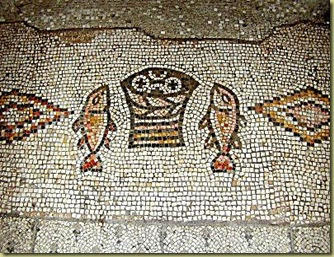
In times of need, and in times of plenty, your Lord provides you all things good, beneficial, and needful to your body and soul. As you walk through the valleys of your life, always in the shadow of death, your Good Shepherd leads and guides you to His font of living water and to His life-giving banquet, even in the presence of your enemies – sin, death, and Satan. Before His Incarnation, He provided the Tree of Life in the Garden of Eden, holy manna in the wilderness, and water from the rock which St. Paul tells us was the Christ, Jesus. After His Incarnation, in two distinct and unique events, Jesus fed five thousand, and then four thousand men with a small amount of bread and fish. In each event, basketfuls of leftovers were collected after the masses had eaten their fill and were satisfied. Then, on the night in which He was betrayed, in fulfillment of the Passover, Jesus fed His disciples with bread and wine, in, with, and under which were His life-giving body and blood for the forgiveness of sins and the strengthening of faith by the power of His performative and creative Word. And, your Lord has left you His meal of sustenance in your times of need, and His feast and banquet of joy in times of plenty, that you would be provided all things good, beneficial, and needful to your body and soul until the day He returns and you will, once again, eat from the tree of life in the presence of God in a day upon which the sun will never set.

Today’s Gospel lesson is the account of one of these miraculous feedings, the lesser celebrated, the Feeding of the Four Thousand, recorded in St. Mark’s Gospel, chapter eight. Likely, some of you were not aware that there was a feeding of the four thousand, but you know only of the feeding of the five thousand. And, likely, some of you have been instructed, or believe, that these two accounts are but two tellings of the same event. But this is not the case.

In the first place, St. Mark’s Gospel contains both accounts – both the feeding of the five thousand in chapter six, and the feeding of the four thousand in chapter eight. In the second place, the details of each feeding are different and unique. In the feeding of the five thousand, the crowds were not far from towns and villages where they could easily purchase food to eat. Nevertheless, Jesus instructed His disciples to feed the crowds in the desolate place where they were. St. Mark tells you that the people sat down in green grass in groups, as at tables at a banquet. There is no sense of urgency or desperation in the feeding of the five thousand as there is in the feeding of the four thousand. However, in that second miraculous feeding, the crowds had been following Jesus for three days, presumably with little food or drink, and many of the people had come from far away. They could not simply be released to purchase food in nearby towns and villages, for the people were weak and would faint on the way. Again, Jesus instructed the four thousand to sit down, not on green grass, but on the ground in that desolate place. There is no mention of the four thousand being seated in groups, as in a banquet. In contrast, in the feeding of the five thousand, the Lord had compassion on the people because they were like sheep without a shepherd, but, in the feeding of the four thousand, the Lord had compassion on the people because they had nothing to eat.

No, these two accounts of miraculous feedings are not one and the same, rather, they are to be contrasted and compared, their similarities and their differences, that the Lord’s constant presence and providence may be revealed. In those times in your life when you seem to have all that you need, when it is easy to believe that you are the master of your life and the provider of your own sustenance, then the Lord continues to provide you all that you need for your body and life. Though you may take His providence for granted and fail to return thanks, your Lord invites you to His feast and banquet of the finest of wines and the choicest of meats. And, in those times in your life when you are in need and want and you do not know how you will overcome the challenges, deadlines, and debts that lie before you, and you are tempted to despair and hopelessness, your Lord provides you a meal of sustenance to carry you through the lean times, for He has compassion for you and He will not let you perish. And so, this continuing miraculous meal of the Lord’s body and blood is at every serving a banquet and feast for some and a meal of sustenance and survival for others. Thus, Jesus says to you, eat and drink of it often, for, in times of plenty and in times of need, at all times, His flesh and blood is what you need for your body and soul.

But there is also a connection to creation in these miraculous feedings. In both the accounts of the feeding of the five thousand and the feeding of the four thousand, Jesus had placed both His disciples and the crowds in a situation where the very best of their efforts were not enough. In the feeding of the five thousand, though the villages and towns were not far off, Jesus insisted that His disciples feed the crowd in the desolate place where they were. Considering only their own meager offerings of bread and fish, the disciples despaired of their ability to obey Jesus’ command and feed the crowds. Similarly, in the feeding of the four thousand, Jesus had led His disciples and the crowds three days into the wilderness and there had arisen a crisis situation where they were hungry and there was no food to be found. In both cases, the only hope for the disciples and the crowds was the miraculous providence of Jesus. However, in both cases, also, Jesus performed the miracle through the ordinary work of His disciples. He did not wave His hands in the air or utter grand poetic incantations, but Jesus took the bread, gave thanks, broke them, and gave them to His disciples to set before the people. And then He blessed the fish also and had the disciples set them before the people. And, in the distribution, they all ate and were satisfied. And they took up the broken pieces that were left over – twelve basketfuls in the feeding of the five thousand, and seven basketfuls in the feeding of the four thousand.

So, what is the connection with creation? Well, first and foremost, your Lord Jesus created and provided what was necessary for the life and sustenance of His people by the creative and life-giving power of His Word. What was, and is, impossible for man, is possible for God who created and still sustains man and all things by the power of His Word. But second, the numbers in the accounts of the feedings are meaningful – the number of the days, the loaves, the fish, the leftovers, and the crowds. In general, the numbers of the loaves of bread and the fish fall short of an important Christological number, eight. It is the number seven that is prominent in the feeding accounts – there are five loaves and two fish in the feeding of the five thousand, and there are seven loaves and a few small fish in the feeding of the four thousand. While the number seven is an important biblical symbol indicating fullness and completion – as God created all things in six days and rested on the seventh, proclaiming it a Sabbath day of rest – after the fall into sin, the number seven is no longer sufficient, but it must be fulfilled and superseded. That brings us to the number eight, a number singularly connected with the resurrection of Jesus Christ – who was crucified, died, and was buried, and, on the third day (or, the eighth day) rose again from the dead. The significance of Jesus’ resurrection on Sunday, the third day after His death on Friday, or the eighth day when taking into consideration the entire seven-day week before it, is that Jesus fulfilled God’s Law and command on behalf of fallen, sin-wrecked man and the former creation, and He died, He fulfilled the Sabbath by resting in the tomb, and He rose again, in the flesh, at the dawn of a new day, the first day of a new creation, a day on which the sun will never set.

Jesus had intentionally led His disciples and the crowds to end of their own providence, to the point where they realized their dependence and turned to Him for help. In both feedings, Jesus worked through and with the bread and fish and the hands of His disciples to provide for His people. He fulfilled all things, and there were abundant leftovers – twelve basketfuls in the feeding of the five thousand, and seven basketfuls in the feeding of the four thousand – for, with Jesus, there is always more – more forgiveness, more sustenance, and eternal life and salvation for anyone and everyone who will not reject Him and His gifts.

For you, to make that three-day journey in this wilderness life is to leave you depleted, empty, faint, and dead – still in your tomb. Your seven loaves – your work, your toil, and your sweat – earn you only death. But Jesus has taken your death into himself and, in exchange, He has given you His life. For, He is the Bread of Life, come down from heaven, as both sustaining manna in your wilderness life, and as a rich banquet feast of abundance and plenty, giving eternal life in heaven. In Jesus Christ, you have been fulfilled. Therefore, in Jesus Christ, may you also find satisfaction from want or need in your life, but also abundance from which to share and give to others.

May you so cling to Jesus in faith and trust and love and so receive His comfort, strength, and forgiveness to complete your journey through the valley of your life, surrounded by the shadow of death. For, you are not alone – you are never alone – but the Lord, your Good Shepherd is with you, guiding you, providing for you. And He has passed through this valley before you and for you and has emerged victorious over death in new and eternal life. He knows the way. He is the Way. He is the Truth. He is the Life – even the Life of the world. And He is present here, now, in this meal of sustenance for you who are famished and fainting from the travails of life in this sin-wrecked world, even as He is present in this banquet feast of plenty and joy for you whose needs are fulfilled at this present time. He is for you, He is for all, that you may be satisfied and full, with an abundance of love, mercy, grace, and forgiveness to spare, to the glory of God the Father, in His holy Son Jesus Christ, through His most Holy Spirit.

In the + Name of Jesus. Amen.

Sunday, July 7, 2024

The Sixth Sunday after Trinity (Trinity 6)

(Audio)


Matthew 5:17-26; Romans 6:1-11; Exodus 20:1-17


In the Name of the Father and of the + Son and of the Holy Spirit.

Law and Gospel. If you’ve been a Lutheran Christian for a length of time, you’ve undoubtedly heard about Law and Gospel and how it is very important to properly distinguish between the two. In fact, Lutherans pretty much wrote the book on the topic – well, at least one particular Lutheran, C. F. W. Walther, “The Proper Distinction Between the Law and the Gospel,” which is required reading in our seminaries before the student sits down to write his first sermon. Martin Luther himself famously stated, “Whoever knows well this art of distinguishing between Law and Gospel, him place at the head and call him a doctor of Holy Scripture.” Luther never claimed to have perfected this art himself, but there is a Doctor of Theology who has, and at whose feet we all must sit, and listen, and learn – Jesus Christ.

For, that is precisely what Jesus was doing in today’s Gospel lesson – distinguishing between Law and Gospel. “Do not think that I have come to abolish the Law or the Prophets; I have not come to abolish them but to fulfill them. For truly, I say to you, until heaven and earth pass away, not an iota, not a dot, will pass from the Law until all is accomplished.” You see, you must not conclude that the Law is bad and that the Gospel is good, or that the Law is old and the Gospel is new, or that the Gospel supersedes and replaces the Law – No! Both the Law and the Gospel alike are the Holy Divine Word of God. And yet, they are distinct and they have distinct purposes and uses.

The Law is the perfect, holy, righteous, and just will of God. The Law is the unflinching, unbending measure of all that we think, say, and do. However, because God’s Law is perfect, holy, righteous, and just, and because it is unflinching and unbending, St. Paul rightly confesses that, in it’s light, “there is no one who is righteous, not even one,” and “all have sinned and fall short of the glory of God.” You see, the Law was not given to us that we might be justified and righteous before God by doing it and keeping it, but the Law was given as “our guardian until Christ came, in order that we might be justified by faith.” The bottom line concerning God’s Law is that it cannot save us. We cannot be justified by obeying it, by doing the works it commands and by avoiding those works it forbids. It was not given for that purpose, but it was given to set God’s holiness, goodness, and righteousness before us and to turn us in repentance at the realization that we do not keep it, and cannot keep it, perfectly as it requires and demands. “The Law is but a mirror bright to bring the inbred sin to light that lurks within our nature.” Or, as I regularly teach our catechumens in Confirmation, “The Law always S.O.S. – Shows Our Sins.”

In contrast, the Gospel is the pure, unconditional, free proclamation of God’s grace to sinful mankind in and through and because of the faithful obedience and works of God’s Son Jesus Christ and His suffering and death upon the cross for the sins of the world. The Gospel makes no demands upon us as to what we must or must not do, but it proclaims to us always what God has done for us all in Jesus Christ. “Yet as the Law must be fulfilled or we must die despairing, Christ came and has God’s anger stilled, our human nature sharing. He has for us the Law obeyed and thus the Father’s vengeance stayed which over us impended.” Or, as I regularly teach our catechumens in Confirmation, “The Gospel always S.O.S. – Shows Our Savior.”

The Pharisees in Jesus’ day plainly failed to distinguish Law and Gospel. They taught the Law, but incorrectly, and they failed to proclaim the Gospel at all. For example, the Fifth Commandment, “You shall not murder.” The Pharisees taught that, so long as you have not physically killed someone, you have kept the Law. Similarly, they taught concerning the Sixth Commandment, “You shall not commit adultery,” that, so long as you have not had physical sexual intercourse with a man or a woman to whom you are not married, that you have kept the Law. Thus, the Pharisees prided themselves that they kept the Law of God so exceedingly well. They considered themselves righteous because of their obedience and their good works according to the Law. However, while they taught the people the same, they harmed them in two different ways: First, they taught the people to trust in their obedience and works according to the Law just as themselves. Second, they offered no mercy, no grace, no Gospel to those who, being more honest with themselves, realized that they did not keep the Law of God very well. That is to say, the Pharisees directed people to find comfort and peace in their obedience and works instead of in God’s grace, mercy, love, and forgiveness. This is why Jesus once rebuked the Pharisees and called them “whitewashed tombs,” for they appeared clean and holy and righteous on the outside, but on the inside they were filled with “dead people’s bones and all uncleanness.”

The Pharisees lowered the bar on God’s Law and made His commandments more do-able so that they could justify themselves. However, Jesus called them out on this and pointed out that, not only do they not keep the letter of the Law, but, worse, they knew not the spirit of the Law – love. Already in Deuteronomy had the spirit of the Law been revealed to God’s people, “Hear, O Israel: The Lord our God, the Lord is one. You shall love the Lord your God with all your heart and with all your soul and with all your might,” and in Leviticus, “You shall love your neighbor as yourself.” The Fifth Commandment is not merely a prohibition against physical murder, but it is a command to love your neighbor, even your enemy, as you love yourself, to “help and befriend him in every bodily need.” Likewise, the Sixth Commandment is not merely a prohibition against adultery, but it is a command to love your neighbor, to love all people, with honor, dignity, and respect for their bodies and to treat your own body with honor, dignity, and respect. However, what the Pharisees taught was the lowest, physical obedience to the Law – obedience in which they took comfort, believing they were justified and righteous – while they neither taught, nor practiced, the spirit of the Law, which is love. They were the epitome of Isaiah’s prophecy, of whom Jesus said, “This people honors me with their lips, but their heart is far from me.”

Today, men still honor Jesus with their lips while their hearts are far from Him, and even the best of us must take care to resist the temptation to relax God’s Law to appear righteous in the eyes of men or to win their favor. Jesus did not come to abolish the Law, but to fulfill it. The Law has not, will not, and cannot pass away, but it remains forever, for it is the perfect, holy, divine will of God. However, our race and our culture are so mired in sin that God’s clear and holy Law sounds out of step with modern wisdom and values, even discriminatory, bigoted, and hateful. In the Church, we are tempted to relax or to bend or to explain away the uncomfortable rigidity, universality, and unchanging nature of God’s Law concerning numerous moral, social, and intellectual issues such as evolution, divorce, homosexuality, abortion, capital punishment, war, and countless others, effectively answering Satan’s question, “Did God really say?” with a tremulous, “No, He didn’t.” Truly we must still hearken to Jesus’ words, “Truly, I say to you, until heaven and earth pass away, not an iota, not a dot, will pass from the Law until all is accomplished. Therefore whoever relaxes one of the least of these commandments and teaches others to do the same will be called least in the kingdom of heaven, but whoever does them and teaches them will be called great in the kingdom of heaven.”

God’s Law has not, will not, and cannot pass away. But, it has been fulfilled; therefore, our relationship to God’s Law has changed, for we have been changed. Since the Law cannot pass away, Jesus willingly, out of love and obedience to His Father, did what was necessary to fulfill it and to set us free from its curse. That has changed our relationship to God’s Law. No longer do we see it as a terrible taskmaster to be obeyed grudgingly out of fear of punishment, out of coercion in order to justify ourselves, but we see it as it truly is – holy, righteous, good, perfect, and true. Our hearts, which had been far from God, are once again near to Him and we see His Law as it is and always has been instead of through sin-corrupted reason and wisdom. Since the Holy Spirit called you out of darkness and death into light and life through the Gospel marked by the sign of Holy Baptism, not only do you not physically hurt or harm your neighbor, but you desire to help him and befriend him in his bodily needs. Not only do you not desire to take what belongs to your neighbor, but you desire to help him keep, preserve, and protect what he has. Not only do you not lie about, slander, or denigrate your neighbor, but you seek to speak well of him and always put the best construction on his words and deeds. The Law has become for you, no longer a loathsome and fearsome rule, but a holy guide for the life of a Christian. The Church calls this the Third Use of the Law. The Third Use of the Law recognizes and confesses that the Law of God has not, will not, and cannot pass away, but it has been fulfilled; therefore, our relationship to God’s Law has changed.

“What shall we say then?” St. Paul asks rhetorically. “Are we to continue in sin that grace may abound? By no means!” St. Paul goes on to explain that we, who are baptized into Christ Jesus, have died to sin, have died to our old sinful ways, have died to fear, loathing, and hatred of God and His Law and our neighbor, and have been raised in Christ to walk in newness of life. We have been changed, already now! “We know that our old self was crucified with Him in order that the body of sin might be brought to nothing, so that we would no longer be enslaved to sin. For one who has died has been set free from sin.” Dear Christian, you were a slave under the Law, but now you are free. You were a slave, but now you are a son, and if a son, an heir. So you must consider yourself every day of your life. When you are tempted to view God’s Law the way a slave does, you must remember that you have died with Christ and have been raised with Him, that you are a son and an heir with Him of God the Father. Never permit yourself to be placed under the Law again as a slave, for if the Son has set you free, you are free indeed. Live in His life and liberty – true liberty, true freedom – and freely love all, no matter what, as you have been freely loved, forgiven, restored, and adopted as sons of God.

In the + Name of Jesus. Amen.