Sunday, December 10, 2023

Populus Zion - The Second Sunday in Advent (Advent 2)

(Audio)


Luke 21:25-36; Romans 15:4-13; Malachi 4:1-6


In the Name of the Father and of the + Son and of the Holy Spirit.

“Signs in sun and moon and stars?” “Distress of nations” and “foreboding of what is coming on the world?” You’ve seen these signs. Indeed, every generation has seen these signs. And yet, the Lord has not returned. Surely it is rational to conclude that He isn’t coming, right? It may even be rational to conclude that He doesn’t exist at all. This, the world would have you believe. This, your culture would have you think. This, your enemy uses to deceive you and to lead you to either pride and self-righteousness, or to despair and hopelessness, or, simply, to unbelief – either way, he wins. However, there is an old saying: “What is long delayed is not yet abandoned.” Therefore, you must be watchful. You must watch for His coming, which is to say, you must have faith, you must have trust. And you must watch that you may be found doing the things you have been given to do; which is to say, you must produce works, the fruit of faith, you must love.

For, these days, and this delay, are given in mercy, that all might have opportunity to repent and be saved. For, “The Lord is not slow to fulfill his promise as some count slowness, but is patient toward you, not wishing that any should perish, but that all should reach repentance.” But how are unbelievers to know the LORD and His mercy? They are to know the LORD and His mercy by the love of His Christian people, by your love. Let the Gentiles be thankful that there are Christians, let the Gentiles be thankful for you, and so glorify the LORD. But do you do this? What do unbelievers hear in your words and see in your deeds? Do you show the love and mercy of the LORD to others in what you say and do and how you live?

Sadly, too often, what unbelievers see in the words and deeds of Christians is judgment, hatred, and hypocrisy. For example, unbelievers today might conclude from what they see and hear from Christians that, to be Christian, is to hate homosexuals and those suffering gender dysphoria. Likewise, they might conclude that, to be Christian, is to have no mercy or pity for pregnant women in very difficult situations. Again, likewise, they might conclude that, to be Christian, is to hypocritically preach the sanctity of marriage, all the while practicing divorce at the same rate as non-believers.

Now, of course, the Holy Scriptures do prohibit and condemn homosexual acts. And the Holy Scriptures do prohibit and condemn killing and murder of any kind apart from the authority given governing authorities to punish the wrongdoer and to protect the good. And, again, the Holy Scriptures prohibit divorce except for unfaithfulness. However, all of those prohibitions and commandments are founded and are fulfilled in love. Nowhere does the LORD command His people to hate those who perform homosexual acts, who abort their children, or who divorce their wives. Nowhere does the LORD command, or permit, His people to hate anyone. On the contrary, your Lord Jesus actually commands you to love your enemies and to do good to those who hate you. Therefore, how are unbelievers to know the LORD and His mercy if His Christian people do not show forth His love to all people, regardless of their sin?

Perhaps the last prophetic voice to speak before the coming of John the Baptist, before which the LORD had remained silent for four hundred years, the Prophet Malachi wrote: “Remember the Law of my servant Moses, the statutes and rules that I commanded him at Horeb for all Israel.” The Prophet directed the people to remember the Ten Commandments, for the Word which had been given long ago still applied and was, in fact, the source of endurance and encouragement even in a time when the Word of the LORD was no longer heard. However, Malachi wasn’t merely preaching works to the LORD’s people, but obedience which is trust according to the spirit of the Law, love. The final words of the Old Testament come from Malachi: “Behold, I will send you Elijah the prophet before the great and awesome day of the LORD comes. And he will turn the hearts of fathers to their children and the hearts of children to their fathers, lest I come and strike the land with a decree of utter destruction.” Notice the change of heart the Prophet promises: The hearts of fathers will be turned to their children, and the hearts of children will be turned to their fathers. They will actually look upon each other in love, without thought for the self. The right relationship between fathers and children will be restored, even as the right relationship between mankind and our heavenly Father will be restored.

Elijah, that is John the Baptist, came preaching repentance for the forgiveness of sins. John prepared the way for the coming of the Lord Jesus. When He began His ministry, Jesus preached much the same message, but He proclaimed the Law fulfilled in His love for His Father and for men, His children, and in His obedience, which is faith and trust. While the Law is fulfilled, it has not passed away. No longer must you obey it out of coercion or fear, but now you obey it in freedom out of love and thanksgiving. And, since the Law is fulfilled, it is not your place to wield it like a weapon and judge others. Indeed, if you insist upon judging others by the Law, by the same Law will you be judged. No, your freedom is bestowed in love, mercy, grace, and forgiveness. What you have freely received you must freely give, or you will lose your freedom and your life.

St. Paul teaches, “whatever was written in former days was written for our instruction, that through endurance and through the encouragement of the Scriptures we might have hope.” Your hope lies in the fact that the LORD has loved you and has forgiven you in Jesus Christ. And, by loving and forgiving others you exercise and maintain your freedom through faith and obedience in Christ. You keep the lamps of your soul full of life-giving oil, trusting in the Word and promise of your LORD in and through all things and all times. In loving with the Lord’s love, you are always prepared, day and night, awake or asleep, for His return. Therefore, you need not fear the signs or His coming, but “straighten up and raise your heads, because your redemption is drawing near.”

The King is coming. That is certain. Judgment is coming upon “all who dwell on the face of the whole earth.” Do not fear. You are children of the light and the very Light of the World shines through you, the Light of our Lord Jesus Christ who is “Light of Light” and “very God of very God.” Let His light shine through you, and do not prevent it or inhibit it by fear of what is befalling this world. These are but signs of His coming, just as the trees bud forth and you know that summer is near. And do not prevent His light shining through you by failing to show love for all, even for the unbeliever and your enemy, even for sinners who appear to be unrepentant and secure in their sin. For, underserved grace, mercy, and love have been given to you without cost or merit. Therefore, give freely of what you have freely received, and you will remain free and without fear of judgment.

Yet, behold, the King is here now with His gifts of grace, mercy, love, peace, charity, kindness, and forgiveness to bind up your wounded souls, heal you, forgive you, restore you, and renew you. Hear, and be forgiven. Eat, and be satisfied. Drink, and be sated. Beloved, be loved. Then, go, and love with His love. And “May the God of hope fill you with all joy and peace in believing, so that by the power of the Holy Spirit you may abound in hope.”

In the + Name of Jesus. Amen.

Wednesday, December 6, 2023

Advent Evening Prayer in the Week of Ad Te Levavi (Advent 1)

(Audio)


Matthew 21:1-9; Romans 13:8-14; Jeremiah 23:5-8


In the Name of the Father and of the + Son and of the Holy Spirit.

“Behold, I will send you Elijah the prophet before the great and awesome day of the LORD comes. And he will turn the hearts of fathers to their children and the hearts of children to their fathers, lest I come and strike the land with a decree of utter destruction.” These words of the Prophet Malachi are the final words of the Old Testament, and then there was silence. For four hundred years no prophet spoke a word from God until John the Baptist.

Then, when all hope was lost – Israel and Judah were under the control of the Roman Empire; the glory of David’s kingdom wasn’t even a faint memory anymore – the tree of Israel had been cut down, flush with the earth, burned and scorched with the fire of God’s wrath. No one hoped for a Savior, a Redeemer, or anything at all, but only for things to simply keep on keeping on. That was when God acted; that is when God always acts: “In the fifteenth year of the reign of Tiberius Caesar (the Roman Emperor), Pontius Pilate (the Roman Governor) being governor of Judea, and Herod being tetrarch of Galilee (a puppet King), and his brother Philip tetrarch of the region of Ituraea and Trachonitis (another puppet king), and Lysanias tetrarch of Abilene (still yet another puppet king), during the high priesthood of Annas and Caiaphas (Jewish leaders who cared little for God’s word, prophecies, or truth, but only that the status quo was maintained), the word of God came to John the son of Zechariah in the wilderness.”

After four hundred years of silence, God was ready to speak once again. His message? “Repent! For the kingdom of God is at hand!” Even though John appears in the New Testament, he is truly the final Old Testament prophet. He is the one of whom Malachi prophesied saying, “Behold, I will send you Elijah the prophet before the great and awesome day of the LORD comes.” Over those four hundred years of silence Israel had made do. It was during this time that the Pharisees and the Sadducees and the Jewish Council (the Sanhedrin) came into power. They had built a comfortable empire for themselves in the space between Roman law and the law of God. Instead of calling the people to repentance that God might show mercy and forgive them and restore them, the Jewish religious leadership invented new laws in addition to God’s law and burdened the people with them, directing them away from God and His word, and securing their own positions of authority and privilege.

It was the Jewish religious establishment in particular whom John condemned as a “brood of vipers,” literally, offspring of the devil himself.  “He said therefore to the crowds that came out to be baptized by him, “You brood of vipers! Who warned you to flee from the wrath to come?” Who warned you? The prophets had warned for over one thousand years that Israel and Judah must repent and stop their adulterous whorring after other gods and their loveless and godless treatment of the poor, widows, orphans, and sojourners and they didn’t listen, but they “killed the prophets and stoned those sent to her.” John exhorted them to “bear fruits in keeping with repentance” and not to rely upon their blood descent from Abraham. The people gave only lip service to God’s word and commandments, honoring Him with their mouths while their hearts were far from them. Their hope was in their blood descent from Abraham, in being an ethnic Jew, and not in God’s word and promise. Theirs was a false religion, and their gods false gods. “God is able from these stones to raise up children for Abraham;” this was an unambiguous reference to the Gentiles, whom the Jews regarded as dumb and lifeless as rocks. Suffice it to say, John the Baptist was a preacher of the law.

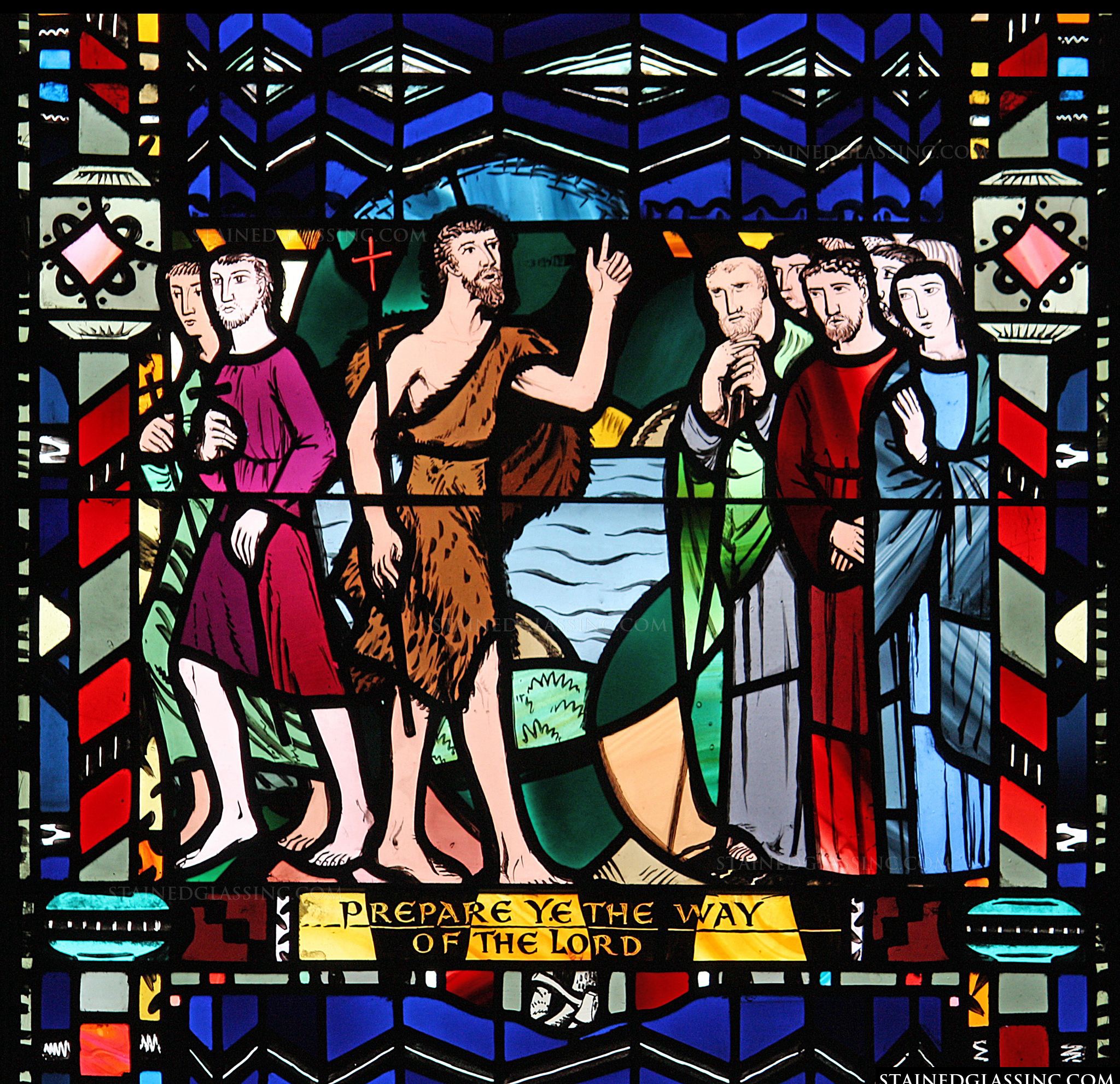
Still the Prophet Isaiah proclaimed that the Forerunner would “Prepare the way of the Lord” and “make his paths straight”; “Every valley shall be filled, and every mountain and hill shall be made low, and the crooked shall become straight, and the rough places shall become level ways.” That is what the preaching of the law does: It levels the playing field, for it condemns us all. Perhaps Paul has put it best: “All have sinned and fall short of the glory of God”; “There is not one who is righteous, not even one.” To prepare the way for the coming of the Lord is to prepare hearts, by the preaching of the law, for the coming the of the Gospel, Jesus Christ. The image is of the king’s servants who go before him to prepare the road for the safe passage of the king’s chariot by filling in the potholes and by leveling the bumps and high places. The preaching of the law brings the mountains of human pride and self-righteousness down and it fills in the valleys of hopelessness and despair by turning men’s eyes and hearts to the King who is coming proclaiming the good news that the law has been fulfilled and that the righteous will now live by faith.

But faith is never alone. Faith is life-giving is and always fruitful. Thus did John warn, “Bear fruits in keeping with repentance,” and “Even now the axe is laid to the root of the trees. Every tree therefore that does not bear good fruit is cut down and thrown into the fire.” The crowds were troubled by these words and they asked, “What then shall we do?” John answered them saying, “Whoever has two tunics is to share with him who has none, and whoever has food is to do likewise.” In other words, what blessings have you from the Lord? Share them with those whom God has given you to serve. Don’t do it in order to become righteous, but because you are righteous before God through faith in Jesus Christ. It’s a love thing: As God has so loved you, so must you also love your brother and your neighbor.

To tax collectors John said, “Collect no more than you ae authorized to do.” To soldiers John said, “Do not extort money from anyone by threats or by false accusation, and be content with your wages.” And so, we see how the fruits we are to bear, the works we are to do, are not foreign to us or unnatural, but they are borne through our Christian vocations, husband, wife; father, mother; son, daughter; butcher, baker, candlestick maker. Your good works are fruits, and they are borne naturally from faith and love in God and Jesus Christ.

The people began to wonder if John might be the Christ. But no, John was not the Christ, but he was the forerunner. The Christ must increase, John must decrease. John’s vocation was to prepare the way for the coming of the Christ. John prepared men’s hearts to receive Jesus by preaching the law unto repentance and then by pointing them to “the Lamb of God who takes away the sin of the world,” Jesus. Christian preachers and pastors continue to do the same today, tomorrow, and to his final Advent. Then “you shall go out leaping like calves from the stall.” Until then, hear the law and let it crush you, receive the Gospel and let it comfort you, love God and love your neighbor and share the Lord’s gifts. Keep your lamps full of the oil of faith. He has come, and He is coming, and even now He comes.

In the + Name of Jesus. Amen.

Sunday, December 3, 2023

Ad Te Levavi - The First Sunday in Advent (Advent 1)

(Audio)


Matthew 21:1-9; Romans 13:8-14; Jeremiah 23:5-8


In the Name of the Father and of the + Son and of the Holy Spirit.

They were looking for a king. What they saw didn’t look anything like a king at all. Nevertheless, He was a king. He was the King. A King unlike any they had ever imagined since they first began to look for a king like the kings of the nations. Then they forsook their true King, the LORD, and received a devil of a man named Saul. And then David. And then Solomon. And then…. well, it pretty much went downhill from there, until it was so bad that Judah despaired of having a king at all. Then they were laid siege and were conquered by the Babylonians, and they were taken away into captivity. Jerusalem was leveled and their temple destroyed. Their fields were salted so that no herb would grow. The land was scorched and burned, and all hope was cut off.

Then, God spoke to His people of old by the prophets. God spoke of impending judgment for their idolatry and apostasy. But God also spoke of comfort and hope, in the most unexpected of places. To burned out, lifeless, and hopeless Judah, Jeremiah proclaimed: “Behold, the days are coming, declares the LORD, when I will raise up for David a righteous Branch, and He shall reign as King….” The thought must have been preposterous and unthinkable. There was no potential for life in Judah. There was no hope for restoration and fruitfulness. They didn’t have a king. They weren’t certain they wanted a king any longer. They were a people without a land. They were no people at all. They were dead, and no one can bring life out of death.

We are not so different from them. We may have different idolatries and apostasies, or maybe not, but we are very much like them. Sin has made our hearts numb, just like them. We have become drunk on our foolishness, just like them. We need to be awakened from our sin-induced stupor to watchfulness that we might repent, just like them. We are dead in our trespasses and sins, just like them, with no hope for redeeming ourselves, for renewal, and for restoration. And, if we are going to live, then life is going to have to come from outside of us. And, if we are going to stand, then someone is going to have to raise us up. And, if we are going to be right with God again, then He is going to have to make that happen. And, He has. And He does: “And this is the Name by which He will be called: ‘The LORD is our Righteousness’.”

This is the message of Advent: The Lord has come. And the Lord is coming. And, the Lord comes, even now. This is the LORD’s doing, and it is marvelous in our sight. Notice the subjects of the verbs in Jeremiah’s proclamation: “Iwill raise up for David a righteous Branch….” “The LORD is our righteousness….” Advent is the Gospel proclamation that a Savior is coming to save those who cannot save themselves. The King is coming to a kingless kingdom. Your God is coming to a godless people. The Bridegroom is coming to His harlot Bride. He is coming to redeem Her. He is coming to save Her. And He is coming to marry Her. But He does not come in the ways that you expect, or even desire. For, He comes in lowliness and humility. He comes in mercy and grace. He comes for all who will receive Him and not reject Him.

They were looking for a king. They were looking for the King, the Messiah. But what they saw didn’t look anything like a king at all, and He certainly didn’t look like the Messiah of their imaginations. Nevertheless, He was the King. He was the Messiah. But, because their hearts were numb with sin, they did not see Him for the Messianic King that He was, the King prophesied of by Jeremiah, and Isaiah, and Zechariah, and all the prophets. He entered the Royal City in the same manner as generations of kings before Him, “humble, and mounted on a donkey.” They acclaimed Him as King, laying down their cloaks and palm branches before Him according to tradition. They even ascribed to Him Messianic praise: “Hosanna to the Son of David! Blessed is He who comes in the Name of the Lord!” But He did not come to do what they thought He would do, what they wanted Him to do. He did not proceed to Herod’s palace and take His place upon the throne. He did not raise up a Jewish army to force out the occupying Romans and establish glory to Israel once again. But He went to the temple, and there he began to overturn the tables of the moneychangers and those who sold sacrificial animals. For, that is the kind of King Jesus was and came to be, the King of Righteousness and Justice for all the people.

King Jesus would indeed take up His throne, not the throne of David, or even Herod, but the throne of the cross. While He was anointed King by His Father and the Holy Spirit in His baptism by John in the Jordan, Jesus would be crowned King in His suffering and death upon the cross. He was not the king they were looking for. And, when Jesus was tried before Pilate, the people cried out, “We have no king but Caesar.” For, they were a people sitting in the darkness of sin and death. But, what passions, desires, and lusts do we permit to be our kings, our idols, our gods? How often do we reject the divine gift for the purchased treasure? No servant can serve two masters, but he will love one and hate the other.

And so, like the end of the Church’s Year of Grace, its beginning is about waiting and watching for the coming of Her King, Her Lord, Her Bridegroom, and Her God. You cannot be waiting and watching if you are sleeping, if you are too occupied with material pursuits, the passions of the flesh, and worldly wisdom. You must not be incurvatus in se, curved inward on yourself, but you must forget yourself and find salvation in another, in the other, extra te, outside of yourself. The Gospel message of Advent is that salvation is coming to you. In fact, salvation unto you has come, and salvation comes to you now. Indeed, salvation is nearer to you now than when you first believed. Therefore, you must be waiting and watching. You must be prepared. However, you cannot be prepared if your hearts are numb with sin, if you are sleeping, if you are too occupied with material pursuits, the passions of the flesh, and worldly wisdom. “‘You shall not commit adultery, You shall not murder, You shall not steal, You shall not covet,’ and any other commandment, are summed up in this word: ‘You shall love your neighbor as yourself’.” Love is not curved inward, but is always focused outward, therefore “Love does no wrong to a neighbor; [and] love is the fulfilling of the Law.”

But the commandment to love is not a commandment of the Law. That is why Jesus calls it a new commandment. For, it is a commandment that has been fulfilled, by Him, in perfect obedience in His Passion. That is why love is the fulfilling of the Law: His love is the fulfilling of the Law. Jesus, your King and Bridegroom, your Lord and God, has fulfilled the Law for you, in your place – you are free. You are free to love with His love without cost or loss, but with joy and thanksgiving. Through trust in Him, you are well prepared to receive Him in His coming. No matter how long He may tarry, you remain prepared and ready. You do not have to worry about the when and the where or what time, whether you are awake or asleep, for your salvation comes to you from outside of you. He is the object of your faith and the substance of your salvation. He is near, even now; your salvation is nearer each and every day than when you first believed.

“Stir up You power, O Lord, and come,” we pray, “that by Your protection we may be rescued from the threating perils of our sins and saved by Your mighty deliverance.” The Lord has heard your prayer, and He has answered, “Come, everyone who thirsts, come to the waters; and he who has no money, come, buy and eat! Come, buy wine and milk without money and without price.” The Lord has heard your prayer, and He has answered, “See, I have prepared my dinner, my oxen and my fat calves have been slaughtered, and everything is ready. Come to the wedding feast.” Your King has come. Your King is coming. Your King comes. Cast off the works of darkness and put on the Lord Jesus Christ. Let Him clothe you and cover your sin. Let Him cleanse you and make you holy. Let Him fill you with His love, to overflowing, that you may abound in His love, an ever-flowing spring. “Hosanna to the son of David! Blessed is He who comes in the Name of the Lord! Hosanna in the highest!”

In the + Name of Jesus. Amen.

Sunday, November 26, 2023

The Last Sunday of the Church Year (Sunday of the Fulfillment)


Matthew 25:1-13; 1 Thessalonians 5:1-11; Isaiah 65:17-25


In the Name of the Father and of the + Son and of the Holy Spirit.

Every bit as much as the sheep and the goats of last Sunday’s Gospel lesson were both part of the Good Shepherd’s flock, so today all ten of the virgins, both the wise ones and the foolish ones, are invitation holders to the marriage feast of the Bridegroom. That is to say, they’re already in good with the Bridegroom. They’ve been chosen. It’s party time for the whole lot of them! All the young ladies need to do is, well, nothing at all, but wait…, wait for the Bridegroom to arrive.

But, waiting is boring, right? It certainly can be. And, this fact is probably best exhibited in children. Children often find it very difficult to wait. Think of the weeks and the days before a birthday or a visit from grandparents or a favorite cousin. Think of the months before Christmas or a trip to Disney World. Are we there yet? Are we there yet? Are we there yet? Children often find it difficult to wait. And, adults, too, often find it difficult to wait. So, while we wait we fill our lives with distractions, a book or a movie, maybe a crossword puzzle. And, when young people get bored, well, there are temptations to do things that aren’t well thought out and are bad for them, things that get them into trouble or worse.

This was true for our ten virgins as well. In their waiting, no doubt they primped and they partied, they danced and they talked, all the while biding the time until the Bridegroom arrived. However, the Bridegroom was delayed. Indeed, we are often faced with delays in this life, are we not? And, we can empathize with the virgins’ exasperation as they cried out, “Oh no, how much longer do we have to wait?” Well, they partied and primped some more, they danced and talked some more, and, eventually, all ten of the young ladies fell asleep. Yes, all ten virgins fell asleep waiting for the Bridegroom to arrive.

And then comes the crux of the story, literally, the crisis, the judgment: At midnight there was a cry, ‘Here is the bridegroom! Come out to meet him.’ And, a piece of information that we were told at the very beginning of the story bears fruit: Five of the virgins were foolish, and five were wise. For when the foolish took their lamps, they took no oil with them, but the wise took flasks of oil with their lamps. Thus, when the delayed Bridegroom arrived in the middle of the night, the foolish young ladies realized that their lamps were going out and that they did not have any more oil. But, why was this piece of information given at the very beginning of the story? Likely, it was to show that it was neither the amount of oil that the virgins possessed nor their preparedness that merited their attendance at the wedding banquet, but it was the Bridegroom’s gracious invitation alone. No works or deeds, words, or even the thoughts of the heart get you into, or keep you out of, the kingdom of heaven, but the Lord’s gracious invitation alone, received and kept in faith alone or rejected.

And so, it is about having oil, but it is not about how much, for the oil is a symbol of faith and trust and it is a symbol of the presence of God’s Holy Spirit. Oil isn’t something that you do or think or speak, but oil is something that you have, or something that you don’t have. Faith is like oil, either you have it, or you don’t. It’s not about how much faith you have, after all, faith as small as a mustard seed can move mountains, and I reckon that you don’t have faith like that, neither do I. But, faith in Christ saves, regardless of how big or small, strong or weak that faith might be. Faith in Christ saves because it receives what Christ has done and it clings to Christ for forgiveness, life, and salvation.

The oil represents faith and Christ’s gift of His Holy Spirit. There is no place and no one from which to purchase faith, and you cannot borrow or receive the faith of another, you have to have your own. Thus, the failing of the five foolish virgins was not that they didn’t have faith, they did, but rather that they allowed their faith to grow weak and thin. Oh, they thought they had enough to be prepared when the Bridegroom came. They were very practical, just like you, thinking that they would only bring enough oil to get them into the early evening when the Bridegroom was scheduled to arrive. But, they didn’t count on his being delayed. Does anyone count on a delay? But, delays happen, don’t they, and then it’s best to be prepared. The five wise virgins seemed foolish in carrying around extra flasks of oil. It was as if they overpacked for a one night stay. Nevertheless, when the Bridegroom was delayed, they had enough oil to wait Him out.

Jesus told this parable to His disciples in the days preceding His crucifixion and death. He knew that they would understand His coming again to mean that He would come very soon. And so, Jesus is both warning them and comforting them, and us, for a delay in His coming. He tells them not simply to wait for Him but also to watch for His coming at a day and hour they do not know. They are to not simply believe, but they are to trust and wait in eager expectation – that is what faith does. They are to take the example of the five wise virgins and bolster their faith, feed their faith, strengthen their faith for the waiting and the watching so that, no matter when Jesus returns, they will be ready and prepared, not by their thoughts, words, and deeds, but because they have faith. But, how do they do this? Where do they go to bolster, feed, and strengthen their faith? You cannot buy faith from vendors. You cannot borrow the faith of others. You have to have and receive faith for yourself. Where then is faith given, fed and strengthened, replenished, and sustained? In and through the means that Christ has appointed during this time in which He is delayed in returning: The preaching of the Gospel. The gift of the Spirit in Holy Baptism. The forgiveness of sins in Absolution. And communion with Jesus in His body and blood in the Holy Eucharist. Through each of these means of grace Christ has promised to be present with you for the forgiveness of your sins and the strengthening of your faith. There is no better way to be prepared for His coming than remaining in His gifts. And, these gifts are not something that you must do for Him, but they are the fruits of what He has done for you in His suffering and death upon the cross. He promises you that if you remain in Him that He will remain in you and that through these means He will be with you always, even to the end of the age. Believe it, for Jesus’ sake.

For, this is what the kingdom of heaven is like. The kingdom of heaven is a gift of God’s perfect and uncompromising grace for all people regardless of their thoughts, words, and deeds for the sake of His son, the Bridegroom, Jesus Christ. He has prepared everything for everyone and He has called all the world to the marriage feast of the Lamb in His kingdom. You are invited. You are in good with God because of Jesus. Do you believe this? If so, then keep on believing this. Keep your faith alive and strong, even if He is delayed in His coming. Wait for His coming. Watch for His coming. Be prepared for His coming by bolstering, feeding, and strengthening your faith. Yeah, I know it’s hard to wait. God knows it’s hard for you to wait too. He knows that you will be distracted. He knows that you will fail at times. He knows that you will fall asleep, that you may even be asleep when Jesus returns. But faith is like oil in a lamp. If you have faith, and if you are sustained and kept in faith by His gracious gifts, then you are well prepared for His coming, even if you fall asleep. For the trumpet will sound, “Here is the Bridegroom! Wake up! Wake up!” Then, all you virgins, made pure, spotless, innocent, and holy in the blood of the Lamb, will come out to meet Him and will enter the marriage feast of the Bridegroom Jesus Christ and His Bride, the Church. But, for now, while we are waiting and watching with eager and hopeful expectation, we gather around and receive this foretaste of that feast to come in Holy Communion with our Lord who has come, who comes to us now, and who is coming for us at a day and an hour we do not know. Therefore, with the Church of Christ of all times and of all places we cry out, “Maranatha,” come, Lord Jesus, come quickly, come.

In the + Name of Jesus. Amen.

Wednesday, November 22, 2023

Eve of the National Day of Thanksgiving

(Audio)


Luke 12:13-21; 2 Corinthians 9:6-15; Deuteronomy 26:1-11


In the Name of the Father and of the + Son and of the Holy Spirit.

The Lord be with you.

And with thy spirit.


Lift up your hearts.

We lift them up unto the Lord.


Let us give thanks unto the Lord our God.

It is meet and right so to do.


How often do we speak or chant those words to each other? Each and every Lord’s Day and on Feast Days throughout the Church’s Year of Grace. Eucharistasomen to kyrio. Let us give thanks unto the Lord. Let us give thanks.

Each and every time we gather together to receive the Lord’s blessings, we also return to Him thanksgiving. Not only on the fourth Thursday of each November, but each and every time we gather. The Lord gives, and we receive. The Lord gives, and in receiving His gifts, we acknowledge Him to be the Lord. The Lord gives, and we receive, and we return to Him thanksgiving and praise. It is meet and right so to do.

It is truly meet right and salutary that we should at all times, and in all places give thanks unto you, holy Lord, almighty Father, everlasting God, through Jesus Christ our Lord. It is meet and right, it is salutary, it is good for us to give thanks. When? – At all times, in all places. In times of joy and in times of sorrow, give thanks. In times of sickness and in times of health, give thanks. In times of lean and in times of plenty, give thanks. There is never a time, never a place, where thanksgiving is inappropriate or out of order. For God has given you the gift of His Son, Jesus Christ, and that gift is forever, a gift that truly never stops giving.

Thus, St. Paul exhorts you “Do not be anxious about anything, but in everything by prayer and supplication with thanksgiving let your requests be made known to God.” “And,” Paul promises you, “the peace of God, which surpasses all understanding, will guard your heats and your minds in Christ Jesus.” Jesus is the only possible peace, and He is all the peace you need. For, the Lord knows what you need and He graciously provides you all that you need for your body and your soul. Even in times of want, sickness, and sorrow, the Lord continues to provide for you and keep you. For, your life is a spiritual pilgrimage, not unlike that of the children of Israel, a pilgrimage from captivity to sin, death, and the devil unto the promised land with God in heaven. And, as He did with the children of Israel, so He tests you to humble you and to see what is in your heart, whether you will keep His commandments or not, that you may know that man does not live by bread alone, but by every word that comes from the mouth of God. In the land to which He is bringing you there will be no hunger, nor thirst, no sickness, no sorrow, no death. But, even now, as you dwell in the midst of all these things, you can be content, for you, like Paul, have learned the secret of facing plenty and hunger, abundance and need: I can do all things through him who strengthens me.

That one, the one who strengthens you, is Jesus Christ, your Lord and Savior. He is the pure and holy gift of the Father, whose flesh is given as the true bread that gives true life and whose blood is given as true drink that a man may truly never thirst again. I can do all things through him who strengthens me, for He is my strength, He is my everything. Filled with Him I lack no thing and I am content.

Returning thanks and praise to God is meet, right, and salutary, for, it is an acknowledgment that He is God and that you are not. It is an acknowledgment that He is the giver of all needful things as well as the giver of the one thing needful. It is an acknowledgement that God is the Creator and provider of all things, to all people and creatures, at all times and in all places wholly apart from our deserving His gifts. Thus, returning thanks is a confession of our unworthiness of the gift and the grace and generosity of the giver. It is a public confession of the goodness, mercy, and grace of our loving God. And, recognizing that we have received all things from God in Jesus Christ, so do we confess our gratitude by readily sharing with others, especially those of the brotherhood of faith, all things.

To God alone be all glory, praise and thanksgiving, through + Jesus Christ, in His most Holy Spirit. Amen.

Sunday, November 19, 2023

Second-Last Sunday of the Church Year (Trinity 26)

(Audio)


Matthew 25:31-46; 2 Peter 3:3-14; Daniel 7:9-14


In the Name of the Father and of the + Son and of the Holy Spirit.

Take note of how Jesus describes the Judgment on the Last Day: “He will separate people one from another as a shepherd separates the sheep from the goats.” You see, the people are already either sheep or goats. In a very real sense, they have been judged already. For, as the preacher to the Hebrews proclaims, “It is appointed for man to die once, and after that comes judgment.” Therefore, what Jesus describes in Matthew 25 is, in actuality, the sorting and the rendering of the sentence – eternal life in heaven, or eternal damnation in hell. For, as St. John proclaims, the Good Shepherd knows His sheep, and His sheep know Him. He gives them eternal life, and no one can snatch them out of His hand.

Now, to be sure, with just a casual hearing, it may sound as though, on the Last Day, that you will be judged on account of your works. Truly, we confess as much in the Athanasian Creed, which I know brings many of you consternation each year when we confess it together on Trinity Sunday saying, “And those who have done good will enter into eternal life, and those who have done evil into eternal fire.” However, you must understand that there is only one hope for your works to be counted as good, and that hope is that God the Father views your works through the purifying lens of Jesus’ holy, innocent shed blood. For, good works do not, and cannot, justify, for they are produced, only and always, by fallen, sin-corrupted men and women. Thus, even the Prophet Isaiah confessed of himself saying that the very best of his works were but filthy rags.

And so it is that the goats will stand before the Lord on the Last Day with only the filthy rags of their sin-corrupted works. And, because of this, the Lord will judge them cursed and will sentence them to “the eternal fire prepared for the devil and his angels.” However, the sheep, too, will stand before the Lord on the Last Day with only the filthy rags of their sin-corrupted works. And, yet, they will be judged “blessed by [the] Father” and they will “inherit the kingdom prepared for [them] from the foundation of the world.” So, if both the sheep and the goats stand before the Lord with their sin-corrupted, filthy-rag-like works, then why are the sheep judged blessed and why are the goats judged cursed? Well, it’s not the works, but it’s the way in which the Lord looks upon the works and upon those who perform them. For, they are, both the sheep and the goats, fallen, corrupted sinners. And, if they were to be judged by their works alone, naked, in and of themselves, then they would all be damned. However, the sheep have something that the goats don’t have; the sheep have the sprinkled, purifying blood of Jesus, which speaks a better Word than the accusing blood of Abel. The holy, innocent shed blood of Jesus does not make their works to be good or holy, and neither does it make the person to be righteous or holy, but it does change the way God the Father looks at you and at your works. For, in the holy, innocent shed blood of Jesus, the Lord looks at your sin-corrupted, filthy-rag-like works and He sees only goodness and holiness and righteousness. And, in the holy, innocent shed blood of Jesus, the Lord looks at your goatish self and He sees only His precious, holy, righteous, and beloved sheep. Therefore, on the Last Day, if you are a sheep, you are a sheep, not because of your works, but you are a sheep because of the holy, innocent shed blood of Jesus. You are counted as a righteous sheep because you trust not in your works for justification before the Lord, but your faith and your trust is in Jesus Christ and in His meritorious work alone. The goats will be those whose fear, love, and trust for justification before the Lord is in something, or someone else, most typically in themselves.

Still, you do not suddenly become a sheep or a goat on the Last Day, but you are a sheep or a goat now. Yet, you are a sheep or a goat now in the same way, and by the same means, that you will be recognized as a sheep or a goat on the Last Day – by the holy, innocent shed blood of Jesus. You see, we all start out as goats. The Holy Spirit calls you to be His sheep by the Gospel, gathers you and enlightens you with His gifts, and sanctifies and keeps you in the true faith. Thus, your being a sheep is objective. It comes from outside of you. While you were still a sinner, Christ died for you. However, once you became the Lord’s sheep, then you began to do truly sheepy things. In your God-given sheepishness, you began to desire to do the sheepy things your Lord desires and commands you to do. You began to do works that are truly good – good, not because they are good in themselves, for no filthy-rag-like work of a corrupted sinner is good in itself, – but good before the Lord because of the holy, innocent shed blood of Jesus. This, the Church calls sanctification, and it flows out of, and is the fruit of, your justification. When the Holy Spirit called you by the Gospel, and gathered and enlightened you with His gifts, He also sanctified you – He declared you to be holy in the holy, innocent shed blood of Jesus. But then, the Holy Spirit continued, and He continues still, to actually make you to be holy.

The Holy Spirit makes you to actually be holy, not all at once mind you, for you could not endure such a thing, but gradually, over the entire time of your life. He makes you holy through the trials and tribulations you face and endure. He makes you holy through the selfless acts of love and mercy and compassion with which you serve others as you have received the same from the Lord yourself. He makes you holy when you suffer and endure ridicule and persecution for the sake of Jesus. In all these ways, and in many more, the Holy Spirit sanctifies you, He makes you to be holy, even as He has already declared to you be holy in the holy, innocent shed blood of Jesus. However, you will not be fully holy, perfectly holy, until the Lord raises you from death on the Last Day. Therefore, throughout your life, from its new beginning in Holy Baptism until your death, you live in the grace of being declared holy before the Lord by the holy, innocent shed blood of Jesus in which you trust solely and completely for justification before the Lord. That is what makes you sheep, even if you are far from a perfect sheep and sometimes, even frequently, do goaty, rather than sheepy, things.

The truth is that, when you are doing the sheepy things you have been called to do, you typically are not aware that you are doing them. You are unaware because you are simply doing what sheep do – eating, drinking, following your Shepherd, lying down and resting, etc. More than that, however, you are doing what you have been called and given to do in all the relationships you have with other people. The Church calls this your vocation. Are you a husband or a wife, a father or a mother, a son or a daughter, an employer or an employee, a teacher, a preacher, a butcher, a baker, or a candlestick maker? Your vocation(s) is where your Lord has called you to live and serve as His sheep, to do the sheepy things He has called you to do. And, on the Last Day, the Lord’s sheep do not recall serving Him when He was hungry and thirsty, a stranger, naked, sick, or imprisoned because they were simply doing what they were given to do, to those whom the Lord had given them to do them to. Moreover, they did not keep a tally of their good works, for they knew that their works were not good enough to merit anything, but that the Lord counted them as His sheep, not because of their works, but because of the holy, innocent shed blood of Jesus.

In contrast, the goats were busy doing what goats do – and, frankly, that often doesn’t look a whole lot different than the sheep! – foraging for food, wandering off on their own, seeking to satisfy their every desire and amusement, etc. While they may still serve their neighbor in various ways, they do not do it with the awareness and intentionality of their God-given vocations, but they do it for the praise they receive from men, with the expectation of a return, or perhaps from a purely humanitarian sense of what is right to do towards one’s fellow man. However, the reason that they are goats is not because of their works, but it is because they have refused, or failed to receive, the Lord’s gracious gift in Jesus’ holy, innocent shed blood.

So, what is the point of today’s Gospel? Very simply, it is this: You are justified, you are a sheep, by faith and trust in the holy, innocent shed blood of Jesus – period. If your faith and your trust are in Jesus, if you are baptized into His death and resurrection, if you regularly receive His gifts in Word and Sacrament, then you are a holy and righteous sheep before the Lord and you can take comfort and be secure in your justification and salvation, for it is not by your works that you are justified and saved, but it is by Christ’s work for you in which you trust. And, because you are a sheep, you will do sheepy things – period. Don’t bother to count them, and most certainly do not succumb to the temptation to put your trust in them. Don’t boast about them, but give thanks to God for them, that He has given them to you to perform for the sake of others to the glory of His Name.

And, because you are the Lord’s sheep, continue to follow your Good Shepherd and to receive from Him the good things He gives you to forgive yours sin, to strengthen your faith, and to sustain and equip you for the sheepy good works He has called and given you to perform. That is to say, continue to gather here on the Lord’s Day and on each and every Feast Day, with the rest of the flock the Spirit has called, gathered, sanctified, and kept in this place around the Holy Word and the Blessed Sacraments of Christ. The Spirit gathers you here as He gathered Noah and his family in the ark to save you from the destroying flood of God’s wrath against sin. That Ark was Jesus in whom you have died and have been raised. Remain in Him, and He will remain in you, and you will bear much, and sheepy, fruit to the glory of His Name.

In the + Name of Jesus. Amen.
Sunday, November 12, 2023

The Third-Last Sunday of the Church Year (Trinity 25)

(Audio)


Matthew 24:15-28; 1 Thessalonians 4:13-18; Exodus 32:1-20


In the Name of the Father and of the + Son and of the Holy Spirit.

The theme of these last three Sundays of the Church Year is very similar to that of the beginning of the new Church Year in Advent: The faithful are to wait and to watch for Jesus’ return. Now, the return of Jesus means many things, but primarily it means two things: Judgment and redemption. Thus, Jesus’ return will be a fearful thing for those who have rejected Him, for it will mean their judgment and condemnation. However, for you who place your faith and trust in Him, even though the world itself is passing away, there is no need for you to fear, for the coming of the Lord means your redemption is complete. Your Lord Jesus Himself says to you: “Now when these things begin to take place, straighten up and raise your heads, because your redemption is drawing near.”

The Lord is coming. That is a promise and a fact. The Lord is coming at a day and an hour you cannot know. Therefore, you must be prepared for His coming at any time. However, this is not a new situation, indeed this has been the situation for Christians ever since Christ’s ascension into heaven, when God’s holy angels promised, “This Jesus, who was taken up from you into heaven, will come in the same way as you saw Him go into heaven.” Now, if this seems like a long time to be waiting and watching, be grateful, for “the Lord is not slow to fulfill His promise as some count slowness, but is patient toward you, not wishing that any should perish, but that all should reach repentance.”

And so, even when you hear a Word of judgment from the Lord, like today, and the next several Sundays, the Lord’s Word of judgment is typically mixed with words of mercy and compassion. For instance, in today’s Gospel lesson, Jesus mercifully provides an advance warning for the faithful to watch and to flee. The judgment that was coming was specifically upon Jerusalem and Judea, namely, the siege and destruction of that city by the Romans that would occur less than a generation later. In 66 A.D., the Emperor Vespasian and his son Titus laid siege to the city until the Roman army finally invaded and destroyed Jerusalem and her temple in 70 A.D. The suffering and the horror were beyond imagination, as the Romans had prevented food, water, and fresh supplies from entering the city for more than three years while also preventing garbage and waste, and the sick and the dead, from leaving the city. Thus, when the Roman army finally entered Jerusalem in 70 A.D., they found entire families dead within their homes, the dead decaying in the street, evidence of cannibalism, and horrors beyond imagination. And anyone who remained alive, they ran through with the sword without mercy until the streets of Jerusalem ran with blood.

However, Jesus’ words of warning concerning judgment are also filled with compassion for His people: “Alas for women who are pregnant and for those who are nursing infants in those days! Pray that your flight may not be in winter or on a Sabbath.” These words of our Lord parallel those in St. Luke’s Gospel as Jesus wept over Jerusalem because of her impending judgment: “Would that you, even you, had known on this day the things that make for peace! But now they are hidden from your eyes. For the days will come upon you, when your enemies will set up a barricade around you and surround you and hem you in on every side and tear you down to the ground, you and your children within you. And they will not leave one stone upon another in you, because you did not know the time of your visitation.”

Additionally, Jesus warns the faithful of false christs and false prophets who will arise in those days to lead the faithful astray. Such figures always arise in times of stress, and, in desperation, people follow them to their own destruction. This is true in the twenty-first century even as it was in the first. Such false prophets and false christs will often sound prophetic and inspired, perhaps they will appeal to reason and appear full of wisdom, some may even have powers of prophecy, hidden knowledge, and may perform wondrous signs and miracles. How will you know if they are true or false? You will know them by their fruits: Do their preaching, teaching, and works accord with the Holy Scriptures? If they do, then there is nothing to fear. However, if they do not, the Spirit cannot lie or contradict the Word of the LORD; therefore, you will know that they are false. Beware of them and flee from their poisonous doctrine.

The judgment upon Jerusalem and Judea was the result of their apostasy. For fifteen centuries God patiently dealt with Israel. But most of that time Israel was stiff-necked and hard hearted. After many warnings, the northern ten tribes were taken into captivity by the Assyrians. Then, after many further warnings, the southern two tribes were taken into captivity by the Babylonians. While many of the people repented and were allowed to return years later, the people soon proved to be impenitent once again. Finally, the Savior came unto His own, but His own received Him not. God became a man and tried again and again to call His covenant people to repentance. Most of them refused. Even after Jesus ascended into heaven, God granted the covenant people another forty years of grace. But then the time of mercy was gone.

Interestingly, and comfortingly, Jesus says that the judgment upon Jerusalem would be tribulation “such as has not been from the beginning of the world until now, no, and never will be.” This means that neither the Great Flood, nor the end of the world, nor any other judgment in history was, is, or ever shall be as severe and awful as was the destruction of Jerusalem in 70 A.D. Jesus also says that “if those days had not been cut short, no human being would be saved. But for the sake of the elect those days will be cut short.” Thus, whatever tribulation you may face, you can be certain that it will not be greater than your strength to persevere in faith. St. Paul teaches the same when he writes: “No temptation has overtaken you that is not common to man. God is faithful, and He will not let you be tempted beyond your ability, but with the temptation He will also provide the way of escape, that you may be able to endure it.” The faithful, the elect of the Lord, you – you will face temptation, trial, and tribulation. That is a promise and a fact. However, do not be afraid. Your Lord Jesus will see you through it if you trust in Him. He will see you through financial problems, problems with your children, health problems, marital problems, wars and terrorism, the death of your loved ones, and through your own death if you trust in Him. He is your Good Shepherd, and He will Shepherd you through the valley of the shadow of death into His Father’s house. He has already passed that way Himself, and, in His death and resurrection, He has knocked down the gate that would keep you in suffering and death. Now that gate is an open door to eternal life. It is your life even now, through faith in Him. No one can take His gift from you. Only you can reject it.

Therefore, do not permit your Enemy Satan to make use of a good crisis. When you face trial and tribulation, suffering and death, do not be anxious and fearful, but turn evermore to your Lord and to His Word. Do not listen to the voices of false prophets and false christs. While they may impress with their rhetoric and charisma, their works, power, and wealth, and their great number of followers, you will know them to be false prophets and false christs by the fruits they bear – their teachings and their works. Do they accord with God’s Word in the Holy Scriptures? Do they proclaim the Law and Gospel of the LORD? Do they proclaim Christ and Him crucified, God’s free gift of forgiveness, life, and salvation for all who believe? Make no mistake, when the Lord returns there will be no mistaking and no second-guessing of who He is, from whence He has come, or of what He has come to do. “For as the lighting comes from the east and shines as far as the west, so will be the coming of the Son of Man.” On that day, every eye shall Him, every tongue shall confess Him, and every knee shall bow before Him in heaven, on earth, and under the earth, and God the Father will be glorified. That is a promise. That is a fact. Believe it, for Jesus’ sake and for your own sake.

Therefore, as we near the end of another Church Year in God’s grace, let us strive to be more vigilant and watchful for Jesus’ Second Advent and Parousia, His coming on the clouds as King and Judge. Let us not live like those uninformed brothers who have no knowledge, no faith, and no hope. For we have heard the Word of the Lord and have been raised from the death of sin to life in the Spirit. Therefore, as the vultures of false prophets and false christs gather around us as a corpse, let us gather like eagles around the corpse, the body and the blood of the Son of God who died, who is risen, and who lives and reigns at the right hand of His Father in heaven, who will return at a day and an hour only the Father knows to raise our bodies from their graves to be reunited with our eternal souls and live with Him forever in His kingdom in heaven. Let us put no trust in our own merits but let us trust in the Word and promise of our Lord fulfilled in Jesus Christ. He is the true temple, built without hands. He is our rock and our fortress that cannot be moved. In Him we have hope and plenteous salvation. “Have no fear little flock, for it is your Father’s good pleasure to give you the kingdom.”

In the Name of Jesus. Amen.

Sunday, November 5, 2023

The Feast of All Saints (observed)

(Audio)


Matthew 5:1-12; 1 John 3:1-3; Revelation 7:2-17


In the Name of the Father and of the + Son and of the Holy Spirit.

St. Peter writes that there are mysteries “into which the angels long to look.” What a marvelous and mysterious thought, indeed! To think that are mysteries still that even God’s holy and perfect angels long to know should give us comfort as we consider mysteries so bright that human reason and wisdom are all but blind. One of those mysteries is the subject of today’s Epistle Reading by St. John: “See what kind of love the Father has given to us, that we should be called children of God; and so we are. […] Beloved, we are God’s children now, and what we will be has not yet appeared; but we know that when He appears we shall be like Him, because we shall see Him as He is.” The mystery is that God loves you so that He has adopted you as His own sons and daughters in Jesus Christ, His only-begotten Son. In the incarnation, the Son of God became a man. And, as a man, Jesus fulfilled God’s Law for you; He suffered and died, and He was raised and has ascended to the right hand of His Father in heaven for you. And, at a time known only to the LORD, Christ will return and raise your bodies from their graves and restore you to life that will never die, an eternal life with God the Father, Son, and Holy Spirit in the kingdom of heaven. Surely, that God would make His Son a man so that He could make men His sons is a mystery even God’s holy angels could not have anticipated!

Likewise, the Preacher to the Hebrews states: “It was not to angels that God subjected the world to come, of which we are speaking. It has been testified [by the Psalmist], ‘What is man, that you are mindful of him or the son of man, that you care for him? You made him for a little while lower than the angels; you have crowned him with glory and honor, putting everything in subjection under his feet’.” No, not until the Incarnation of Jesus Christ, when the Word of God became flesh and made His dwelling amongst us, so the Scriptures say, did the holy angels of God begin to see the unveiling of the great plan their Creator and ours had for humankind. In His Son, He has made you to be sons, and heirs, and kings with Him over heaven and earth – yes, even over the holy angels themselves!

We are granted a glimpse of this happening in our Reading from the Revelation today: “And I heard the number of the sealed, 144,000, sealed from every tribe of the sons of Israel: 12,000 from the tribe of Judah were sealed, 12,000 from the tribe of Reuben, 12,000 from the tribe of Gad,” etc. It reads like a divine roll call! And, all the while, God’s holy angels look on in amazement and great joy. In fact, the LORD has His holy angels do the sealing. God’s holy angels serve Him, and they serve you whom God loves so dearly in His Son Jesus Christ. And then, we are granted a glimpse of an even greater scene, “a great multitude that no one could number, from every nation, from all tribes and peoples and languages, standing before the throne and before the Lamb, clothed in white robes, with palm branches in their hands, and crying out with a loud voice, ‘Salvation belongs to our God who sits on the throne, and to the Lamb’!” St. John describes God’s holy angels “standing around the throne and around the elders and the four living creatures, and they fell on their faces before the throne and worshiped God, saying, ‘Amen! Blessing and glory and wisdom and thanksgiving and honor and power and might be to our God forever and ever! Amen’!” Thus, to the redemption and the sealing of humankind, of God’s children – thus, to your redemption and sealing in Jesus Christ – God’s holy angels say, “Amen! Yea verily, it is so! Amen!”

Then, in a most interesting scene, one of the twenty-four Elders encircling the throne of God and the Lamb –  Elders representing the Old Testament Church of the Twelve Tribes of Israel and the New Testament Church of the Twelve Apostles, and thus, the entire catholic Church of God of all times and all places – one of the Elders asks John, “Who are these, clothed in white robes, and from where have they come?” Indeed, God’s holy angels were not the only ones kept in the dark before the LORD’s time. But, now the time was ripe and the Elder was granted to see and to confess, “These are the ones coming out of the great tribulation. They have washed their robes and made them white in the blood of the Lamb.” These are the newborn saints of God, the LORD’s adopted children, whose sins are washed away in the blood of the Lamb Jesus Christ in the purifying waters of Holy Baptism. These saints are the Church of Jesus Christ on earth – these saints are you! – with one foot in heaven, because of God’s grace and forgiveness in Jesus, and with one foot in the grave, because of your sin, but always moving towards, and longing for, that day when both of your feet will stand, with palms and white robes, with the 144,000 and with the multitude no one can count of the heavenly host before the throne of God, serving Him day and night in His temple, being sheltered with His presence, hungering no more, thirsting no more, weeping no more. What the Spirit has granted us to see in the Revelation is the unam, sanctam, catholicam et apostolicam Ecclesiam, the one holy catholic and apostolic Church of all time and of all places on earth and in heaven. And, while we long to be amongst the multitude of saints in heaven, we take comfort and we confess even now that we are part of the sanctorum communionem, the communion of saints who inhabit heaven and earth.

And, so you see, my dear brothers and sisters in Christ, you are not alone – you are never alone – but God has knit you together with all faithful people of all times and of all places into one holy communion, the mystical body of His Son, Jesus Christ. Those who have died in the Lord are said to be blessed, for they have run the course of their lives in faith, and they have received the promise of unspeakable joys in Christ Jesus their Lord. Therefore, you may give thanks to the LORD for them and follow their example in all virtuous and godly living, knowing that the LORD is faithful and true, and that He will keep His promises to you just as He has kept His promises for those who have gone before you. No, you are not alone – you are never alone. Indeed, even now we are surrounded by so great a cloud of witnesses! In this Divine Service, heaven descends to you who cannot ascend to it, for the Lord is surely with you, just as He promised; and the Lord is never alone, but His saints accompany Him, for they stand in His presence with angels and archangels and with all the company of heaven! “O blest communion, fellowship divine! We feebly struggle, they in glory shine; yet all are one in Thee, for all are Thine. Alleluia! Alleluia!”

Yet, still, as glorious and wonderful as this truth is, you must take caution not to fall into the devil’s snare and settle for something less than the Lord would give to you. For, the enemy will tempt you settle for your soul being in the presence of Jesus upon the death of the body. Now, while it is truly good that the soul is with the Lord, there is nothing at all that is good about death. Only what the LORD has created is good, and the LORD has not created death. Death is not good, but it is the final enemy. Death destroys a person, separating body from soul as was not meant to be. While it is true that, upon death, the soul of the faithful goes to be with Jesus, the soul is not the person that the LORD God created and that the Lord Jesus died to redeem. No, that person is a body and soul, and nothing less. This is why the saints in heaven long for that “yet more glorious day” when “the saints triumphant rise in bright array.” My dear brothers and sisters in Christ, do not be tempted to sell out the resurrection of the body for the mere presence of the soul in heaven. No, when our Lord Jesus Christ returns, “He will transform your lowly body to be like His glorious body, by the power that enables Him even to subject all things to Himself.” Again, St. John exhorts you, “Beloved, we are God’s children now, and what we will be has not yet appeared; but we know that when He appears we shall be like Him, because we shall see Him as He is.” Maintaining this hope, this faith, this confession, now, will keep you pure even as He is pure, until He comes.

In this way, you can find blessedness in having a poor spirit. You can find blessedness in mourning. You can find blessedness in meekness and humility. You can find blessedness in hunger and thirst for righteousness. You can find blessedness in showing mercy. You can find blessedness in purity of heart. You can find blessedness in peacemaking, even when it paid back to you with reviling and persecution and evil. For, so they did to your Lord Jesus Christ, and so also will they do to you, His body. But remember those saints coming out of the great tribulation and filling the heavenly courts of your God and King. They have passed through the valley of the shadow of death and are in the Father’s house. And, Christ, your Shepherd, has passed through that valley before you, and He accompanies you through that valley now. Even now, He leads you beside the cool springs of the baptismal font and beckons you to return to the waters daily in repentance for the remission of your sins. Even now, He anoints you with His Holy Spirit, sealing you in His grace and forgiveness. Even now, He feeds you with His own life-giving body and blood in the presence of your Enemy. And He promises you that He will be your Shepherd and that He will guide you to springs of living water, and that God, His Father, will wipe away every tear from your eyes.

In the + Name of Jesus. Amen.

Sunday, October 29, 2023

The Festival of the Reformation (observed)

(Audio)


Matthew 11:12-19; Romans 3:19-28; Revelation 14:6-7


In the Name of the Father and of the + Son and of the Holy Spirit.

It is often said that justification is the doctrine by which the Church stands or falls. But what does this statement mean? What does justification mean? Justification is about how you are made to be right with your God: Are you made right with God by your works, by being obedient under the Law? Or are you made right with God by grace, by the works and merit of Jesus? The former is the way of the Law, which leads only to death, while the latter is the way of the Gospel, which bestows forgiveness, life, and salvation.

St. Paul teaches you plainly in Romans, “By the works of the Law no human being will be justified in His sight.” Likewise, Paul teaches, “Now the righteousness of God has been manifested apart from the Law, […] the righteousness of God through faith in Jesus Christ for all who believe. For there is no distinction: for all have sinned and fall short of the glory of God, and are justified by His grace as a gift, through the redemption that is in Christ Jesus.”

And so, God’s Law is the great leveler, condemning us all equally without exception: The Law of God condemns the Jew and the Gentile, the clean and the unclean, the Pharisee and the prostitute, the good and the bad, the saint and the sinner. However, the Gospel, likewise, forgives and redeems equally and without exception all who believe in Jesus Christ “whom God put forward as a propitiation by His blood, to be received by faith.” This is to show God’s righteousness, that, though He has all things against you, He willingly holds nothing against you, but forgives you all things through Jesus Christ. Therefore, God retains His justice and righteousness, and at the same time He justifies you who have faith in Jesus.

There is no cause for boasting, for there are no works or merit you can (or would want to) take credit for, for God has done all things necessary for your justification. He has done what you could never do: He has made you right with Him once again. Likewise, there is no cause for despair, for your sin-corrupted works and worthless merit have no role in your justification at all! As they cannot count for you, neither do they count against you if you repent and trust in Jesus for forgiveness.

However, the flesh does not like this arrangement. The flesh insists that it deserves credit and merit for its good works and that it, on the contrary, does not deserve judgment and condemnation for it’s bad works. The flesh considers the wisdom of God in justification to be foolishness. Often, the proclamation of the Gospel is met with rebellion, anger, and violence. Thus, Jesus lamented, “From the days of John the Baptist until now the kingdom of heaven has suffered violence, and the violent take it by force. For all the Prophets and the Law prophesied until John, and if you are willing to accept it, he is Elijah who is to come.”

The Prophets and the Law are the entirety of the Old Testament scriptures. As our resurrected Lord taught the Emmaus disciples, these all testify of Him. What they teach, specifically, is that God’s Law is Holy and Righteous, demanding perfection: You must be holy, as the LORD your God is holy. God set the bar so high that no one could possibly reach it, for the Law was never intended to be the means of your justification, making you right with God. Thus, God instituted the sacrificial system that the sins of the children of Israel could be atoned for, covered over for a time. But they had to be repeated over and over again, year after year. Indeed, no man was ever forgiven his sins by these sacrifices, but God looked away from his sins for a time. That’s why, when John the Baptist came, he pointed to Jesus as the fulfillment of God’s Law saying, “Behold, the Lamb that God has provided, who does not merely cover over your sins, but who actually takes them away!”

But what was the reaction of the religious leadership, and even many of the laity of Israel, to Jesus’ preaching of the Law’s fulfillment and its Third Use and fruit, love? They denied His divinity saying, “Aren’t you the carpenter’s son from Nazareth, the son of Joseph whom we know?” They denied His ability to forgive sins saying, “Only God can forgive sins.” And their fathers killed the Prophets whom God sent to testify about Jesus even as they would kill the Prophets, Evangelists, and Apostles Jesus would send in His Name.

Jesus described them in this way: “To what shall I compare this generation? It is like children sitting in the marketplaces and calling to their playmates, ‘We played the flute for you, and you did not dance; we sang a dirge, and you did not mourn’.” His meaning is that the flesh is never satisfied. First it wants to boast of its works and merits, but then the Law crushes man’s pride and reveals the best of man’s works to be but filthy rags. Thus, disdaining the Law, man lowers the bar for himself (if that were possible) so that he may do what the Law requires according to his own, not God’s, definition. This is what the Pharisees were especially good at doing. They made the Law do-able for themselves, but un-do-able for the laity, the people they were supposed to be serving. Yet, even then, they couldn’t do it perfectly. Therefore, they lowered it again, and again, and again. However, often the opposite occurs: The flesh recognizes that it cannot fulfill the Law’s demands and thus is plunged into hopelessness and despair. This will leave the poor soul either in the morass of despair, or his heart will be hardened, and he will rail against God’s Law and God Himself crying, “Unfair! Unjust! Evil!” The devil steals the Word of the Gospel away from that heart altogether and it returns to the hard soil it was before.

Likewise, Jesus taught that they rejected John because he didn’t eat and drink in the legalistic ways that they did saying “He has a demon,” while they rejected Jesus because He did eat and drink, calling Him “a glutton and a drunkard, a friend of tax collector’s and sinners!” John, the forerunner of Jesus, represented the Law and the Prophets, the final word of the Law to be spoken. Jesus is the fulfillment of the Law and the Prophets, and He is the fulfillment of John as well. Where John commanded men, not to perform the Law to be saved, but to repent of their failings, their sins, in keeping it, Jesus would be justified by His deeds. Jesus alone did all things well; He fulfilled the Law along with all Messianic prophecies: “the blind receive their sight and the lame walk, lepers are cleansed and the deaf hear, and the dead are raised up and the poor have good news preached to them.” Jesus is the Wisdom of God, often personified as Sophia in the feminine, thus He teaches, “Wisdom is justified by Her deeds.” Of no man but Jesus could this be said, for Jesus alone kept the Law perfectly, in perfect love and obedience, and had no sin of His own to corrupt His works or His merit. Therefore, not only did Jesus fulfill God’s Law for you, in your place, but He could take your sin and guilt upon Himself and put it to death and bury it, leaving it behind in His empty tomb forever.

Still, the flesh rebels against and rejects this Truth and Wisdom. The Pharisees of Jesus’ time rejected Jesus’ Gospel and considered it “expedient that one man should die for the people.” They despised the Law of God and preferred their own law instead. They couldn’t possibly see the Gospel for the Good News that it was, for they trusted in their works and merits and deceived themselves that they kept God’s Law, thus they saw no need at all for faith in Jesus or the forgiveness He offered.

However, Pharisees are not consigned only to first century Israel, but each generation has its own fleshly legalists. In Luther’s time it was the magisterium of the papacy, cardinals, and bishops. The magisterium taught that works (prayers and pilgrimages) and money (tithes and indulgences) could merit God’s forgiveness. Luther exposed this for the legalistic false teaching that it was, insisting from the Scripture that men “are justified by faith (alone) apart from works of the Law.” In fact, what we are commemorating this day is Luther’s nailing of his Ninety-Five Theses on Indulgences to the door of All Saints’ Church in Wittenberg, Germany, October 31st, 1517. Each of these ninety-five theses dealt specifically with the question, “How are we justified before God?” How you answer that question will inform how you treat countless other doctrines in the Church: Who is Jesus? What does His sacrificial death mean? How can I know that I am saved? Is God wrathful or gracious? What am I to make of suffering and death? How should I understand the command to perform good works? Etc. This is why the doctrine of justification is said to be the doctrine by which the Church stands or falls, for if any part of your justification depends upon you, you can never be saved, and if you are justified by grace through faith in Jesus Christ, then you need do nothing to be saved at all but believe and trust in Jesus and receive God’s most gracious gift of forgiveness, life, and salvation.

In Jesus, the hour of God’s judgment has come – bearing your sins, Jesus was judged guilty in your place, and you have been judged innocent. Moreover, Jesus received the sentence you deserved, death, and He went to your cross, was crucified, died, and was buried. But He rose again from the dead because He had paid the penalty for your sin and, having no sin of His own, the grave could not hold Him. Therefore, He has taken away the sting of death, sin, and He has taken away the power of sin by fulfilling the Law. This is the eternal Gospel that must be proclaimed again, and again, and again “to those who dwell on the earth, to every nation and tribe and language and people.”

Thus, the Reformation continues, for the flesh and sinful men will continually rebel against and reject the Gospel and return to the chains of the Law, God’s, man’s, the devil’s, or otherwise. Semper ecclesia reformanda, the Church is always being reformed, for we must daily, weekly, monthly, seasonally, and annually cast off the shackles of the Law and works righteousness, repent, and receive the soothing balm of the Gospel. The foolishness of God is wiser than man’s wisdom. And the Wisdom of God will appear as foolishness to man’s flesh and corrupted reason. Therefore, we pray and we repent, this day and every day, that God would continue to send His angels, His messengers, His pastors, teachers, and evangelists to proclaim to us the eternal Gospel again, and again, and again. And He will, and He does. Even now He has prepared His table before you in the presence of your enemies that you may eat and be satisfied, drink and be quenched. And He promises that He will never leave you or forsake you, but that He will keep you and protect you as you pass through the valley of the shadow of death. For, “A mighty fortress is our God, a trusty shield and weapon.” And though “the old evil foe now means deadly woe,” “He’s judged; the deed is done; one little word can fell him.” You may be surprised to hear that Luther said that “one little word” was “Liar!” However, this makes sense, because Jesus is “the Way, the Truth, and the Life,” and He exposes Satan for what he is, a liar. Therefore, when Satan lies to you saying, “You must do more if you are going to merit God’s forgiveness,” or, “There is no forgiveness for you, your sins are too great,” just say to him, “Liar! My Jesus is the Truth, and He has set me free; for I am saved by grace through faith in Jesus, and that is the truth.

In the + Name of Jesus. Amen.