
Advent Songs of Salvation: The Song of Simeon - The Nunc Dimittis
Luke 2:22-32; Titus 2:11-14; Isaiah 52:7-10
In the Name of the Father and of the + Son and of the Holy Spirit.
Thus far in this Advent series we have heard from some fairly prominent figures in the Scriptures. We listened to Zechariah, the father of John the Baptist, and to Mary, the mother of our Lord Jesus Christ. Today, however, we hear from someone we know comparatively little about. Simeon was neither a priest nor a prophet, nor anyone of particular renown. All that Scripture tells us is this: he was “righteous and devout, waiting for the consolation of Israel,” and “the Holy Spirit was upon him.”
In other words, Simeon was a faithful believer doing what faithful believers are given to do: watching and waiting for the coming of the Lord, hearing and trusting the Word of God, and serving others in his God-given vocation to the glory of God. He was not extraordinary by the world’s standards, but he was faithful. Yet there is one thing that is special - indeed unique - about Simeon: “It had been revealed to him by the Holy Spirit that he would not see death before he had seen the Lord’s Christ.”
It was that same Holy Spirit who led Simeon into the temple on the very day that Joseph and Mary brought their forty-day-old son to present Him to the Lord and to offer the sacrifice required by the Law of Moses. Scripture does not tell us how old Simeon was, but it is clear that he had been waiting for this day for a long time. And when the moment finally comes, Simeon takes the child into his arms and sings:
“Lord, now You are letting Your servant depart in peace,
according to Your word;
for my eyes have seen Your salvation
that You have prepared in the presence of all peoples,
a light for revelation to the Gentiles,
and for glory to Your people Israel.”
There is no reason to think that Simeon had a death-wish. This is not despair speaking, but faith. Simeon is not longing merely for his own peace, but rejoicing in the salvation of the whole world, now present in this promised child. To be a Christian is to long for Christ’s kingdom and reign, and to wait for them in hope. In that way, Simeon’s posture is our own. We too live between promise and fulfillment, patiently awaiting the second Advent of our Lord Jesus Christ.
We prepare for and observe His coming in many ways. Annually, as we journey through the Church Year from Advent to Christmas and Epiphany, from Lent to Easter, from Pentecost through Trinity, and back again to Advent. Weekly, as we gather for the Divine Service, moving through the workaday world toward the refreshment of Christ’s Word and Sacraments on the Lord’s Day. And daily, as we confess our sins at night, commend ourselves to God’s mercy should we die before we wake, and then rise in the morning to serve Him by serving our neighbor in word and deed, to the glory of His name.
As with the canticles of Mary and Zechariah, Simeon’s song is sung in the past tense. His words are not merely about what God will do someday, but about what God has already done: “My eyes have seen Your salvation.” The promise has been kept. The Christ has come. And in that baby boy resting in Simeon’s arms is the fullness of God’s saving work - the certainty that whatever remains to be fulfilled is as good as done already. This child is God’s salvation for all people, of all times and all places, both Jew and Gentile, just as the prophet Isaiah had foretold: “All the ends of the earth shall see the salvation of our God.”
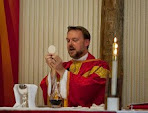
We know Simeon’s song best, of course, from its place in the Divine Service. Have you ever stopped to consider why we sing the Nunc Dimittis where we do? We sing it after the distribution, after we have received Christ’s true body and blood in the Lord’s Supper. Only then do we join Simeon and the whole Church in singing, “Lord, now lettest Thou Thy servant depart in peace.” Why? Because like Simeon, we have seen our salvation. More than that, we have received Him. Christ gives Himself into our hands and mouths, just as truly as He once rested in Simeon’s arms.
Having received Christ, we too may depart in peace, from the altar, from this place, and, when the Lord so wills, from this life of sorrow and trial. The peace Simeon sings of is not rooted in circumstance, but in Christ alone.
Simeon’s Nunc Dimittis is therefore a fitting close not only to his life, but also to our Advent waiting. Mary and Zechariah sang in anticipation and dawning fulfillment. Now Simeon sings as fulfillment stands before him. And we sing with him: the promises are kept, the Savior is here, salvation has been seen, and peace is given.
And still, we wait. We depart in peace again and again, week by week, day by day, until that final day when Christ comes in glory. Until then, Simeon’s song becomes our own: sung after supper, at the close of the day, and finally at the end of life itself. For Christ is our peace. Christ is our salvation. Christ is our light.
With Simeon and with the whole Church, we sing: “Lord, now You let Your servant go in peace; for my eyes have seen Your salvation.”
In the + Name of Jesus. Amen.


No comments:
Post a Comment