
Luke 18:9-14; 1 Corinthians 15:1-10; Genesis 4:1-15
In the Name of the Father and of the + Son and of the Holy Spirit.
It wasn’t the sacrifice that was the problem. “Abel was a keeper of sheep, and Cain a worker of the ground.” “In the course of time Cain brought to the LORD an offering of the fruit of the ground, and Abel also brought of the firstborn of his flock and of their fat portions.” Both sacrifices were appropriate. Yet “the LORD had regard for Abel and his offering, but for Cain and his offering he had no regard.” It wasn’t the sacrifice that was the problem. The problem was God’s regard.
Pastor, what on earth do you mean? Let me explain. The LORD had no need of a sacrifice. In fact, according to what is recorded in the first four chapters of Genesis, God had not yet commanded such a sacrifice. That would come later. There is something deeper going on here, something that teaches us about righteousness, sin, humility, contrition, repentance, mercy, grace, forgiveness, and, most of all, fear, love, and trust in the LORD.
When the Bible says that the LORD regarded someone or something, it means that God noticed, looked upon, paid close attention to, and showed active care, favor, or judgment toward them. It is not merely a passive glance. God turns His attention toward someone with a purpose. Thus, Mary confesses in the Magnificat, “My soul magnifies the Lord, ... for He has regarded the lowliness of His handmaiden.” Centuries earlier, Hannah prayed, “O LORD of hosts, if you will indeed regard the affliction of your servant and remember me and not forget your servant, but will give to your servant a son, then I will give him to the LORD all the days of his life.”
Likewise, Jesus regarded Peter after Peter denied Him for the third time. Jesus looked upon Peter, and Peter went out and wept bitterly. The LORD’s regard brought Peter to contrition and repentance. The LORD’s regard is the LORD’s regard. He does not regard a person because of who they are, what they offer, or what they have done. His regard is His gracious will alone.
The LORD does not tell us why He regarded Abel’s sacrifice but not Cain’s. It was His will. And yet the preacher to the Hebrews gives us this insight: “By faith Abel offered to God a more acceptable sacrifice than Cain, through which he was commended as righteous, God commending him by accepting his gifts.” Abel offered his sacrifice by faith. And what is faith? Faith is not a work. It is not knowledge, an act of reason, or an act of the will by which we make ourselves acceptable to God. Faith is trust. It is trust in the LORD and in His promises. “Now faith is the assurance of things hoped for, the conviction of things not seen.”
All that we can say about Cain is that the LORD did not regard his sacrifice. I do not believe it is right to conclude that Cain had no faith. That is not really the point. The point is that the LORD’s regard is His to give or withhold, and either are good and just. When Cain became angry and his face fell, the LORD warned him: “If you do well, will you not be accepted? And if you do not do well, sin is crouching at the door.” Cain’s problem was not that God had failed him. Cain’s problem was what he did with God’s judgment. Better to have the faith of Job, who in the midst of suffering and sorrow confessed, “The LORD gave, and the LORD has taken away; blessed be the name of the LORD.” To become resentful, angry, and jealous because God has not regarded us as we think He ought to be regarded is not the fruit of faith. It is the fruit of sin and unbelief.
And then Jesus gives us two more men. A Pharisee and a tax collector. Both went to the temple to pray. The Pharisee went straight to the front and prayed with his head and hands lifted high: “God, I thank you that I am not like other men, extortioners, unjust, adulterers, or even like this tax collector. I fast twice a week; I give tithes of all that I get.” And here is the uncomfortable part: the Pharisee was telling the truth. He really did those things. He fasted. He tithed. He was, outwardly, a righteous man. But his righteousness was in himself. And because his righteousness was in himself, he had no need of the righteousness that comes from God. He could not receive imputed righteousness because he believed he already possessed righteousness of his own. And worse, because he did not love the LORD, he did not love his neighbor. He treated the tax collector with contempt.
We saw the same thing in Cain. His anger toward God became hatred and contempt for his brother, and finally murder. The tax collector, however, stood far off. He would not even lift his eyes toward heaven. He simply prayed, “Lord, have mercy on me, a sinner.” That is faith. He was humble. He was contrite. He was repentant. And he trusted that God was merciful, good, loving, and forgiving. He trusted that whatever God did would be just. And Jesus says that this man, not the Pharisee, went home justified. “For everyone who exalts himself will be humbled, but the one who humbles himself will be exalted.”
St. Paul teaches the same thing to the Corinthians by using himself as an example. Paul proclaims the Gospel of Jesus Christ: His death, His burial, His resurrection, His appearances, and His ascension. And Paul confesses that this Gospel was given to him. He was not one of the Twelve. He had been a persecutor of Jesus and of those who trusted in Him. So, Paul considers himself unworthy. He calls himself the least of the apostles. But he is an apostle. How? “By the grace of God, I am what I am.” Paul does not boast in his works, his prayers, his sacrifices, or his righteousness. He boasts in the grace of God.
And that is where this Gospel leaves us today. Not standing before God with our heads held high, presenting Him with a list of the reasons He ought to regard us. We come like the tax collector. “Lord, have mercy on me, a sinner.” And then we come to the altar. We do not come because we have made ourselves worthy. We come precisely because we are not worthy. We come in humility, confessing our sin. We come in contrition, grieving over our sin. We come in repentance, turning from our sin to Christ. And we come in faith, not faith in our faith, not faith in our worthiness, not faith in our works, but faith in Jesus Christ and His promises.
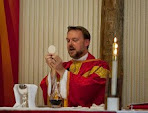
For here, at this altar, the LORD regards you. He looks upon you not according to your righteousness, but according to the righteousness of Christ given to you. Here Christ gives you His true body and His true blood, given and shed for you for the forgiveness of sins. Here the sinner who says, “Lord, have mercy,” hears the answer of the Gospel. Mercy. Forgiveness. Grace. Christ.
So come with humility, but do not leave in despair. Come in contrition, but leave with forgiveness. Come in repentance, but leave reconciled. Come in faith, hope, and joy, because your hope is not in yourself. Your hope is in Christ. And the LORD who regards the lowly has promised that those who humble themselves will be exalted. “For everyone who exalts himself will be humbled, but the one who humbles himself will be exalted.”
In the + Name of Jesus. Amen.


No comments:
Post a Comment