
Luke 12:13-21; 2 Corinthians 9:6-15; Deuteronomy 8:1-10
In the Name of the Father and of the + Son and of the Holy Spirit.
When the Israelites entered the Promised Land, they did not conquer it by their own strength; they received it. The Lord drove out the nations before them. The Lord gave them walled cities they did not build, houses they did not construct, vineyards and orchards they did not plant, wells they did not dig. They stepped into a life already established, already watered, already ready to sustain them. In a sense, the Lord placed them back into a kind of Eden, surrounded by gifts they had not earned.
And when harvest time came, the Israelites returned thanks to the Lord simply by bringing back to Him a portion of what He had already provided. They had not prepared the soil, nor sown the seed, nor sent the rain. Yet He allowed them to reap, and He taught them to give back in humble thanksgiving.
The firstfruits offering included a spoken confession, a remembrance of God’s mighty deeds: “A wandering Aramean was my father… and the Egyptians treated us harshly… Then we cried to the LORD… and the LORD brought us out… and He brought us into this land… And behold, now I bring the first of the fruit of the ground, which You, O LORD, have given me.” This was worship. This was thanksgiving. And it always had three parts: remembrance, humility, and gratitude.
Our worship of the Lord today is no different, except that we too often forget. Instead of remembering, we grow proud. Instead of humility, we become self-sufficient. Instead of thanksgiving, we slide into selfishness, greed, and lovelessness. And so, it is good, indeed necessary, for us to stop on this day and repent. To remember again that the Lord still provides for us as surely as He provided for His people of old. Every day He grants us is a day of His giving; every breath is borrowed; every meal is mercy.
The chief way we offer thanks to the Lord is by returning to Him a portion of the good things He has given us. In so doing, we confess two truths: 1) The Lord is the Giver of every gift, and 2) we can give only what He has first placed in our hands.
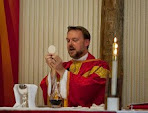
This is what we do each Lord’s Day in our tithes and offerings, and, even more, in the Lord’s Supper, that holy Eucharist, that “Thanksgiving,” in which we receive Christ Himself. In the Sacrament, the Giver becomes the Gift. There is no greater act of divine generosity than this.
But thanksgiving does not come naturally to us. It must be learned. It must be trained into the heart. The weekly Divine Service, the feasts and festivals of the Church Year, and even this national holiday serve as reminders and tutors in humility, gratitude, and charity. For the Lord never blesses us to keep His gifts locked away; He blesses us that we may bless others. He fills our barns so that our neighbor may not go hungry. He gives us abundance so that His Name may be glorified in our generosity.
This is precisely St. Paul’s point: “Whoever sows sparingly will also reap sparingly, and whoever sows bountifully will also reap bountifully.” But seed does no good in the barn. The Lord gives so that we may sow, so that we may do something with His gifts, not hoard them for ourselves.
Jesus illustrates this in His parable of the rich fool. Notice how He begins: “The land of a rich man produced plentifully.” Not the rich man, but the land. God gave the abundance. But the man’s response was to keep everything for himself, to build bigger barns, to quit working, to settle into a life of self-satisfied ease. It sounds like the cultural ideal of comfort and security we sometimes call the American Dream. But Jesus shows us the spiritual foolishness of that ideal when it becomes our treasure.
God gave the harvest so that the man might rejoice in God’s generosity and share with those in need. Instead, he enclosed it, hoarded it, protected it. And then he died. His riches were wasted. No one benefited from the Lord’s blessing, not even he.
“So is the one,” Jesus warns, “who lays up treasure for himself and is not rich toward God.”
But remember why Jesus told this parable. Someone in the crowd wanted Jesus to make his brother divide the inheritance with him. He wanted the Kingdom of God to work like the kingdoms of men: claim your rights, secure your portion, make sure you aren’t cheated. Jesus refuses: “Man, who made me a judge or arbitrator over you?” In the Kingdom of God, His people are not compelled to give; they want to give. They give freely, recognizing everything they have has come freely from God.
Then Jesus lays bare the deeper issue: “Take care, and be on your guard against all covetousness, for one’s life does not consist in the abundance of his possessions.”
Covetousness is idolatry. It enthrones our desires above God. It whispers that God has short-changed us, that He has given others better gifts, that He cannot be trusted to provide. And from this poisoned root come bitter fruits: jealousy, resentment, rivalry, self-pity, and hostility toward both neighbor and God.
At its heart, covetousness is a violation of the First Commandment: You shall have no other gods before Me. For a covetous heart does not fear, love, or trust in God above all things.
If covetousness is the disease, then Christ is the cure, and thanksgiving is the sign of a heart healed by Him. Gratitude is not merely feeling thankful; it is faith’s confession that God has given more than we deserve and more than we can measure. Gratitude says, “I have enough, for God has not failed me.” Gratitude turns our eyes from what others possess to what God has placed in our own hands. You cannot give thanks for God’s provision and, at the same time, resent His generosity to someone else.
As our nation pauses this week, we remember that thanksgiving is not just a holiday tradition or a prelude to a turkey dinner. It is a Christian discipline. It shapes our character. It calms our restless comparisons. It produces contentment, steadiness, and peace. It puts pride, greed, and envy in their proper place. It teaches us to open our hands as freely as our Father opens His.
And above all, thanksgiving directs us to Christ, the Firstfruits from the dead, the Bread of Life from heaven, the One who became poor so that we, through His poverty, might become rich. In Him, the Father has already given us every good and perfect gift. In Him, daily bread is enough. In Him, generosity becomes joy. And in Him, we learn to say, with Israel, with the Church, and with all the saints, “Behold, I bring the first of the fruit, which You, O Lord, have given me.”
In the + Name of Jesus. Amen.


No comments:
Post a Comment