
Luke 8:4-15; 2 Corinthians 11:19 – 12:9; Isaiah 55:10-13
In the Name of the Father and of the + Son and of the Holy Spirit.
We would like to believe that the Gospel is simply “out there” for anyone to take up if only he will choose it, that faith is a decision within our grasp. But nothing could be further from the truth. Holy Scripture and our own experience testify otherwise. It is only by the grace of God and the work of the Holy Spirit through the Word of God that the soil of the human heart is made receptive. Thus, we confess with Luther in the explanation of the Third Article: “I believe that I cannot by my own reason or strength believe in Jesus Christ, my Lord, or come to Him; but the Holy Spirit has called me by the Gospel, enlightened me with His gifts, sanctified and kept me in the true faith.”
That confession gives us the right ears with which to hear today’s Gospel. In the Parable of the Sower, Jesus speaks of crop failure three times before He comes to the sowing that bears fruit. Three failures. One success. Why is there so often a bad harvest when the seed of the Word of God is sown? Why does the Gospel seem to be wasted on so many? Jesus is unsentimental about the answer. There is something in fallen humanity that resists the Word. The seed is good; the problem is the soil. Seventy-five percent of the soils in the parable do not bear lasting fruit.
The Word of God shows us not only how faith is created, but also how unbelief is exposed. That is the nature of Jesus’ parables. They are not moral illustrations meant to inspire effort. They are revelatory and divisive. They create faith where and when it pleases God, and at the same time they unmask the hardness, shallowness, and distraction of hearts that reject the Word.
Jesus Himself tells us that His parables concern “the mysteries of the kingdom of God.” The kingdom does not give advice to the capable; it gives grace to the unworthy. It is received not by those who assume they are strong, perceptive, or spiritually competent, but by those who hunger and thirst for mercy and know they do not deserve it. The one who understands the parables is not the clever hearer, but the repentant one. And even that understanding is not self-produced. It is worked by the Holy Spirit through the Word and by grace alone.
So, Jesus presses the issue of hearing. It is not enough simply to hear sounds with the ears. You must hear with Spirit-given ears. Many hear the Word, but few believe it. Many believe for a while, but few persevere. Many show signs of life, but only some bear fruit with patience. Yet those who do bear fruit bear it abundantly – thirty-, sixty-, even a hundredfold. Hearing ears and fruitful lives are gifts. They are not achievements. They are granted by the Holy Spirit through the Word of God.
This means that the Word of God is never weak, never ineffective, never at fault. If there is no fruit, the problem is not the seed. The Lord says through the prophet Isaiah: “My Word that goes out from my mouth shall not return to me empty, but it shall accomplish that which I purpose, and shall succeed in the thing for which I sent it.” Sometimes that purpose is hardening and judgment. “Seeing they may not see, and hearing they may not understand,” Jesus says. But to those whom the Spirit grants ears to hear, it is “given to know the secrets of the kingdom of God.”
And here is the greatest secret of all: the power is not finally in the soil, but in the Seed itself. The true Seed in the parable is not merely a message, but a Person. The Seed is the Word made flesh, the Word-Son of God, Jesus Christ. He Himself teaches us, “Unless a grain of wheat falls into the earth and dies, it remains alone; but if it dies, it bears much fruit.”
Jesus is the Seed sown by the Father: conceived by the Holy Spirit, born of the virgin Mary, planted in the earth by His death, and raised again to bestow life that never ends. His cross is the sowing. His tomb is the furrow. His resurrection is the harvest. From His death flows forgiveness of sins; from His risen life flows faith, perseverance, and fruit in His people. Any fruit the faithful bear in their lives – faith, love, confession, good works – is not their own creation, but the fruit of Christ’s own life at work in them.
To receive the Seed, then, is to receive the Word. And that means seeking Jesus where He has promised to be found. This is what even His own family once failed to understand when they sought Him on their own terms. Jesus is found in His Father’s house – first in the tabernacle and the temple, and now in the Church. He is found where His Word is preached and His Sacraments are given according to His institution.
The prophet Isaiah urges us, “Seek the LORD while He may be found.” That is not a threat, but an invitation filled with urgency. Do not postpone what God gives today. Do not imagine that neglecting the Word has no cost. Hard soil does not become good soil by accident. Shallow roots do not deepen on their own. Thorns are never removed by neglect. The Spirit works through means, and those means are given now.
This is why the Third Commandment matters so deeply. “Remember the Sabbath day by keeping it holy.” And what does this mean? “We should fear and love God so that we do not despise preaching and His Word, but hold it sacred and gladly hear and learn it.” To absent oneself from the Word is not neutrality; it is danger. To gladly hear it is not duty alone; it is life.
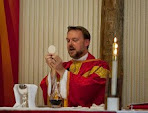
And hearing does not stop with preaching. The same Word who is sown into ears places Himself into your mouth. In the Holy Supper, the Seed gives Himself as true food and drink for sinners: His body given for you, His blood shed for you. Here Christ sustains the faith He has created. Here He strengthens weak roots, guards against the scorching heat of trial, and chokes out the thorns of sin and unbelief with His forgiveness.
So, hear the Word. Hear it often. Hear it where Christ has promised to be. Come to His house. Receive His preaching. Seek Him at His altar. For the Seed is faithful, the Sower is generous, and where the Spirit gives ears to hear, the harvest will surely come.
In the + Name of Jesus. Amen.


No comments:
Post a Comment