
Matthew 26:1 – 27:66; Philippians 2:5-11; Zechariah 9:9-12; Matthew 21:1-9
In the Name of the Father and of the + Son and of the Holy Spirit.
Palmarum is both the Second Sunday of Passiontide and the beginning of the holiest week of the Church’s Year of Grace. The liturgy and the Propers for this day are filled with drama, joy and sorrow, praise and rejection, triumph and suffering woven tightly together. Even the most stoic among us may find our eyes drifting downward, our hearts uneasy, perhaps even stirred to tears. For on this day, we are not given a single moment to contemplate, but the whole sweeping account of our Lord’s Passion set before us at once.
We begin with joy. Our Lord Jesus enters Jerusalem, the City of Peace, as the Passover approaches. The crowds greet Him with shouts of praise: “Hosanna to the Son of David! Blessed is He who comes in the Name of the Lord!” Garments are spread on the road, palm branches laid before Him. Here is their King, their long-awaited Messiah. Surely now He will deliver them, overthrow their enemies, restore the throne of David, and establish a kingdom of power and glory.
But this is not the first time the crowds have sought to make Jesus their king. After He fed the five thousand with five loaves and two fish, they rushed to seize Him, to force Him into kingship. And when Jesus later confronted them, He exposed their hearts: they sought Him not because they believed, but because they had eaten their fill. They wanted a king who would satisfy their desires, meet their expectations, and serve their purposes.
And so it is on this day. Some voices that cry “Hosanna!” will soon cry “Crucify Him!” Some of the crowds that welcome Him will reject Him. The praise of Palm Sunday gives way quickly, shockingly, to the hatred of Good Friday. For Jesus is indeed a King, but not the kind of king they want.
He comes not on a war horse, but on a donkey, lowly, humble, gentle. He does not wear royal robes of splendor, but is stripped, scourged, and covered in His own blood. He does not receive a crown of gold, but a crown of thorns pressed cruelly into His head. To the eyes of the world, Jews and Gentiles alike, the Sanhedrin, the Romans, even His own disciples, this King appears weak, pitiful, defeated. And yet, the inscription above His head speaks the truth: “Jesus of Nazareth, King of the Jews.” The chief priests protest, but the governor answers firmly, “What I have written, I have written.” The world may mock Him, but His kingship stands.
Dearly beloved people of God, having eyes, we often do not see. Having ears, we do not hear. There is only one Law of God: love. Love that seeks not its own, but the good of another. To love God is to place Him above ourselves. To love our neighbor is to place them before ourselves. This is the Law fulfilled. And this is precisely what we fail to do.
We want a king who serves us on our terms. We want blessings that fit our desires, solutions that match our expectations. We grumble when God’s gifts come to us in ways we do not understand or appreciate. Like children standing before a full pantry and crying, “There is nothing to eat,” we overlook the abundance set before us because it is not what we crave. So we chase after other kings, comfort, success, pleasure, control. Yet none of these satisfy. They promise much, but deliver little. Like empty calories that leave the body weak and weary, the things of this world leave us drained, burdened, and still in bondage.
But you, O people of God, have a true King. King Jesus rules by serving. He reigns not by taking, but by giving. He has taken on your flesh, humbled Himself, and become obedient, even to death on a cross. This is not weakness. This is divine love in its fullest expression. This is your King, who lays down His life for you, to free you from sin, death, and the power of the devil.
And this King still serves you. He comes to you even now, not in outward splendor, but in humble means. He stoops down to you in His absolution, speaking forgiveness into your ears and restoring you to the purity of your Baptism. He comes in His Word, living and active, proclaiming His victory over sin and death. And He comes to feed you. Today, as two children receive the Lord’s Supper for the first time, we are given a beautiful picture of this truth. For what is Holy Communion but the coming of your King to serve His people?
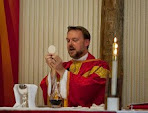
Do we not sing the very words of Palm Sunday each time we gather at this altar? “Hosanna to the Son of David! Blessed is He who comes in the Name of the Lord!” And does He not come, truly come, humbly, hidden under bread and wine? Here is your King, not distant or removed, but present for you. Here He gives you not earthly bread alone, but His own body and blood, the very price of your redemption.
This is how Palm Sunday and Good Friday are bound together. The One who is welcomed with palms is the same One who goes to the cross. The One who is praised is the One who is sacrificed. And the One who is sacrificed is the One who now gives Himself to you as food and drink for eternal life.
“Behold, your King is coming to you; righteous and having salvation is He, humble…” And so He comes, still humble, still hidden, still giving Himself for you. And where the King is, there is His Kingdom. Here, at this altar, heaven touches earth. With angels and archangels and all the company of heaven, we join in the eternal song. At the Name of Jesus, every knee bows, in heaven and on earth and under the earth, and every tongue confesses that Jesus Christ is Lord, to the glory of God the Father.
So rejoice, O people of God. Your King has come. Your King has died. Your King is risen. And your King comes to you still, here, now, for you, to forgive, to renew, to strengthen, and to save. Oh, what a King our Jesus is.
In the + Name of Jesus. Amen.


No comments:
Post a Comment