
Luke 6:36-‐42; Romans 8:18-‐23; Genesis 50:15-‐21
In the Name of the Father and of the + Son and of the Holy Spirit. Amen.
Last Sunday we considered God's love manifested as grace. Today we see God's love manifested as mercy. Grace and mercy are two sides of the same coin, for both are manifestations of God's love for you in Jesus Christ.
When I teach catechumens about grace and mercy, I explain it this way: Grace is when God gives us good things that we do not deserve. Mercy is when God does not give us the bad things that we do deserve. One is a giving; the other is a withholding. Yet both come from God: His will, His action, His love.
Last week we heard of God's seeking love that finds and restores the lost. Today we focus on God's mercy, through which He works even through suffering, pain, and loss to preserve us in His Son unto eternal life. We hear that God works man's intended evil for good. We hear that the sufferings of this present time are not worth comparing with the glory that is to be revealed to us. And we hear our Lord exhort us to be merciful as our Father is merciful: to judge not, condemn not, forgive, and give.
The story of Joseph and his brothers is one of the clearest examples of mercy in all of Holy Scripture. Joseph's brothers were consumed with jealousy. Their father Jacob loved Joseph, the son of his old age. He gave Joseph the many-colored coat. Then came the dreams in which Joseph's brothers bowed before him. Their jealousy turned to hatred. They plotted murder. Reuben intervened, and instead they sold Joseph into slavery.
What followed was years of suffering, injustice, and humiliation. Yet through it all God was at work. Joseph eventually became Pharaoh's right-hand man in Egypt. Then came the famine. His brothers traveled to Egypt seeking food and, just as Joseph had dreamed, bowed before him.
After Jacob died, the brothers feared revenge. Surely now Joseph would repay them for all they had done. They expected judgment. They expected condemnation. They expected to receive what they deserved. Instead, they received mercy.
Joseph said, "Do not fear, for am I in the place of God? As for you, you meant evil against me, but God meant it for good." Joseph did not deny their sin. He did not pretend evil was good. He named it for what it was. "You meant evil against me." Yet he also confessed God's greater purpose. God had been at work through all of it to preserve life.
Joseph did not give his brothers what they deserved. He forgave them. He restored them. When they offered themselves as slaves, he called them brothers. He provided for them and for their children. Their guilt was not repaid with vengeance but overcome by mercy.
What Joseph did for his brothers points us to what God has done for us. In our Epistle lesson, St. Paul reminds us that the fall into sin affected not only humanity but the entire creation. Everything is subjected to corruption. Everything groans beneath the curse of sin. We see it everywhere, in sickness and disease, war and violence, broken relationships, anxiety and fear, sorrow and death. We know these things all too well. We experience them in our homes, our bodies, our families, and our hearts. Yet Paul directs our eyes beyond present suffering. "I consider that the sufferings of this present time are not worth comparing with the glory that is to be revealed to us."
Notice that Paul does not deny suffering. Christianity is not wishful thinking. It does not pretend pain is not real. Rather, Paul says that what God has prepared for His children is so glorious that there is no comparison.
The whole creation waits with eager longing for the revealing of the sons of God. Dearly beloved, that is you. The revealing of God's sons began with the Incarnation of His eternal Son, Jesus Christ. It continues now in those who have been united to Christ through Holy Baptism and faith. Yet its full revelation awaits the resurrection of the body. That is why we groan.
We do not groan because we have no hope. We groan because we do have hope. We possess the firstfruits of the Spirit. We know what is coming. We know that Christ is risen. We know that our bodies will be raised. We know that creation itself will be set free from its bondage to corruption. Paul compares our present sufferings to the pains of childbirth. Labor is painful. It is difficult. Yet the joy of the child overwhelms the suffering that came before. So it is with the Christian life. The sufferings of this present age are preparing us for the glory that is coming.
God does not waste suffering. He works through it. Just as He worked through Joseph's suffering to preserve life, so He works through our suffering to preserve us in Christ and prepare us for the resurrection. That is divine mercy. God does not give us what our sins deserve. The wages of sin is death. Yet God gives us life. He does not hold our sins against us. He forgives them for the sake of His Son. He does not condemn us. Christ has already borne our condemnation upon the cross.
And if this is how God has treated us, how then shall we treat one another? This is the point of our Lord's words in today's Gospel. "Judge not, and you will not be judged; condemn not, and you will not be condemned; forgive, and you will be forgiven." How can those who have received such mercy refuse mercy to a brother? How can those whose chains have been removed bind another with judgment, condemnation, or bitterness? We cannot.
The debt forgiven us is greater than any debt owed to us. The mercy shown us is greater than any mercy we are called to show another. Therefore, as recipients of God's mercy, we become instruments of that mercy toward others. Forgive as you have been forgiven. Give as you have been given to. Show mercy as mercy has been shown to you.
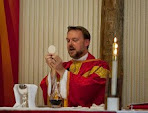
The Lord now prepares a feast for His sons who are being revealed. Here, too, His glory remains hidden. Christ is present under humble forms of bread and wine. Yet this Holy Supper is a foretaste of the glory to come. It is a feast of reconciliation. What was lost has been found. What was broken has been restored. It is a feast of grace, mercy, love, and forgiveness.
Therefore, come to this altar as those who have been set free. Come forgiving as you have been forgiven. Come reconciled to your brothers. Do not place upon another the chains from which Christ has released you. For He who fills this cup and satisfies the hungry heart fills you with His overflowing love, grace, mercy, and forgiveness, that you may pour the same upon others to the glory of God the Father, through His Son, Jesus Christ, in the communion of the Holy Spirit.
In the + Name of Jesus. Amen.


No comments:
Post a Comment